The Franklin Institute Awards Program
The Franklin Institute Awards celebrates nine of the world's brightest visionaries—individuals whose work has transformed our lives and an early-career researcher who has already raised the bar of scientific excellence. The 2024 laureates will be celebrated in Philadelphia April 15-19, 2024. Credit: The Franklin Institute
One of the oldest comprehensive science awards in the world, The Franklin Institute Awards Program is a cornerstone of the legacy of Philadelphia’s Franklin Institute since its founding in 1824. Over the past 200 years, The Franklin Institute Awards Program has honored the most influential scientists, engineers, and inventors who have significantly advanced science and technology. The roster of more than 2,000 laureates includes luminaries such as Nikola Tesla, Marie and Pierre Curie, Orville Wright, Thomas Edison, Albert Einstein, Jane Goodall, Stephen Hawking, and more recently, vaccine pioneers Kizzmekia Corbett, Drew Weissman, and Katalin Karikó. Notably, 125 of these laureates have also received the Nobel Prize.
Engineering for Humanity: HEALTHY

The RoAR lab develops innovative robots and methods to help humans relearn, restore, and improve functional movements.
Your Trunk Support Trainer (TruST) is a great example of that. It was created to assist those with spinal cord injuries. Later, you demonstrated that it’s also effective in helping children with cerebral palsy. Was this an unexpected development, due to overlap in the nature of these disorders, or do you find that you often translate your work to meet different challenges?
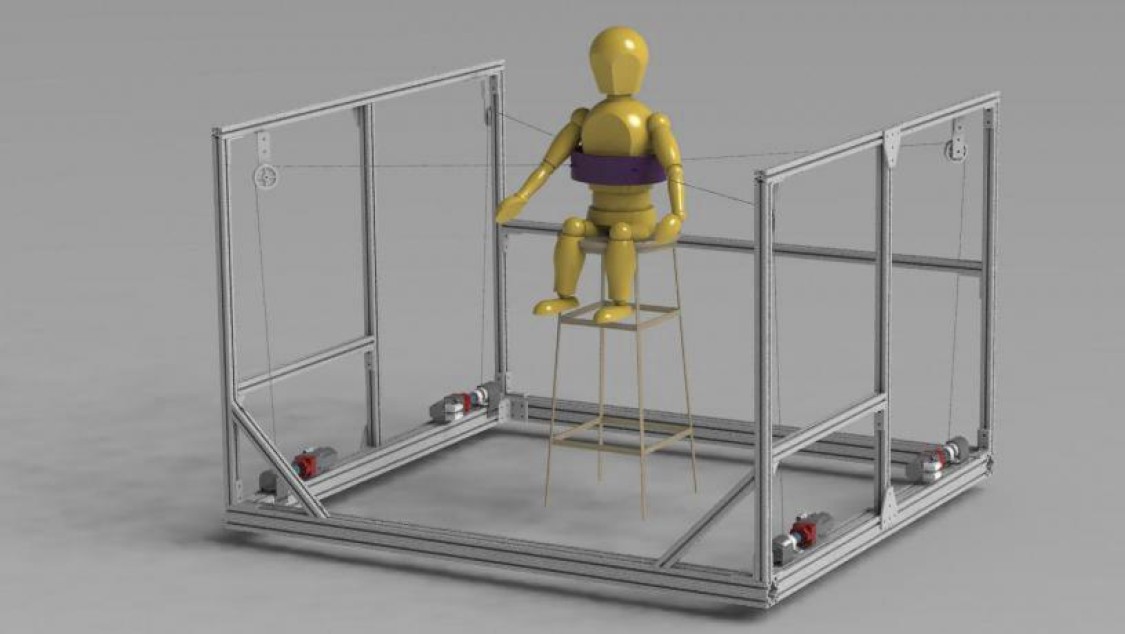
Poor trunk control is a functional impairment that we see in different medical conditions, including spinal cord injury, cerebral palsy, stroke and many others. The TruST robotic device was designed with the following goal in mind: How to provide active support to the trunk at different levels in the upper body while simultaneously challenging a participant to perform tasks that take them outside their base of support. Through an intensive training of the task and changing the level/magnitude of the support, participants are able to relearn and regain their muscle activity and coordination. A similar procedure could be applied to both participants with SCI and children with cerebral palsy. However, TruST had to be fine tuned for the two different patient groups. We just started a new National Institutes of Health-funded project to perform a clinical trial using TruST with a group of 85 children with cerebral palsy to evaluate the efficacy of TruST relative to typical standard of care. We are optimistic that TruST will be able to restore and retrain trunk control in children with cerebral palsy who absolutely need these to be functional in their daily life.
Images from the challenge
Highlights from the student teams