NSF Engineering Research Center for Smart Streetscapes
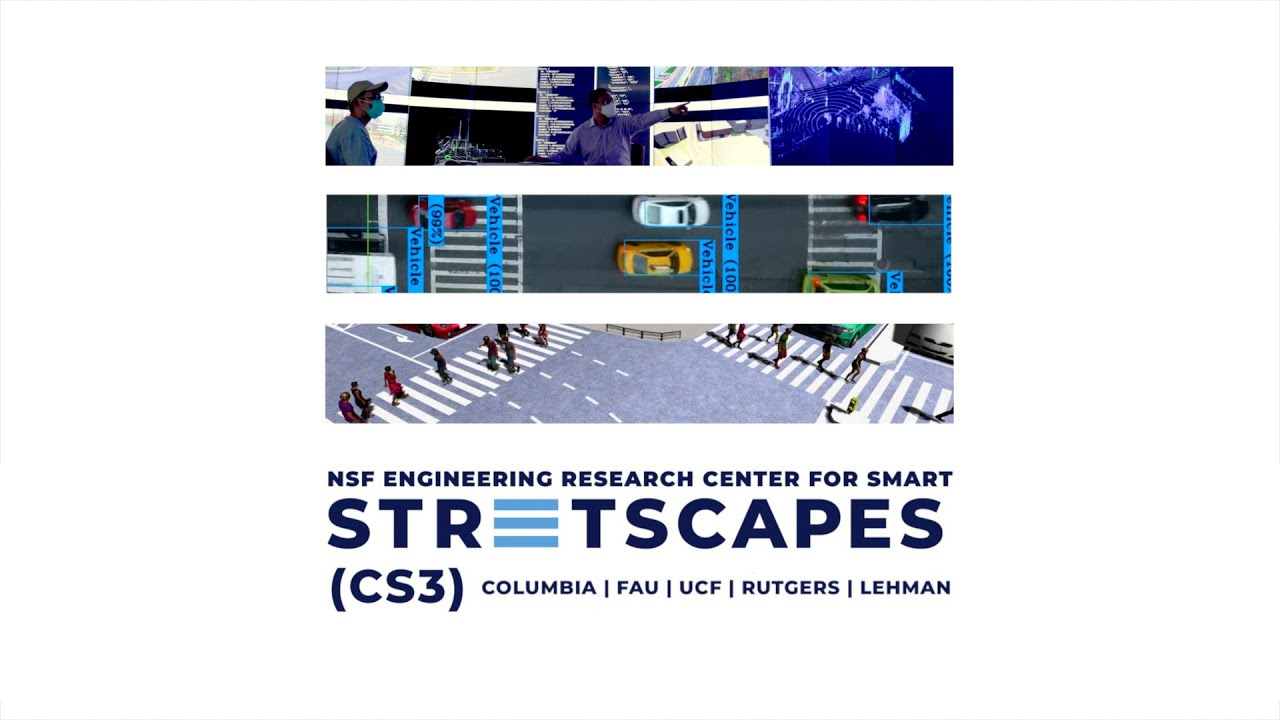
Core Columbia University Partners
Columbia Engineering’s key partners at the University include the Data Science Institute (DSI), a leader in data science research with expertise in smart cities sensing, computer vision, human-computer interaction, and urban policy and management.
Other partners include:
- Columbia’s Faculty of Arts and Sciences, which offers a wide range of expertise in data science education and workforce development, led by Statistics Professor and Department Chair Tian Zheng;
- The School of International and Public Affairs (SIPA), which for more than 75 years has been educating professionals who work in public, private, and nonprofit organizations to make a difference in the world. SIPA’s participation in the project is led by Ester Fuchs, professor of international and public affairs and political science and director of the School’s Urban and Social Policy program, who emphasizes the importance of community engagement;
- Columbia Technology Ventures, which is working closely with CS3 to foster the entrepreneurial spirit of the student body and faculty, and to cultivate institutional connections with industry.
Columbia Executive Vice President for Research Jeannette Wing, who is also a professor of computer science, noted, "When people from different perspectives and areas of expertise come together, sparks fly. Under the platform of CS3, this unique constellation of researchers and educators has the opportunity not only to ask questions they would never have been able to ask on their own, let alone answer, but they also get to connect dots across campuses and beyond the university gates."
National Impact
“For decades, NSF Engineering Research Centers have transformed technologies and fostered innovations in the United States through bold research, collaborative partnerships, and a deep commitment to inclusion and broadening participation," said NSF Director Dr. Sethuraman Panchanathan. “The new NSF centers will continue the legacy of impacts that improve lives across the Nation.”
“One strength of NSF Engineering Research Centers is their ability to bring interdisciplinary academic teams together in convergent research to identify novel approaches to thorny societal challenges," said Dr. Susan Margulies, NSF Assistant Director for Engineering. “With their unique testbeds and industry partners, the centers innovate and translate solutions that are effective and sustainable.”
Columbia Engineering
Columbia Engineering, based in New York City, is one of the top engineering schools in the U.S. and one of the oldest in the nation. Also known as The Fu Foundation School of Engineering and Applied Science, the School expands knowledge and advances technology through the pioneering research of its more than 250 faculty, while educating undergraduate and graduate students in a collaborative environment to become leaders informed by a firm foundation in engineering. The School’s faculty are at the center of the University’s cross-disciplinary research, contributing to the Data Science Institute, Earth Institute, Zuckerman Mind Brain Behavior Institute, Precision Medicine Initiative, and the Columbia Nano Initiative. Guided by its strategic vision, “Columbia Engineering for Humanity,” the School aims to translate ideas into innovations that foster a sustainable, healthy, secure, connected, and creative humanity.
NSF
The U.S. National Science Foundation propels the nation forward by advancing fundamental research in all fields of science and engineering. NSF supports research and people by providing facilities, instruments and funding to support their ingenuity and sustain the U.S. as a global leader in research and innovation. With a fiscal year 2022 budget of $8.8 billion, NSF funds reach all 50 states through grants to nearly 2,000 colleges, universities and institutions. Each year, NSF receives more than 40,000 competitive proposals and makes about 11,000 new awards. Those awards include support for cooperative research with industry, Arctic and Antarctic research and operations, and U.S. participation in international scientific efforts. www.nsf.gov
Yuan Yang
Lorenzo M. Polvani
Steven M. Bellovin