HeForShe Columbia: Gender Equality in STEM and Academia
Livestream of the HeForShe panel, moderated by Dean Mary Boyce
Suzanne Goldberg, Executive Vice President for University Life; Herbert and Doris Wechsler Clinical Professor of Law; Special Advisor to the President for Sexual Assault Prevention and Response, welcomed the attendees at Low Library and those tuning in via livestream and introduced keynote speaker Elizabeth Nyamayaro, senior advisor to the UN Women executive director and head of HeForShe, who described growing up as a girl in her native Zimbabwe and detailed ongoing efforts toward a gender-equal world.
Dean Boyce then reflected on her experiences as a woman in engineering and how important the highly collaborative nature of the field is to all engineers. She noted that “this is perhaps one of the greatest times to be pursuing a degree in engineering or applied science—the needs for and the impact of engineering developments on lives around the world has never been clearer.”
Boyce foresees a positive future for women in engineering, though “we all have a long way to go,” she noted. A few universities are seeing great strides in attracting women into engineering and applied science fields and Columbia Engineering is at the forefront: women make up 43 percent of its undergraduate body and 49 percent of the current first-year class. The graduate student body is 35 percent women: 38 percent MS students, 24 percent PhD. At the same time, women now make up 18 percent of the faculty.
“What’s clear in these numbers,” Boyce noted, is that “the pipeline is growing, and now there are more than ever an increasing number of talented and qualified women pursuing engineering. This will result in more women in graduate programs, postdoc programs, and faculty positions, and will help create the critical mass needed to achieve greater gender equity.”
Helen Lu, vice chair and professor of biomedical engineering (BME), talked about the downside of being not just the first women faculty member in BME but also the first to get tenure, the challenges in hiring faculty, and the positive increase in the number of female students. Elsewhere in the life sciences, Carol Mason, professor of pathology and cell biology, neuroscience and ophthalmic science, principal investigator and chair of interschool planning at Columbia's Zuckerman Institute, discussed her experiences, the unique challenges of various career trajectories, and the “leaky” pipeline siphoning off women from fields not noted for work-life balance.
Dennis Mitchell, Vice Provost for Faculty Diversity and Inclusion, Columbia University and Senior Associate Dean for Diversity for the Columbia University College of Dental Medicine, spoke about the University’s efforts to target faculty recruiting and retention in addition to fostering “a climate of inclusiveness” at every level. Globally, Julien Pellaux, strategic senior advisor to the Under-Secretary-General and Executive Director UN Women, discussed gender equity from the perspective of the UN’s efforts and initiatives.
“We are in the midst of an engineering renaissance and a key objective will be making sure that women have an equal share—this is important for the world, not just for women,” said Boyce. “At Columbia, the critical mass and presence of women and visibility of women attracts other women—it is a subtlety that is important to the overall environment and atmosphere in the classroom and the laboratory.”
Allie Obermeyer: Engineering Proteins as SEAS
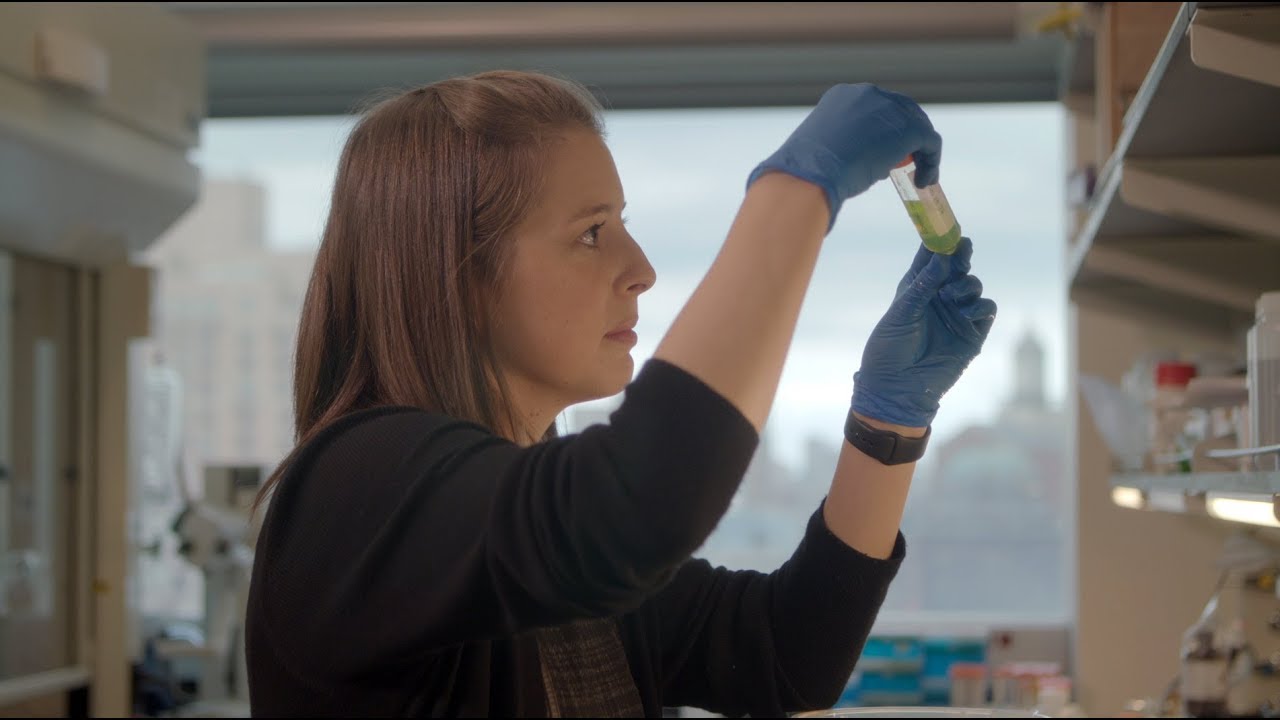
Allie Obermeyer, assistant professor of chemical engineering, conducts research bridging chemistry, biology, and engineering, is focused on improving human health by developing protein- and polymer-based materials for biomedical applications.
Protein phase separation has been linked to the organization of cellular components via the formation of membraneless organelles, which are compartments in a cell that are not enclosed by a lipid membrane. These phase-separated membraneless organelles create distinct environments that are essential to cellular processes that range from cell signaling to stress response. While several key proteins that form these organelles have been identified, researchers are still unable to design membraneless organelles from the ground up.
At the PSME Symposium, Obermeyer will share her group’s efforts to design synthetic membraneless organelles. Her approach is inspired by natural biological systems and builds on the physics of polymer phase separation controlled by electrostatic interactions. By simply tuning the charge on proteins, Obermeyer’s team has engineered phase separation of these proteins with nucleic acids in cells. Using a library of engineered proteins, her team has determined predictive design rules for protein phase separation in vivo. Their results have enabled them to apply these design rules to promote membraneless organelle formation for a range of proteins of interest. They are now using these capabilities to improve protein purification and the biosynthesis of chemicals.