Undergraduate Programs
-
Admission Requirements
Beginning in Fall 2027, the program will admit only full-time M.S. students. Students entering a medical physics graduate educational program shall have a strong foundation in basic physics. This shall be demonstrated either by an undergraduate degree in physics, or by a degree in an engineering discipline, or another of the physical sciences, and a minimum of three fundamental upper-level physics courses taught through a physics department. Examples of fundamental physics courses include, but are not limited to: classical mechanics, modern physics, quantum mechanics, electromagnetism, statistical physics, thermodynamics, optics, nuclear/particle physics, and astrophysics (see below). GRE exam scores are not required. The Physics GRE is recommended. Proficiency in written and spoken English and a working knowledge of computer programming, probability, and statistics are also required.
A list of qualified courses are: -
Application
The priority deadline for applications for full-time study is February 15. Applications received by June 30 will be considered on a space-available basis. For more information, please see Graduate Admissions. Applicants are asked to inform the Medical Program Coordinator at [email protected] following the submission of an online application.
-
Financial Aid
As a rule, assistantships, grants, scholarships, and fellowships are not available to students in master's degree programs, including the medical physics program. U.S. citizens and permanent residents may be eligible to receive federal student loans. Please see the FAQ for additional information.
-
Core Curriculum
The Program consists of a core curriculum of medical and nuclear physics courses, a laboratory course, anatomy, two practicums, a tutorial, one elective, and a seminar. Specific course requirements are:
- APPH E4010: Introduction to nuclear science
- APPH E4330: Radiobiology for medical physicists
- APPH E4710: Radiation instrumentation lab, I
- APPH E4550: Medical physics seminar
- APPH E4500: Health physics
- APPH E4600: Fundamentals of radiological physics & radiation dosimetry
- APBM E4650: Anatomy for physicists & engineers
- APPH E6319: Clinical nuclear medicine physics
- APPH E6330: Diagnostic radiology physics
- APPH E6335: Radiation therapy physics
Opportunities for specialization exist via the choice of elective courses and practicums. In addition, a fourth semester option exists.
-
Comprehensive Exam
A passing grade on a medical physics comprehensive examination is required for graduation with a Master of Science degree in Medical Physics. This closed-book written exam is offered twice a year, in December and May, following the last semester of studies and consists of 6 questions covering the required course work taken during the program.
-
Other Requirements
In order to be allowed to participate in a practicum at the New York Presbyterian Hospital at the Columbia University Medical Center, students in the Columbia Medical Physics Program must complete an on-line course that leads to HIPAA compliance certification. They must also comply with hospital-mandated medical surveillance, which includes drug screening: http://www.cumc.columbia.edu/hr/policies-procedures/medical-surveillance
Successful completion of two online ethics courses, offered without charge to students enrolled in our Program, is required for graduation.
- Admissions and Placement Statistics
Specific Program Requirements
-
Medical Physics MS Program
Full-Time Curriculum
The following courses are required for the full-time program.
(Schedule subject to change)
First Fall Courses
- APPH E4010: Introduction to nuclear science (3 pts)
- APPH E4600: Fundamentals of radiological physics & radiation dosimetry (3 pts)
- APPH E4710: Radiation instrumentation lab, I (3pts)
- APBM E4650: Anatomy for physicists & engineers (3 pts)
Spring Courses
- APPH E6319: Clinical nuclear medicine physics (3 pts)
- APPH E6330: Diagnostic radiology physics (3 pts)
- APPH E6335: Radiation therapy physics (3 pts)
- APPH E4550: Medical physics seminar (0 pts)
- APPH E4500: Health physics (3 pts)
Summer Courses
- Subject to availability: summer practicum(s) for which students will register in the Fall term
Second Fall Courses
- APPH E4330: Radiobiology for medical physicists (3 pts)
- Varies: Practicum (see below) (6 pts)
- Varies: Elective (see below) (3 pts)
Practicums (2 required)
- APPH E6333: Radiation therapy (prerequisite: APPH E6335) (3 pts)
- APPH E6340: Diagnostic radiology (prerequisite: APPH E6330) (3 pts)
- APPH E6365: Nuclear medicine (prerequisite: APPH E6319) (3 pts)
- APPH E6380: Health physics (prerequisite: APPH E4500) (3 pts)
A grade of B+ or better in the prerequisite course, adjusted at the discretion of the instructor, and permission of instructor and advisor are required for each practicum. Students register for the practicum in the Fall or the Spring term; the work for 2 of the 4 praticums may be done in the Summer term.
Electives (3 pts. required)
- APPH E4711: Radiation instrumentation lab, II (3 pts)
- APPH E6336: Advanced topics in radiation therapy (3 pts)
- APAM E6650: Research project (1-6 pts)
- APPH numbers vary: Third Practicum (3 pts)
Optional Course
- APAM E4999: Supervised internship (1 pt)
-
Certificate of Professional Achievement in Medical Physics
Our CAMPEP-accredited Certificate of Professional Achievement in Medical Physics is designed for professionals who have a PhD in physics or a related discipline and who wish to become eligible to apply for the medical physics examinations given by the American Board of Radiology (ABR).
As stated on the ABR website, to be eligible for Part 1 of the ABR Examination, applicants "must be enrolled in and in good standing with, or have graduated from, a CAMPEP-accredited program," which specifically includes CAMPEP-accredited certificate programs like Columbia's.
Furthermore, prior to taking Part 2 of the ABR Examination, applicants are required to have completed a two-year residency in medical physics which consists of a clinical and an academic component. By successfully completing Columbia’s non-degree certificate program an applicant will have satisfied the academic component already.
Course Requirements
This part-time program requires satisfactory completion of six of the following courses:
- APPH E4500: Health physics
- APPH E4600: Fundamentals of radiological physics and radiation dosimetry
- APPH E4330: Radiobiology for medical physicists
- APPH E6330: Diagnostic radiology physics
- APPH E6335: Radiation therapy physics
- APBM E4650: Anatomy for physicists and engineers.
Certificate students are allowed to waive a course based on prior equivalent academic work but another 3-point course must be substituted for the waived course.
Admission
Doctoral degree in physics, applied physics, or one of the physical sciences is required. An applicant who was not a physics major as an undergraduate, or who does not have an advanced degree in physics, must have taken physics training at least equivalent to a minor. This training must include at least three upper level physics courses, which, if taken after completion of the undergraduate degree, must have been taken at an accredited four-year college. Completion of course prerequisites is also required.
When appropriate, certificate program requirements are updated to conform to guidelines set by CAMPEP and by policies set by the ABR.
- The application deadline for fall admission is August 1.
- Applications are available online at: Graduate Admissions
- On the "Applied Physics and Applied Mathematics" drop down menu, follow the instructions for NEW APPLICANT. Under degree level, please select "OTHER" and under program level select "MEDICAL PHYSICS CERTIFICATE."
- Applicants are asked to inform the Program Coordinator at [email protected] following the submission of an online application.
Because Columbia's online application system is usually changed in July from the current admissions cycle to the next one, applicants for the Certificate Program who apply in July, must contact the Medical Physics Program Coordinator at [email protected].
The CAMPEP-accredited Certificate of Professional Achievement in Medical Physics is a part-time program that does not support visa applications and is exclusively available to U.S. citizens and residents. Our program does not offer any financial support.
- Undergraduate Labs
-
Electives
The undergraduate program in Biomedical Engineering is accredited by the Engineering Accreditation Commission of ABET: http://www.abet.org.
-
Senior Design
The Biomedical Engineering Design course is a required, two-semester capstone course for undergraduate students. Students work in a team to tackle a real-world, open-ended design project in the biomedical field.
-
Undergraduate Research
Undergraduate students have the opportunity to get involved in cutting-edge research within the Department of Biomedical Engineering.
Many BME labs welcome qualified undergraduates to join their research teams, either through work-study or as paid research assistants. These hands-on experiences allow students to apply classroom knowledge, explore areas of interest, and contribute to ongoing innovations in the field.
For more information on the work-study program, please visit Student Financial Services.
- Undergraduate Advising
-
Non-Department Led Research
Research conducted outside the BME department may count for BMEN E3998 credit if approved. In this case, students must register under their BME academic advisor, who will coordinate with the external research supervisor. To qualify:
- The project must relate to biomedical engineering and include engineering content (confirmed with a short project description).
- The external supervisor must confirm via email:
- The student is not being paid.
- The work is being done for credit.
- 1 credit = 5 hours/week commitment (up to 3 credits per semester).
- The student will receive a letter grade.
- Assessment methods (e.g., final paper, presentation, or poster).
-
Summer Research
BME labs offer summer research positions through internships, research assistantships, and work-study. Students can receive technical elective credit by enrolling in BMEN E3998 during the summer.
Additionally, many BME faculty participate in Columbia’s Summer Undergraduate Research Fellowship (SURF). Qualified students are encouraged to apply.
-
Education Objectives
The Biomedical Engineering Department at Columbia University is dedicated to preparing our graduating students for the following:
- Professional employment in areas such as the medical device industry, engineering consulting, biomechanics, biomedical imaging, and biotechnology
- Graduate studies in biomedical engineering or related fields
- Attendance at medical or dental school
-
Student Outcomes
We strive to ensure that our students successfully attain the following:
- an ability to identify, formulate, and solve complex engineering problems by applying principles of engineering, science, and mathematics
- an ability to apply engineering design to produce solutions that meet specified needs with consideration of public health, safety, and welfare, as well as global, cultural, social, environmental, and economic factors
- an ability to communicate effectively with a range of audiences
- an ability to recognize ethical and professional responsibilities in engineering situations and make informed judgments, which must consider the impact of engineering solutions in global, economic, environmental, and societal contexts
- an ability to function effectively on a team whose members together provide leadership, create a collaborative and inclusive environment, establish goals, plan tasks, and meet objectives
- an ability to develop and conduct appropriate experimentation, analyze and interpret data, and use engineering judgment to draw conclusions
- an ability to acquire and apply new knowledge as needed, using appropriate learning strategies.
-
Undergraduate Enrollment and Graduation Data
Graduates of our program go on to graduate studies, medical school, and employment. Students have gone onto sectors including pharmaceuticals, medical devices, diagnostics, governmental oversight organizations (FDA, NIH, OSHA, etc.), and even finance. Through the program, students can meet entrance requirements for graduate training in the various allied health professions. For instance, no more than three additional courses are required to satisfy entrance requirements for most U.S. medical schools, and can be chosen to also fulfill elective requirements for graduation.
A statistical breakdown of each class is available below (numbers as of Fall 2023):
2018 2019 2020 2021 2022 2023 Sophomores 36 35 40 44 44 40 Juniors 49 41 44 55 53 57 Seniors 48 52 40 47 55 54 Total 133 128 124 146 152 151
BS in Materials Science
To learn more about the program, please see the Columbia Engineering Bulletin: Undergraduate Program in Material Science
Undergraduate Research
There are multiple on-campus and off-campus research opportunities for undergraduate students
Advising
Have a question? Please contact our Student Services Coordinator or reach out to a Materials Science Undergraduate Advisor.
Why Study Mining Engineering at Columbia?
As a student here, you’ll benefit from:
-
Global Energy Transition Focus
Tackle the pressing challenge of sourcing minerals for renewable energy technologies and infrastructure.
-
Modernized, Industry-Aligned Curriculum
Our curriculum has been specially designed to reflect current industry practices, incorporating technical advances, emerging trends and vital soft skills such as strong teamwork, communication and problem-solving skills.
-
A Legacy of Leadership
Columbia's School of Mines, founded in 1864, laid the groundwork for engineering education in the U.S. Our Mining program continues that tradition with a renewed focus on climate and sustainability.
-
Sustainability-Centered Engineering
Learn to integrate environmental stewardship and community engagement into every phase of the mining lifecycle.
-
Enhanced Career Prospects
This specialized training will distinguish you from other engineering graduates, making you a highly sought-after professional in the mining industry.
Our dedicated Assistant Director of Graduate Career Placement can provide you with expert advice both during your studies and after graduation. You’ll receive personalized career guidance, application support, tailored workshops, and access to exclusive job opportunities within the earth and environmental engineering sector and beyond.
With strong industry connections, we also facilitate networking events and internships that give you the experience and confidence to stand out in the competitive job market.
-
Major or Minor in Mining Engineering
If you are interested in our department but want to major in another field, you can still minor in Mining Engineering. Due to our broad and multidisciplinary scope, a number of our courses are already required across other engineering departments. As well as developing interdisciplinary knowledge, this structure will ensure your workload is manageable.
What Will I Learn?
Our curriculum integrates fundamental math and science with technical mining engineering practices. You’ll also take nontechnical classes across Columbia’s Core Curriculum. Developing this interdisciplinary knowledge will prepare you to navigate the complex challenges faced by tomorrow’s industry leaders.
Requirements
-
Application Requirements
What we look for:
- Transcripts and school reports. We accept all secondary school qualifications (AP, International Baccalaureate, Cambridge A Levels, National School curricula, etc.). We do not have standardized requirements or “cut-off” test scores for first-year admission but we do expect to see coursework in physics and calculus.
- Teacher recommendations. We would like to learn more about your contributions in the classroom and at school, as well as what you might offer to your Columbia classmates.
- Responses to our Columbia-specific application questions. Your answers will provide us with insight into your intellectual interests and the way in which your curiosity and sense of community might translate to Columbia’s campus.
- A personal statement. We review applications in context, taking into account the multiple, intersecting ways that you have been shaped by your family circumstances. Understanding who you are, what your home responsibilities are, whether you have experienced any systemic and situational barriers and advantages will ensure we can review your application fairly and accurately.
- English language proficiency. If your home language is not English or if your secondary school studies were predominantly in another language, you will need to provide evidence of your English language proficiency. Visit our English Proficiency Requirements for accepted exams and minimum score requirements.
-
Degree Requirements
BS in Mining Engineering
To graduate from our BS program you must complete:
- 18 credits (approximately six courses) of technical Mining Engineering electives during your final two years.
- The Columbia liberal arts core. This is typically satisfied during the first two years, although you can undertake non-technical electives during your final two years.
Minor in Mining Engineering
To earn a minor in Mining Engineering, you must complete:
- Six courses selected from a specified list approved by your undergraduate advisor.
Undergraduate Financial Aid
What matters most to us is your ability to thrive at Columbia.
We offer plenty of financial options to support you through your journey with us. Learn more about the types of aid that are available.

Combined Plan
Find out how you can earn a Liberal Arts degree at your current university and also a BS in Earth and Environmental Engineering from Columbia University.
Careers & Outcomes
With global career opportunities in mining operations, consulting, and environmental management, you won’t just find a job—you’ll join a mission to redefine the future of global energy. Whether working deep underground, in remote landscapes or in cutting-edge offices around the world, your career options as a mining engineer will be both diverse and impactful.
Your training also provides a strong foundation for graduate studies. Many graduates pursue MS and PhD programs in mining, chemical, computer, climate, electrical, and environmental engineering. They have also launched successful careers in transferrable fields such as law, policy, finance, consulting, and medicine.
Department Faculty
Image
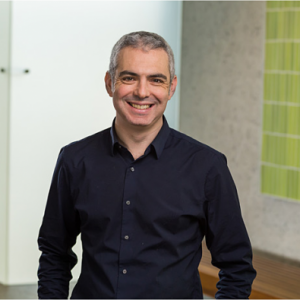
Daniel Steingart | Image
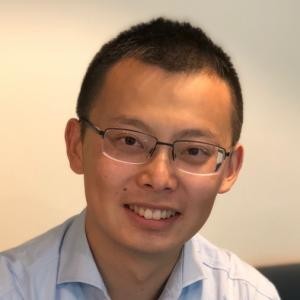
Bolun Xu |
Research and Work Experience Opportunities
Hands-on experience
At Columbia, you don’t have to wait until you graduate to start making a contribution. There are lots of opportunities to gain hands-on experience through research projects and summer internships.
Our faculty-run laboratories always need students to support them with their cutting-edge research spanning across areas such as electrochemical energy, carbon capture, climate modeling, materials recycling, and more.
Student Research Opportunities
Entrepreneurship
Considering launching a startup during your studies or after you graduate? Columbia Engineering Innovation, Design & Entrepreneurship team can help you develop the business acumen to successfully launch your venture.
The team offers specialist entrepreneurship courses, bootcamps, networking opportunities and spaces for prototyping and testing. They also organize competitions with opportunities to win seed funding. This community of talented professors, students and alumni will give you the network of support needed to achieve your entrepreneurial goals.
Entrepreneurship Opportunities
Related Programs

MS in Earth and Environmental Engineering
This MS program explores the most imminent challenges of our time - from sustainable energy and carbon management to safe and secure water and responsible resource management.
BS in Earth and Environmental Engineering
Prepare to apply the tools of engineering to address complex environmental challenges.
-
Program Educational Objectives
Graduates of the Chemical Engineering Program achieve success in one or more of the following within a few years of graduation:
- Careers in industries that require technical expertise in chemical engineering.
- Leadership positions in industries that require technical expertise in chemical engineering.
- Graduate-level studies in chemical engineering and related technical or scientific fields (e.g. biomedical or environmental engineering, materials science).
- Careers outside of engineering that take advantage of an engineering education, such as business, management, finance, law, medicine, or education.
- A commitment to life-long learning and service within their chosen profession.
-
Important Links
html Copy code
- Bulletin
- Old Chemical Engineering Study Plan*
- New Chemical Engineering Study Plan*
- Chemical Engineering Registration Form
- "Old" Chemical Engineering Technical Electives List
- "New" Chemical Engineering Technical Electives List
- Chemical Engineering Undergraduate Concentrations
- Course Equivalency Form for Combined Plan Students
- Course Equivalency Form for Transfer Students
- SEAS Outside/Summer Credit Approval Form
- Chemical Engineering Senior Thesis Guidelines
*Note: students in the Classes of 2026 & 2027 may choose to use either the "new" or "old" study plan. Students in the Class of 2028 and later are required to use the "New" study plan.
-
Student Outcomes
Upon graduation, we expect our students to have:
- An ability to identify, formulate, and solve complex engineering problems by applying principles of engineering, science, and mathematics.
- An ability to apply engineering design to produce solutions that meet specified needs with consideration of public health, safety, and welfare, as well as global, cultural, social, environmental, and economic factors.
- An ability to communicate effectively with a range of audiences.
- An ability to recognize ethical and professional responsibilities in engineering situations and make informed judgments, which must consider the impact of engineering solutions in global, economic, environmental, and societal contexts.
- An ability to function effectively on a team whose members together provide leadership, create a collaborative and inclusive environment, establish goals, plan tasks, and meet objectives.
- An ability to develop and conduct appropriate experimentation, analyze and interpret data, and use engineering judgment to draw conclusions.
- An ability to acquire and apply new knowledge as needed, using appropriate learning strategies.
-
Enrollment and Graduation Statistics
2018 2019 2020 2021 2022 2023 Sophomores 19 15 11 13 19 25 Juniors 38 30 23 19 17 22 Seniors 31 37 29 22 19 16 Total 88 82 63 54 55 63 2019 2020 2021 2022 2023 2024 Graduates 31 39 29 21 20 14
Undergraduate Financial Aid
What matters most to us is your ability to thrive at Columbia.
We offer plenty of financial options to support you through your journey with us. Learn more about the types of aid that are available.
Entrepreneurship
Considering launching a startup during your studies or after you graduate? Columbia Engineering Innovation, Design & Entrepreneurship team can help you develop the business acumen to successfully launch your venture.
The team offers specialist entrepreneurship courses, bootcamps, networking opportunities and spaces for prototyping and testing. They also organize competitions with opportunities to win seed funding. This community of talented professors, students and alumni will give you the network of support needed to achieve your entrepreneurial goals.
Entrepreneurship Opportunities
Why Study Earth and Environmental Engineering at Columbia?
As a student here, you’ll benefit from:
-
Field-Leading Faculty
Join a department full of active scholars publishing pioneering research in areas like energy-efficient desalination, resource recovery from waste materials, and AI-empowered climate modeling.
-
Research Opportunities & Project-Based Learning
Our curriculum offers the perfect balance of theory and practice.
From the Art of Engineering course in your first semester to your year-long senior design project, you'll learn how to apply engineering principles to solve real-world problems.
Opportunities to support faculty with external research projects will complement your studies and expand your theoretical understanding of this diverse and far-reaching field.
-
New York City
Studying in NYC will exposure you to diverse urban and natural environments, offering a perfect living laboratory to engage with issues like urban pollution and coastal management. A hub for research and industry, the city is an ideal place to find internships and make connections for your future.
-
Focus on Sustainability
Engage in problem solving at the intersection of natural and engineered systems by applying technical skills to critical water, energy, minerals, and decarbonization challenges.
-
ABET Accreditation
The BS in Earth and Environmental Engineering program is accredited by the Engineering Accreditation Commission of ABET, under the commission’s General Criteria and Program Criteria for Environmental Engineering and Similarly Named Engineering Programs.
ABET is a nonprofit organization that draws on industry experts to develop standards for education programs in science, computing, and engineering. Accreditation indicates that our program has met its rigorous standards for equipping engineering professionals for the field. -
Comprehensive Career Support
Our dedicated Assistant Director of Graduate Career Placement can provide you with expert advice both during your studies and after graduation. You’ll receive personalized career guidance, application support, tailored workshops, and access to exclusive job opportunities within the earth and environmental engineering sector and beyond.
With strong industry connections, we also facilitate networking events and internships that give you the experience and confidence to stand out in the competitive job market.
-
Major or Minor in Earth and Environmental Engineering
If you are interested in our department but want to major in another field, you can still minor in Earth and Environmental Engineering. Due to our broad and multidisciplinary scope, a number of our courses are already required across other engineering departments. As well as developing interdisciplinary knowledge, this structure will ensure your workload is manageable.
What Will I Learn?
Our curriculum is rooted in basic math, sciences and liberal arts. With a diverse selection of interdisciplinary courses to choose from, you’ll be able to tailor your studies to reflect your interests and career goals. These fundamentals will train you to address the technical and socio-economic challenges related to environmental problems.
Requirements
-
Application Requirements
What we look for:
- Transcripts and school reports. We accept all secondary school qualifications (AP, International Baccalaureate, Cambridge A Levels, National School curricula, etc.). We do not have standardized requirements or “cut-off” test scores for first-year admission but we do expect to see coursework in physics and calculus.
- Teacher recommendations. We would like to learn more about your contributions in the classroom and at school, as well as what you might offer to your Columbia classmates.
- Responses to our Columbia-specific application questions. Your answers will provide us with insight into your intellectual interests and the way in which your curiosity and sense of community might translate to Columbia’s campus.
- A personal statement. We review applications in context, taking into account the multiple, intersecting ways that you have been shaped by your family circumstances. Understanding who you are, what your home responsibilities are, whether you have experienced any systemic and situational barriers and advantages will ensure we can review your application fairly and accurately.
- English language proficiency. If your home language is not English or if your secondary school studies were predominantly in another language, you will need to provide evidence of your English language proficiency. Visit our English Proficiency Requirements for accepted exams and minimum score requirements.
-
Degree Requirements
BS in Earth and Environmental Engineering
To graduate from our BS program you must complete:
- 18 credits (approximately six courses) of technical Earth and Environmental Engineering electives during your final two years.
- The Columbia liberal arts core. This is typically satisfied during the first two years, although you can undertake non-technical electives during your final two years.
Minor in Earth and Environmental Engineering
To earn a minor in Earth and Environmental Engineering, you must complete:
- Six courses selected from a specified list approved by your undergraduate advisor.
Undergraduate Financial Aid
What matters most to us is your ability to thrive at Columbia.
We offer plenty of financial options to support you through your journey with us. Learn more about the types of aid that are available.
Combined Plan
Find out how you can earn a Liberal Arts degree at your current university and also a BS in Earth and Environmental Engineering from Columbia University.
Careers & Outcomes
With your multi-disciplinary training in earth and environmental engineering, you'll be well qualified to pursue careers in industry, government agencies, and organizations specializing in the environment and the provision of basic materials. As well as engineering, you can easily pivot into careers across law, policy, finance, consulting, and even medicine. Your training also provides a strong foundation for graduate studies, with many graduates advancing to MS and PhD programs across chemical, computer, climate, mechanical, materials, and environmental engineering.
Our graduates have found positions with employers including:
- STV
- U.S. Army Engineer Research and Development Center
- AECOM
- The Port Authority of New York
- ARUP
- NYS Department of Environmental Conservation
Department Faculty
Image
Daniel Steingart | Image
Bolun Xu |
Research and Work Experience Opportunities
Hands-on experience
At Columbia, you don’t have to wait until you graduate to start making a contribution. There are lots of opportunities to gain hands-on experience through research projects and summer internships.
Our faculty-run laboratories always need students to support them with their cutting-edge research spanning across areas such as electrochemical energy, carbon capture, climate modeling, materials recycling, and more.
Student Research Opportunities
Entrepreneurship
Considering launching a startup during your studies or after you graduate? Columbia Engineering Innovation, Design & Entrepreneurship team can help you develop the business acumen to successfully launch your venture.
The team offers specialist entrepreneurship courses, bootcamps, networking opportunities and spaces for prototyping and testing. They also organize competitions with opportunities to win seed funding. This community of talented professors, students and alumni will give you the network of support needed to achieve your entrepreneurial goals.
Entrepreneurship Opportunities
Related Programs
MS in Earth and Environmental Engineering
This MS program explores the most imminent challenges of our time - from sustainable energy and carbon management to safe and secure water and responsible resource management.

MS in Carbon Management
Master the mechanisms. technologies, and processes to sustainable resolve the global energy crisis.
How the BS/MS Dual Degree with Ecole Polytechnique Works
3
Years at Ecole Polytechnique
Ecole Polytechnique's Bachelor Program offers students the choice of three double tracks allowing them to customize their academic journey with a specialization in mathematics and either in economics, computer science or engineering and physical science.
Learn More2
Years at Columbia Engineering
Columbia's Master Program offers students the choice of ten master programs according to the double track choosen during their bachelor degree.
Master of Science Program Pathways
-
BS Double Degree: Maths and Physics
Available Master of Science programs:
- Applied Mathematics
- Applied Physics
- Biomedical Engineering
- Chemical Engineering
- Computer Engineering
- Computer Science
- Data Science
- Earth and Environmental Engineering
- Financial Engineering
- Materials Science
- Mechanical Engineering
- Operations Research
- Quantum Science and Technology
-
BS Double Degree: Maths and Computer Science
Available Master of Science programs:
- Applied Mathematics
- Biomedical Engineering
- Computer Engineering
- Computer Science
- Data Science
- Earth and Environmental Engineering
- Financial Engineering
- Materials Science
- Operations Research
- Quantum Science and Technology
-
BS Double Degree: Maths and Economics
Available Master of Science programs:
- Applied Mathematics
- Computer Science
- Data Science
- Earth and Environmental Engineering
- Financial Engineering
- Materials Science
- Operations Research
For information about the Master of Science portion of the program, contact Graduate Admissions.
Students interested in applying to the program must apply through the Ecole Polytechnique admissions process.
See Yourself at Columbia Engineering
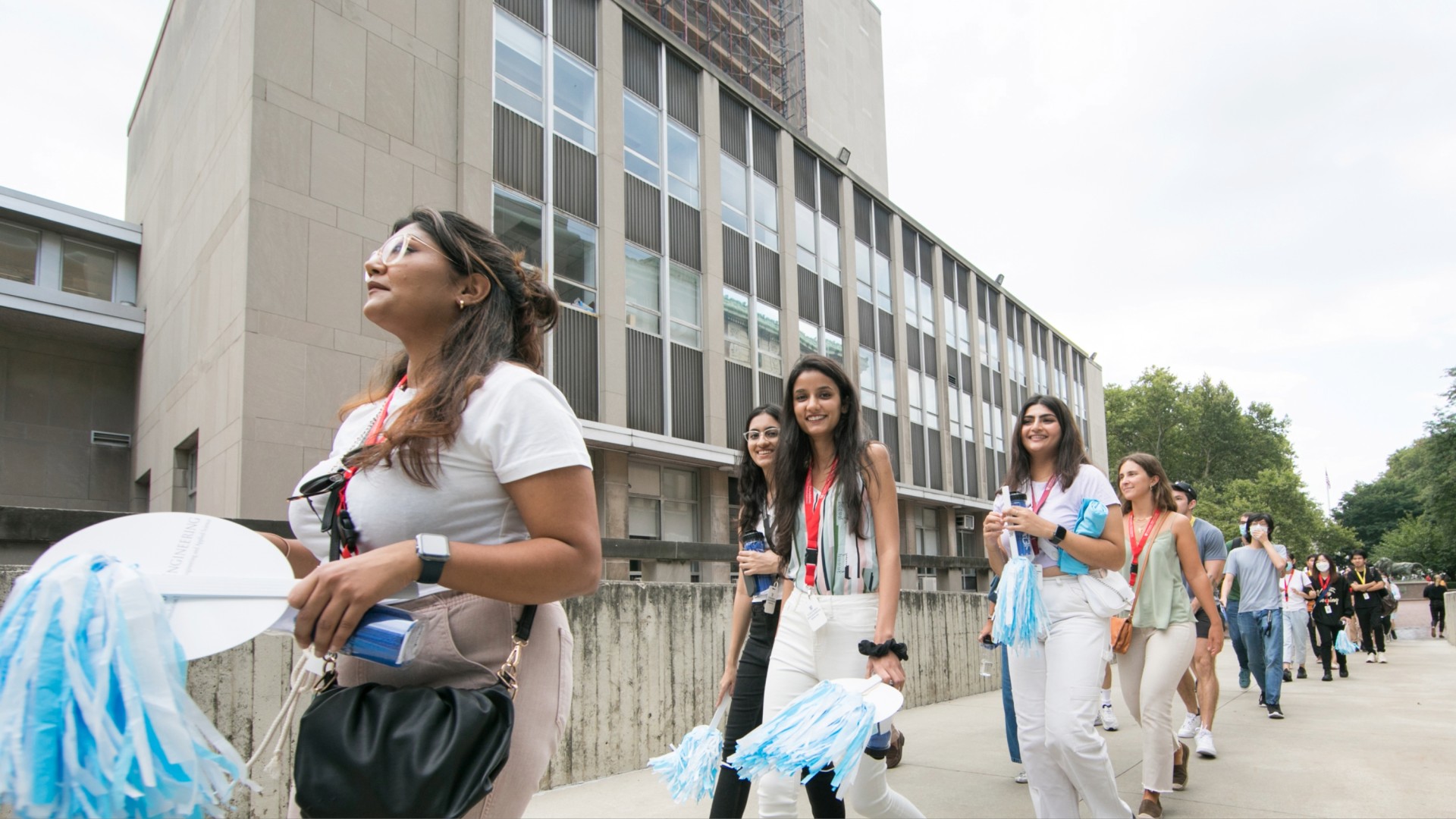
Graduate Student Life
From delving deeper into your engineering interests in a professional organization to exploring New York City with a group of friends, you’ll find your people and your place at Columbia Engineering.
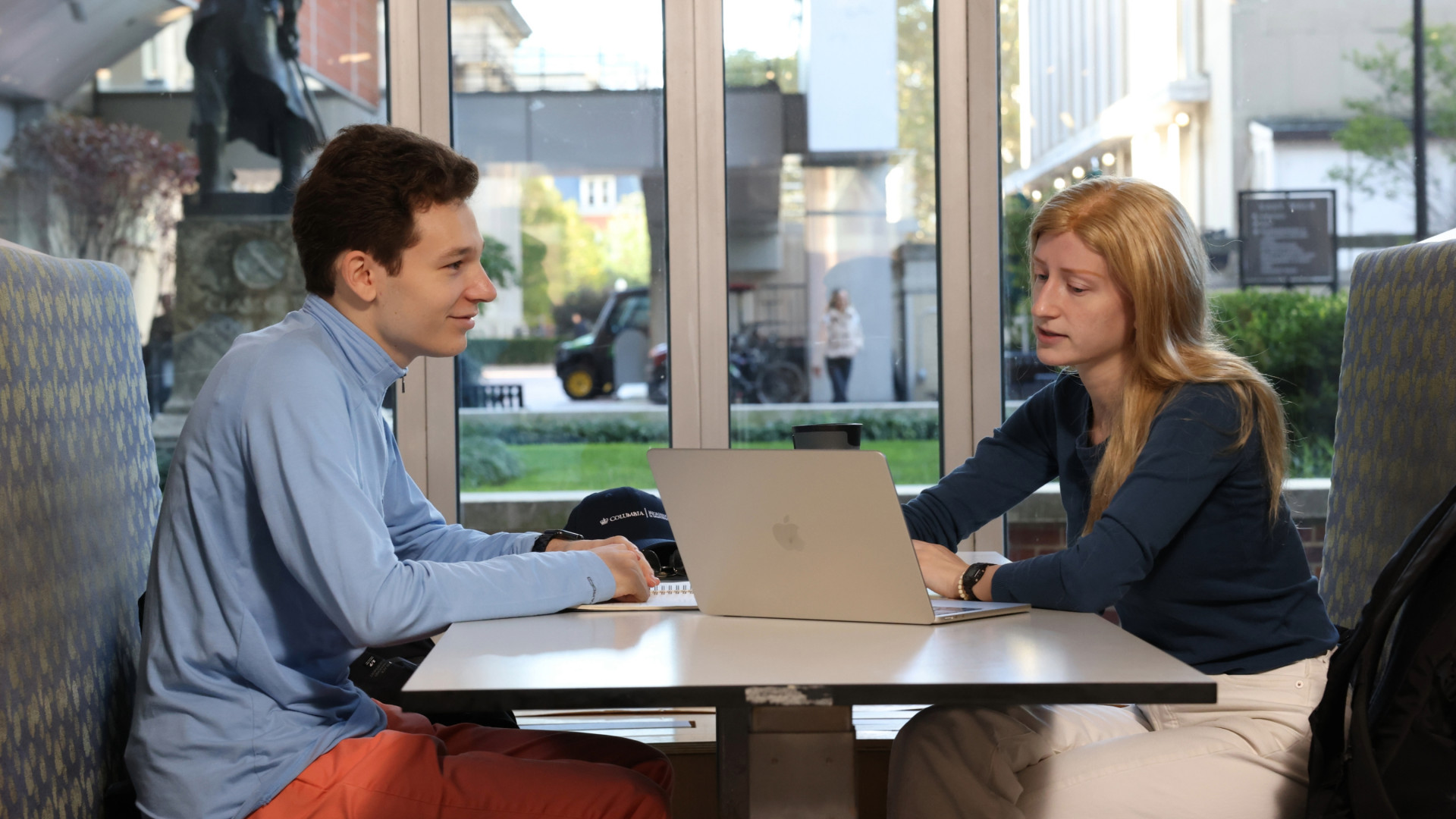
Career Placement
At every stage of the journey, we empower you to advance your career through training, information, strategic connections, advanced tools, and more.