Core Columbia University Partners

Columbia Engineering’s key partners at the University include the Data Science Institute (DSI), a leader in data science research with expertise in smart cities sensing, computer vision, human-computer interaction, and urban policy and management.

Other partners include:

  • Columbia’s Faculty of Arts and Sciences, which offers a wide range of expertise in data science education and workforce development, led by Statistics Professor and Department Chair Tian Zheng;
  • The School of International and Public Affairs (SIPA), which for more than 75 years has been educating professionals who work in public, private, and nonprofit organizations to make a difference in the world. SIPA’s participation in the project is led by Ester Fuchs, professor of international and public affairs and political science and director of the School’s Urban and Social Policy program, who emphasizes the importance of community engagement;
  • Columbia Technology Ventures, which is working closely with CS3 to foster the entrepreneurial spirit of the student body and faculty, and to cultivate institutional connections with industry.

Columbia Executive Vice President for Research Jeannette Wing, who is also a professor of computer science, noted, "When people from different perspectives and areas of expertise come together, sparks fly. Under the platform of CS3, this unique constellation of researchers and educators has the opportunity not only to ask questions they would never have been able to ask on their own, let alone answer, but they also get to connect dots across campuses and beyond the university gates."

National Impact

“For decades, NSF Engineering Research Centers have transformed technologies and fostered innovations in the United States through bold research, collaborative partnerships, and a deep commitment to inclusion and broadening participation," said NSF Director Dr. Sethuraman Panchanathan. “The new NSF centers will continue the legacy of impacts that improve lives across the Nation.”

“One strength of NSF Engineering Research Centers is their ability to bring interdisciplinary academic teams together in convergent research to identify novel approaches to thorny societal challenges," said Dr. Susan Margulies, NSF Assistant Director for Engineering. “With their unique testbeds and industry partners, the centers innovate and translate solutions that are effective and sustainable.”

Columbia Engineering

Columbia Engineering, based in New York City, is one of the top engineering schools in the U.S. and one of the oldest in the nation. Also known as The Fu Foundation School of Engineering and Applied Science, the School expands knowledge and advances technology through the pioneering research of its more than 250 faculty, while educating undergraduate and graduate students in a collaborative environment to become leaders informed by a firm foundation in engineering. The School’s faculty are at the center of the University’s cross-disciplinary research, contributing to the Data Science Institute, Earth Institute, Zuckerman Mind Brain Behavior Institute, Precision Medicine Initiative, and the Columbia Nano Initiative. Guided by its strategic vision, “Columbia Engineering for Humanity,” the School aims to translate ideas into innovations that foster a sustainable, healthy, secure, connected, and creative humanity.

NSF

The U.S. National Science Foundation propels the nation forward by advancing fundamental research in all fields of science and engineering. NSF supports research and people by providing facilities, instruments and funding to support their ingenuity and sustain the U.S. as a global leader in research and innovation. With a fiscal year 2022 budget of $8.8 billion, NSF funds reach all 50 states through grants to nearly 2,000 colleges, universities and institutions. Each year, NSF receives more than 40,000 competitive proposals and makes about 11,000 new awards. Those awards include support for cooperative research with industry, Arctic and Antarctic research and operations, and U.S. participation in international scientific efforts. www.nsf.gov

About the Study

Journal: Environmental Science: Advances

Title: “Microbial nanocellulose biotextiles for a circular materials economy.”

Authors: Theanne N. Schiros12, Romare Antrobus23, Delfina Far´ias1, Yueh-Ting Chiu3, Christian Tay Joseph2, Shanece Esdaille2, Gwen Karen Sanchirico1, Grace Miquelon1, Dong An4, Sebastian T. Russell4, Adrian M. Chitu5, Susanne Goetz6, Anne Marika Verploegh Chasse7, Colin Nuckolls8, Sanat K. Kumar4, and Helen H. Lu23.

  1. Department of Science and Mathematics, Fashion Institute of Technology, New York, NY 10001, USA
  2. Materials Research Science and Engineering Center, Columbia University, New York, NY 10027, USA
  3. Department of Biomedical Engineering, Columbia University, New York, NY 10027, USA
  4. Department of Chemical Engineering, Columbia University, New York, NY 10027, USA
  5. Materials Science and Engineering, Columbia University, New York, NY 10027, USA
  6. Surface/Textile Design, Fashion Institute of Technology, New York, NY 10001, USA
  7. Footwear and Accessories Design, Fashion Institute of Technology, New York, NY 10001, USA
  8. Department of Chemistry, Columbia University, New York, NY 10027, USA

The study was supported by National Science Foundation, MRSEC program through Columbia on Precision-Assembled Quantum Materials (PAQM), grant DMR-2011738 (TNS, RA, Y-TC, HHL, CTJ, SE, DA, STR), the National Institutes of Health, grant NIH-NIAMS 1R01-AR07352901 (HHL), and a DoD CDMRP award, grant W81XWH-15-1-0685 (HHL).

COI: The authors declare no financial or other conflicts of interest.

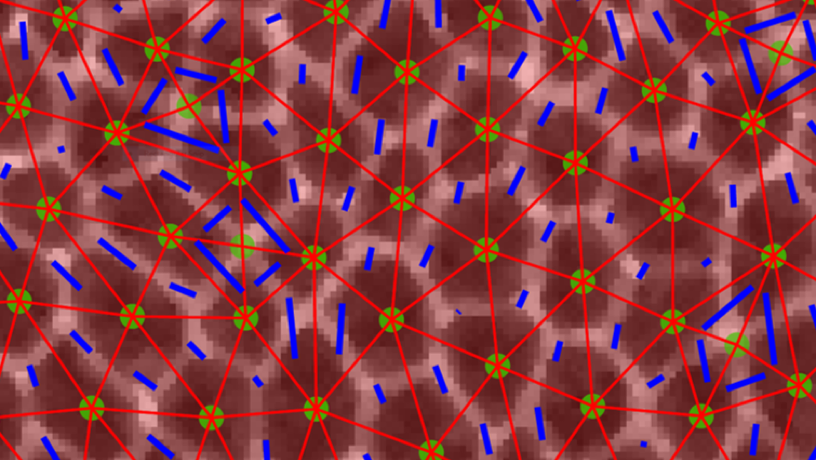
After validating a number of other physical systems with known solutions, the researchers fed videos of systems for which they did not know the explicit answer. The first videos featured an “air dancer” undulating in front of a local used car lot. After a few hours of analysis, the program returned 8 variables. A video of a Lava lamp also produced 8 eight variables. They then fed a video clip of flames from a holiday fireplace loop, and the program returned 24 variables.

A particularly interesting question was whether the set of variable was unique for every system, or whether a different set was produced each time the program was restarted. “I always wondered, if we ever met an intelligent alien race, would they have discovered the same physics laws as we have, or might they describe the universe in a different way?” said Lipson. “Perhaps some phenomena seem enigmatically complex because we are trying to understand them using the wrong set of variables.” In the experiments, the number of variables was the same each time the AI restarted, but the specific variables were different each time. So yes, there are alternative ways to describe the universe and it is quite possible that our choices aren’t perfect.

The researchers believe that this sort of AI can help scientists uncover complex phenomena for which theoretical understanding is not keeping pace with the deluge of data—areas ranging from biology to cosmology. “While we used video data in this work, any kind of array data source could be used—radar arrays, or DNA arrays, for example,” explained Kuang Huang PhD ’22, who coauthored the paper.

The work is part of Lipson and Fu Foundation Professor of Mathematics Qiang Du’s decades-long interest in creating algorithms that can distill data into scientific laws. Past software systems, such as Lipson and Michael Schmidt’s Eureqa software, could distill freeform physical laws from experimental data, but only if the variables were identified in advance. But what if the variables are yet unknown?

Lipson, who is also the James and Sally Scapa Professor of Innovation, argues that scientists may be misinterpreting or failing to understand many phenomena simply because they don’t have a good set of variables to describe the phenomena. “For millennia, people knew about objects moving quickly or slowly, but it was only when the notion of velocity and acceleration was formally quantified that Newton could discover his famous law of motion F=MA,” Lipson noted. Variables describing temperature and pressure needed to be identified before laws of thermodynamics could be formalized, and so on for every corner of the scientific world. The variables are a precursor to any theory. “What other laws are we missing simply because we don’t have the variables?” asked Du, who co-led the work.

The paper was also co-authored by Sunand Raghupathi and Ishaan Chandratreya, who helped collect the data for the experiments. Since July 1, 2022, Boyuan Chen has been an assistant professor at Duke University. The work is part of a joint University of Washington, Columbia, and Harvard NSF AI institute for dynamical systems, aimed to accelerate scientific discovery using AI.

About the study

Journal: Nature Computational Science

Title: Discovering State Variables Hidden in Experimental Data.

Authors: Boyuan Chen, Kuang Huang, Sunand Raghupathi, Ishaan Chandratreya, Qiang Du, Hod Lipson

The study was supported by NSF AI Institute for Dynamical Systems 2112085, DARPA MTO Lifelong Learning Machines (L2M) Program W911NF-21-2-0071, and NSF NRI Award 1925157, NSF DMS 1937254, NSF DMS 2012562, NSF CCF 1704833, DE SC0022317, and DOE ASCR DE SC0022317.

COI: The authors declare no financial or other conflicts of interest.

About the Study

Conference: USENIX Symposium on Operating Systems Design and Implementation (OSDI '22), July 11-13, 2022, Carlsbad, CA

Title: Design and Verification of the Arm Confidential Compute Architecture

Authors: Xupeng Li, Xuheng Li, Christoffer Dall, Ronghui Gu, Jason Nieh, Yousuf Sait, and Gareth Stockwell.

This work was supported in part by Arm, OPPO, an Amazon Research Award, a Guggenheim Fellowship, DARPA contract N66001-21-C-4018, and NSF grants CCF-1918400, CNS-2052947, and CCF-2124080.

COI: Ronghui Gu is the founder of and has an equity interest in CertiK. The other authors declare no financial or other conflicts of interest.

Subscribe to Research