Research
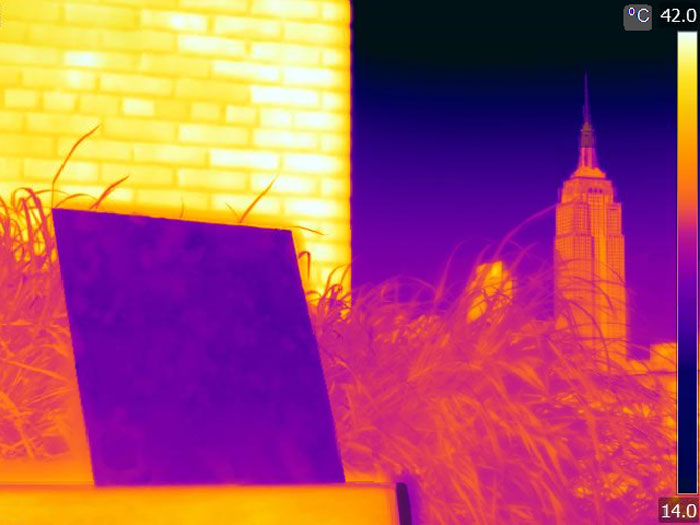
Polymer Coating Cools Down Buildings
September 27, 2018
Research
September 27, 2018
Beginning in Fall 2027, the program will admit only full-time M.S. students. Students entering a medical physics graduate educational program shall have a strong foundation in basic physics. This shall be demonstrated either by an undergraduate degree in physics, or by a degree in an engineering discipline, or another of the physical sciences, and a minimum of three fundamental upper-level physics courses taught through a physics department. Examples of fundamental physics courses include, but are not limited to: classical mechanics, modern physics, quantum mechanics, electromagnetism, statistical physics, thermodynamics, optics, nuclear/particle physics, and astrophysics (see below). GRE exam scores are not required. The Physics GRE is recommended. Proficiency in written and spoken English and a working knowledge of computer programming, probability, and statistics are also required.
A list of qualified courses are:
The priority deadline for applications for full-time study is February 15. Applications received by June 30 will be considered on a space-available basis. For more information, please see Graduate Admissions. Applicants are asked to inform the Medical Program Coordinator at [email protected] following the submission of an online application.
As a rule, assistantships, grants, scholarships, and fellowships are not available to students in master's degree programs, including the medical physics program. U.S. citizens and permanent residents may be eligible to receive federal student loans. Please see the FAQ for additional information.
The Program consists of a core curriculum of medical and nuclear physics courses, a laboratory course, anatomy, two practicums, a tutorial, one elective, and a seminar. Specific course requirements are:
Opportunities for specialization exist via the choice of elective courses and practicums. In addition, a fourth semester option exists.
A passing grade on a medical physics comprehensive examination is required for graduation with a Master of Science degree in Medical Physics. This closed-book written exam is offered twice a year, in December and May, following the last semester of studies and consists of 6 questions covering the required course work taken during the program.
In order to be allowed to participate in a practicum at the New York Presbyterian Hospital at the Columbia University Medical Center, students in the Columbia Medical Physics Program must complete an on-line course that leads to HIPAA compliance certification. They must also comply with hospital-mandated medical surveillance, which includes drug screening: http://www.cumc.columbia.edu/hr/policies-procedures/medical-surveillance
Successful completion of two online ethics courses, offered without charge to students enrolled in our Program, is required for graduation.
The following courses are required for the full-time program.
(Schedule subject to change)
First Fall Courses
Spring Courses
Summer Courses
Second Fall Courses
Practicums (2 required)
A grade of B+ or better in the prerequisite course, adjusted at the discretion of the instructor, and permission of instructor and advisor are required for each practicum. Students register for the practicum in the Fall or the Spring term; the work for 2 of the 4 praticums may be done in the Summer term.
Electives (3 pts. required)
Optional Course
Our CAMPEP-accredited Certificate of Professional Achievement in Medical Physics is designed for professionals who have a PhD in physics or a related discipline and who wish to become eligible to apply for the medical physics examinations given by the American Board of Radiology (ABR).
As stated on the ABR website, to be eligible for Part 1 of the ABR Examination, applicants "must be enrolled in and in good standing with, or have graduated from, a CAMPEP-accredited program," which specifically includes CAMPEP-accredited certificate programs like Columbia's.
Furthermore, prior to taking Part 2 of the ABR Examination, applicants are required to have completed a two-year residency in medical physics which consists of a clinical and an academic component. By successfully completing Columbia’s non-degree certificate program an applicant will have satisfied the academic component already.
This part-time program requires satisfactory completion of six of the following courses:
Certificate students are allowed to waive a course based on prior equivalent academic work but another 3-point course must be substituted for the waived course.
Doctoral degree in physics, applied physics, or one of the physical sciences is required. An applicant who was not a physics major as an undergraduate, or who does not have an advanced degree in physics, must have taken physics training at least equivalent to a minor. This training must include at least three upper level physics courses, which, if taken after completion of the undergraduate degree, must have been taken at an accredited four-year college. Completion of course prerequisites is also required.
When appropriate, certificate program requirements are updated to conform to guidelines set by CAMPEP and by policies set by the ABR.
Because Columbia's online application system is usually changed in July from the current admissions cycle to the next one, applicants for the Certificate Program who apply in July, must contact the Medical Physics Program Coordinator at [email protected].
The CAMPEP-accredited Certificate of Professional Achievement in Medical Physics is a part-time program that does not support visa applications and is exclusively available to U.S. citizens and residents. Our program does not offer any financial support.
Columbia, one of the leading university centers for training in plasma physics, offers a graduate program leading to the Master of Science (MS), Master of Philosophy (MPhil), Doctor of Philosophy (PhD) and Doctor of Engineering Science (EngScD or DES) degrees. The program builds a foundation in the science and application of plasma physics and features a specialty in the high-temperature plasma physics needed for controlled fusion energy. Besides a sound basic training in relevant areas of applied physics, students develop expertise in experimental, theoretical, and computational plasma physics. This instruction provides the background needed to conduct research in Columbia University’s Plasma Research Laboratory and in other national plasma research facilities. Since its inception in 1960, the program at Columbia has granted more than 110 doctoral degrees with many of our graduates playing leading roles in all phases of plasma physics, including, in particular, the worldwide program to develop controlled fusion energy.
Degree Requirements for Master of Science (MS) in Applied Physics
Degree Requirements for Doctor of Philosophy (PhD) in Applied Physics: Plasma Physics
Degree Requirements for Doctor of Engineering Science (EngScD or DES) in Applied Physics: Plasma Physics
Core Courses
Related Courses of Specialization
Plasma Physics Faculty
Allen H. Boozer
Gerald A. Navratil
Elizabeth Paul
Carlos Paz-Soldan - AP Academic Program Coordinator
Ben Zhu
Research Scientists and External Advisors
Admitted students may work with scientific advisors external to the applied physics faculty, as long as student secures funding from said faculty. Examples of other researchers or faculty external to the department include:
Steven Sabbagh, Adjunct Professor & Research Scientist/PPPL
Solid State Physics Graduate Specialty
This graduate specialty encompasses the study of the electrical, optical, magnetic, thermal, high-pressure, and ultrafast dynamical properties of solids, with an aim to understanding them in terms of the atomic and electronic structure. The field emphasizes the formation, processing, and properties of thin films, low-dimensional structures—such as one- and two-dimensional electron gases, nanocrystals, surfaces of electronic and optoelectronic interest, and molecules. Facilities include a microelectronics laboratory, high-pressure diamond anvil cells, a molecular beam epitaxy machine, ultrahigh vacuum systems, lasers, equipment for the study of optical properties and transport on the nanoscale, and the instruments in the shared facilities overseen by the Columbia Nano Initiative. There are also significant resources for electrical and optical experimentation at low temperatures and high magnetic fields. Specific course requirements for the solid-state physics doctoral specialization are set with the academic adviser, in consultation with the Committee on Materials Science and Engineering/Solid-State Science and Engineering.
Optical Physics Graduate Specialty
This graduate specialty involves a basic training in relevant areas of applied physics with emphasis in quantum mechanics, quantum electronics, and related areas of specialization. Some active areas of research in which the student may concentrate are laser modification of surfaces, optical diagnostics of film processing, inelastic light scattering in nanomaterials, nonlinear optics, ultrafast optoelectronics photonic switching, optical physics of surfaces, and photon integrated circuits. Specific course requirements for the optical and laser physics doctoral specialization are set with the academic adviser.
Degree Requirements for Master of Science (MS) in Applied Physics
APPH E4018: Applied physics laboratory (2 pts)
APPH E4112: Laser physics (3 pts)
ELEN E4301: Introduction to semiconductor devices (3 pts)
ELEN E6331-2: Principles of semiconductor physics I and II (3 pts)
MSAE E4206: Electronic and magnetic properties of solids (3 pts) or their equivalent for solid state
Students with an interest in Optical Physics should take the following courses:
APPH E4018: Applied physics laboratory (2 pts)
APPH E4100: Quantum physics of matter (3 pts)
APPH E4110: Modern optics (3 pts)
APPH E4112: Laser physics (3 pts)
APPH E6110: Laser interactions with matter (3 pts)
ELEN E9402: Seminar in quantum electronics (3 pts) or their equivalent for optical physics
Degree Requirements for Doctor of Philosophy (PhD) in Applied Physics: Solid State or Optical Physics
Degree Requirements for Doctor of Engineering Science (EngScD or DES) in Applied Physics: Solid State or Optical Physics
Core Courses
Related Courses of Specialization
Solid-State Physics and Optical & Laser Physics Faculty
William E. Bailey
Siu-Wai Chan
Aravind Devarakonda
Alexander Gaeta
Oleg Gang
James S. Im
Chris A. Marianetti
I.C. Noyan
Latha Venkataraman
Nanfang Yu
Xueyue (Sherry) Zhang
Multidisciplinary and External Advisors
Admitted students may work with scientific advisors external to the applied physics faculty, as long as student secures funding from said faculty.
Have a question? Feel free to contact our Student Services Coordinator or reach out to a 1st Year Doctoral Applied Physics Advisor.
Students wishing to pursue an MS degree which continues directly into a PhD program, should apply to the MS / PhD Track Program in Materials Science and Engineering in the Department of Applied Physics and Applied Mathematics. Students who have already earned an MS degree should apply to the Doctor of Philosophy (PhD) or the Doctor of Engineering Science (EngScD or DES) degree programs. Financial aid is available for students pursuing a doctorate. Fellowships, scholarships, teaching assistantships, and graduate research assistantships are awarded on a competitive basis.
For more information, please see the Columbia Engineering Bulletin: Materials Science and Engineering (EngScD, PhD)
At the end of the first year of graduate study in the doctoral program, candidates are required to take a comprehensive written qualifying examination, which is designed to test the ability of the candidate to apply course work in problem solving and creative thinking. The standard is first-year graduate level. There are two four-hour examinations over a two-day period. Candidates in the program must take an oral examination within one year of taking the qualifying examination. Within two years of taking the qualifying examination, candidates must submit a written proposal and defend it orally before a Thesis Proposal Defense Committee consisting of three members of the faculty, including the adviser. Doctoral candidates must submit a thesis to be defended before a Dissertation Defense Committee consisting of five faculty members, including two professors from outside the doctoral program. Requirements for the EngScD (administered by the School of Engineering and Applied Science) and the PhD (administered by the Graduate School of Arts and Sciences) are listed elsewhere in the SEAS bulletin.
The requirements for the Doctor of Engineering Science ( EngScD or DES) in Materials Science and Engineering
Solid-state science and engineering is an interdepartmental graduate specialty that provides coverage of an important area of modern technology that no single department can provide. It encompasses the study of the full range of properties of solid materials, with special emphasis on electrical, magnetic, optical, and thermal properties. The science of solids is concerned with understanding these properties in terms of the atomic and electronic structure of the materials in question. Insulators (dielectrics), semiconductors, ceramics, and metallic materials are all studied from this viewpoint. Quantum and statistical mechanics are key background subjects. The engineering aspects deal with the design of materials to achieve desired properties and the assembling of materials into systems to produce devices of interest to modern technology, e.g., for computers and for energy production.
The graduate specialty in solid-state science and engineering includes research programs in semiconductor nanocrystals; optics of semiconductors and nanomaterials; molecular beam epitaxy leading to semi-conductor devices; metamaterials and infrared optoelectronic devices (Prof. Nanfang Yu, Applied Physics and Applied Mathematics); and inelastic light scattering in low-dimensional electron gases within semiconductors); large-area electronics and thin-film transistors (Prof. James Im, Henry Krumb School of Mines/Applied Physics and Applied Mathematics); structural analysis and high Tc superconductors (Prof. Siu-Wai Chan, Henry Krumb School of Mines/Applied Physics and Applied Mathematics); X-ray microdiffraction and stresses (Prof. I. C. Noyan, Henry Krumb School of Mines/Applied Physics and Applied Mathematics); electronic and magnetic metal thin films; magnetic properties of thin films (Prof. William Bailey, Applied Physics and Applied Mathematics); the structure of nanomaterials); electronic structure calculations of materials (Prof. Chris Marianetti, Applied Physics and Applied Mathematics); ultrafast nonlinear optics and nanophotonics (Prof. Alexander Gaeta, Applied Physics and Materials Science and Engineering); and silicon photonics (Prof. Michal Lipson, Electrical Engineering and Applied Physics).
Program of Study
The applicant for the graduate specialty must be admitted to one of the participating programs: applied physics and applied mathematics, or electrical engineering. A strong undergraduate background in physics or chemistry and in mathematics is important.
The doctoral student must meet the formal requirements for the EngScD or PhD degree set by the department in which he or she is registered. However, the bulk of the program for the specialty will be arranged in consultation with a member of the interdepartmental Committee on Materials Science and Engineering/ Solid-State Science and Engineering. At the end of the first year of graduate study, doctoral candidates are required to take a comprehensive written examination concentrating on solid-state science and engineering.
The following are regarded as core courses of the specialty:
APPH E4100: Quantum physics of matter (3 pts)
APPH E4110: Modern Optics (3 pts)
APPH E4112: Laser physics (3 pts)
APPH-MSAE E6081-E6082: Solid state physics, I and II (3 pts)
CHEM GU4230: Statistical thermodynamics (4.5 pts)
or
CHAP E4120: Statistical mechanics (3 pts)
ELEN E4301: Introduction to semiconductor devices (3 pts)
ELEN E4944: Principles of device microfabrication (3 pts)
ELEN E6331-E6332: Principles of semiconductor physics (3 pts)
ELEN E6403: Classical electromagnetic theory (4.5 pts)
or
PHYS GR6092: Electromagnetic theory, I (4.5 pts)
MSAE E4100: Crystallography (3 pts)
MSAE E4206: Electronic and magnetic properties of solids (3 pts)
MSAE E4207: Lattice vibrations and crystal defects (3 pts)
MSAE E6220: Crystal physics (3 pts)
MSAE E6240: Impurities and defects in semiconductor materials
MSAE E6241: Theory of solids
PHYS GR6018: Physics of the solid state
PHYS GR6037: Quantum mechanics
For for engineers who wish to do advanced work beyond the level of the MS degree, but who do not desire to emphasize research, please learn more about our Professional Degree: Metallurgical Engineer
Have a question? Feel free to contact our Student Services Coordinator or reach out to the Materials Science & Engineering 1st Year Doctoral Advisor.