Campus
Climate Week 2025 in Photos
At this year’s Climate Week NYC, Columbia Engineering convened conversations on the breakthroughs reshaping our path to sustainability.
Columbia Engineering participated in Climate Week NYC, September 22-26, by hosting nine events that brought together an international group of experts leading the charge in creating long-term solutions to our environmental challenges.
“At this year’s Climate Week, we celebrated new centers, new projects, and ongoing collaborations across Columbia and with external partners focused on building a more sustainable future,” said Shih-Fu Chang, dean of Columbia Engineering. “This type of cooperation is what we need to address our biggest climate challenges and help build a green economy.”
Insuring a Changing World

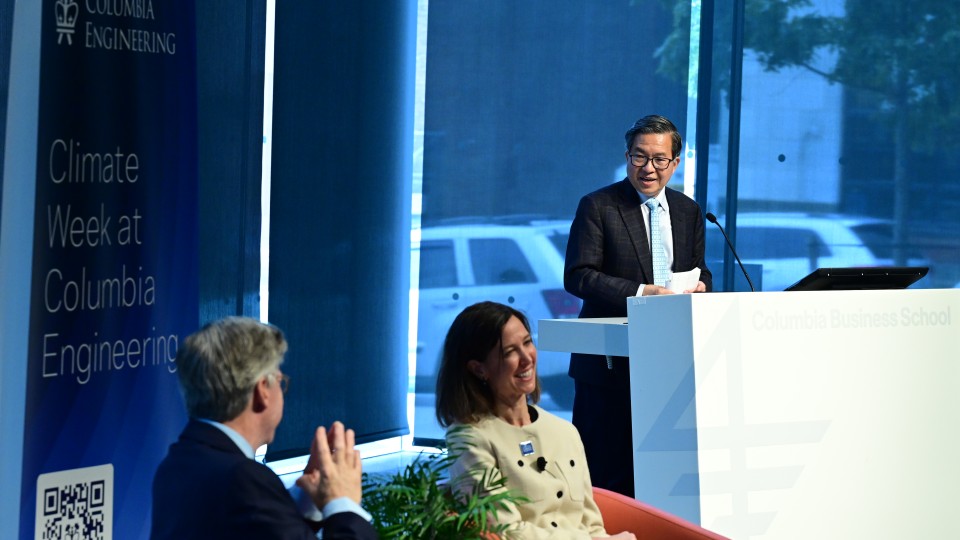
Columbia Engineering kicked off NYC Climate Week 2025 with the latest installment of our Tech CEO Lecture Series. Alongside co-hosts Columbia Business School and Columbia Climate School, we welcomed Engineering alumnus Alexander Sarrigeorgiou BS‘79, MS‘80, who is chairman and CEO at Eurolife FFH Insurance Group. In a fireside chat with Climate School Dean Alexis Abramson, Sarrigeorgiou discussed how climate change and AI are influencing how society manages risk.
Read more here.
Open-source Hub for Sustainable Materials

Leaders from across New York City gathered to launch Gotham Foundry, a hub designed to accelerate the development of new sustainable materials and educate the next generation of biomanufacturing and green workforce professionals. The launch event included a biomaterials exhibition, a fashion show featuring young designers, and remarks by representatives from the City, the NYC Economic Development Corporation (NYCEDC), Columbia, FIT, CUNY, Genspace, and SoHarlem.
The multi-institutional endeavor underscores NYCEDC’s ongoing commitment to foster deep tech startups and fuel next-generation innovation and leverages Columbia Engineering’s extensive expertise in sustainable and novel materials. Gotham Foundry is initially located at Harlem Biospace on Columbia Engineering’s Manhattanville campus in West Harlem.
Visit the Gotham Foundry website.
Better Data for Clean Air
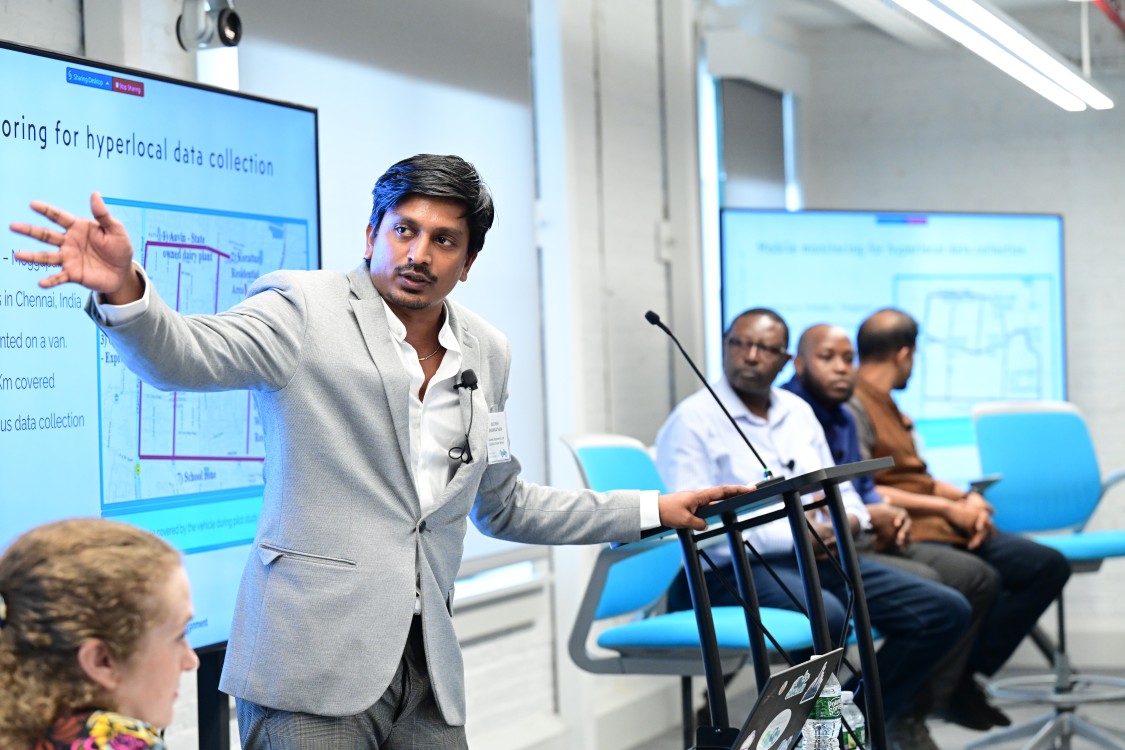
This international panel highlighted creative and innovative work at the interface of environmental science, engineering, public health, data science, economics, policy, and community engagement.
Learn more about the Clean Air Toolbox for Cities.
CEEC Symposium
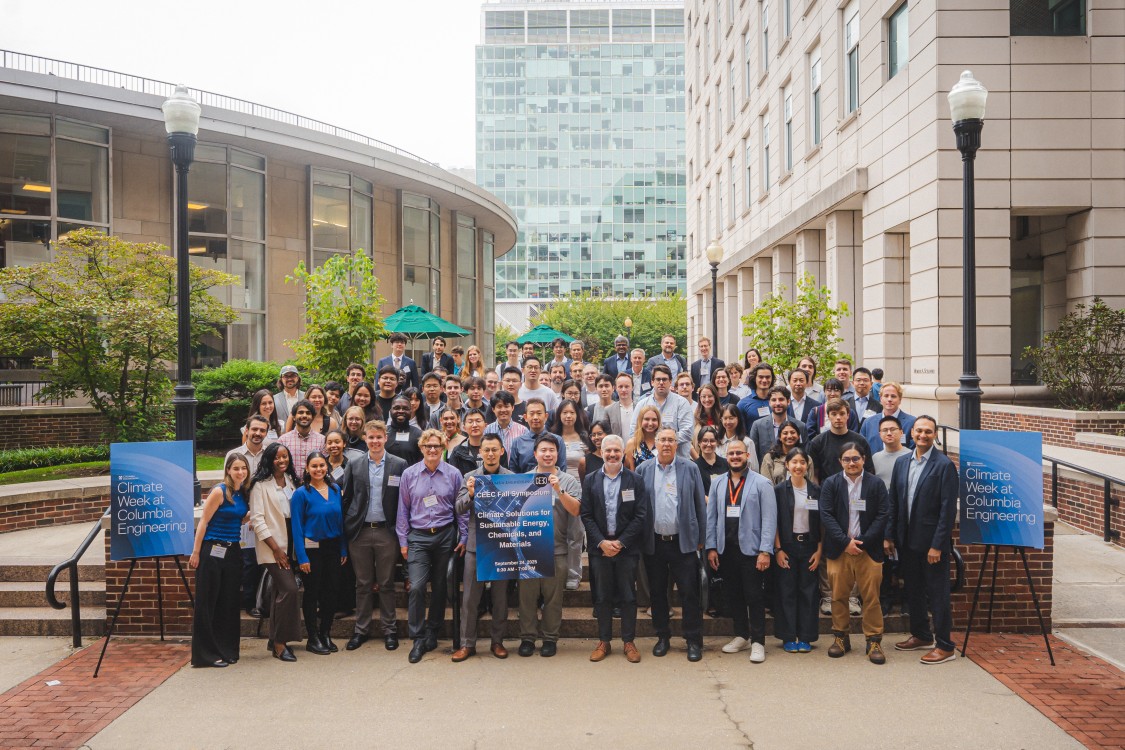
The Columbia Electrochemical Energy Center hosted its fourth annual symposium, featuring research reports and talks on scaling electrochemical technology, optimizing the operation of electrochemical devices, and securing a reliable supply of critical materials.
Learn more about the Columbia Electrochemical Energy Center.
The Race to Fusion Energy
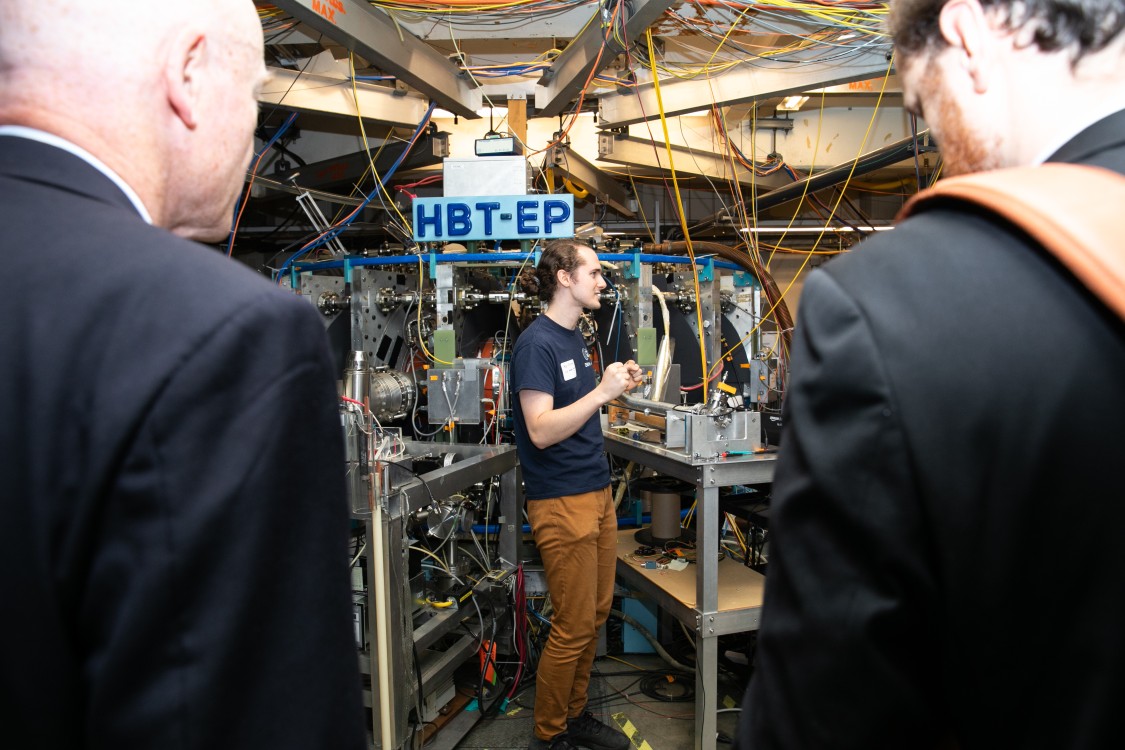
The Columbia Fusion Research Center convened an international panel of experts, policymakers, and business leaders to explore the mix of cooperation and competition that defines today’s international fusion landscape. Founded earlier this year, the center builds on Columbia’s longstanding legacy of fusion research and aims to play an instrumental role in making fusion a practical source of energy.
“This is one of the first university centers focused on supporting the fusion industry’s growth,” said Carlos Paz-Soldan, associate professor of applied physics and applied mathematics and director of the Fusion Research Center. “We’re not just pursuing academic milestones — we’re working closely with companies to accelerate their progress and guide our academic work."
Learn more about the Columbia Fusion Research Center.
Rethinking Water 2025
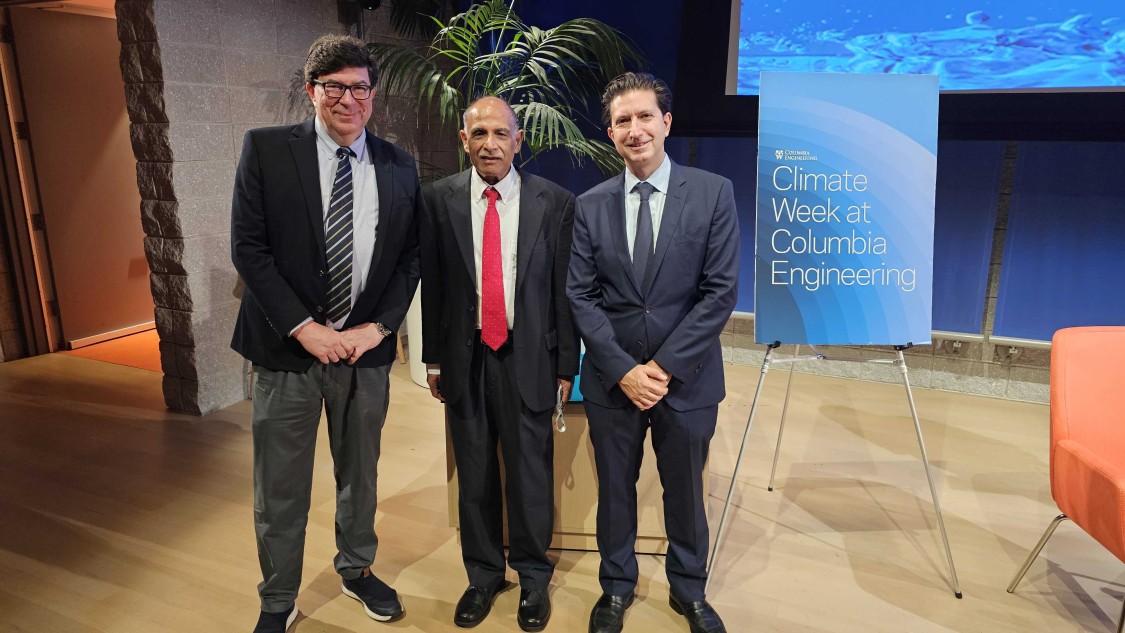
Now in its sixth year, this hallmark event brought together leaders from finance, academia, government, and industry to find solutions to the most pressing water challenges in the United States.
Using Generative AI for Climate Science
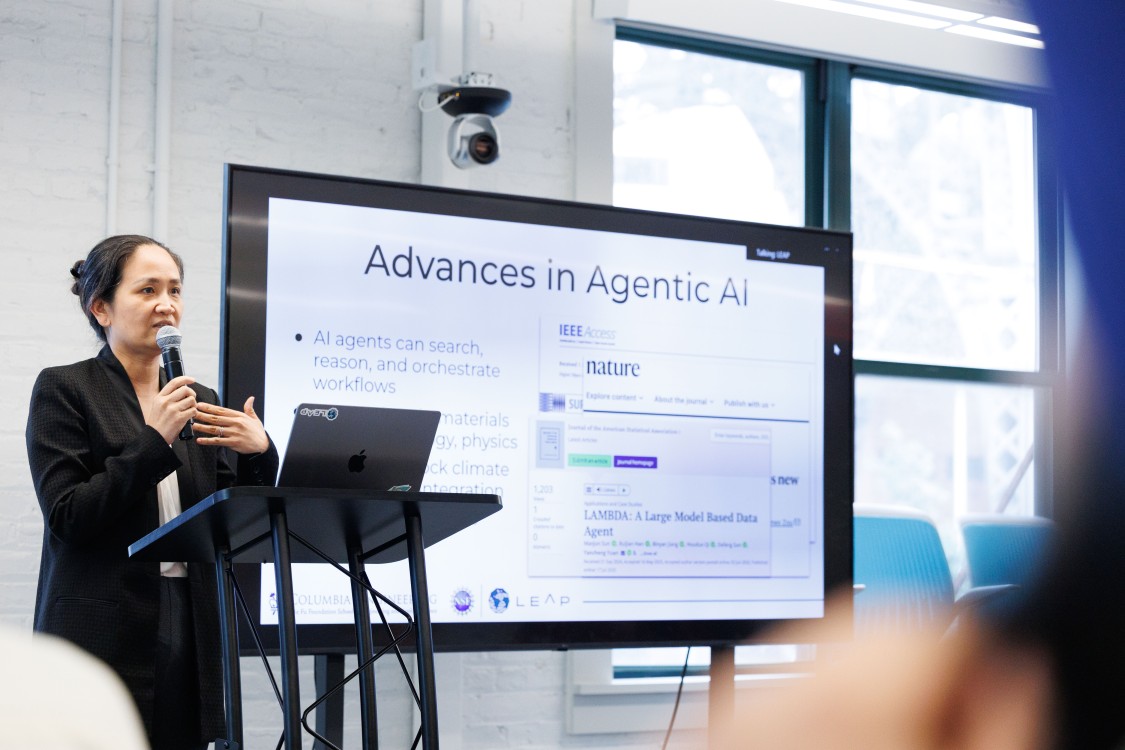
LEAP, an NSF-funded center advancing the field of climate data science, hosted an interdisciplinary panel that brought together leading experts from academia, industry, and technology to explore how GenAI is reshaping key areas of climate science, including ocean modeling and data assimilation, climate emulation, and real-time chatbot interfaces.
Center of Advanced Electrification Fall Symposium
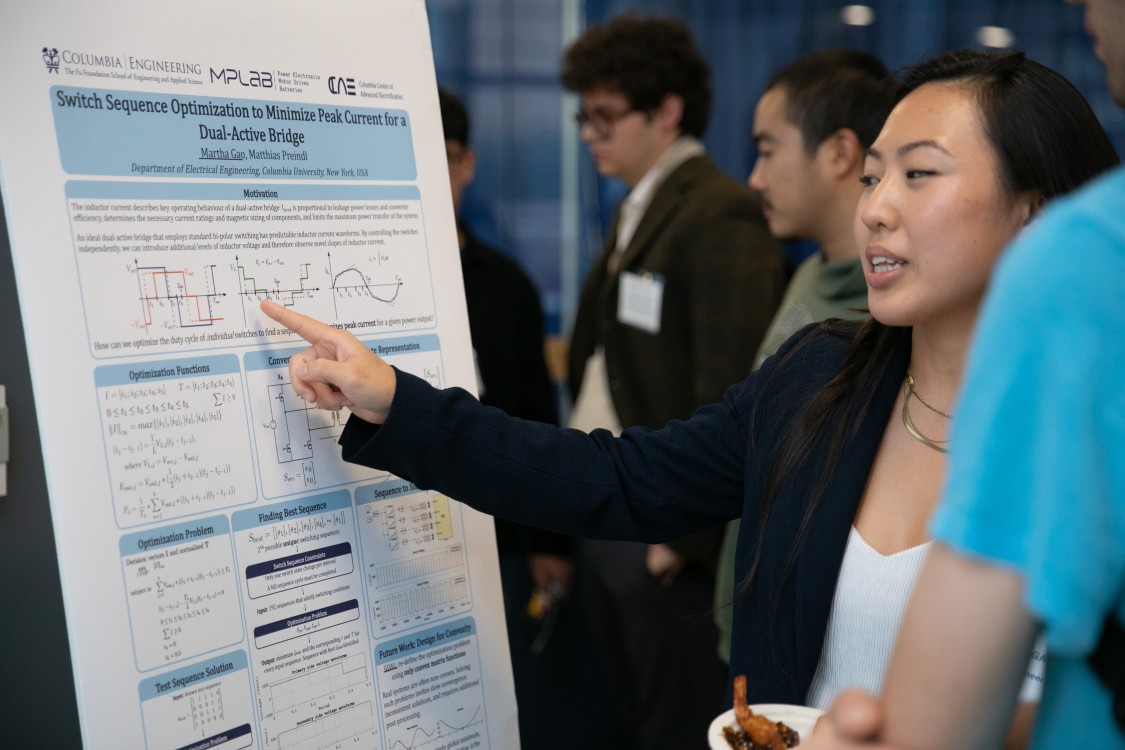
At its inaugural symposium, the Columbia Center of Advanced Electrification (CCAE) hosted conversations and research presentations on power electronics, electrification, and the future of the global energy system.
Read more about the symposium.