Research
Spotlight on Women’s Health Research
New York media highlights the Myers Soft Tissue Lab's work in preventing preterm births.
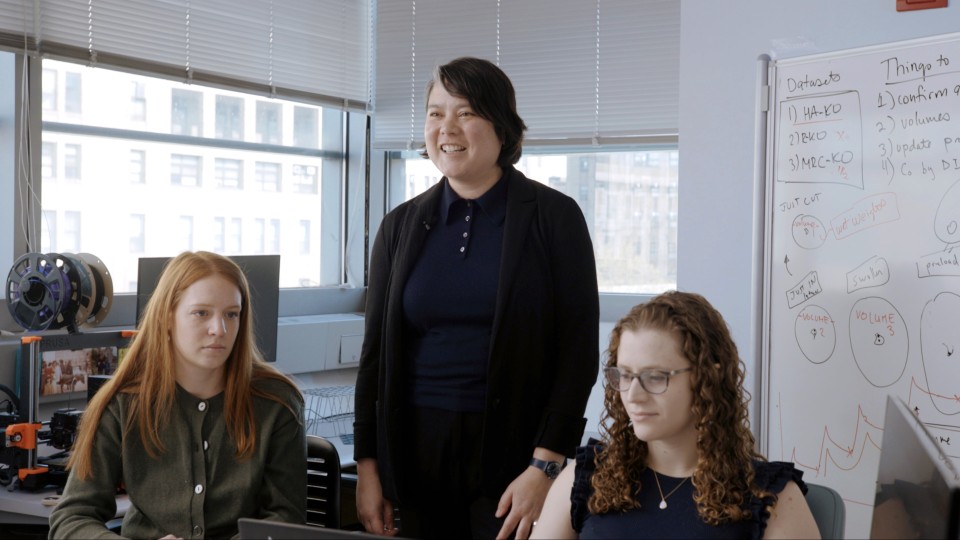
“We like testing the cervix; it’s a miraculous material,” says Kristin Myers, professor of mechanical engineering at Columbia Engineering, whose lab was featured in two major New York outlets, WNBC and WABC, for Pregnancy and Infant Loss Awareness Month.
Myers and her mostly female research team are developing cutting-edge technology to monitor pregnancy. As a mechanical engineer, Myers has dedicated her career to approaching pregnancy as a structural issue, focusing on the biomechanics of the uterus, cervix, and fetal membranes. Central to her research is how the mechanics of pregnancy can go wrong and lead to unwanted outcomes like preterm birth, an issue that occurs in roughly 10% of pregnancies in the U.S.
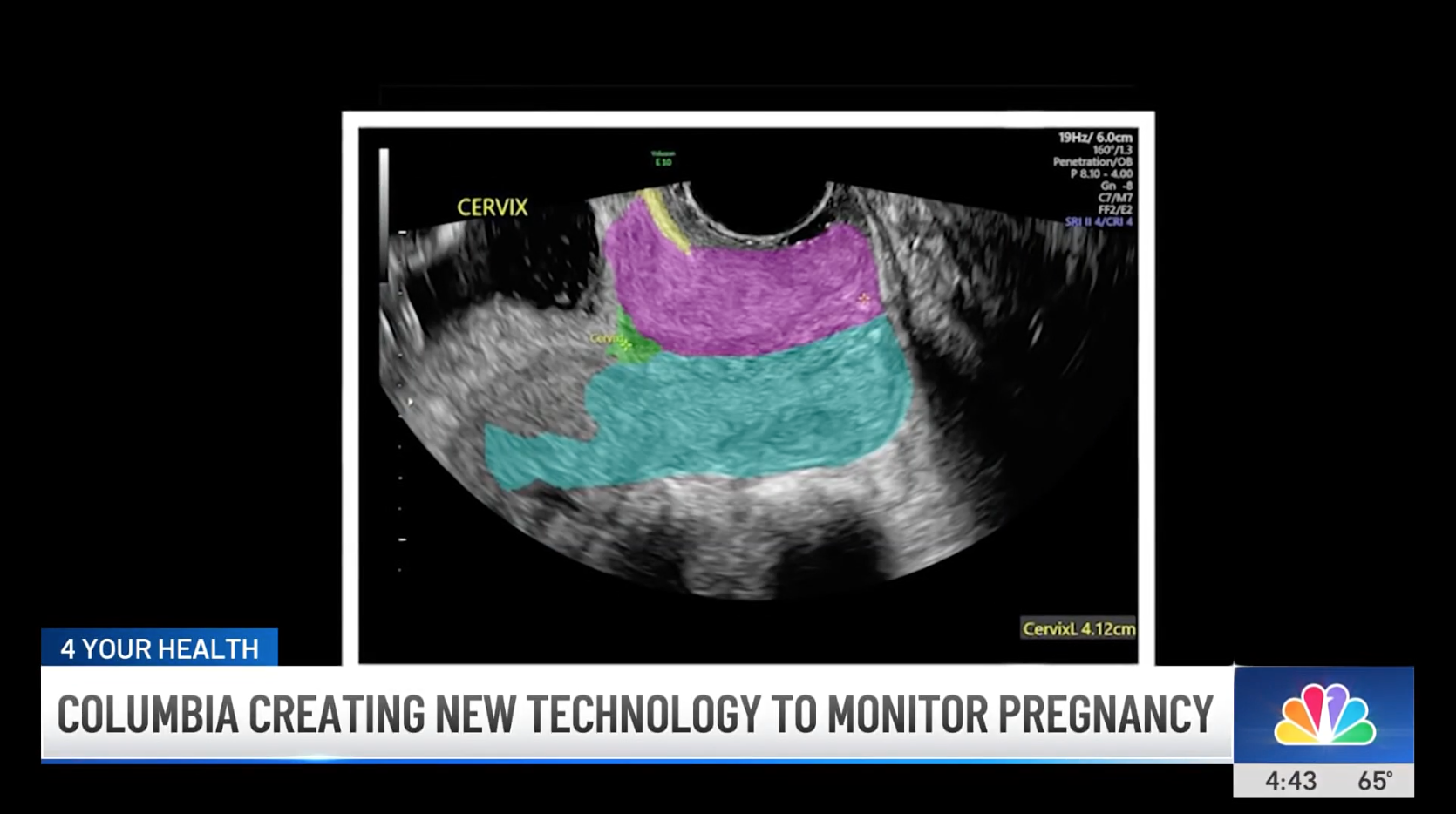
New York media highlighted how Myers and her team are creating virtual twins of the uterus using ultrasound images. Such models allow them to better understand the uterus and test medical interventions.
“A digital twin is a physical representation of something in the physical world,” explains Myers. “In your standard of care, can we build these maternal models, [so] that I can build a virtual representation of you, and then ask ‘what if’ scenarios?”
Myers research has long been supported by The Iris Fund, an organization that funds basic science research related to preterm birth. Serena Russell, a PhD student in the Myers lab seen in the media coverage, uses a tool called the Intron to apply and measure mechanical force on tissue. Mirella Mourad, also featured, is a maternal-fetal medicine specialist and director of the Preterm Birth Prevention Center at Columbia Doctors, and a long-time collaborator with the Myers lab. She and Myers both believe that digital twin technology can one day be used for every pregnancy.
Says Myers, “We can use science so that women can feel empowered about what’s happening with their body.”
Watch on WNBC and WABC
WABC
New Technology at Columbia University Could Help Doctors Prevent a Dangerous Pregnancy Complication
Lead Photo Caption: Kristin Myers (center) at work in the Myers lab at Columbia University
Lead Photo Credit: Jane Nisselson/Columbia Engineering