
Faculty Voices
Next Generation AI Agent System
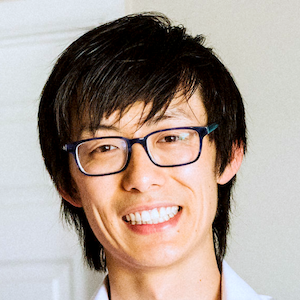
Eugene Wu
Associate Professor of Computer Science
Quote: Despite significant investment, AI agents have not seen broad adoption in organizations. Beyond efficiency and management challenges, progress requires cross-disciplinary research in three areas: achieving reliable performance, mitigating risks, and identifying applications that truly benefit from agentic capabilities. These issues cannot be solved within a single discipline and demand collaborative efforts to create new systems, algorithms, and user experiences. To this end, Eugene Wu is co-directing Columbia’s new Data, Agents, and Processes Lab (DAPLab), which partners with industry, students, faculty, and alumni to advance impactful research.
Innovations for Women's Health
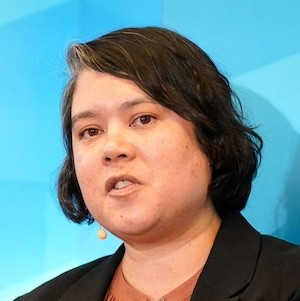
Kristin M. Myers
Professor of Mechanical Engineering
“In my laboratory, we measure the physical properties of reproductive anatomy to build digital twins that simulate the human body. These twins are helping femtech companies design tools and techniques to replace the surprisingly rudimentary treatments available to ob-gyns. Physicians and engineers are currently working on methods to use individual patients’ ultrasounds to customize digital twins, helping better understand the causes of preterm birth and opening the door to predicting this common and dangerous complication. To support safe, effective innovation in femtech and better clinical outcomes, we need sustained investment in the full research pipeline.” Read more about Professor Myers’ work here.

Biology-Inspired AI
Richard Zemel
Trianthe Dakolias Professor of Computer Science
Evolution has equipped humans with remarkable adaptability, enabling us to continuously acquire, update, and exploit knowledge despite operating under significant resource constraints—our brains must work with limited time and data to perceive and learn about the world, while functioning within the volume and energy restrictions of biological wetware. In contrast, while current AI systems demonstrate impressive knowledge and reasoning capabilities, they demand enormous energy and data resources and experience substantial forgetting when learning new tasks. My research addresses this challenge by focusing on developing machine learning systems that operate efficiently and controllably, enhancing their ability to perform reliably across both familiar and novel tasks while requiring fewer resources, drawing inspiration from studies of natural learning systems. This research promises to yield more controllable and efficient AI systems, provide deeper insights into natural learning mechanisms, and ultimately inform approaches to improve human learning itself.