
Blavatnik Doctoral Fellows: 2019-2020 Cohort
Columbia Engineering's Doctoral Students Supported by the Blavatnik Fellowship in 2019-2020
Divya Bhansali, Department of Biomedical Engineering
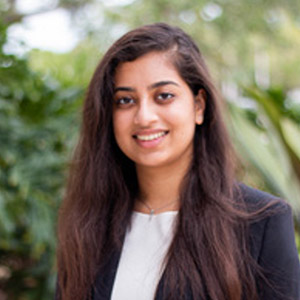
Divya Bhansali, a graduate of the University of Miami, joined the Biomedical Engineering Department this fall. She has worked on several research projects including developing a "Heart on a Chip Platform" at the Miller School of Medicine, building a semi-autonomous platform to segment and optimize 3-D ultrasound data at MD Anderson Cancer Center, and studying antibody mediated activation of Toll-Like Receptors at UT Southwestern. She has also been heavily involved in volunteer efforts and has served as president of UM's Engineers Without Borders Chapter overseeing two international projects, and as a two-term president of UM's Engineering Student Council. Her research interests lie in drug delivery, human development, and cell and tissue engineering.
Christian Cupo, Department of Mechanical Engineering
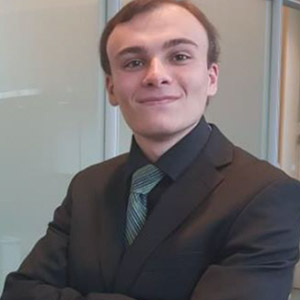
Christian Cupo has a diverse background which promotes his research interest at the interface of engineering and biology. He entered Columbia University as a Blavatnik Presidential Fellow in the mechanical engineering Ph.D. program, where he is working in the labs of Professors James Hone and Karen Kasza studying organ fabrication, optogenetics and microfabrication. Prior to joining Columbia, he graduated summa cum laude with dual Bachelor and Master of Engineering degrees in mechanical engineering from Stevens Institute of Technology in the spring of 2018. During this time, his primary research focused on nanomaterial fabrication and characterization in the Dr. Eui-Hyeok Yang Laboratory. Upon graduation, he transitioned to a cancer nanomedicine laboratory at Memorial Sloan Kettering Cancer Center (MSKCC) under the mentorship of Dr. Daniel Heller, developing carbon nanotube nanosensors for non-invasively detecting endolysosomal diseases and cancer. Christian extends his passion for engineering using three of his personal 3d printers to create intricate models related to his research to aid in outreach STEM initiatives.
Ipek Gokulu, Department of Chemical Engineering
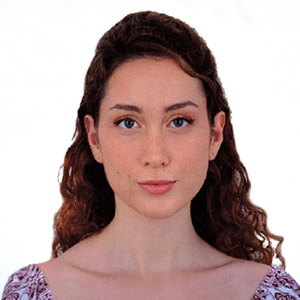
Ipek S. Gokulu is a PhD student at Columbia University in the department of Chemical Engineering. She graduated from TED Ankara College Private High School in 2014 where she completed the International Baccalaureate Diploma Program. After high school, she graduated from Koc University with a double major in Chemical & Biological Engineering and Industrial Engineering as the first ranking student in her department in 2019. She conducted research projects and published a paper and a book chapter on biomimetic materials, nanomaterials and tissue regeneration during her undergraduate education. She started her doctoral studies as a PhD student and Blavatnik Presidential Fellow at Columbia University in September 2019. She joined the Banta Lab in January 2019 and is currently working on a project to explore the impact of applied forces on the activity of a model thermostable enzyme using DNA based methods.
Olivia Powell, Department of Biomedical Engineering
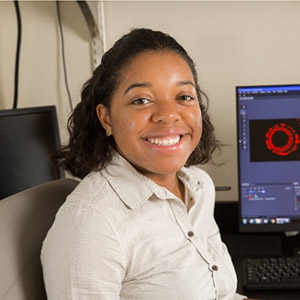
Olivia Powell joined the doctoral program in Biomedical Engineering this past fall. A graduate of the University of Delaware, she completed a Bachelors of Mechanical Engineering and her honors thesis, “Developing a passively driven storage platform for droplet-based microfluidic virology experiments.” She has joined Biomedical Engineering Professor Nandan Nerurkar’s Morphogenesis and Developmental Biomechanics Lab to study the physical mechanisms that influence the development and behavior of cells and tissues, and contribute to disease pathogenesis.
Fay Wang, Department of Biomedical Engineering
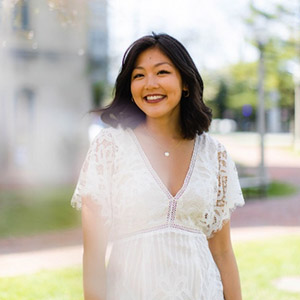
Fay is a Ph.D. student in biomedical engineering. She graduated from Boston University with a degree in biomedical engineering, where she worked on several projects related to biomedical optics, such as creating an imaging device to aid in assessing melanomas, and using spatial frequency domain imaging in preclinical breast cancer studies. Fay joined Professor Andreas Hielscher and his Biophotonics and Optical Radiology lab, where she plans to continue her research in biomedical optics and breast cancer. Currently, they are working on a bra that can be worn by breast cancer patients in the clinic to monitor their chemotherapy response. As a graduate student, she hopes that she can continue to develop novel optical technologies like these and translating them to the clinical setting.