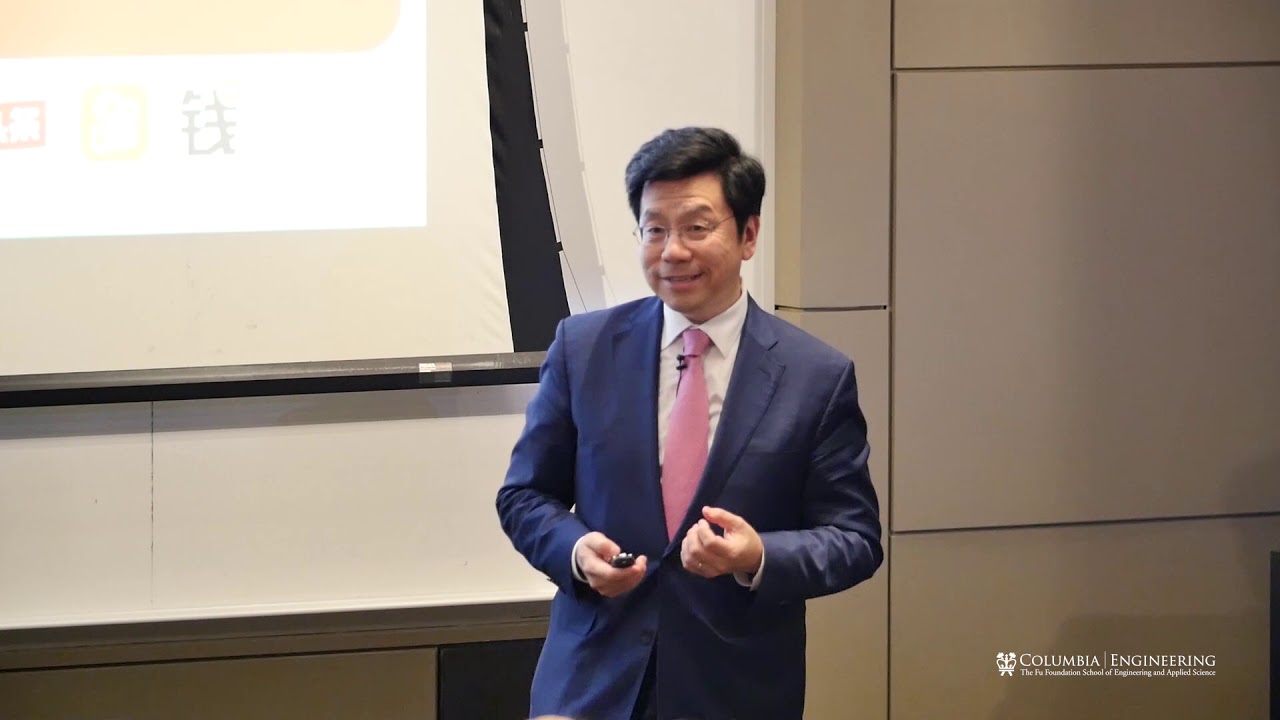
In her opening remarks, Dean Boyce touched on the School’s deep focus on AI research. “This is an area that Columbia Engineering is quite committed to,” she said, adding that over 50 faculty members—almost a quarter of the faculty—are actively investigating artificial intelligence across all departments. “They are either working on the foundations of AI or they are bringing AI into their domains. They may be discovering new materials, creating innovative new business models, or looking at how do we bring engineering impact into medicine.”
Lee, who devised a first-of-its-kind speech recognition system for his PhD thesis, is a widely cited expert on the subject. Presently head of Sinovation Ventures, a venture capital (VC) firm that has launched five, billion-plus-dollar tech startups, and the author of seven best-selling books, Lee also served as founding president of Google China. In 2017, he spoke at Columbia Engineering’s graduation ceremony, which he credited with sowing the seeds for his latest venture. “It’s great to be back at my alma mater and to be talking about my new book, the idea for which actually came from my Class Day speech,” Lee told the crowd at Davis.
The financier began his talk with a brief overview of how and why AI technology has advanced so rapidly in China over the past decade. In the last ten years, a fierce approach to entrepreneurship combined with favorable regulation and access to a uniquely rich trove of data transformed the country into an AI juggernaut. In 2017, VC funding in China eclipsed similar investment in the US.
But while the pace of China’s rise might give some pause, Lee cautioned the audience not to view AI development in the two countries as a zero-sum game. “The growth of one doesn’t imply shrinking of the other,” he said.
The more pressing issue is an AI-induced existential threat faced by both, he argued. Unprecedented risks to areas such as privacy and security lurk just below our collective horizon. The greatest challenge, however, will likely arise from AI’s potential to undermine labor markets and social systems across the globe as it greatly exacerbates income inequality and automates many jobs out of existence by midcentury.
But we needn’t feel powerless in the face of such dire predictions, Lee said.
“I propose that if we do a very good job in the next 20 years, AI will be viewed as an age of enlightenment,” he said.
To effectively and fairly manage the transition will require nothing less than a realignment of the world economy, Lee posited, so as to adequately compensate work based on the kind of compassion and creativity machines are incapable of. It also requires redirecting our parochial instincts toward a new era of international cooperation. Such a golden age would not only liberate humanity from routine work, but also push people to think more deeply and expansively about what it means to be human.
“For those who fear AI, fear not,” he said. “Because AI is just a tool. We are the masters of AI. We uniquely have free will, and we will be the ones to write the ending of the story of humans and AI.”
Lee’s talk was the first in a new Engineering for Humanity lecture series focusing on how technology can have a positive impact on humanity. The next installment takes place on Nov. 28, when Dean Boyce and Biomedical Engineering Professor Elizabeth Hillman join alumni Greg Dorn and Shivrat Chhabra to discuss health and wellness technology at the Computer History Museum in Mountain View, CA.
Images from the challenge
Highlights from the student teams
HeForShe Columbia: Gender Equality in STEM and Academia
Livestream of the HeForShe panel, moderated by Dean Mary Boyce
Suzanne Goldberg, Executive Vice President for University Life; Herbert and Doris Wechsler Clinical Professor of Law; Special Advisor to the President for Sexual Assault Prevention and Response, welcomed the attendees at Low Library and those tuning in via livestream and introduced keynote speaker Elizabeth Nyamayaro, senior advisor to the UN Women executive director and head of HeForShe, who described growing up as a girl in her native Zimbabwe and detailed ongoing efforts toward a gender-equal world.
Dean Boyce then reflected on her experiences as a woman in engineering and how important the highly collaborative nature of the field is to all engineers. She noted that “this is perhaps one of the greatest times to be pursuing a degree in engineering or applied science—the needs for and the impact of engineering developments on lives around the world has never been clearer.”
Boyce foresees a positive future for women in engineering, though “we all have a long way to go,” she noted. A few universities are seeing great strides in attracting women into engineering and applied science fields and Columbia Engineering is at the forefront: women make up 43 percent of its undergraduate body and 49 percent of the current first-year class. The graduate student body is 35 percent women: 38 percent MS students, 24 percent PhD. At the same time, women now make up 18 percent of the faculty.
“What’s clear in these numbers,” Boyce noted, is that “the pipeline is growing, and now there are more than ever an increasing number of talented and qualified women pursuing engineering. This will result in more women in graduate programs, postdoc programs, and faculty positions, and will help create the critical mass needed to achieve greater gender equity.”
Helen Lu, vice chair and professor of biomedical engineering (BME), talked about the downside of being not just the first women faculty member in BME but also the first to get tenure, the challenges in hiring faculty, and the positive increase in the number of female students. Elsewhere in the life sciences, Carol Mason, professor of pathology and cell biology, neuroscience and ophthalmic science, principal investigator and chair of interschool planning at Columbia's Zuckerman Institute, discussed her experiences, the unique challenges of various career trajectories, and the “leaky” pipeline siphoning off women from fields not noted for work-life balance.
Dennis Mitchell, Vice Provost for Faculty Diversity and Inclusion, Columbia University and Senior Associate Dean for Diversity for the Columbia University College of Dental Medicine, spoke about the University’s efforts to target faculty recruiting and retention in addition to fostering “a climate of inclusiveness” at every level. Globally, Julien Pellaux, strategic senior advisor to the Under-Secretary-General and Executive Director UN Women, discussed gender equity from the perspective of the UN’s efforts and initiatives.
“We are in the midst of an engineering renaissance and a key objective will be making sure that women have an equal share—this is important for the world, not just for women,” said Boyce. “At Columbia, the critical mass and presence of women and visibility of women attracts other women—it is a subtlety that is important to the overall environment and atmosphere in the classroom and the laboratory.”
Programmed Bacteria for Cancer Immunotherapy
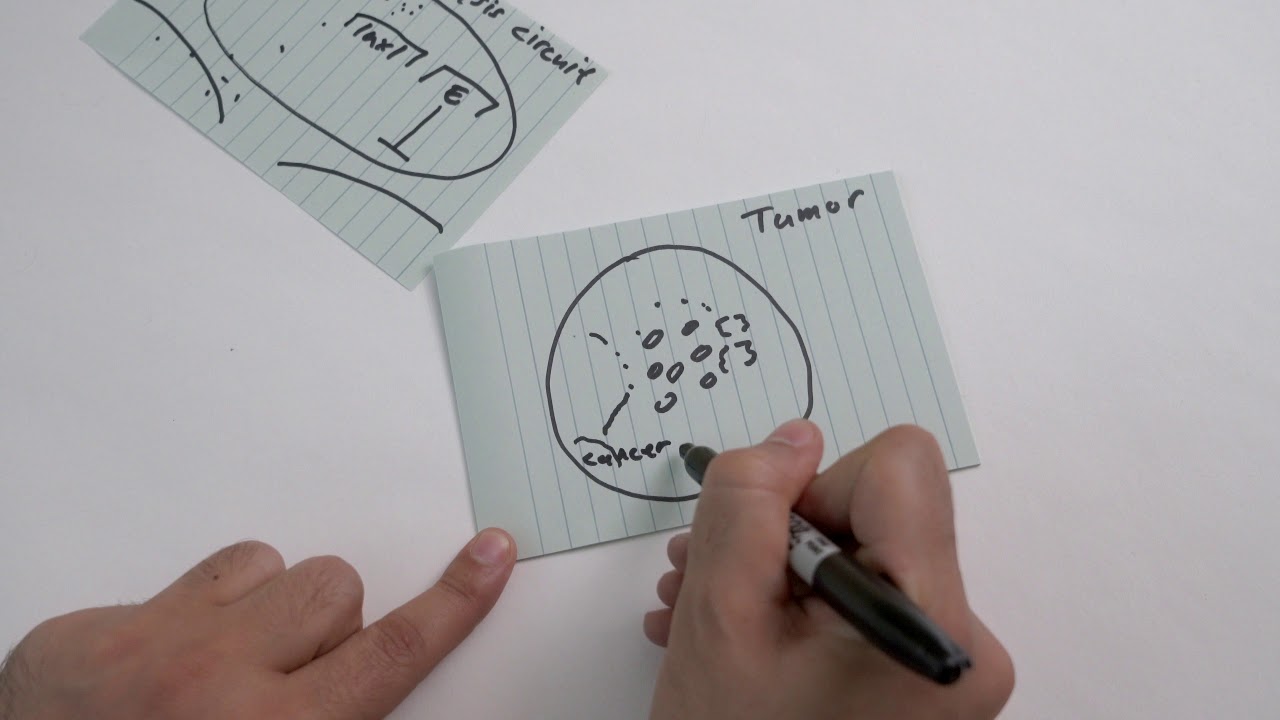
Teaming up with the Columbia University Irving Medical Center (CUIMC), Columbia Engineering has addressed this challenge by engineering a strain of non-pathogenic bacteria that can colonize solid tumors in mice and safely deliver potent immunotherapies, acting as a Trojan Horse that treats tumors from within.
The study was led in collaboration with Nicholas Arpaia, assistant professor of microbiology & immunology at CUIMC, and co-senior author on the publication. The team combined their expertise in synthetic biology and immunology to engineer a strain of bacteria able to grow and multiply in the necrotic core of tumors. When bacteria numbers reach a critical threshold, the non-pathogenic E. coli are then programmed to self-destruct, allowing for effective release of therapeutics and preventing them from wreaking havoc elsewhere in the body. Subsequently, a small fraction of bacteria survive lysis and reseed the population, allowing for repeated rounds of drug delivery inside treated tumors. The proof of concept in programming the bacteria in this way was originally developed a few years ago (Din & Danino et al. Nature 2016). In the current study, the authors chose to release a nanobody that targets a protein called CD47.
CD47, a “don’t-eat-me” signal, protects cancer cells from being eaten by innate immune cells such as macrophages and dendritic cells. It is found in abundance on a majority of human solid tumors and has recently become a popular therapeutic target.
“But CD47 is present elsewhere in the body, and systemic targeting of CD47 results in significant toxicity as evidenced by recent clinical trials. To solve this issue, we engineered bacteria to target CD47 exclusively within the tumor and avoid systemic side-effects of treatment,” adds Sreyan Chowdhury, the paper’s lead author and a PhD student co-mentored by Arpaia and Danino.
The combined effect of bacterially induced local inflammation within the tumor and the blockade of CD47 leads to increased ingestion, or phagocytosis of tumor cells and subsequently to enhanced activation and proliferation of T cells within the treated tumors. The team found that treatment with their engineered bacteria not only cleared the treated tumors but also reduced the incidence of tumor metastasis in multiple models.
“Treatment with engineered bacteria led to priming of tumor-specific T cells in the tumor that then migrated systemically to also treat distant tumors,” Arpaia says. “Without both live bugs lysing in the tumor and the CD47 nanobody payload, we were not able to observe the therapeutic or abscopal effects.”
The team is now performing further proof-of-concept tests, as well as safety and toxicology studies, of their engineered immunotherapeutic bacteria in a range of advanced solid tumor settings in mouse models. Positive results from those tests may lead to a clinical trial in patients. They are also collaborating with Gary Schwartz, CUIMC’s chief of hematology/oncology and deputy director of the Herbert Irving Comprehensive Cancer Center, on clinical translation aspects of their work, and have started a company to translate their promising technology to patients.
About the Study
Journal: Nature Medicine
Title: Programmable bacteria induce durable tumor regression and systemic antitumor immunity
Authors: Sreyan Chowdhury1,2; Samuel Castro1; Courtney Coker1; Taylor E. Hinchliffe1; Nicholas Arpaia2,3; Tal Danino1,3,4
- Department of Biomedical Engineering, Columbia University
- Department of Microbiology & Immunology, Vagelos College of Physicians and Surgeons of Columbia University
- Herbert Irving Comprehensive Cancer Center, Columbia University
- Data Science Institute, Columbia University
This work was supported by the NIH Pathway to Independence Award (R00CA197649-02) (T. Danino), DoD Idea Development Award (LC160314) (T. Danino), DoD Era of Hope Scholar Award (BC160541) (T. Danino), NIH NIGMS (R01GM069811) (T. Danino), NIH K22AI127847 (N. Arpaia), Searle Scholars Program SSP-2017-2179 (N. Arpaia), Bonnie J. Addario Lung Cancer Foundation Young Investigators Team Award (N. Arpaia and T. Danino) and the Roy and Diana Vagelos Precision Medicine Pilot Grant (N. Arpaia and T. Danino).
COI: S. Chowdhury, N.A., and T.D. have filed a provisional patent application with the US Patent and Trademark Office (US Patent Application No. 62/747,826) related to this work. T.D. and N.A. 270 have a financial interest in GenCirq, Inc.
Columbia Engineering
Columbia Engineering, based in New York City, is one of the top engineering schools in the U.S. and one of the oldest in the nation. Also known as The Fu Foundation School of Engineering and Applied Science, the School expands knowledge and advances technology through the pioneering research of its more than 220 faculty, while educating undergraduate and graduate students in a collaborative environment to become leaders informed by a firm foundation in engineering. The School’s faculty are at the center of the University’s cross-disciplinary research, contributing to the Data Science Institute, Earth Institute, Zuckerman Mind Brain Behavior Institute, Precision Medicine Initiative, and the Columbia Nano Initiative. Guided by its strategic vision, “Columbia Engineering for Humanity,” the School aims to translate ideas into innovations that foster a sustainable, healthy, secure, connected, and creative humanity.
Allie Obermeyer: Engineering Proteins as SEAS
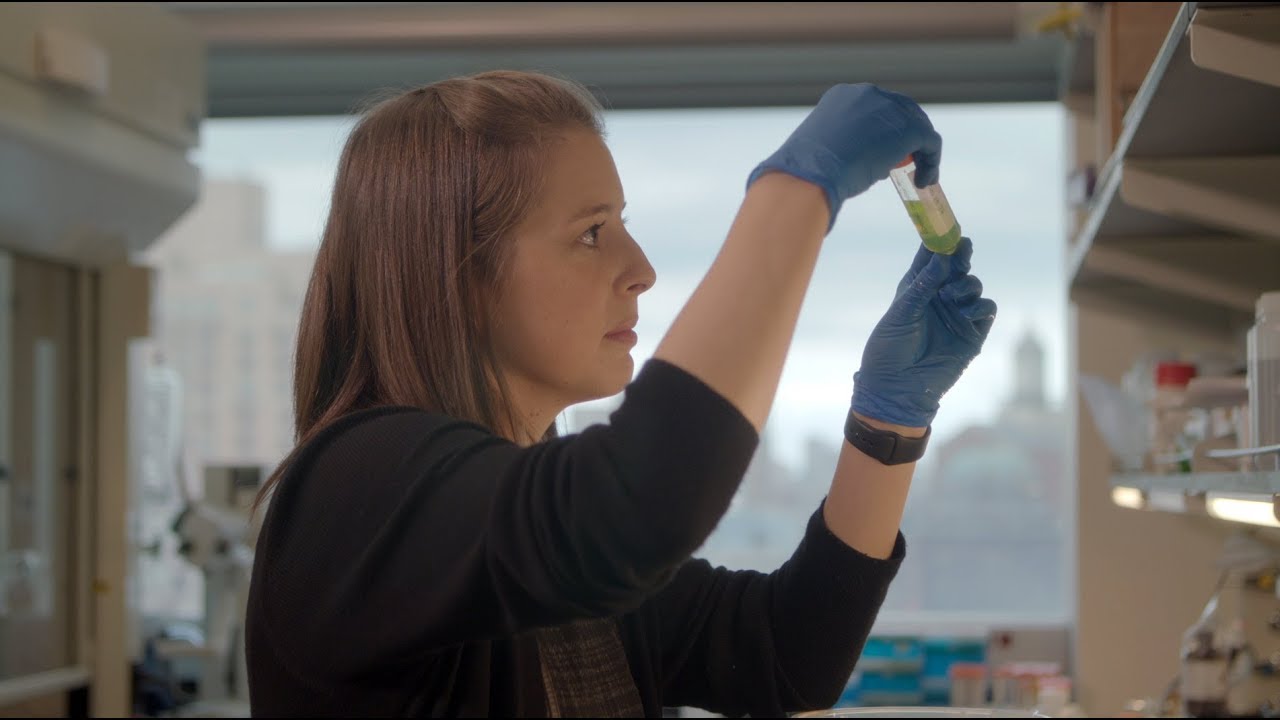
Allie Obermeyer, assistant professor of chemical engineering, conducts research bridging chemistry, biology, and engineering, is focused on improving human health by developing protein- and polymer-based materials for biomedical applications.
Protein phase separation has been linked to the organization of cellular components via the formation of membraneless organelles, which are compartments in a cell that are not enclosed by a lipid membrane. These phase-separated membraneless organelles create distinct environments that are essential to cellular processes that range from cell signaling to stress response. While several key proteins that form these organelles have been identified, researchers are still unable to design membraneless organelles from the ground up.
At the PSME Symposium, Obermeyer will share her group’s efforts to design synthetic membraneless organelles. Her approach is inspired by natural biological systems and builds on the physics of polymer phase separation controlled by electrostatic interactions. By simply tuning the charge on proteins, Obermeyer’s team has engineered phase separation of these proteins with nucleic acids in cells. Using a library of engineered proteins, her team has determined predictive design rules for protein phase separation in vivo. Their results have enabled them to apply these design rules to promote membraneless organelle formation for a range of proteins of interest. They are now using these capabilities to improve protein purification and the biosynthesis of chemicals.