Faculty Stories
Jeffrey Kysar: Professor of Mechanical Engineering and Otolaryngology/Head and Neck Surgery
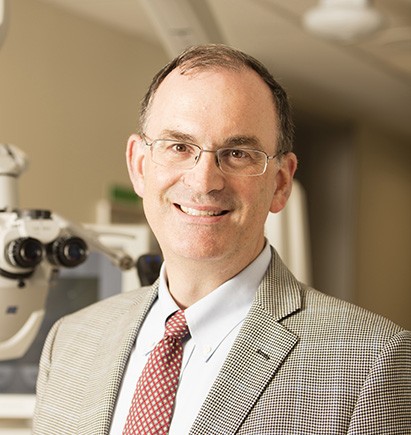
"Safe medical access to the inner ear is currently not possible because of the position of the inner ear within the skull. Therefore, severe hearing and severe balance disorders, such as Ménière’s Disease, are diagnosed and treated indirectly. My group designs and deploys microsurgical tools to provide safe medical access to the inner ear. We work closely with surgeons in preclinical studies and have demonstrated safe medical access to the inner ear for both diagnosis and treatment. We are currently planning clinical trials with the goal of enabling direct diagnosis and direct treatment of hearing and balance disorders in humans."
Gordana Vunjak-Novakovic: University Professor and Mikati Foundation Professor of Biomedical Engineering
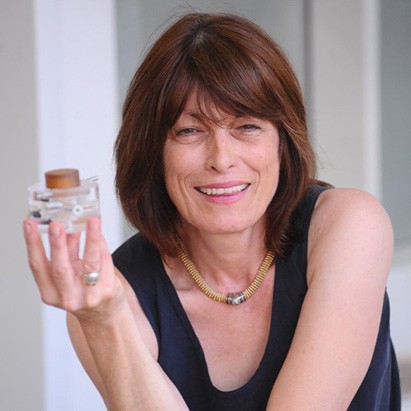
"One of the biggest challenges in today’s medicine is finding ways to reestablish the function of our vital organs lost to injury or disease. For over 25 years, my research team has been developing approaches for bioengineering heart, lung and bone from the patient’s own cells. At the same time, we are creating tiny “organs on a chip” that recapitulate organ level and systemic functions. These models allow us to study currently incurable conditions such as cancer metastasis, heart disease, and lung fibrosis. Our goal is to turn these discoveries into treatments that can help us live longer and healthier lives."
Michael Massimino: Professor of Professional Practice in the Department of Mechanical Engineering
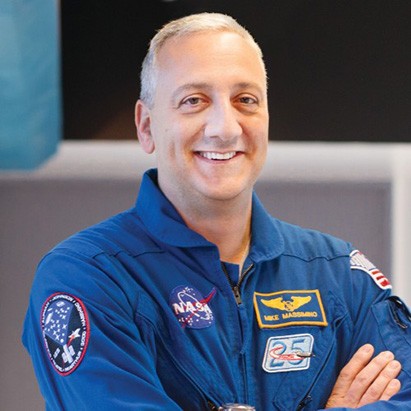
"Space exploration is a passion for many students at Columbia. I advise our space club, the Columbia Space Initiative (CSI), founded ten years ago and now the most popular engineering club on campus, with 250+ active members dedicated to the pursuit of knowledge in near-space, space, and beyond. This enthusiasm has led to the creation of a new Aerospace Engineering Minor and the ongoing effort to establish a Major. CSI students pursue missions in satellites, rockets, astrobiology, robotics, sustainable aviation, habitats, space policy, and outreach. They are the finest group of young people I have ever encountered. Supporting their research will allow them to continue making significant contributions to the space program and the world while at Columbia and in their future careers."
Student Stories
Nicholas Djedjos ’26SEAS
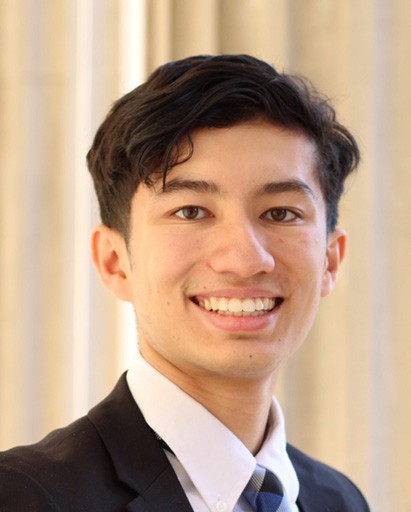
"Thanks to Columbia Engineering’s generous financial aid program, I was able to explore the intersection of computer vision and cancer biology this past summer at Summer@SEAS. There, I was able to correct for faulty biological prep using machine learning, allowing my team to analyze previously unusable protein data. Columbia Engineering also financed my research trip to one of the most prestigious computational biology conferences, RECOMB, in Seoul, Korea in April 2025. I had the opportunity to network with professors and graduate students, present my own novel research method, and explore a new culture. Columbia Engineering’s general financial aid during the school year has permitted me to focus more on my academics instead of pursuing a part-time job. As a result, I’ve been able to lead clubs like the Columbia University Biotech Society (formerly known as Systems Biology Initiative), where I organized biotech research and industry talks and networking events."
Aashi Kotecha ‘26SEAS
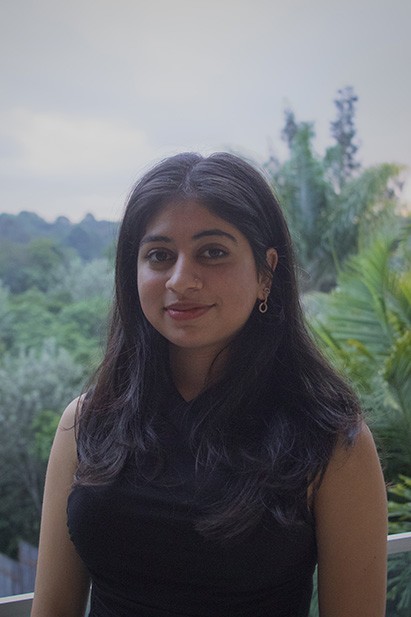
"Over the summer of 2024, I spent two months at the research and development department of Macleods Pharmaceuticals in Mumbai, India. Going into this experience, I was unsure whether the pharmaceutical industry was for me or how I should plan for this in terms of future internships and coursework. I wanted to gain clarity on this, develop research experience that would make me a more competitive applicant in the future, as well as live independently in a new country. I am extremely proud to say that this was all possible during the internship and I have come out of it with a clearer career direction and plan."
Manuella Kwawu ‘26SEAS and Julie Aleiner ‘26SEAS
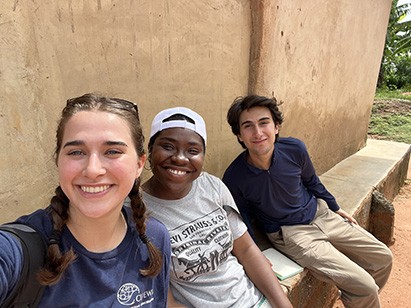
"We have witnessed firsthand the profound impact that donor support has on the work of Engineers Without Borders. During the recent trip to Ghana, donor contributions went a long way toward funding the travel of two project teams: an assessment team that conducted site analysis for a future preschool in Obodan, and the Mpakadan implementation team, which collaborated with the Electricity Company of Ghana to connect homes to the national electrical grid. These funds allowed both teams to prioritize the technical and community-driven aspects of their work without being overly burdened by financial constraints. As long-time members of Columbia EWB and leaders on the executive board, we have experienced the many ways in which donor support advances the organization’s mission through funding, outreach, and the sharing of knowledge."
Donor Voices
Every innovation and achievement at Columbia Engineering is made possible by the Dean’s Leadership Society’s continued support. Together, the Society and its members are creating opportunities for future engineering leaders.
Alyssa and Michael Au ’90SEAS; P: ’29CC
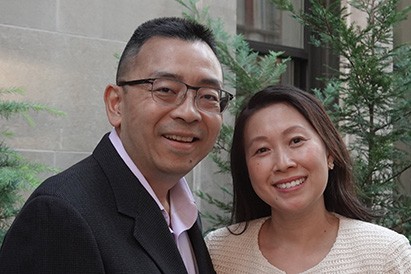
"As a Columbia Engineering graduate who benefited from financial aid, I understand the life-changing impact of generous donors. My time at Columbia not only shaped my career but also gifted me lifelong friendships and optimism that better was always possible. We support the Undergraduate Scholarships Fund to help ensure today’s talented and motivated students can thrive, regardless of financial background. Contributing each year is our way of honoring those donors before us, whose selfless giving helped pave the way for the next generation of engineers."
Theresa Sgammato ’84SEAS; P: '16SEAS, '17SEAS, 18SEAS, '21 SEAS
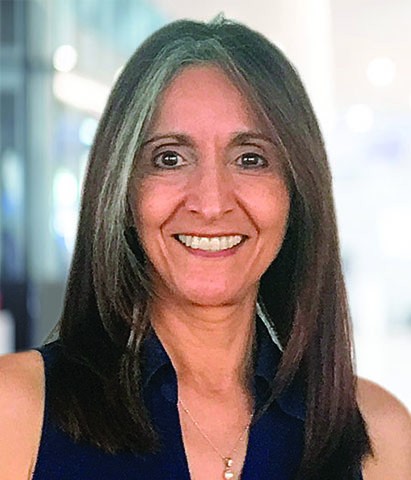
"I give to Columbia out of a deep sense of obligation and gratitude for an education that has given me so much opportunity, and when Columbia asked me to make the University my top philanthropic priority, I was glad to do so. Further, I delight in hosting the Welcome Reception for Newly Admitted Students from the San Diego area. It is great to spend an evening celebrating the joy of being admitted to Columbia College or Columbia Engineering with newly admitted high school seniors and their families."
Jon and Sarah Aibel ’92CC; P: ’23CC ’25CC ’28SEAS
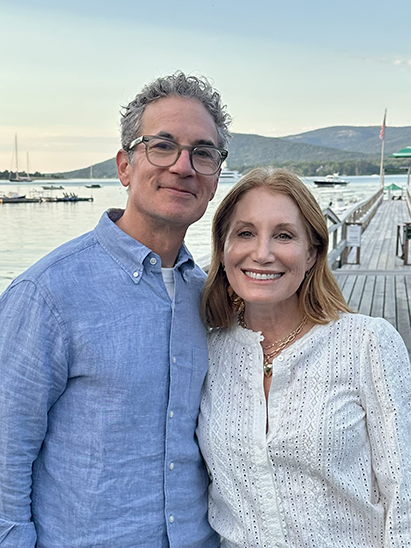
"Our three children have been fortunate to attend Columbia, and it’s been especially meaningful to watch our youngest, Hudson ’28SEAS, chart his own path at Columbia Engineering. Supporting the Parents Fund is our way of helping ensure that all students have access to the same kinds of opportunities that have enriched our children’s experiences—rigorous academics, vibrant extracurriculars, and a supportive community in which students can grow, discover, and thrive."
Davis Auditorium
Location: 412 CEPSR
Occupancy: 200
183 fixed seats, 5 wheelchair / portable seats. This room has an e-podium, For support email [email protected] or call 4-3633 Pick up wireless mic at the Dean's Office.
Carleton Commons
Location: 4th floor Mudd
Occupancy: See full policy
Rate: See full policy
Sindeband East 414
Location: 414 CEPSR
Occupancy: 45
45 chairs, projector/screen, speakers, wifi, e-podium microphone.
Costa Engineering Commons (formerly Interschool Lab)
Location: 750 CEPSR
Occupancy: 70
Rate: SEAS internal use only. Do not book without prior approval.
65 chairs, two (2) projectors/screens, spearkers, wifi.
Program Details
-
Proposal Criteria
A. Shared usage for revenue generation
- Estimated number of users (faculty, students, post docs)
- Estimated number of hours per week
B. Estimated operation costs
- Technical support (hours per week)
- Materials & supplies
- Maintenance contracts
- Depreciation
C. Lab management operations
- Please recommend lab management tools
- Registration and use of the selected platform
Two examples of new equipment purchases and funding structure may be found below. We have modeled this program on one operating successfully at Northwestern University.
-
Funding
Projects will be funded at a level between $5K – $100K beginning summer 2017. The number of projects accepted each year will depend on the dollar amount of the proposals.
The program is funded by an initial investment from the Dean’s Office with the potential for additional funding in future years. This program will enable reinvestment in the fund to create a sustainable purchase assistance program.
The repayment plan for purchases made with program funds operates identically to a depreciation schedule, which will offset the financial assistance and be repaid over time. Depreciation is a financial concept that spreads the cost of a fixed asset over its useful life and accounts for equipment losing value over time due to use, decay, or obsolescence. The depreciation rate is calculated by the tool’s cost, useful life, and estimated salvage value. Columbia University has determined the useful life of research equipment as ten years.
User fees for shared equipment will generate both the depreciation payment as well as cover the tool’s material costs, operating costs, and the cost of technical or administrative staff support.
Sharing equipment is a mechanism to professionalize facilities and to encourage hiring technical and scientific staff to run the equipment. Note also that use of shared equipment with fees can be charged to grants; it also avoids any conflicts of interest, therefore helping faculty with outside startup and consulting arrangements.
One concrete goal of this program is to help faculty fund the purchase and/or replacement of essential, highly-used shared equipment.
-
Proposal Submission Deadline
Friday April 7, 2017, 5:00 PM
Award notifications will be made on Saturday, May 20, 2017
Funds will be available as of August 2017, possibly July
-
Proposal Format
Submit the following materials via email, in .doc format to [email protected] by the Friday April 7, 2017, 5:00 PM deadline:
- Project Proposal - description of the equipment, usage information including expected shared users and level of activity, why the equipment is necessary at this time, and plans for space allocation or suggested location for shared facilities.* (5-page maximum, single space, 12-font, Times New Roman)
- Budget with Narrative – cost to purchase equipment, what materials and supplies are needed, what maintenance and services are needed, what are the total costs associated with the equipment
- PI Questionnaire
If you have equipment purchased by SEAS and are interested in moving to this model to cover maintenance or other costs, please email [email protected].
*The review committee will try to match-make equipment sharing
-
Example Proposal A
A PI purchases a research tool for $110,000 and the tool has a $10,000 salvage value and a ten-year useful life.
- Calculate the depreciable asset cost: $110,000 - $10,000 = $100,000
- Calculate the depreciation rate, divide the useful life (10 years) into 1 = 10%
- Calculate the annual depreciation amount, multiply the depreciation rate by the depreciable asset cost: $100,000 x .1 = $10,000
- The PI will record $10,000 of depreciation on the tool every year
Users
Suppose the tool has 10 users, averaging 2 hours per week, for 50 weeks per year:
- 1,000 usage hours per year
- 10,000 / 1,000 = $10 base (depreciation / usage hours)
Costs
- Depreciation schedule set at $10,000 every year for 10 years
- Suppose annual costs are $5K
- Suppose the tool requires 10% effort of a technical staff member with a $100K salary (including fringe benefits) = $10K
- 15K/1,000 = $15 (maintenance + tech personnel / usage hours)
Fees
- Total internal user fee = $25 per hour
- Total external user fee (20% markup) = $30 per hour
Assuming 90% internal and 10% external users:
Year 1, the facility will have generated $25,500
- Depreciation recovery reinvested into REAP = $10K
- Supplies and materials = $5K
- Technical staff = $10K
Year 5, the facility will have generated $382,500
- Depreciation recovery reinvested into REAP = $50K
- Supplies and materials = $25K
- Technical staff = $50K
Year 10, the facility will have generated $287,000
- Depreciation recovery reinvested into REAP = $100K
- Supplies and materials = $50K
- Technical staff = $100K
-
Example Proposal B
A PI purchases research equipment that costs $50,000 and has a ten-year useful life.
- Calculate the depreciation rate, divide the useful life (10 years) into 1 = 10%
- Calculate the annual depreciation amount, multiply the depreciation rate by the depreciable asset cost: $50,000 x .1 = $5,000
- The PI will record $5,000 of depreciation on the tool every year
Users
If the equipment has 5 users averaging 4 hours per week for 40 weeks per year
- 800 usage hours per year
- 5,000/800 = $6.25 base (depreciation/usage hours)
Costs
- Depreciation schedule set at $5,000 every year for 10 years
- Annual maintenance costs are $5K
- If the equipment requires 5% effort of a technical staff member with a $100K salary (including fringe benefits) = $5K
- 10K/800 = $12.50 (maintenance + tech personnel / usage hours)
Fees
- Total internal user fee = $18.75 per hour
- Total external user fee (20% markup) = $22.50 per hour
Assuming 90% internal and 10% external users:
Year 1, the facility will have generated $15,300
- Depreciation recovery reinvested into REAP = $5K
- Supplies and materials = $5K
- Technical staff = $5K
Year 5, the facility will have generated $76,500
- Depreciation recovery reinvested into REAP = $25K
- Supplies and materials = $25K
- Technical staff = $25K
Year 10, the facility will have generated $153,000
- Depreciation recovery reinvested into REAP = $50K
- Supplies and materials = $50K
- Technical staff = $50K
-
PI Questionnaire
General Information
- Applicant name
- Managing and owning department
- Name the equipment or tool.
- Describe the tool and services to be provided.
- List the current funded projects that might use this research equipment, include the chart string or research grant for each.
- List the proposed projects and startup projects affiliated with this research equipment.
- What physical space is available for the equipment?
- If space is needed, please explain the constraints of your current lab and the space requirements for the requested equipment.
Usage Criteria
- Please describe the base activity level for the equipment.
- Please specify anticipated PIs and research groups that will use the equipment, and include number of students, post docs etc.
- Please estimate the expected total machine usage hours (per month) of each user and group.
- Do you anticipate the equipment will be usable for ten years, (Columbia’s standard useful life)?
Budget and Narrative
- What does the equipment cost?
- Do you need scientific personnel to oversee the equipment? If so, what percentage of effort will this require and what is the estimated cost?
- What materials and supplies does the equipment need to operate?
- What do these materials and supplies cost?
- What are the anticipated maintenance and service needs?
- What do these services cost?
- What other costs do you anticipate? For example, are there rental service contracts, professional services, conferences related to the equipment?
-
Funding Timeline
- Present at Chairs meeting: Thursday, January 12, 2017
- Application Deadline: Friday, April 7, 2017
- Award Notification: Saturday, May 20, 2017
- Funds Available: August 2017, possibly July
FAQs
-
Will temps be able to participate in telework?
Please contact SEAS-HR to discuss the need to use temporary employees during this time.
-
I am experiencing stress and anxiety. Does the University provide any resources?
The Employee Assistance Program (EAP) is available for employees and their families.
-
Who should I contact if I have questions about telework?
If you have questions related to equipment or University software, please speak to your supervisor.
FAQs for Support Staff and NUSS Employees
-
Wil my work hours be the same?
Generally, yes. Employees should not work outside of their approved working hours unless expressly approved and communicated by their supervisor.
-
What if I need to work overtime?
As is usually the case, overtime must be approved in advance by your supervisor.
About Covid-19
As Columbia University continues to monitor COVID-19, consult the University's Response Site or Columbia Preparedness for up-to-date information.
COVID-19 Fact Sheet
Columbia Preparedness has provided a fact sheet to help reduce the chances of contracting COVID-19.
Columbia Health Guides
Columbia Health provided guides for self-isolation for members of the Columbia Community.
COVID-19 HEALTH UPDATED 3-18-20
A message from Melanie Bernitz, MD, MPH; Associate Vice President and Medical Director, Columbia Health, Associate Clinical Professor of Medicine (in the Center for Family and Community Medicine)
I-9 Anywhere
Please see the message below from Columbia University Human Resources with instructions for completing I-9 and E-Verify for new hires.
Baltasar Lopez Sardi, Department of Chemical Engineering
Baltasar is a new student in the M.D./Ph.D. Chemical Engineering program who will be joining Columbia this upcoming fall 2021. He received a B.S. in Biomedical Engineering from the University of Florida in 2021. Baltasar is highly interested in the study of biomaterials and their applications to solve medical challenges faced today. He is specifically interested in the manipulation of the properties of the biomaterials to mimic natural phenomena to tackle biomedical problems. Outside of research, Baltasar has multiple hobbies, from traveling to playing tennis to meeting new people. He is very excited to be joining the Chemical Engineering program at Columbia and meeting all the faculty and fellow students who will be there throughout his journey to get an M.D./Ph.D. degree.
Brian DeHority, Electrical Engineering
Brian graduated from the Cooper Union for the Advancement of Science and Art with a B.S. in Electrical Engineering and is an entering M.S./Ph.D. student under Dr. Ken Shepard. He has worked in both micro-scale sensor design as well as in the development of novel therapies for neural disorders and ailments. As an example, his senior design project was a non-invasive neurostimulation device that increases the window of efficacy for ischemic stroke treatments. Under Dr. Shepard, he hopes to further this research in the junction of healthcare and electrical engineering, promoting the integration of electronics with the human biology. Brian is thrilled to be a Columbia Student and Blavatnik Fellow, joining the forefront of scholars at this intersection of engineering and medicine.
Aidan Therien, Electrical Engineering
Aidan, a graduate of Duke University, will join the Department of Electrical Engineering at Columbia as a Ph.D. student. At Duke, Aidan double majored in Electrical and Computer Engineering and Biomedical Engineering, completed a chemistry minor, and contributed to multiple healthcare-oriented research projects. During the pandemic, he joined the Duke University COVID Response team in partnership with Duke Health to work on developing aerosol-reducing ventilator components to decrease risk of infection for healthcare workers. His research interests include medical devices, biotechnology, and signal processing. He will work with Professor Christine Hendon developing biomedical optics technologies that enable structure-function analysis of biological organ systems.
Serena Russell, Mechanical Engineering
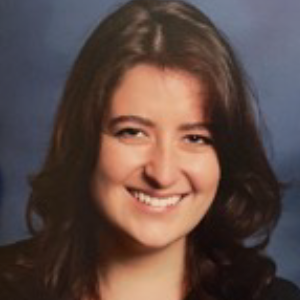
Serena is starting her Ph.D. in Mechanical Engineering at Columbia University as a Blavatnik Fellow focusing on biomechanical models of pregnancy as a part of Dr. Kristin Myers' lab. She received her B.S. in Mechanical Engineering from the University of Massachusetts Amherst and her Sc.M. in Epidemiology from Brown University where she focused in women's reproductive and environmental health as an AAUW Selected Professions Fellow and Draper Fellow. In her master's program, she studied maternal depression as it relates to environmental exposures and adapted a microfluidic model of early pregnancy. Serena is interested in advancing our understanding of pregnancy and other conditions that affect women's reproductive health, with the ultimate goal of reducing maternal and child mortality due to conditions such as preterm birth.
Sebastian Salazar, Computer Science
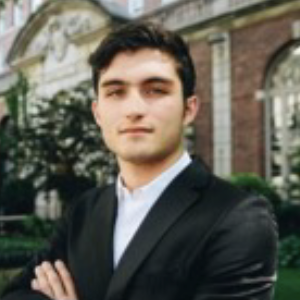
Sebastian graduated with a B.S. in Applied Physics from Columbia University in May 2021. As an undergraduate student, he conducted research for the Nuclear Engineering division at Los Alamos National Laboratory, where he researched how Machine Learning techniques can be used for Nuclear Safeguards. During his senior year, he started working on a research project that explored the actionability and interpretability of Machine Learning models in healthcare. Sebastian really believes that cutting-edge theoretical Machine Learning research has the potential to positively change how the world around us operates, which is why he decided to pursue a Ph.D. in the field. He is an incoming doctoral student in the Computer Science department, where he will be working with Professor Ansaf Salleb-Aouissi to study the interpretability and actionability of Machine Learning models.
Parth Gami, Biomedical Engineering
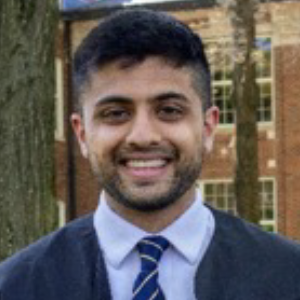
Parth is an M.S./Ph.D. student in the Department of Biomedical Engineering at Columbia University and is part of the Ultrasound Elasticity and Imaging Laboratory led by Dr. Elisa Konofagou. In May 2021, Parth graduated from the Georgia Institute of Technology with highest honors in biomedical engineering and a minor in industrial design. At Georgia Tech, Parth conducted research in stem cell development, medical diagnostics, and medical device development. His primary research at Georgia Tech focused on the development of a low-cost, noninvasive device for the early diagnosis of preeclampsia in low-resource settings. Parth is interested in the use of medical imaging for early detection and tracking of disease. As part of the Ultrasound Elasticity and Imaging Laboratory, Parth will join the Pulse Wave Imaging group and investigate the use of ultrasound for vascular disease detection.
Mathini Vaikunthan, Biomedical Engineering
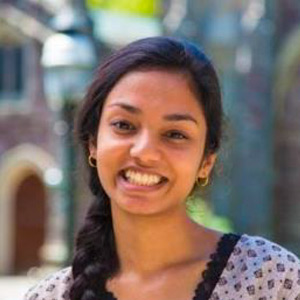
Mathini is interested in the application of high-throughput technologies to understand and combat drug resistance. She has previously worked in the lab of Professor Mark Brynildsen at Princeton University to develop synergy screening techniques to find potential anti-virulence therapies for E. coli infections. After graduating, she joined Deloitte Government and Public Services as a consultant to work on issues of public health. She will be joining the lab of Professor José L. McFaline-Figueroa to develop single-cell genomics tools and subsequently deploy these tools against aggressive tumor types that frequently fail the standard-of-care.
Christia Victoriano, Biomedical Engineering
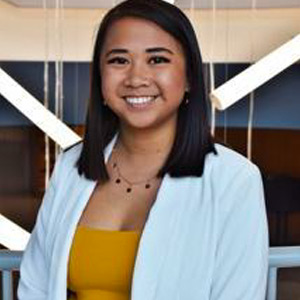
Originally from Pensacola, Florida, Christia is an incoming M.S./Ph.D. student in the Biomedical Engineering Department. She graduated from Vanderbilt University in 2021 with a bachelor's degree in Biomedical Engineering. As an undergraduate, she worked to develop streamlined, cost-effective molecular diagnostic assays for viral pathogens such as Zika, Influenza, and SARS-CoV-2. For her doctoral studies, she will be conducting research in Professor Sam Sia’s lab. She is interested in utilizing microfluidics to develop fully-integrated diagnostic tests in order to expand access to medical testing in low-resource areas.
Jane Liao, Chemical Engineering
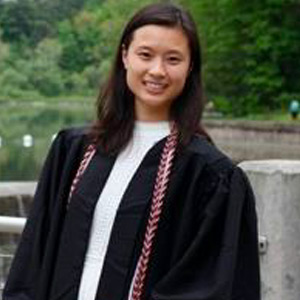
Jane graduated from Cornell University with a B.S. in Chemical and Biomolecular Engineering in May 2018 and will join the Chemical Engineering Department at Columbia as an M.S./Ph.D. student. As an undergraduate student, Jane participated in the International Genetically Engineered Machine (iGEM) competition and conducted research in synthetic biology and protein engineering. After graduation, she joined GlaxoSmithKline as a Research and Development Scientist, where she supported the purification process development of several therapeutic antibodies for clinical and commercial manufacturing. Jane is excited to continue interdisciplinary research at Columbia and contribute to the advancement of novel therapeutics.
Howard Nicholson III, Biomedical Engineering
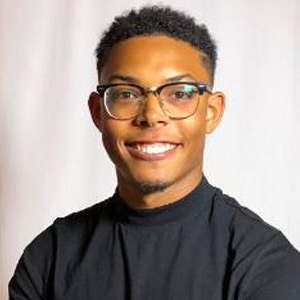
Howard graduated from the University of Maryland Baltimore County with a B.S. in Chemical Engineering and minor in music. This fall, Howard will start in the Biomedical Engineering M.S./Ph.D. Program working under the mentorship of Dr. Clark Hung in the Cellular Engineering Laboratory to understand how physical and chemical stimuli impact cells and tissues in order to incorporate these forces in strategies for developing functional tissue substitutes of clinical relevance. He is also interested in investigating how bias and racism may lead to inequity in healthcare and biomedical innovation.
Kelia Human, Department of Biomedical Engineering
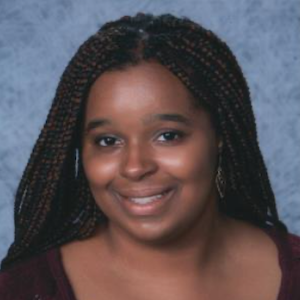
Kelia Human is starting her PhD program in biomedical engineering at Columbia University as a Blavatnik Fellow. She is from Berkeley, CA and she graduated from Northwestern University with a degree in biomedical engineering. The faculty member she will be working with at Columbia is Professor Samuel Sia. Kelia is interested in flexible and small electronics for biomedical purposes such as sensing and diagnostic testing. She is specifically interested in the potential use of this technology in low resource settings and in underserved communities.
Farid Khoury, Department of Chemical Engineering
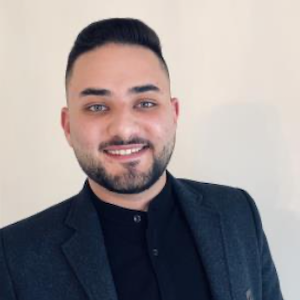
Farid Khoury is a Syrian immigrant who fled the war for a better future and education in the United States. He received a bachelor's of science degree and a master's of science degree in chemical engineering from Cleveland State University in 2019 and 2020, respectively. Farid believes in protecting the environment and making the earth a better place for future generations; for that reason, he has chosen to study biofuel production from green microalgae. Farid is proud to be a Columbia University Blavatnik Presidential Fellow and a recipient of the National Science Foundation Graduate Fellowship. He will be attending Columbia University as a Ph.D. candidate in the chemical engineering department, and he plans to work on protein engineering projects in Dr. Scott Banta's laboratory.
Panagiotis Oikonomou, Department of Biomedical Engineering
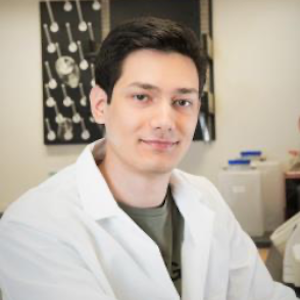
Born and raised in Athens, Greece, Panagiotis Oikonomou is an incoming MS/PhD student in the Biomedical Engineering department. As an undergraduate at Columbia University, he worked on multiple research projects, including cancer therapeutics, microfluidic point-of-care devices as well as soft-tissue biomechanics and tendon repair. In his senior year, his capstone project team designed a wearable for the outpatient monitoring of seizures, using machine learning for the classification process. For his doctoral studies, he will be part of Professor Nandan Nerurkar’s group, the Morphogenesis and Developmental Biomechanics Lab, investigating how tissues and organs form in the developing embryo.
Shashwat Shukla, Department of Electrical Engineering
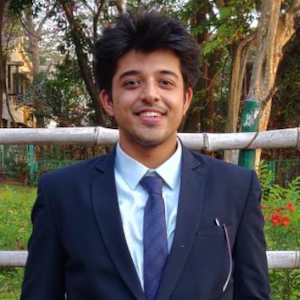
Shashwat Shukla graduated from the Indian Institute of Technology Bombay, with a B.Tech and M.Tech in electrical engineering, along with a minor in computer science. He is interested in the application of Signal Processing and Biologically-plausible Machine Learning to theoretically and computationally model brain function. His past research focused on Spiking Neural Network models for bio-inspired navigation, inference and learning. Shashwat is joining the Bionet group in the Electrical Engineering Department at Columbia University to work with Professor Aurel Lazar on uncovering the functional logic of the fruit fly brain.
Chaoqun Zhou, Department of Mechanical Engineering
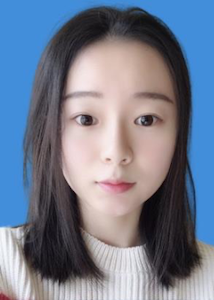
Chaoqun Zhou, earned her MS degree in mechanical engineering from Columbia Engineering in spring 2020. This fall, she will join the doctoral program in mechanical engineering. She is interested in delivering novel medical devices via micro/nanotechnology. She will continue to work with Professor Jeffrey W. Kysar on inner ear drug delivery by employing microfabricated ultra-sharp needles.
Divya Bhansali, Department of Biomedical Engineering
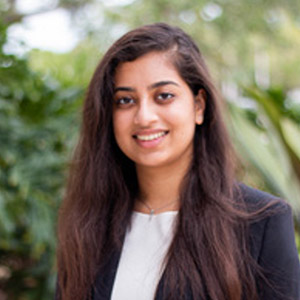
Divya Bhansali, a graduate of the University of Miami, joined the Biomedical Engineering Department this fall. She has worked on several research projects including developing a "Heart on a Chip Platform" at the Miller School of Medicine, building a semi-autonomous platform to segment and optimize 3-D ultrasound data at MD Anderson Cancer Center, and studying antibody mediated activation of Toll-Like Receptors at UT Southwestern. She has also been heavily involved in volunteer efforts and has served as president of UM's Engineers Without Borders Chapter overseeing two international projects, and as a two-term president of UM's Engineering Student Council. Her research interests lie in drug delivery, human development, and cell and tissue engineering.
Update from Divya Bhansali on this past year at Columbia Engineering:
In the past year, under the mentorship of Dr. Kam Leong, I have begun a project focused on studying drug delivery systems for oral cancer and pain, in collaboration with the School of Dentistry at NYU. This project is allowing me to hone my skills in scientific thinking and train me to think about tough but important problems critically and independently. I will be presenting a poster on this at the Biomedical Engineering Society National Conference in October. I am also the first author on a review paper on the current and future nanotechnologies for pain treatment, which will be published this fall. In addition, I have been working on a project addressing breast cancer metastasis and working to develop ideas for corona-virus vaccines. At Columbia, I currently serve as Philanthropy Chair for the Graduate Organization of Biomedical Engineering (GoBME) where I am responsible for organizing and managing fundraising, donation, and volunteering based events. During the COVID-19 crisis in NYC, I found both local and remote volunteering opportunities for our students to be able to give back to our community during a dire time. I am also organizing outreach events through BioBus for and looking to expand to the local Harlem community. As a graduate student, I also plan on mentoring high-school and undergraduate students in the lab, introducing them to scientific research, and teaching them new techniques. In line with the outreach program being developed with GoBME, I took the position of Graduate Student Representative on the Columbia BME Diversity, Equity, and Inclusion Committee, to help tackle important issues including faculty and student diversity and recruitment efforts; student engagement, mentoring, and recognition; strategic partnerships with other institutions and organizations; and integration of diversity into research initiatives and operations. This has been a very meaningful position as it gives me a platform to help address the needs of underrepresented minorities, the LGBTQ+ community, and women in STEM within the college with the administration. On a college-wide level, I serve as a departmental representative and finance committee member in the Engineering Graduate Student Council (EGSC) where I get to help run a scholarship fund for graduate professional development and organize college-wide events for graduate students. In addition, I am the graduate SEAS representative to the Student Library Advisory Committee.
Christian Cupo, Department of Mechanical Engineering
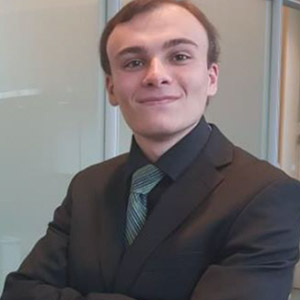
Christian Cupo has a diverse background which promotes his research interest at the interface of engineering and biology. He entered Columbia University as a Blavatnik Presidential Fellow in the mechanical engineering Ph.D. program, where he is working in the labs of Professors James Hone and Karen Kasza studying organ fabrication, optogenetics and microfabrication. Prior to joining Columbia, he graduated summa cum laude with dual Bachelor and Master of Engineering degrees in mechanical engineering from Stevens Institute of Technology in the spring of 2018. During this time, his primary research focused on nanomaterial fabrication and characterization in the Dr. Eui-Hyeok Yang Laboratory. Upon graduation, he transitioned to a cancer nanomedicine laboratory at Memorial Sloan Kettering Cancer Center (MSKCC) under the mentorship of Dr. Daniel Heller, developing carbon nanotube nanosensors for non-invasively detecting endolysosomal diseases and cancer. Christian extends his passion for engineering using three of his personal 3d printers to create intricate models related to his research to aid in outreach STEM initiatives.
Update from Christian Cupo on this past year at Columbia Engineering:
Much was accomplished in this past academic year because of this very generous fellowship from the Blavatnik Foundation. I completed all of my required academic courses and achieved a 3.92 GPA. In addition, I passed the qualifying examination, which is the first major milestone in the journey to completing my Ph.D. Concurrently, I made major strides in my research. I rotated in both Prof. Hone’s and Prof. Kasza’s laboratories and developed such a passion for both fields that my thesis project of engineering 3D tissue structures will be co-mentored by both professors. Additionally, I was able to complete all of the intensive cleanroom training for fabricating micropatterns and independently finished a project on creating high aspect ratio cell microwells for developing 3D tissue cultures in collaboration with a group at Mt. Sinai. At the same time, I made significant progress in fabricating a microarray of pillars for cell force tracking in the characterization of optogenetic tools. After gaining this initial experience, I was also able to take the lead on several laboratory tours for various outreach programs and inspire students to take part in the summer research opportunities offered by Columbia.
In spite of recent events, I was productive this spring too and was able to analyze experimental data that had been collected before the university ramp-down, which will be included in a forthcoming manuscript on which I will be a co-author. Furthermore, I was able to start applying for fellowships that would cover my tuition, stipend, and fees after my current fellowship expends.
In my remaining time at SEAS, I will continue to direct my research towards integrating the fields of optogenetics and microfabrication to engineer synthetic organs through tissue folding (Origami). The recent time away from the lab has provided me a serendipitous opportunity to clarify the objectives of my project and comprehensively outline the experiments to be performed.
Likewise, I will continue to hone my technical expertise in the mechanical, biomedical, and chemical engineering fields through collaborations with other research groups, presenting my research at interdisciplinary conferences each year and by attending the weekly seminars in the respective departments. Also, I am currently mentoring two undergraduate students which has allowed me the opportunity to not only share my passion for my project, but also learn with them as this original project moves forward. I will continue to mentor many more students in my time at SEAS to help students develop a passion for research.
Ipek Gokulu, Department of Chemical Engineering
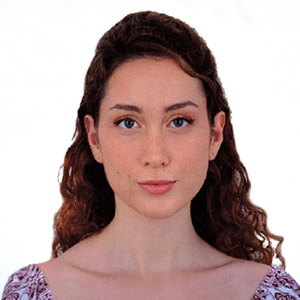
Ipek S. Gokulu is a PhD student at Columbia University in the department of Chemical Engineering. She graduated from TED Ankara College Private High School in 2014 where she completed the International Baccalaureate Diploma Program. After high school, she graduated from Koc University with a double major in Chemical & Biological Engineering and Industrial Engineering as the first ranking student in her department in 2019. She conducted research projects and published a paper and a book chapter on biomimetic materials, nanomaterials and tissue regeneration during her undergraduate education. She started her doctoral studies as a PhD student and Blavatnik Presidential Fellow at Columbia University in September 2019. She joined the Banta Lab in January 2019 and is currently working on a project to explore the impact of applied forces on the activity of a model thermostable enzyme using DNA based methods.
Update from Ipek Gokulu on this past year at Columbia Engineering:
I am proud to complete the 2019-2020 academic year as Blavatnik Presidential Fellow in the Department of Chemical Engineering at Columbia University. During the first half of this academic year, I have mainly focused on my classes and getting to know the prestigious faculty and research groups in my department to decipher which would best suit my academic skills and interests. As a result, I completed the Fall 2019 semester with a 3.92/4.00 GPA and joined the Banta Lab with Professor Scott Banta. I thought that working with Scott Banta and his group as my PI and research group was the best match for me both because I saw a substantial area of growth for my scientific vision and because aspired to work on protein and metabolic engineering for a long time. I started to actively work on my first project which is called “Exploring the Impact of Applied Forces on the Activity of Alcohol Dehydrogenase D (AdhD) from Pyrococcus furiosus Using DNA Tweezers” in the end of January 2020. Our main objective in this project is to successfully demonstrate the dynamic and controllable changes in catalytic activity that can be achieved by altering applied forces to the enzyme during catalysis. Accordingly, I worked on protein modeling and site directed mutagenesis in the first half of Spring 2020 semester while concentrating on my classes. I have passed all of my classes which were mainly focused on biopharmaceutical production and industry with high grades and maintained my GPA as letter grading was not effective in Spring 2020 due to COVID-19 regulations. I have not been able to go into the lab due to the same lockdown regulations in the second half of the Spring 2020 semester and the beginning of summer. Thus, I have focused on protein modeling and engineering algorithms in order to optimize the protein structure and DNA attachment points for achieving the best possible results once the labs reopen. As NYC recently went into Phase 2, I have now returned to the lab and hope to complete this project during the next academic year with accelerated progress. I hope and aim to be involved in many more projects related to biochemical engineering and improve myself until I graduate with a PhD degree from Columbia University as a Blavatnik Presidential Fellow.
Olivia Powell, Department of Biomedical Engineering
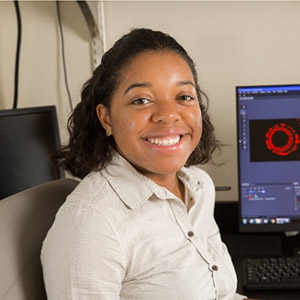
Olivia Powell joined the doctoral program in Biomedical Engineering this past fall. A graduate of the University of Delaware, she completed a Bachelors of Mechanical Engineering and her honors thesis, “Developing a passively driven storage platform for droplet-based microfluidic virology experiments.” She has joined Biomedical Engineering Professor Nandan Nerurkar’s Morphogenesis and Developmental Biomechanics Lab to study the physical mechanisms that influence the development and behavior of cells and tissues, and contribute to disease pathogenesis.
Update from Olivia Powell on this past year at Columbia Engineering:
Over the course of my first year, I have been investigating the molecular and mechanical cues that drive foregut development in the chick embryo. Concepts from continuum fluid mechanics, developmental biology, and computational modeling SEAS graduate courses have complemented my project and helped me make strides towards my research goals. During recent months, I have also participated as a guest speaker and mentor to high school students interested in science and research through the Hypothekids program. Ultimately, I aim to devote the rest of my time at SEAS to understanding the underlying mechanisms of early development, as well as the respiratory and digestive congenital birth defects that occur when those processes go awry.
Fay Wang, Department of Biomedical Engineering
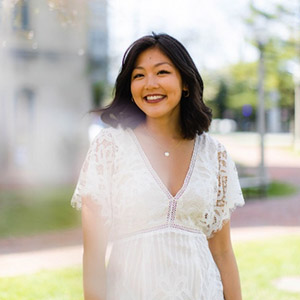
Fay is a Ph.D. student in biomedical engineering. She graduated from Boston University with a degree in biomedical engineering, where she worked on several projects related to biomedical optics, such as creating an imaging device to aid in assessing melanomas, and using spatial frequency domain imaging in preclinical breast cancer studies. Fay joined Professor Andreas Hielscher and his Biophotonics and Optical Radiology lab, where she plans to continue her research in biomedical optics and breast cancer. Currently, they are working on a bra that can be worn by breast cancer patients in the clinic to monitor their chemotherapy response. As a graduate student, she hopes that she can continue to develop novel optical technologies like these and translating them to the clinical setting.
Update from Fay Wang on this past year at Columbia Engineering:
My first year as a Ph.D. student has been very exciting, and I am incredibly thankful for all the experiences I have gotten so far. I was able to image breast cancer patients in our clinical study at CUIMC using both a conventional Diffuse Optical Tomography (DOT) system and the bra imager that was developed in our lab. Interacting with the patients was a bit intimidating at first, but I found that I rather enjoyed it once I got comfortable. I was also able to present the development of our bra at a virtual conference for The Optical Society. It was great to be able to represent my lab, listen to the feedback of others in my field, and watch and learn from the other presentations. I look forward to continuing our clinical work at the medical center (once COVID-19 passes), continuing to develop our imaging technologies, and hopefully publishing my first paper in the near future.
Besides research, I have made a lot of great friendships through classes, graduate student events, and intramural sports. I feel as though I have a strong support system here at Columbia, and I look forward to spending the next few years with everyone at SEAS. Currently, I am preparing for my qualifying exam. So, if all goes well, I will officially be a Ph.D. candidate and I can begin to develop a research proposal for my thesis!