Columbia Students Go Full Throttle with LOX Rocket
Blast off! CSI Rockets team successfully launch its hybrid rocket using liquid oxygen. Credit: Courtesy of CSI
The successful launch capped off a yearslong effort by nearly 60 undergraduates to design, build, and test the rocket. The project came to fruition at the FAR-OUT 2024-2025 competition, where the rocket reached its target altitude for the first time in team history and achieved full recovery. The team shared video clips of the launch with Columbia Engineering faculty and supporters.
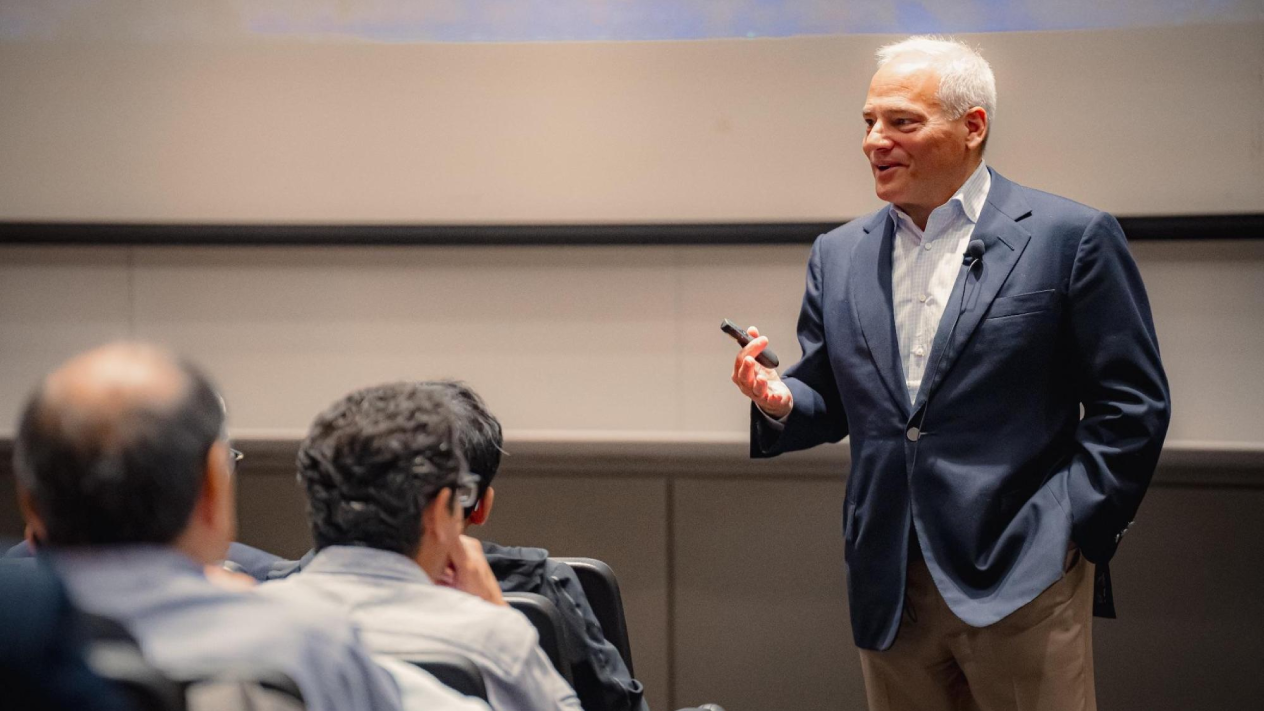
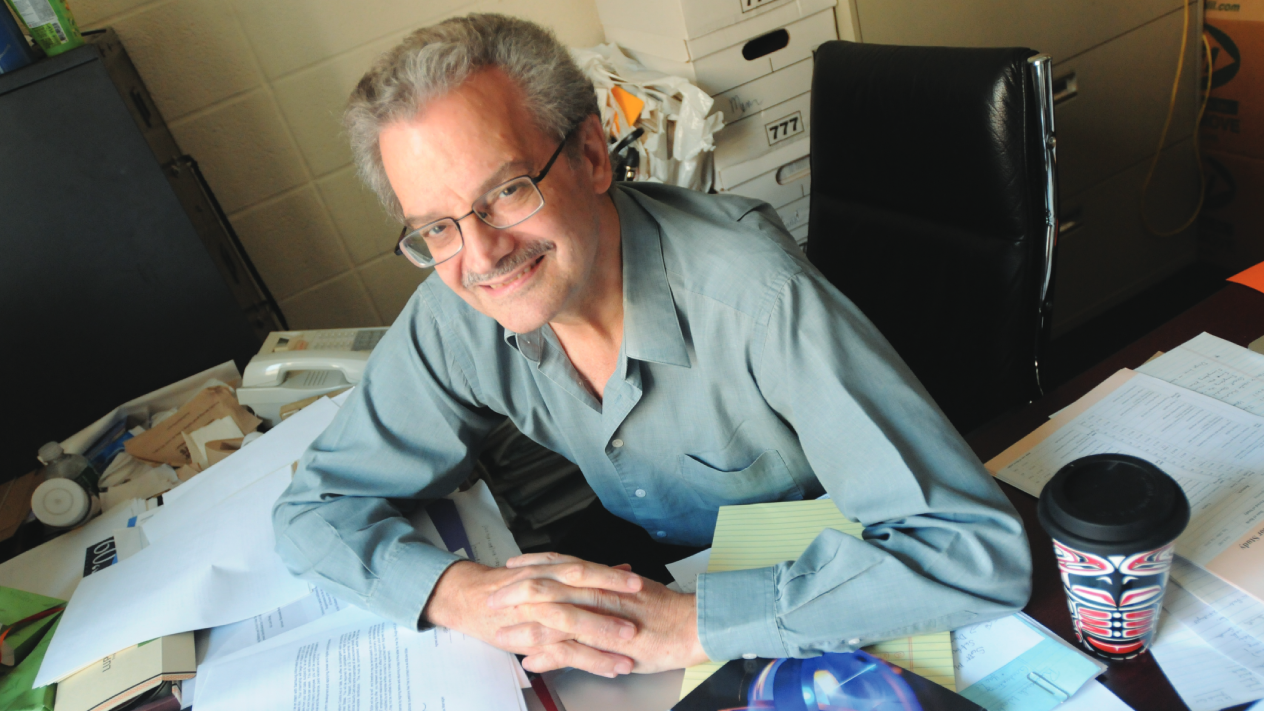
“This is an incredible achievement,” said Hod Lipson, James and Sally Scapa Professor of Innovation and chair of the Department of Mechanical Engineering. “It shows how our engineering education has accelerated from textbooks and lectures to record-breaking experiential learning. This is literally the next generation of rocket scientists.”
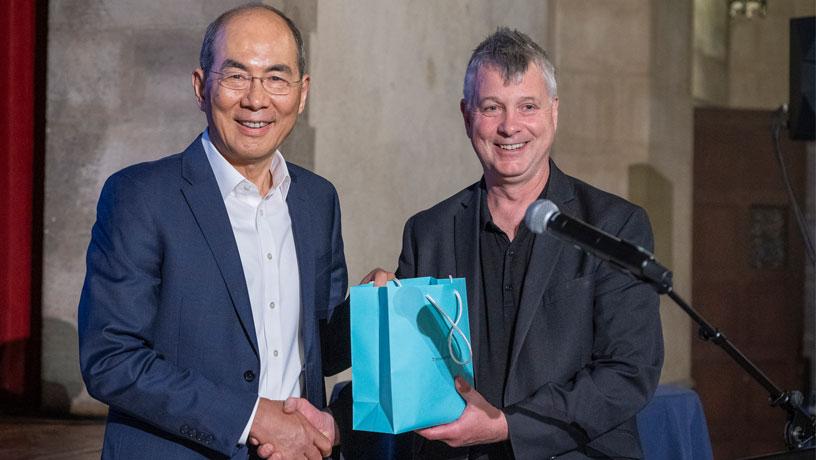
“It made my day to see our student team launch this newly designed rocket,” said Shih-Fu Chang, Dean of Columbia Engineering.
Now in its third consecutive year of successful launches, CSI Rockets has become a proving ground for student-led aerospace work. With this milestone behind them, the team is already planning its next move.
“We’re excited for what the next generation will accomplish,” said Sheehan. “This is just the beginning.”
Getting to the Launchpad
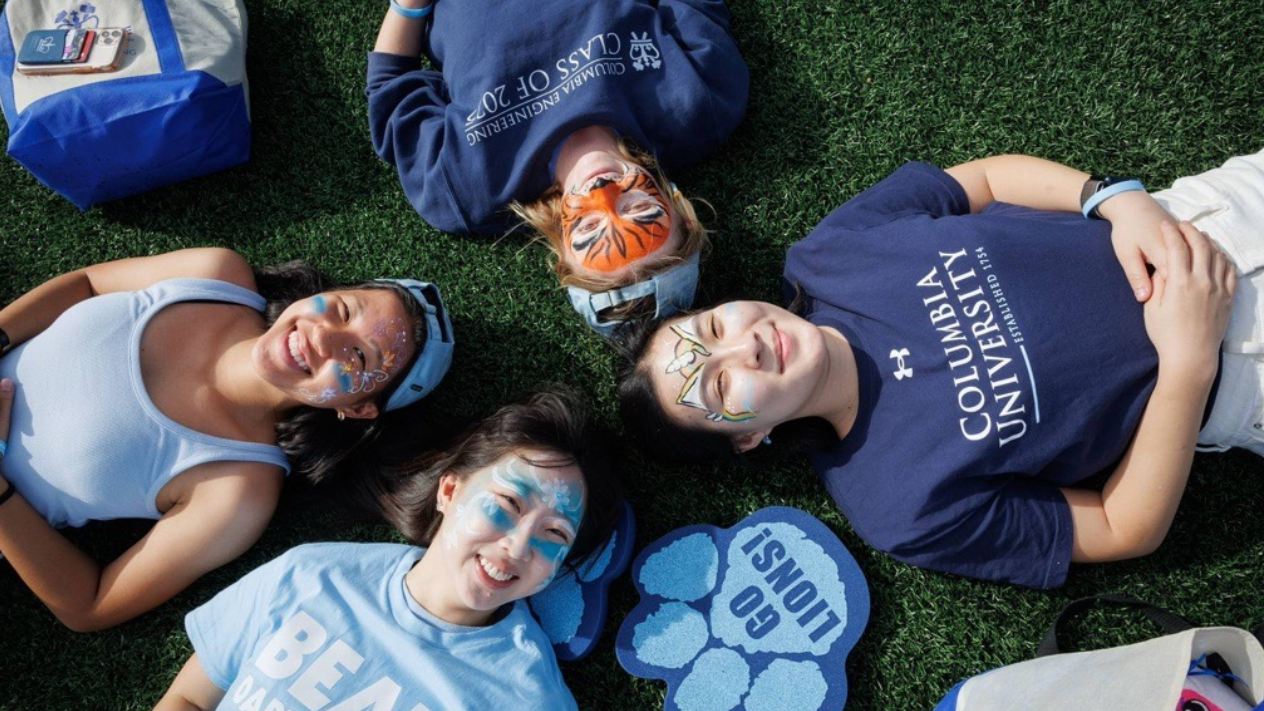
The CSI Rockets team is composed entirely of undergraduate students, drawing from a wide range of disciplines and schools across Columbia University. While the group is rooted in engineering, it includes students from Columbia College, Columbia Engineering, and Barnard.
While most teams at FAR-OUT work on the same rocket for two or three years, the Columbia team builds a new rocket each year.
“We do something different with the rocket every year,” said CSI Rockets co-lead Valentina Fichera, who graduated in 2025 with a degree in mechanical engineering. “Everyone was on board with transitioning to liquid oxygen — it forced us to push ourselves.”
This year’s team included about 60 members, with 19 traveling to the desert for the launch. Those undergraduate students were spread across specialized teams focused on propulsion, electronics, airframe, payload, and the combustion chamber.
Inside the Rocket
CSI Rockets had previously relied on nitrous oxide hybrid systems. But this year, the team switched to a liquid oxygen hybrid, which is a far more technically demanding system typically used in larger-scale commercial rockets. Few student teams even attempt liquid oxygen hybrids.
“We all wanted that experience,” Fichera said.
“Liquid oxygen exists in a cryogenic state,” explained Sheehan. “So everything from storage to pressurization becomes more complex. We had to overhaul our entire propulsion system.” The team used gaseous nitrogen to pressurize the liquid oxygen and built new components to manage the system safely and effectively.
“We designed for a target apogee of 6,500 feet and reached nearly 5,700. It was our most accurate launch yet,” Fichera said. The launch itself came on the second-to-last window on the final day of the event, after multiple early-morning attempts.
Fichera and Sheehan, who have interned at leading aerospace companies like Firefly and SpaceX, are pursuing engineering positions in industry.
“We spent a lot of time working on the rocket this year,” Fichera said with a laugh.
CSI team members who attended the FAR-OUT rocketry competition:
- Michael Sheehan ’26SEAS (Team Co-Lead)
- Skylar Bogdanowitsch ’26SEAS (Team Co-Lead)
- Valentina Marini Fichera ’25SEAS (Team Co-Lead)
- Jorge Casas '23CC (Team Co-Lead)
- Aadam Awad ’26SEAS (Fluids Co-Lead)
- Vayu Singhal ’26SEAS (Fluids Co-Lead)
- Isabella Singleton ’27SEAS (Airframe Lead)
- Theo Lack ’26SEAS (Rising Fluids Co-Lead)
- Angela De Labra ’27SEAS (Rising Airframe Co-Lead)
- Alex Chen ’25SEAS (Electronics Co-Lead)
- Ania Krzyżańska ’25SEAS (Electronics Co-Lead)
- Tieqiong Zhang ’25SEAS (Electronics Co-Lead)
- Aruzhan Abil ’28CC (Rising Electronics Co-Lead)
- Joss Clegg ’28SEAS (Rising Electronics Co-Lead)
- Christopher Acosta ’25SEAS (Propulsion Combustion Chamber Co-Lead)
- Tingmeng Wang ’27SEAS (Propulsion Combustion Chamber Co-Lead)
- Raisa Effress ’27Barnard (Propulsion Combustion Chamber Co-Lead)
- Naomi Dreicer Liberman ’27SEAS (Rising Propulsion Combustion Chamber Co-Lead)
- Maria Cuevas ’26CC (Payload Co-Lead)
- Siroun Johnson ’26SEAS (Payload Co-Lead)
Lead Photo Credit: Courtesy of Columbia Space Initiative
Fresh from their win at the Millard Chan Tech Challenge, the team behind MilkShaker demonstrated a practical and science-backed solution to prevent mastitis, providing professional level care without sacrificing time or requiring special training. Another group of seniors in the Department of Mechanical Engineering showcased a prototype for the CareCruiser, a wheelchair-to-stroller attachment designed to give wheelchair-using parents and caregivers greater independence when navigating with strollers and carseats.
Several projects also tackled infrastructure design, including a civil engineering and engineering mechanics team that unveiled Rethinking Resilience. The project envisions a new sustainable, flood-resilient train station to replace the existing Ardsley-on-Hudson station along the MTA’s Metro-North Hudson Line.
And in the gaming arena, a team from the Department of Electrical Engineering demonstrated their physical tank game using modified remote-controlled cars. By reconfiguring the electronics of remote-controlled cars, the team enabled Bluetooth-based control of both the motors and onboard lasers. Players score by hitting opposing cars with laser pulses, while any car that gets hit is temporarily disabled with a five-second freeze penalty.
Dean Shih-Fu Chang greeted the students and commended them on their year-long efforts. “You all have started with an idea and brought it to life. That’s what engineers do! We bring ideas to life . . . Today’s showcase truly represents our Engineering for Humanity vision. This is a milestone in your Columbia experience and one I hope you remember for years to come.”
Each year, Columbia Engineering seniors work on a capstone project, aka Senior Design. They are challenged to solve real-world problems with innovative solutions, rooted in their foundational math, science and engineering courses.
Here’s a look at some of the students and their innovations at Senior Design Expo 2025.
Scenes from Senior Design Expo ‘25
Credit: Timothy Lee/Columbia Engineering
Masthead Caption: A student tries on LenScribe, a compact set of 3D-printed glasses designed for audio input, speech processing, and visual display
Masthead Credit: Timothy Lee/Columbia Engineering
Mayor's Cup Highlights
Credit: Diane Bondareff/Columbia Engineering
A day of innovation, teamwork, and STEM spirit
"We are so happy to have you here, and we hope to do more with New York City schools and our partners to share and promote our love of STEM,” said Dean Chang. “Columbia Engineering has a long history of supporting FIRST Robotics teams with mentors–we have hosted the FIRST Robotics kickoff for multiple years and plan to do so again in 2026.”
Dean Chang also noted that more than 40 students from the Engineering School had signed up to volunteer. “Many of our engineering students are FIRST alumni, as well. They have personally benefited from this program and they know the impact being on a robotics team in middle or high school can have on a young person's life.”
“Today’s competition is more than just a contest. It is a testament to the dedication, the creativity, and the hard work of each and every one of you,” said Ray while addressing the students. “The innovation and approaches you took to source materials and build your projects were truly remarkable – it’s very inspiring.”
To win the robot challenge, alliances of two teams would compete against another alliance–and challenge their robots with a series of tasks, from collecting blocks and disposing them in the team’s bucket, or retrieving hooked blocks to hang in the middle of the arena. The Mayor’s Cup came to an exciting conclusion when the last two teams of alliances competed for first place. Teams Saturn and Mercury, an alliance team took home the first place trophy. Both teams were made up of students from the Staten Island Technical High School.
Robotics demos and campus exploration
In addition to the full day of competitions, Columbia Engineering faculty members presented a series of robotics demos. Highlights included demonstrations from Hod Lipson’s Creative Machines Lab, Sunil Agrawal’s ROAR Lab, Yunzhu Li’s RoboPI Lab, and Matei Ciocarlie’s ROAM Lab. The School’s Office of Outreach also showcased a creation from their flagship program SHAPE (Summer High School Academic Program for Engineers), a summer program that offers college-level courses taught by Columbia faculty.
Additional demos were showcased by student groups representing the Engineering School, including Columbia Space Initiative, Columbia Robotics Club, Biomedical Engineering Society, and Columbia University Formula Racing. High school students participating in the competition also had a chance to tour the School and learn more about student clubs from Columbia students who shared demos of their past work.
“Thank you to the students for really putting in the effort to make this day a reality,” said Zigman at the competition. “Many of you will go on to careers in STEM, but for those of you who don’t, you’re going to be incredibly successful because of the mindset and skills you’ve learned that will serve you well in anything you choose.”
Lead Photo Credit: Diane Bondareff/Columbia Engineering
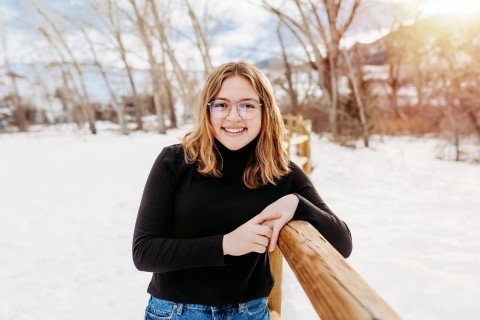
Kathryn (Kate) Lampo has always aimed higher than most—literally. “I was the kid who wanted to be an astronaut,” she said.
As a senior majoring in mechanical engineering, she’s inching even closer to achieving that childhood dream. After graduation this spring, Kate, the current co-president of Columbia Space Initiative (CSI), will soon begin her professional journey in the aerospace field.
Kate has recently been named a recipient of the 2025 Campbell Award, an honor presented to a graduating student who shows exceptional leadership and Columbia spirit as exemplified by the late Bill Campbell ’62CC, ’64TC. She has received numerous accolades this past year, including a Marshall Scholarship and was honored with Aviation Week Network’s 20 Twenties Class of 2025 award. Advised by Mechanical Engineering Professors Mike Massimino and Matei Ciocarlie, Kate conducts research in Ciocarlie’s Robotic Manipulation and Mobility Laboratory, where she works on designing and building robotic manipulators. She will be continuing her studies in space robotics at the University of Oxford following graduation.
Thinking back — what first drew you to Columbia Engineering?
Honestly, the city! I grew up in the suburbs of Denver, and while I loved Colorado (and still do), I knew that I wanted to move somewhere completely different for college. Columbia also seemed like a place brimming with opportunity, and I knew that I would grow in significant ways at Columbia Engineering.
Did you always know you wanted to get into the aerospace engineering field?
I did! When I was younger, I was the kid that wanted to grow up to be an astronaut. I’ve always been fascinated by the scientific potential inherent in exploring our universe, and as my aspirations developed throughout middle and high school, I became more and more interested in building the vehicles that allow us to do so. To me, aerospace engineering has always been a great way to combine my love for space with my enjoyment of designing and building things. I’ve been able to refine those aspirations further here, and am now focused on robotics for space applications.
What’s a moment at Columbia that shifted how you see yourself—or your future?
I think the most valuable thing that Columbia has taught me is to believe that anything is possible.
My freshman year, I worked in a team as a part of the Columbia Space Initiative (CSI) that built a lunar gripping and anchoring tool for a NASA competition. After being selected as national finalists, we got to travel to the Johnson Space Center in Houston, TX to test the tool in the Neutral Buoyancy Laboratory, which is a microgravity astronaut training center.
To have that opportunity so early on was a phenomenal experience, and it made me realize that I could do serious engineering as early as my freshman year. That has inspired me to pursue every outlandish opportunity since, and while plenty of my efforts have been unsuccessful, my penchant for trying has opened up many other doors for me throughout college.
“The most valuable thing that Columbia has taught me is to believe that anything is possible.”
Kathryn LampoBS'25
How has the School’s guiding principle, Engineering For Humanity, resonated with your experience at Columbia?
I’ve been lucky enough to have had many teaching opportunities that embody the concept of Engineering for Humanity to me. I’ve spent a lot of time working on educational STEM outreach in Title I middle schools across the city, developing and delivering lessons on space science and engineering to thousands of kids. I’ve also been a teaching assistant for first-year students for the last two years, which is something that I’ve found to be incredibly rewarding.
In my mind, a big part of Engineering for Humanity is making STEM opportunities accessible to anyone that wants to pursue them. Coming up with creative and novel solutions that benefit humanity requires integrating diverse perspectives, which is something that Columbia has made clearly evident to me.
If you could send one piece of advice to your first-year self, what would it be?
Relax! My first-year self (like many first-years) was overly stressed and trying to do way too much. Four years is a long time, and I would encourage her to authentically explore her interests instead of trying to join every extracurricular she came across. There’s no rush—and taking time for rest is important!
Share some words to live by or a message to your fellow grads?
While I often think the phrase is used in a negative way, I really like the expression “throw everything at the wall and see what sticks.” I’m a big believer in trying things with the understanding that not everything will work out, but something is bound to stick. I think it’s worthwhile to be open to new and unfamiliar experiences, and to pursue things that seem improbable.
What are your plans this summer and after Columbia?
This summer, I’m excited to spend some time resting at home in Colorado with my family and friends. In the fall, I’m off to Oxford to start my MSc in Engineering! I’ll be studying robotic planning for space environments.
What will you miss the most about your time at Columbia Engineering?
Easily the Columbia Space Initiative (CSI)! CSI has been such a home for me during my four years at Columbia—I joined the first week of my freshman year, and I haven’t left since. From the jump, the club provided me with truly phenomenal aerospace opportunities, from testing a lunar gripping tool in NASA’s Neutral Buoyancy Laboratory to calling an astronaut on the ISS to building a pair of satellites to launch in the next couple of years. Beyond that, CSI has also given me some of my closest friends and my strongest community here. I’ll miss it very dearly!
2025 Millard Chan ‘99 Tech Challenge
Sirin Samman/Columbia Engineering
Bringing robotics to the factory floor
The first place prize of $25,000 was awarded to Kathedra, which is developing an AI-guided robotic upholstery system that brings innovation to the $180 billion upholstered furniture market.
A key goal is to free workers from strenuous, repetitive manual work and enable manufacturers to produce diverse chair designs at high volume in the US. Their aim is to solve a critical labor shortage the industry is currently facing.
“We are so grateful to Columbia for providing the resources. It’s been so amazing to be part of this community,” said David Faes ‘24GS, a co-founder of Kathedra. Faes, a recent alumnus of the School of General Studies, and his co-founder, Oliver Chasan, said furniture manufacturers have enthusiastically welcomed their idea, noting that nothing like it currently exists. The team, which includes mechanical engineering senior Kyle Cash, is connecting with the Catawba Valley Furniture Academy, a reputable college for careers in furniture making, to seamlessly integrate automation into the industry.
By women for women
Awarded $15,000, second-place prize went to Milkshaker, co-founded by five Engineering seniors–Hope Hersom, Pricilla Dua, Valentina Marini Fichera, Elise Yang, and Kavita Parikh. This innovation aims to prevent and treat mastitis, an inflammation of the breast tissue causing pain and fever in nursing mothers.
The only known solution is a lymphatic drainage breast massage performed by certified physical therapists, noted Hersom, and the pool of these trained specialists is limited. Even in Manhattan, she said, only two such specialists exist, underscoring how inaccessible the treatment is for the majority mothers.
A bra-like garment, MilkShaker is wearable tech with a built-in mechanism and rechargeable batteries. The device mimics the work of a certified therapist by massaging the breast— pushing fluid from the top and bottom of the breast away from the nipple and milk ducts— to prevent clogging. The team has produced a prototype, with next steps to obtain a patent and ultimately enter into clinical trials.
A breath of fresh air
The third-place winner of a $10,000 prize was awarded to SWERV (Smart Windows Energy Recovery Ventilators). Founded by a three-member team led by Austin Riesenberger, SWERV is hoping to improve indoor air quality, especially for those with asthma. Compared to traditional ventilators with costs ranging from $2,000 to $4,000 and require major renovation, SWERV is window-mounted and efficiently cycles fresh air while recovering heat and moisture.
“I feel great because this is our first seed money that will help us build more prototypes, finalize deals with manufacturers and obtain a patent,” said Riesenberger, a mechanical engineering senior.
Smarter glasses, powered with AI for the visually impaired
Cadre Technologies received this year’s Engineering for Humanity Prize of $10,000. Cadre is producing AI-powered glasses for the visually impaired. Unlike other glasses which do only object detection, this features real-time object recognition, text reading, and facial identification. It processes visual data instantly, converting it into audio feedback to help users navigate their surroundings with confidence.
“We've conducted 1,357 trials in different parts of India, but we're working to get approval to start trials in the U.S., and this prize money will help achieve that,” said Cadre founder Muneer Khan MS’22, who studied electrical engineering at Columbia.
Since 2021, Chan has been providing not only financial support, but mentorship for startups. “I’ve been where you are today, and I can relate. Sometimes you are smart. Sometimes you are lucky. You need both,” he said in his remarks to attendees. With robust experience in establishing successful startups, Chan urged winners to take advantage of all the networks and resources Columbia offers.
Impressed by the quality of this year’s entries, one of the judges, Lan Huang, a leading scientist, inventor and biotech entrepreneur said selection was based on viability of the start-up, competitive advantage, and team composition.
“It gets better every year,” she said of the annual competition. “I can tell you, as an entrepreneur myself, it’s not the technology that makes a company successful but the team who can stick together to the end.”
Lead Photo Caption: The MilkShaker team wins second-place prize of $15,000 in startup funding
Lead Photo Credit: Sirin Samman/Columbia Engineering