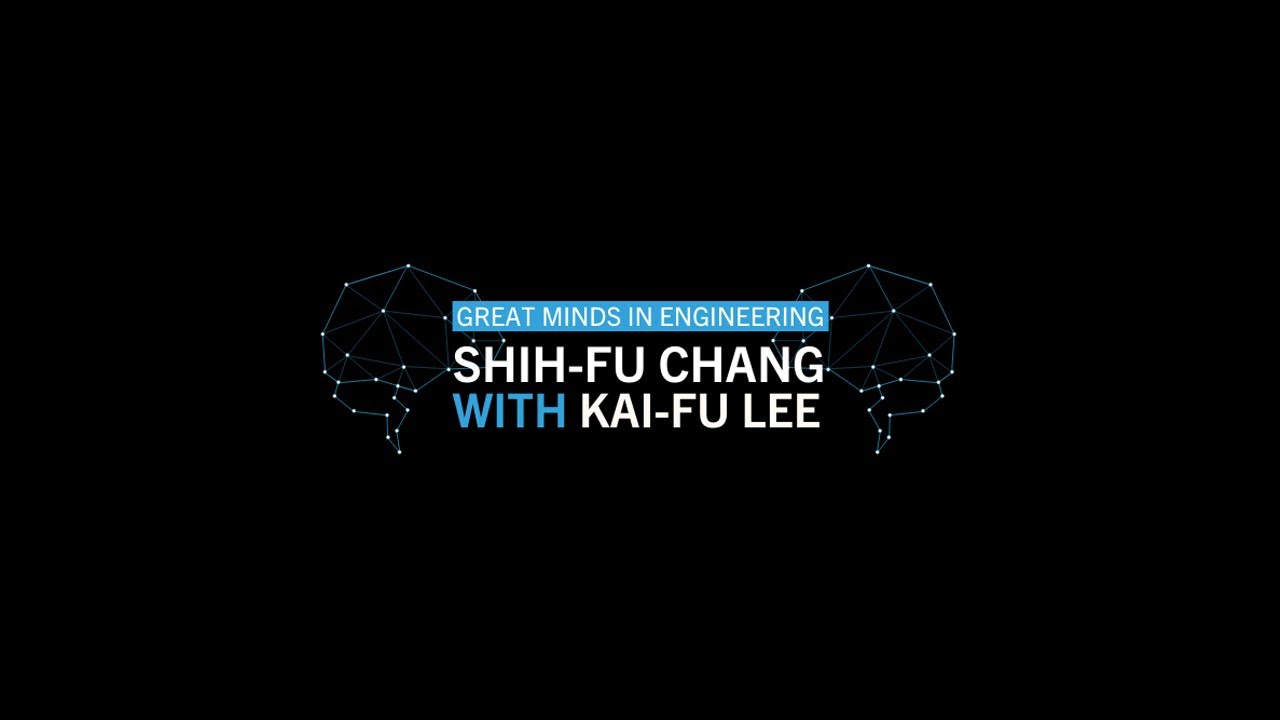
Columbia Engineering Interim Dean Shih-Fu Chang speaks with AI pioneer Kai-Fu Lee

AI pioneer and best-selling author Kai-Fu Lee recently sat down with Columbia Engineering Interim Dean Shih-Fu Chang for a wide-ranging conversation touching on key technologies, such as machine learning, cryptocurrencies, and virtual reality, and how they might shape our lives over the next 20 years. Lee, whose new book “AI 2041: Ten Visions for Our Future” was recently published, is a seminal figure in AI technology, inventor of the first AI to defeat a world champion in the game Othello in 1988. 

Lee got his academic start in computer science with a bachelor’s from Columbia in 1983 and went on to be a president of Google China and executive at Microsoft, SGI, and Apple. He is currently CEO of Sinovation Ventures and president of Sinovation Ventures’ Artificial Intelligence Institute. Dean Chang is also a professor of computer science and electrical engineering, as well as inaugural director of Columbia Center of Artificial Intelligence Technology. He is a world-renowned expert in computer vision, multimedia, and artificial intelligence. The talk and audience questions were moderated by Jessica Tsoong BS’08, a tech entrepreneur and angel investor currently based in the Bay Area, California.


Lead Photo Credit: Brandon Vallejo/Columbia Engineering

Three Things to Know about Microplastics and Nanoplastics

  1. Ubiquitous Presence

    Microplastics, tiny particles less than 5 millimeters in size, have been found in environments worldwide—from the deepest parts of the ocean to the Arctic ice, and even in the air we breathe and the food we consume. In environments, microplastics can continue to break down, and form nanoplastics, plastic particles with sizes less than 1 micrometer. 
     

  2. Hidden in Plain Sight

    A recent study by Dr. Yan has revealed that bottled water can contain hundreds of thousands of nanoplastic particles per liter. These tiny bits are often invisible to the naked eye but can be ingested by humans and animals, potentially impacting health.
     

  3. Persistent Pollutants

    Microplastics are highly resistant to environmental degradation. They can linger in ecosystems for decades, accumulating and posing long-term risks to marine life and food safety as they absorb and concentrate toxic pollutants. Due to the small particle size, nanoplastics can enter the human body and transport to vital organs such as the liver, potentially leading to negative health outcomes. The funded NOAA project will build smart plastic collection systems, and if successful, can largely reduce the riverine input to ocean environments.

Subscribe to Computational Engineering & AI