Mayor's Cup Highlights
Credit: Diane Bondareff/Columbia Engineering
A day of innovation, teamwork, and STEM spirit
"We are so happy to have you here, and we hope to do more with New York City schools and our partners to share and promote our love of STEM,” said Dean Chang. “Columbia Engineering has a long history of supporting FIRST Robotics teams with mentors–we have hosted the FIRST Robotics kickoff for multiple years and plan to do so again in 2026.”
Dean Chang also noted that more than 40 students from the Engineering School had signed up to volunteer. “Many of our engineering students are FIRST alumni, as well. They have personally benefited from this program and they know the impact being on a robotics team in middle or high school can have on a young person's life.”
“Today’s competition is more than just a contest. It is a testament to the dedication, the creativity, and the hard work of each and every one of you,” said Ray while addressing the students. “The innovation and approaches you took to source materials and build your projects were truly remarkable – it’s very inspiring.”
To win the robot challenge, alliances of two teams would compete against another alliance–and challenge their robots with a series of tasks, from collecting blocks and disposing them in the team’s bucket, or retrieving hooked blocks to hang in the middle of the arena. The Mayor’s Cup came to an exciting conclusion when the last two teams of alliances competed for first place. Teams Saturn and Mercury, an alliance team took home the first place trophy. Both teams were made up of students from the Staten Island Technical High School.
Robotics demos and campus exploration
In addition to the full day of competitions, Columbia Engineering faculty members presented a series of robotics demos. Highlights included demonstrations from Hod Lipson’s Creative Machines Lab, Sunil Agrawal’s ROAR Lab, Yunzhu Li’s RoboPI Lab, and Matei Ciocarlie’s ROAM Lab. The School’s Office of Outreach also showcased a creation from their flagship program SHAPE (Summer High School Academic Program for Engineers), a summer program that offers college-level courses taught by Columbia faculty.
Additional demos were showcased by student groups representing the Engineering School, including Columbia Space Initiative, Columbia Robotics Club, Biomedical Engineering Society, and Columbia University Formula Racing. High school students participating in the competition also had a chance to tour the School and learn more about student clubs from Columbia students who shared demos of their past work.
“Thank you to the students for really putting in the effort to make this day a reality,” said Zigman at the competition. “Many of you will go on to careers in STEM, but for those of you who don’t, you’re going to be incredibly successful because of the mindset and skills you’ve learned that will serve you well in anything you choose.”
Lead Photo Credit: Diane Bondareff/Columbia Engineering
2025 Millard Chan ‘99 Tech Challenge
Sirin Samman/Columbia Engineering
Bringing robotics to the factory floor
The first place prize of $25,000 was awarded to Kathedra, which is developing an AI-guided robotic upholstery system that brings innovation to the $180 billion upholstered furniture market.
A key goal is to free workers from strenuous, repetitive manual work and enable manufacturers to produce diverse chair designs at high volume in the US. Their aim is to solve a critical labor shortage the industry is currently facing.
“We are so grateful to Columbia for providing the resources. It’s been so amazing to be part of this community,” said David Faes ‘24GS, a co-founder of Kathedra. Faes, a recent alumnus of the School of General Studies, and his co-founder, Oliver Chasan, said furniture manufacturers have enthusiastically welcomed their idea, noting that nothing like it currently exists. The team, which includes mechanical engineering senior Kyle Cash, is connecting with the Catawba Valley Furniture Academy, a reputable college for careers in furniture making, to seamlessly integrate automation into the industry.
By women for women
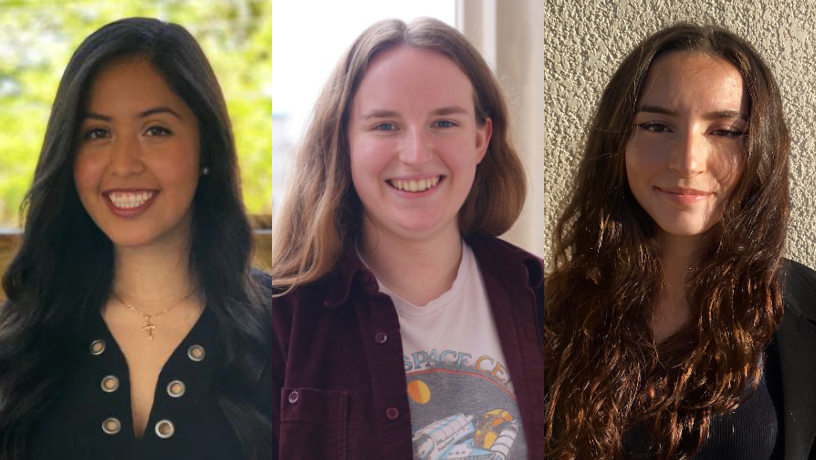
Awarded $15,000, second-place prize went to Milkshaker, co-founded by five Engineering seniors–Hope Hersom, Pricilla Dua, Valentina Marini Fichera, Elise Yang, and Kavita Parikh. This innovation aims to prevent and treat mastitis, an inflammation of the breast tissue causing pain and fever in nursing mothers.
The only known solution is a lymphatic drainage breast massage performed by certified physical therapists, noted Hersom, and the pool of these trained specialists is limited. Even in Manhattan, she said, only two such specialists exist, underscoring how inaccessible the treatment is for the majority mothers.
A bra-like garment, MilkShaker is wearable tech with a built-in mechanism and rechargeable batteries. The device mimics the work of a certified therapist by massaging the breast— pushing fluid from the top and bottom of the breast away from the nipple and milk ducts— to prevent clogging. The team has produced a prototype, with next steps to obtain a patent and ultimately enter into clinical trials.
A breath of fresh air
The third-place winner of a $10,000 prize was awarded to SWERV (Smart Windows Energy Recovery Ventilators). Founded by a three-member team led by Austin Riesenberger, SWERV is hoping to improve indoor air quality, especially for those with asthma. Compared to traditional ventilators with costs ranging from $2,000 to $4,000 and require major renovation, SWERV is window-mounted and efficiently cycles fresh air while recovering heat and moisture.
“I feel great because this is our first seed money that will help us build more prototypes, finalize deals with manufacturers and obtain a patent,” said Riesenberger, a mechanical engineering senior.
Smarter glasses, powered with AI for the visually impaired
Cadre Technologies received this year’s Engineering for Humanity Prize of $10,000. Cadre is producing AI-powered glasses for the visually impaired. Unlike other glasses which do only object detection, this features real-time object recognition, text reading, and facial identification. It processes visual data instantly, converting it into audio feedback to help users navigate their surroundings with confidence.
“We've conducted 1,357 trials in different parts of India, but we're working to get approval to start trials in the U.S., and this prize money will help achieve that,” said Cadre founder Muneer Khan MS’22, who studied electrical engineering at Columbia.
Since 2021, Chan has been providing not only financial support, but mentorship for startups. “I’ve been where you are today, and I can relate. Sometimes you are smart. Sometimes you are lucky. You need both,” he said in his remarks to attendees. With robust experience in establishing successful startups, Chan urged winners to take advantage of all the networks and resources Columbia offers.
Impressed by the quality of this year’s entries, one of the judges, Lan Huang, a leading scientist, inventor and biotech entrepreneur said selection was based on viability of the start-up, competitive advantage, and team composition.
“It gets better every year,” she said of the annual competition. “I can tell you, as an entrepreneur myself, it’s not the technology that makes a company successful but the team who can stick together to the end.”
Lead Photo Caption: The MilkShaker team wins second-place prize of $15,000 in startup funding
Lead Photo Credit: Sirin Samman/Columbia Engineering
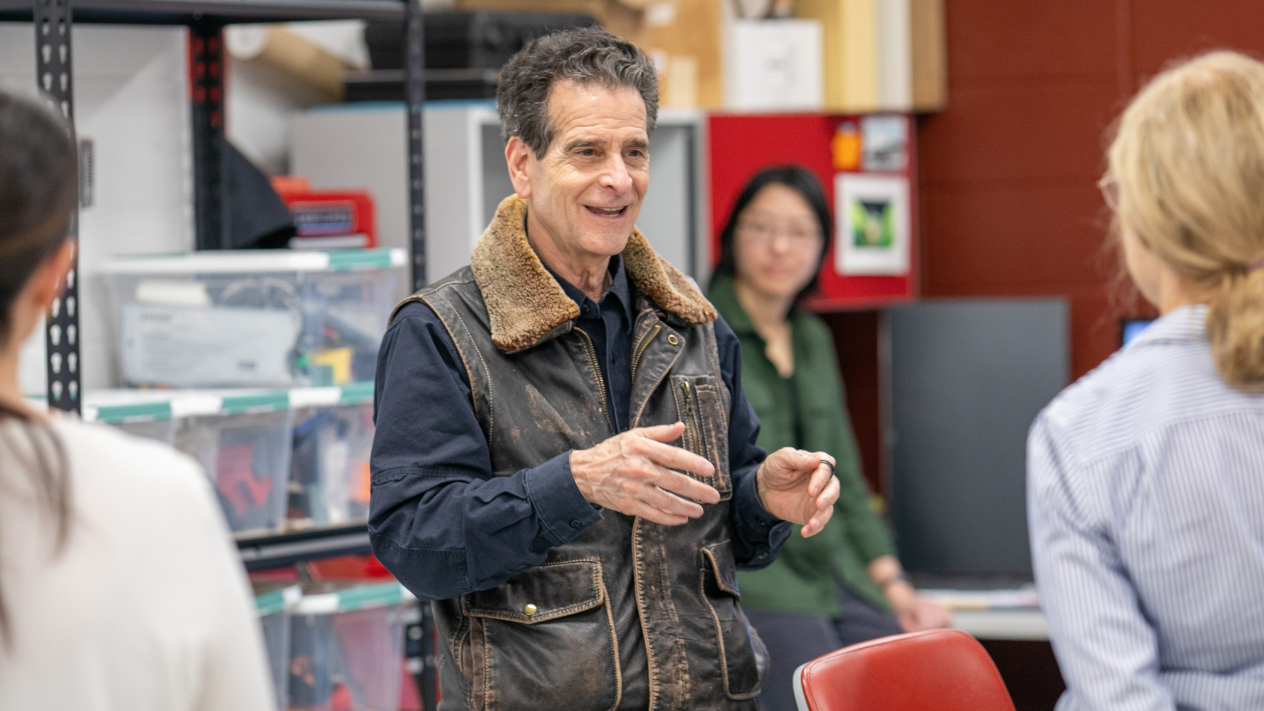
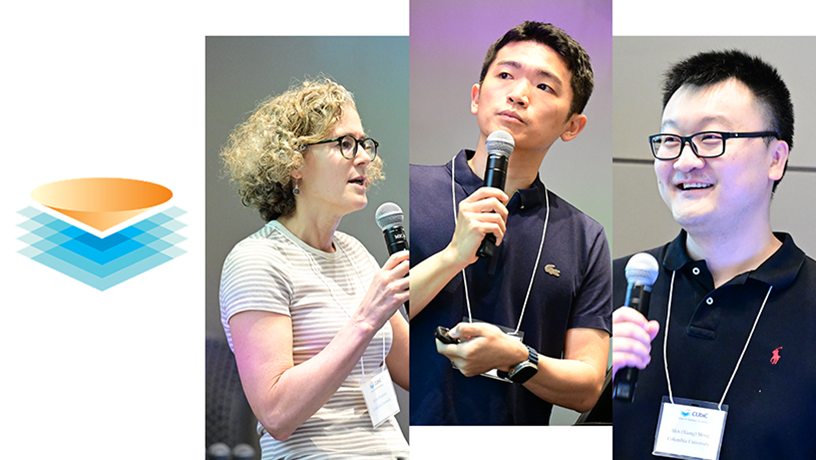
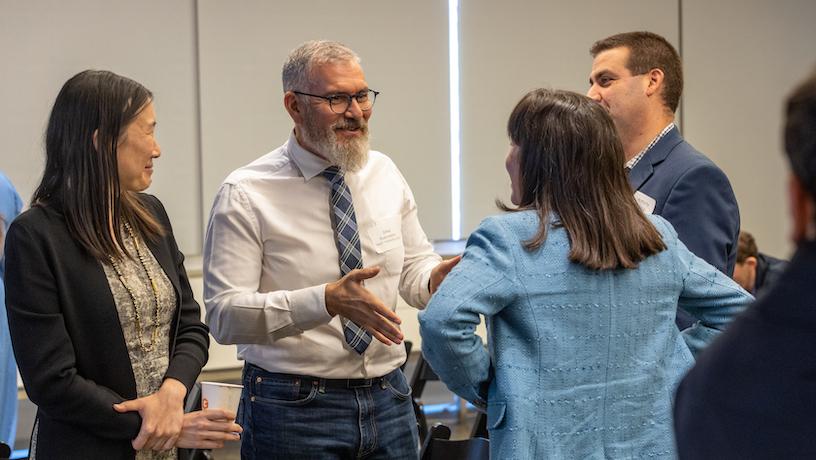
Dean Kamen Tech CEO talk and Columbia visit
Credit: David Dini/Columbia Engineering
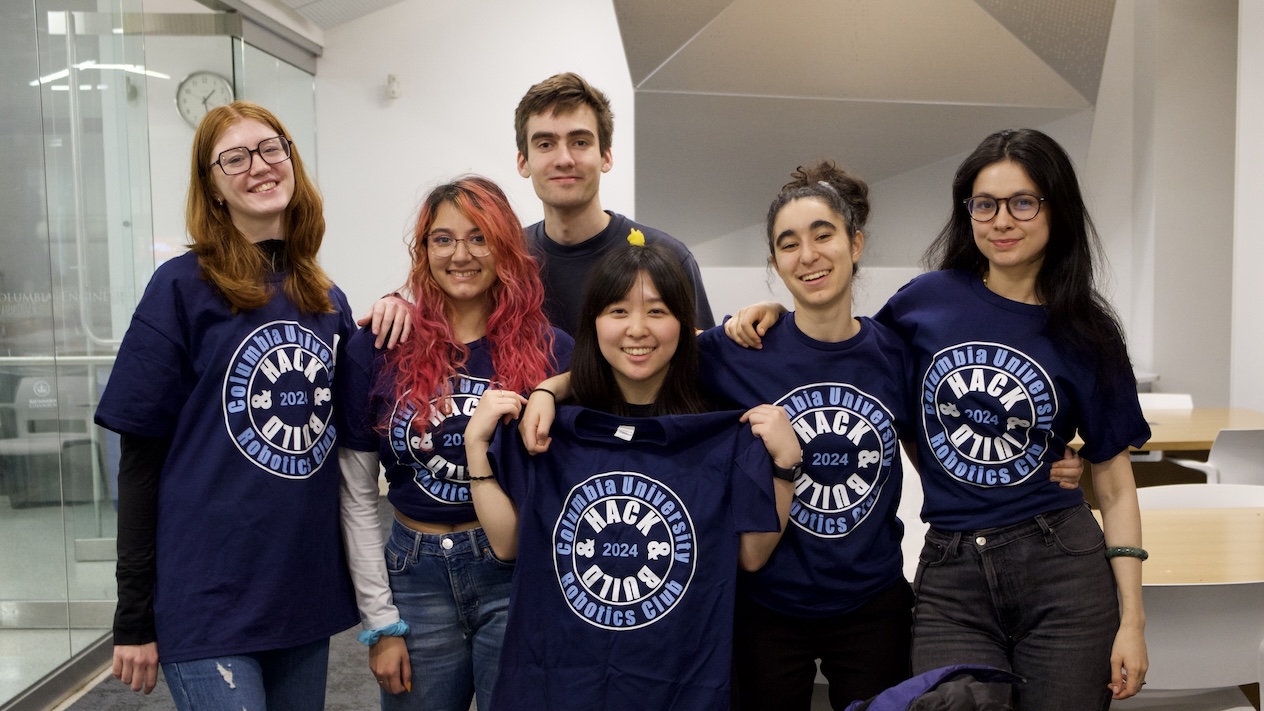
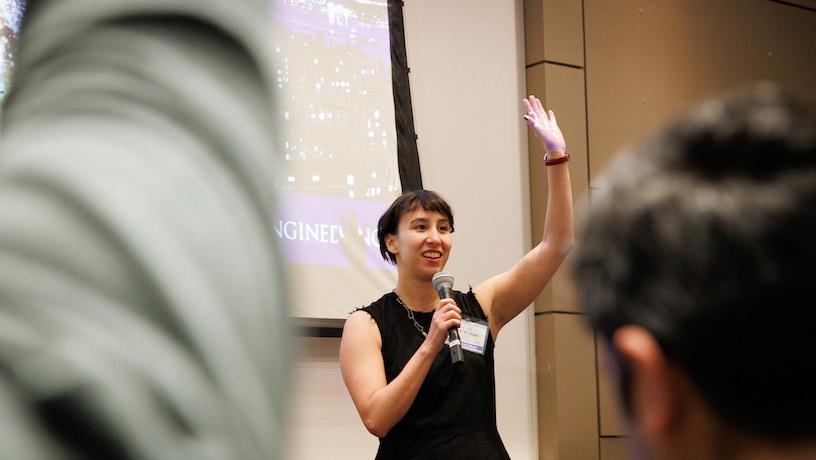
Highlights from the Hack & Build hardware hackathon
Credit: Columbia University Robotics Club