Scenes from Erman Ilicak’s Talk
Photos by David Dini
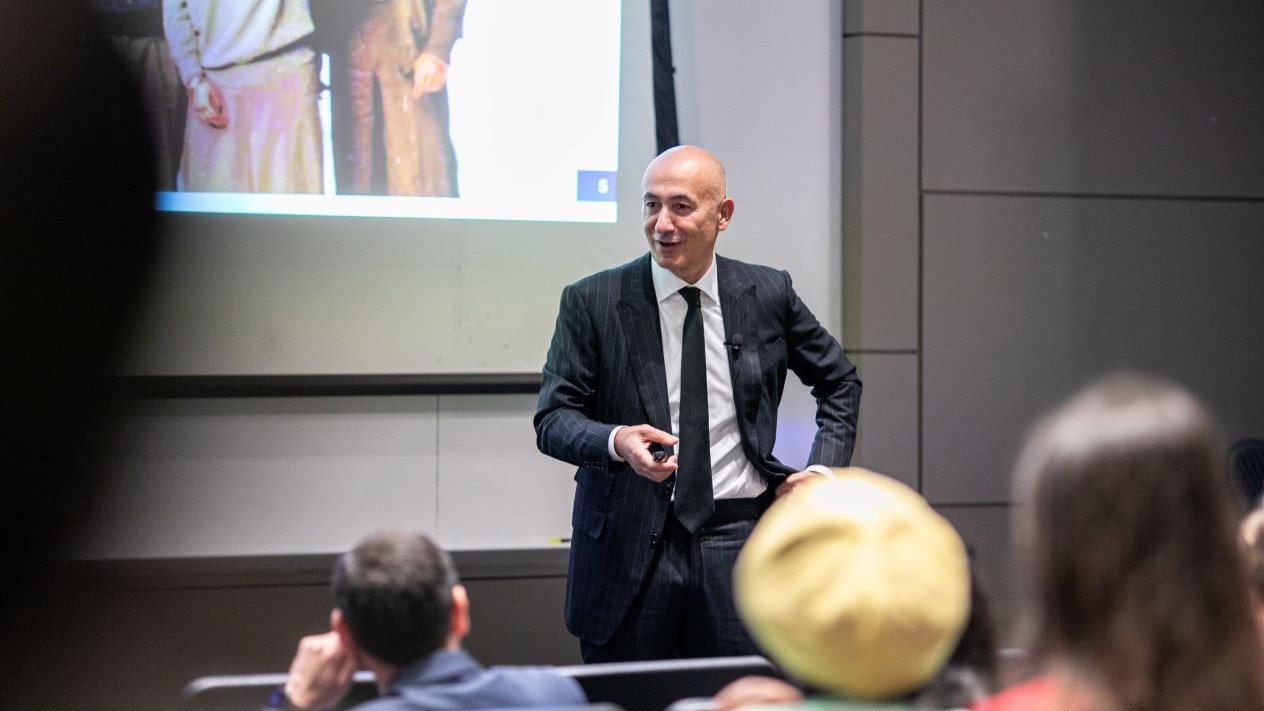
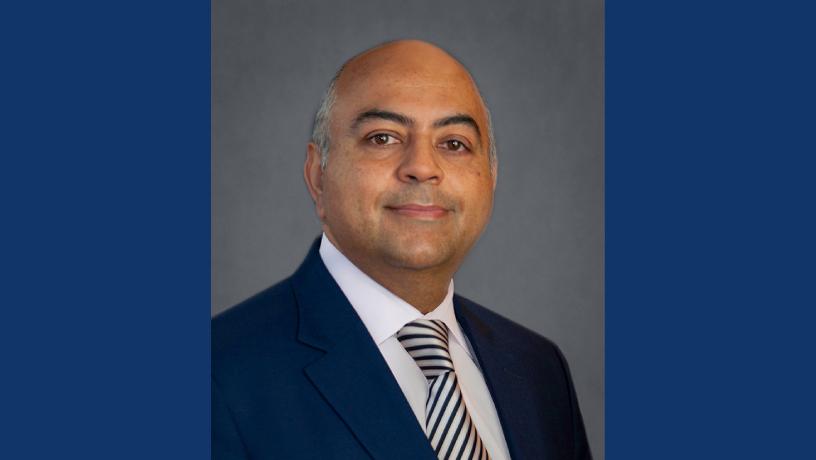
At age 26, frustrated by the slow pace of large corporate hierarchies, Ilicak decided to “do [his] own thing,” recruiting a team of young engineers to fill gaps left by industry giants. The firm would go on to deliver Europe’s tallest tower, its largest hospital, and the world’s longest tunnel. To date, his company has completed more than 5,000 contracts worth $60 billion worldwide.
Ilicak described the company’s evolution into what he calls the “Renaissance Way,” a model that reinvests capital, emphasizes innovation and collaboration, and manages risk through self-sufficiency. Informed by his time as a business leader and while pursuing an MBA and PhD, Ilicak’s approach enabled his company to finance ambitious projects that might not have been possible otherwise.
“We introduced a new growth model for delivering multibillion-dollar projects,” he said.
His talk closed with advice for students: choose your industry carefully, learn business finance, and build strong teams.
“It’s here — at places like Columbia Engineering — where you have the best opportunities to find teammates you trust,” he said. “That is the most important thing.”
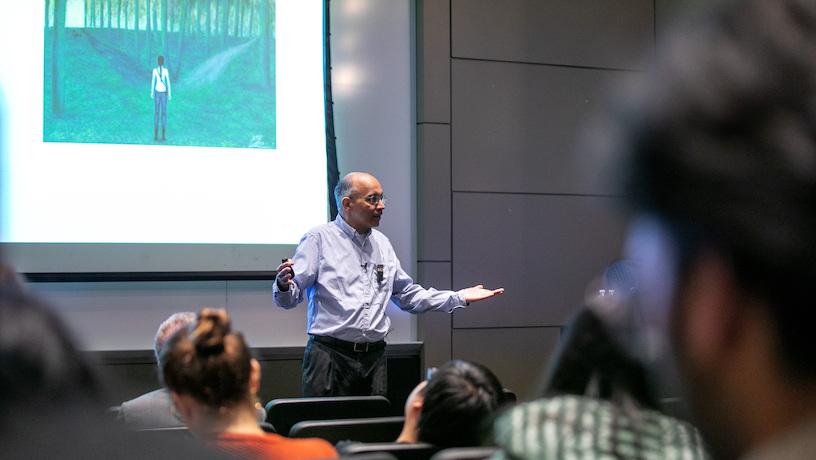
Caption: Erman Ilicak delivers a Tech CEO lecture in Davis Auditorium
Credit: David Dini/Columbia Engineering
Engineers at Ground Zero: Film Screening and Discussion
Photos by Timothy Lee
What was your initial reaction when you arrived at Ground Zero?
When I went down to the site after September 11, I just felt utter awe at two buildings of this size coming down–seeing the destruction and pile of debris that was down there, and knowing that there was a significant loss of human life at the site and the surrounding neighborhoods.
How did your experience at Ground Zero impact you personally and professionally in the years that followed?
In terms of impacting my life personally, I lost quite a few friends on that day. One former employee from Leslie E. Robertson was actually killed during the attacks of 9/11, plus a lot of the workers from the Port Authority who we worked with at the World Trade Center. I had quite a few friends who worked for various companies in the towers who lost their lives on 9/11 as well.
Professionally, it really changed my career trajectory. I had worked in the design end of structural engineering up until that point. For 10 months I was down at Ground Zero working six days a week, and it really moved my career in structural engineering from a design aspect to a forensic engineering standpoint, investigating causes of building collapses, fires, structural issues in buildings, and so forth.
I still work in this area today, conducting forensic investigations on all sorts of buildings and projects around the country and around the world.
What did structural engineers learn from 9/11?
Structural engineers after 9/11 learned quite a few things.
First, when designing new structures, we have learned to look more closely at progressive collapse. There were many revisions in codes, both international and around the U.S.
Examples such as having more hardened fireproofing, meaning the fireproofing adherence to the structural steel. In terms of egress, it is important to make sure stairs are separated on extremely tall structures above a certain height.
Better communication systems were also set within high-rise buildings–training of personnel and occupants within these buildings for evacuations is vital. This ensures there would be an orderly, expeditious evacuation of the structure if something were to occur. Also, including a service elevator dedicated to fire personnel on structures above a certain height is now a requirement.
These are just examples of probably 20 to 30 different modifications and recommendations that were made for engineers and architects when designing high-rise structures following 9/11.
What do you hope viewers will walk away knowing and understanding after watching this film?
I hope that people who watch this film get an understanding of what structural engineers did down at the site. There are a lot of documentaries and stories that describe the view of first responders, firefighters, and victims, what they did and how they helped that day.
What I hope people learn from this is that there were structural engineers and architects at Ground Zero who assisted first responders in stabilizing structures, recovering victims, as well as finding survivors.
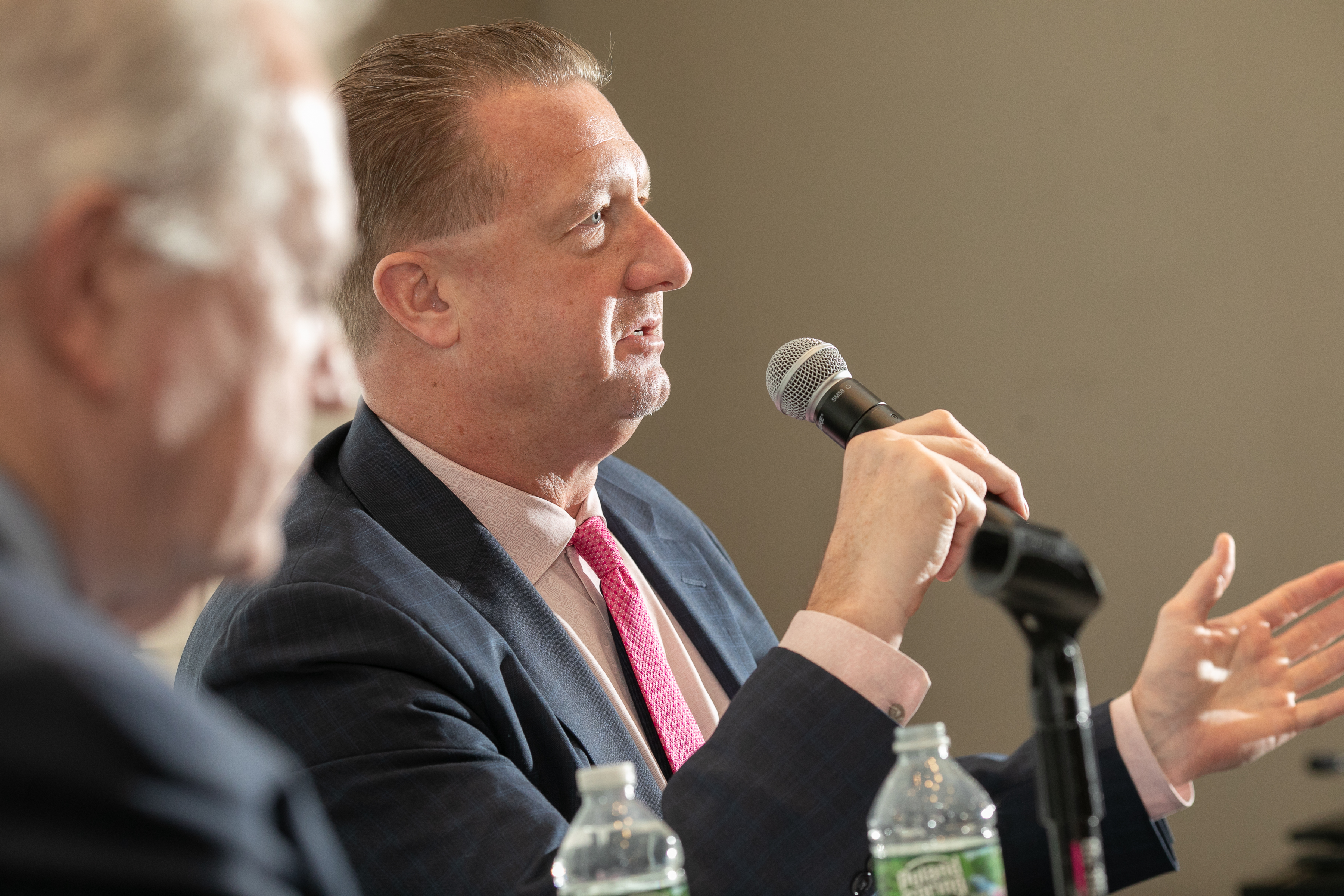
Lead Photo Caption: Alumnus James Feuerborn during a talk at the Feb. 17 film screening of “Engineers at Ground Zero”
Lead Photo Credit: Timothy Lee
Dean's Alumni Welcome Dinner & CEAA Awards Presentation
Photo highlights from the event
Today's Growing Fusion Portfolio
Carlos Paz-Soldan, an associate professor of applied physics and applied mathematics, enraptured alumni attendees with a century of rising and falling interest and research in harnessable nuclear fusion—a promising frontier in the increasingly widespread conversation around energy—and Columbia’s continued role at the forefront.
AI Chatbots
The next day was an invigorating discussion on generative artificial intelligence tools like OpenAI’s ChatGPT, offered to a full-capacity audience of alumni and their families by Kathleen McKeown, Henry and Gertrude Rothschild Professor of Computer Science.
Semiconductor Innovation
Finally, shedding light on how the landmark CHIPS Act is set to redefine the future of semiconductor technology, Harish Krishnaswamy, associate professor of electrical engineering, gave alumni an exclusive glimpse into the game-changing developments set to shape the world of technology as we know it.
Dean Chang’s State of the School Address
On Saturday, Dean Chang gave a State of the School address to attendees with exciting new updates on the School and plans for the future. Highlights included recent faculty and alumni awards, a review of Class Day and Commencement, and funding wins for new multi-partner centers based at Columbia Engineering such as ARNI, the AI Institute for Artificial and Natural Intelligence. Dean Chang also unveiled Columbia+, a new lifelong learning online platform open to alumni that features online courses, live-streamed and recorded events, and podcasts from across Columbia’s schools and Global Centers. He closed with a look ahead at Columbia’s expansion into Manhattanville and plans for a new engineering building focused on advancing the Engineering for Humanity vision.
Building Bridges
Milestone Class Gatherings
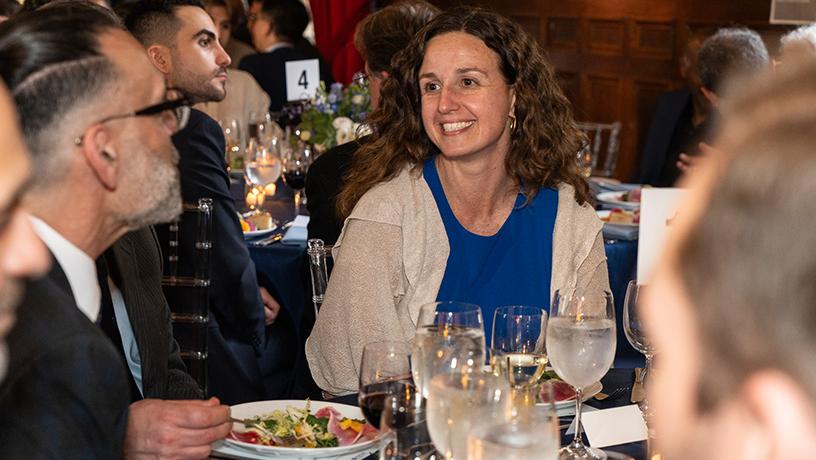
Laughter, anecdotes, and a collective sense of Columbia pride reverberated across campus as alumni volunteers and staff brought former classmates together to celebrate their milestone graduation anniversaries. View class photos.
Chelsea Piers Reception
Back by popular demand for its second year, the Chelsea Piers Reception saw generations of alumni bring the dance floor to life. Enjoying floor-to-ceiling views of the New York City skyline, alumni of each of the undergraduate schools mingled and relished in an evening of celebration and connection. View photos.
Engineering Master's and Doctoral Alumni Reception
Unique to Columbia Engineering, which offers world-renowned advanced degree programs in addition to its undergraduate degree programs, this first in-person gathering of its kind brought master’s and doctoral alumni together across a diverse range of industries and academic departments in the hallowed library at the Italian Academy. It was a full and lively room. Dean Chang gave remarks and mingled with alumni. View photos.