Looking ahead

The day demonstrated that effective deployment of AI requires close partnerships combined with technological know-how. In his closing remarks, Andrew Smyth discussed how the day’s discussions successfully bridged the gap between theoretical research and the practical needs of infrastructure owners, operators, and planners. By bringing together global industry leaders like NEC Labs and Google with local stakeholders like West Palm Beach to New Brunswick, the event reinforced CS3’s role as a vital hub for public-private innovation.

As the center moves into its fourth year, CS3 remains focused on ensuring that technological leaps in AI translate into tangible public value. As Smyth noted in his final remarks, the center's ultimate success lies in its ability to listen to community needs before engineering begins, ensuring that the "purposeful, vibrant streetscapes" of the future are built on a foundation of trust, safety, and public good. By maintaining this commitment to a core statement of values, CS3 aims to move beyond simple data collection to create urban environments that serve the people who live in them. 


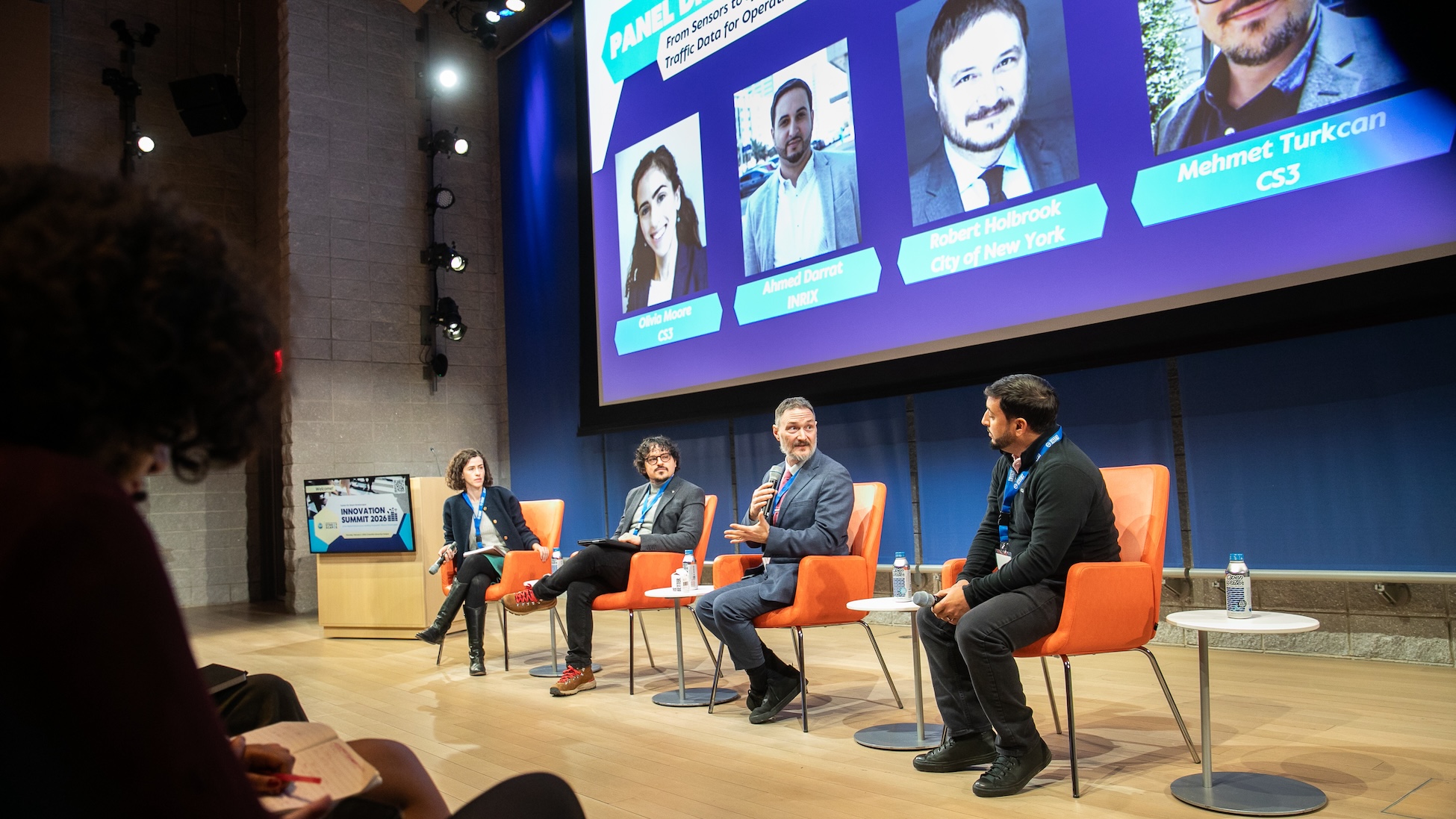
Lead Photo Caption: CS3 Managing Director Olivia Moore (far left) moderates a discussion on transforming raw traffic data into actionable insights.
Photo Credit: Timothy Lee

A major theme of the conference was the application of engineering principles and data analysis techniques to a wide range of underaddressed problems in women’s health. 

“Our field can learn from other areas of engineering, such as automotive and aerospace, that already use physics- and data-driven digital twins and models to accelerate product design and solutions,” said co-organizer Kristin Myers, a professor of mechanical engineering at Columbia Engineering. “Women’s health challenges mirror a lot of the major outstanding challenges in health more generally, such as designing sensors and monitors that fit a patient’s need while conveying actionable information to a medical provider.”

The daylong event featured keynotes from Silvia Blemker, professor of biomedical engineering at the University of Virginia; Steven Levine, the senior director of virtual human modeling at Dassault Systèmes; and Sandra Brown, the dean of the College of Nursing and Allied Health, Southern University and A&M College. The expert panels covered gynecologic health, preterm/pregnancy health, pelvic floor health, commercialization and the regulatory path, and education and workforce.


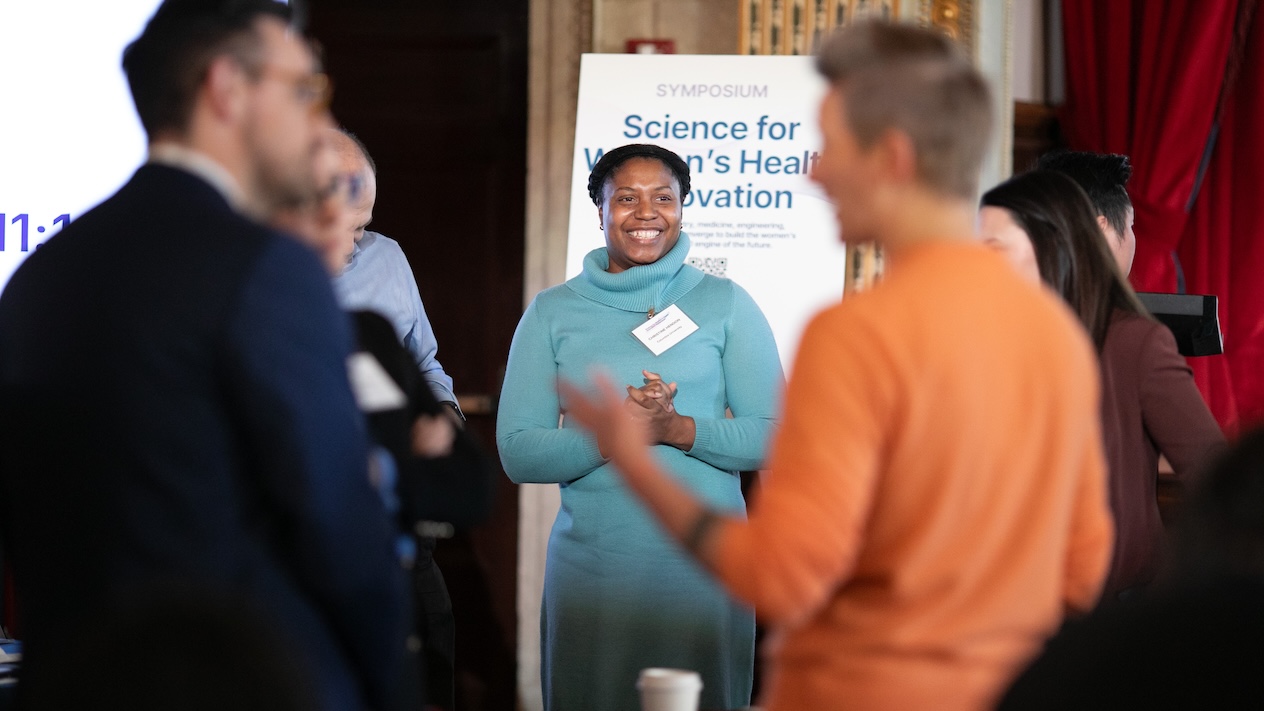
Lead Photo Caption: Christine Hendon, associate professor of electrical engineering, who develops innovative imaging technologies to study human tissue and disease.

Lead Photo Credit: David Dini/Columbia Engineering


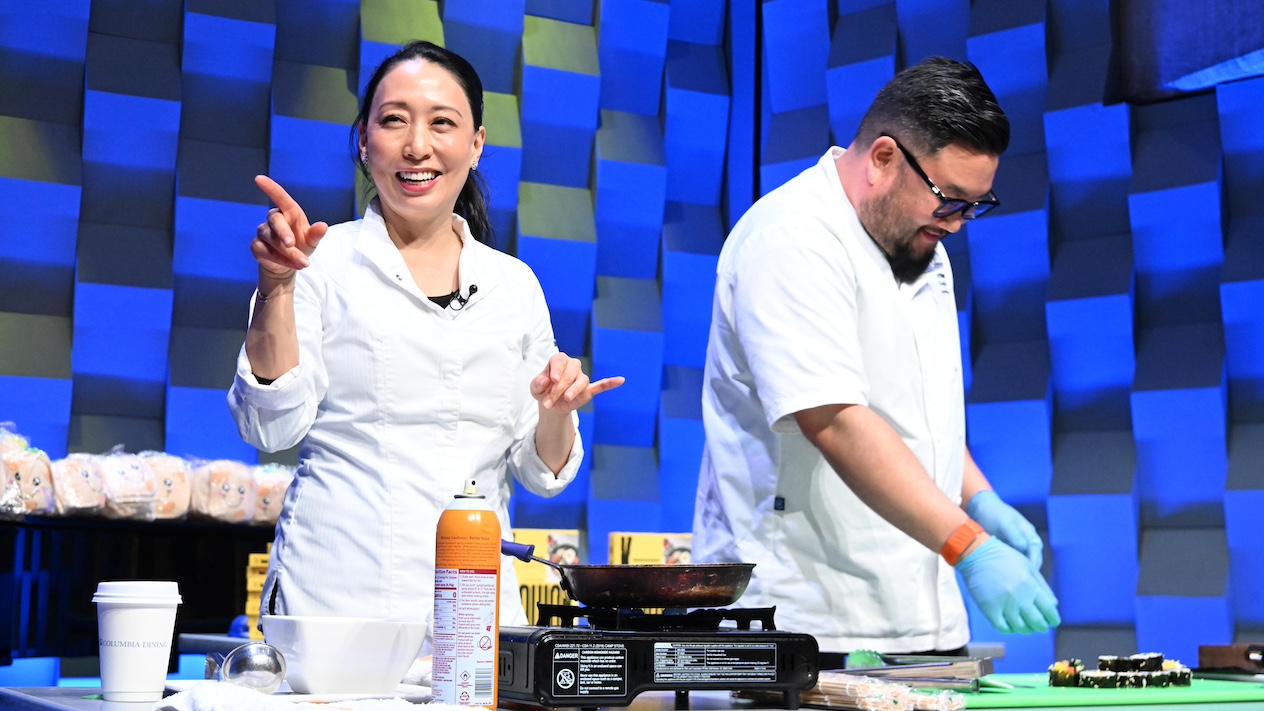
Lead Photo Caption:  Chef Judy Joo BS’97 leads the Feb. 11 kimbap masterclass for students on campus

Credit:  Eileen Barroso/Columbia Engineering


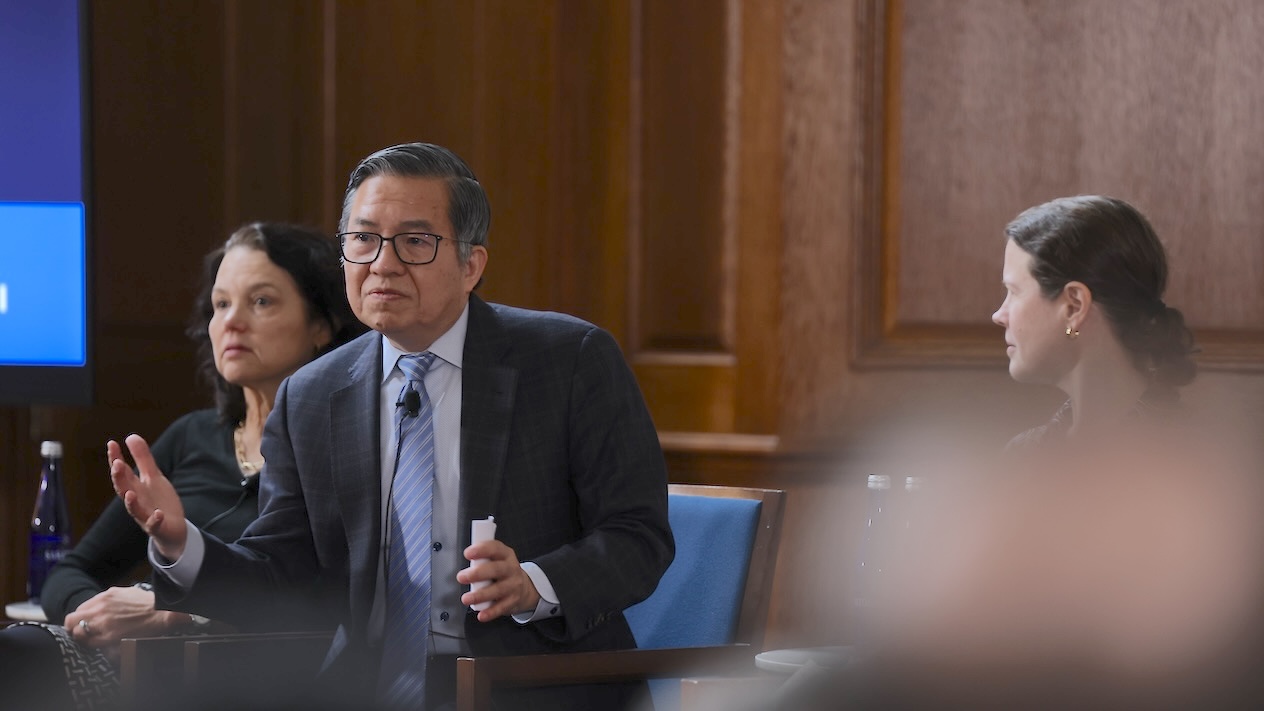
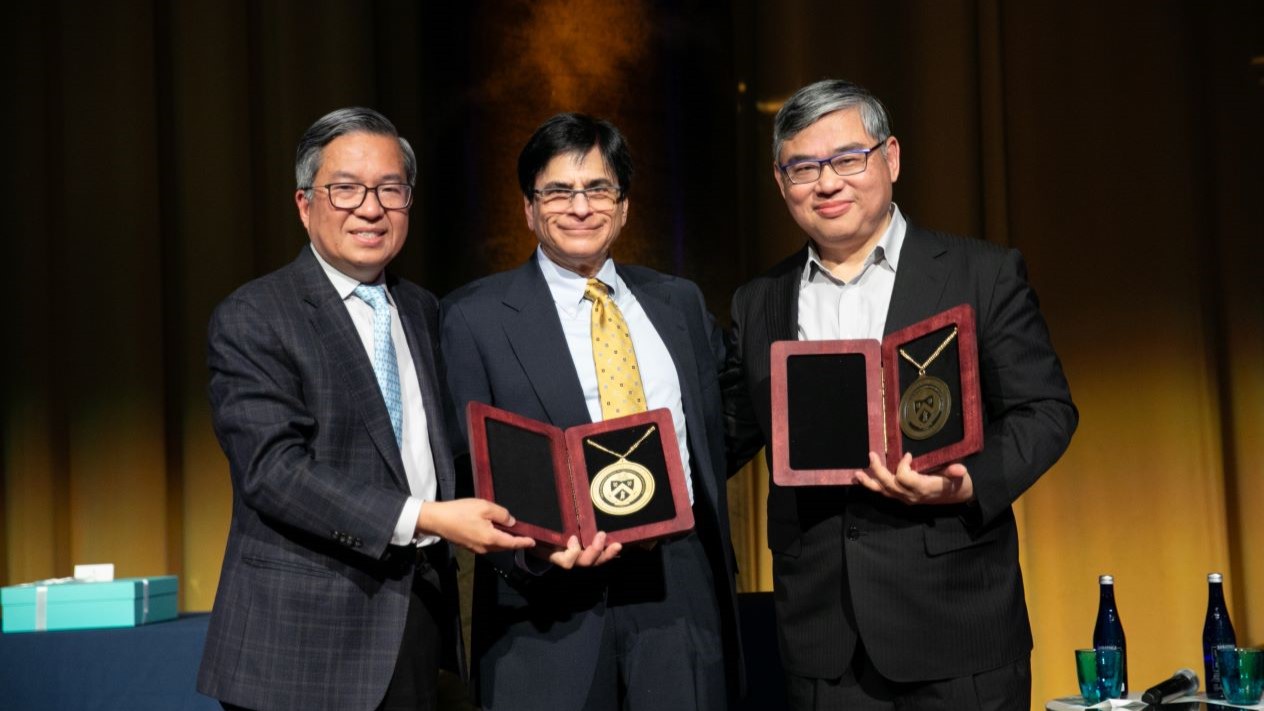
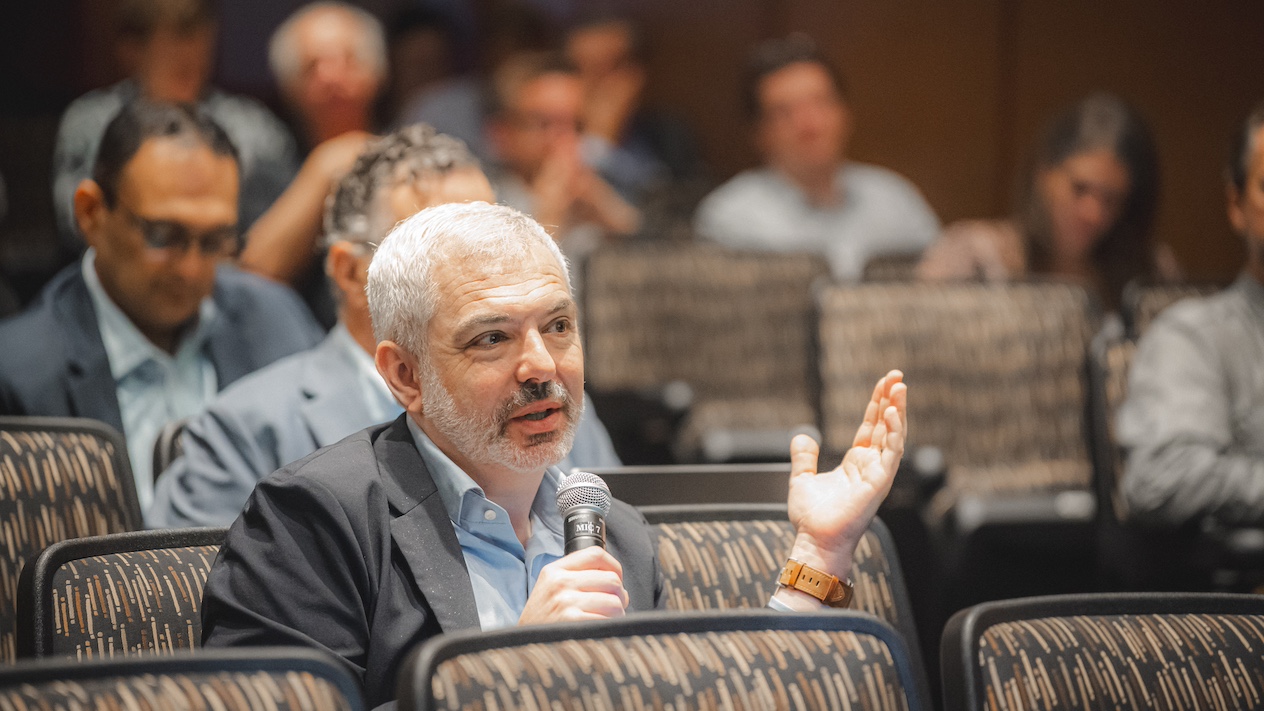
Lead Photo Caption: Left to right: Shih-Fu Chang, Steven Feiner, Fermi Wang.

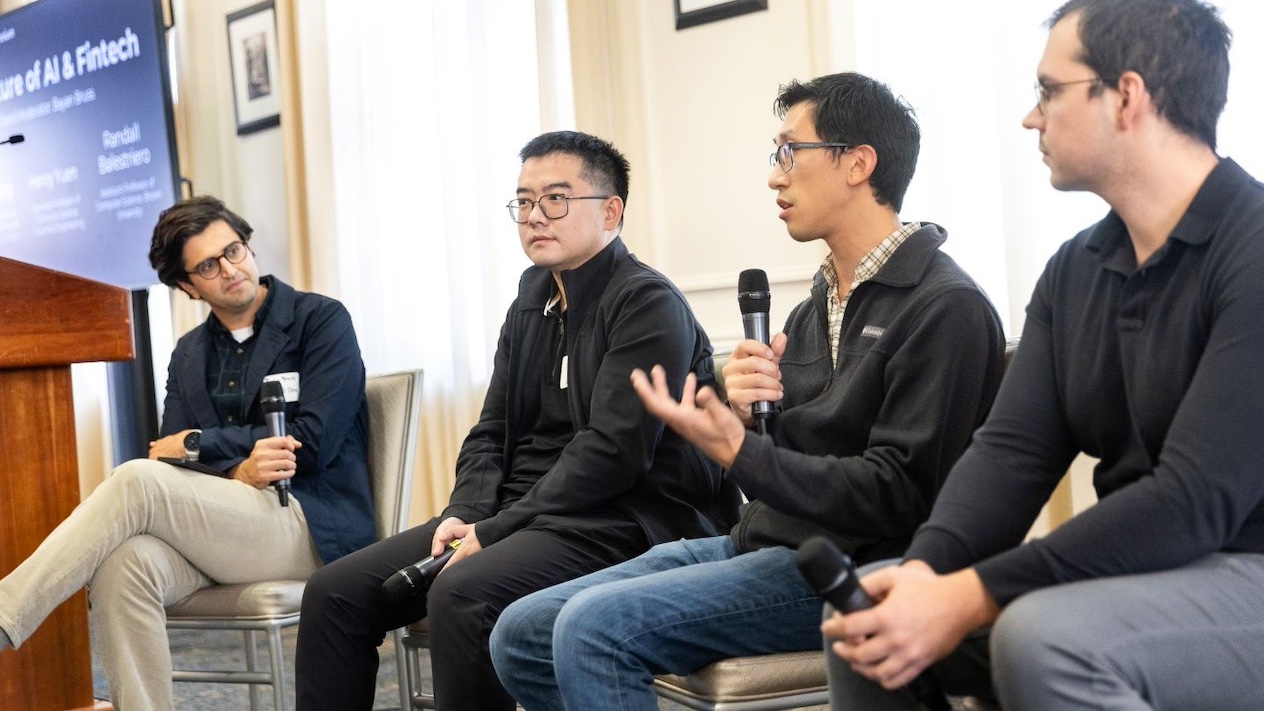
The final panel, moderated by Bayan Bruss of Capital One, focused on the “Future of AI and Fintech” and featured academic researchers from Columbia Engineering, the University of Texas at Austin, and Brown University. Their conversation explored the integration of quantum computing and AI into financial services, including the current limitations and potential of these technologies.

“In terms of where we’re at with quantum computing, things are very early-stage,” said Henry Yuen, Srivani Family Associate Professor of Computer Science at Columbia Engineering. “There’s a lot of fundamental research to be done. If we build these machines, what are we going to use them for?”

The panel agreed that significant theoretical and practical advancements are needed before it can revolutionize finance, particularly in the areas of scalability and reliability. 

“We had a fantastic lineup of speakers,” said Capponi, closing out the day’s agenda. “It’s a very good example of the mix between academia and industry. We all learn from each other. I’ve seen interactive discussions with people that hopefully will lead to further ideas.” 

Prem Natarajan, chief scientist and head of Enterprise AI at Capital One, also praised the breadth of expertise among the participants.  

“We value gatherings like this to foster discussion and potential collaborative ideas,” said Natarajan. “Successfully maximizing the broad benefits of AI  will require interdisciplinary collaboration, combining expertise from academia's research capabilities with industry's infrastructure and data resources. The breakthroughs of the future will come out of such partnerships.”


Lead Photo Caption: From left to right: Bayan Bruss, VP, Applied AI Research at Capital One, Atlas Wang, associate professor of electrical and computer engineering, UT Austin, Henry Yuen, Srivani Family Associate Professor of Computer Science, Columbia Engineering, Randall Balestriero, assistant professor of computer science, Brown University

At age 26, frustrated by the slow pace of large corporate hierarchies, Ilicak decided to “do [his] own thing,” recruiting a team of young engineers to fill gaps left by industry giants. The firm would go on to deliver Europe’s tallest tower, its largest hospital, and the world’s longest tunnel. To date, his company has completed more than 5,000 contracts worth $60 billion worldwide.

Ilicak described the company’s evolution into what he calls the “Renaissance Way,” a model that reinvests capital, emphasizes innovation and collaboration, and manages risk through self-sufficiency. Informed by his time as a business leader and while pursuing an MBA and PhD, Ilicak’s approach enabled his company to finance ambitious projects that might not have been possible otherwise. 

“We introduced a new growth model for delivering multibillion-dollar projects,” he said.

His talk closed with advice for students: choose your industry carefully, learn business finance, and build strong teams. 

“It’s here — at places like Columbia Engineering — where you have the best opportunities to find teammates you trust,” he said. “That is the most important thing.”


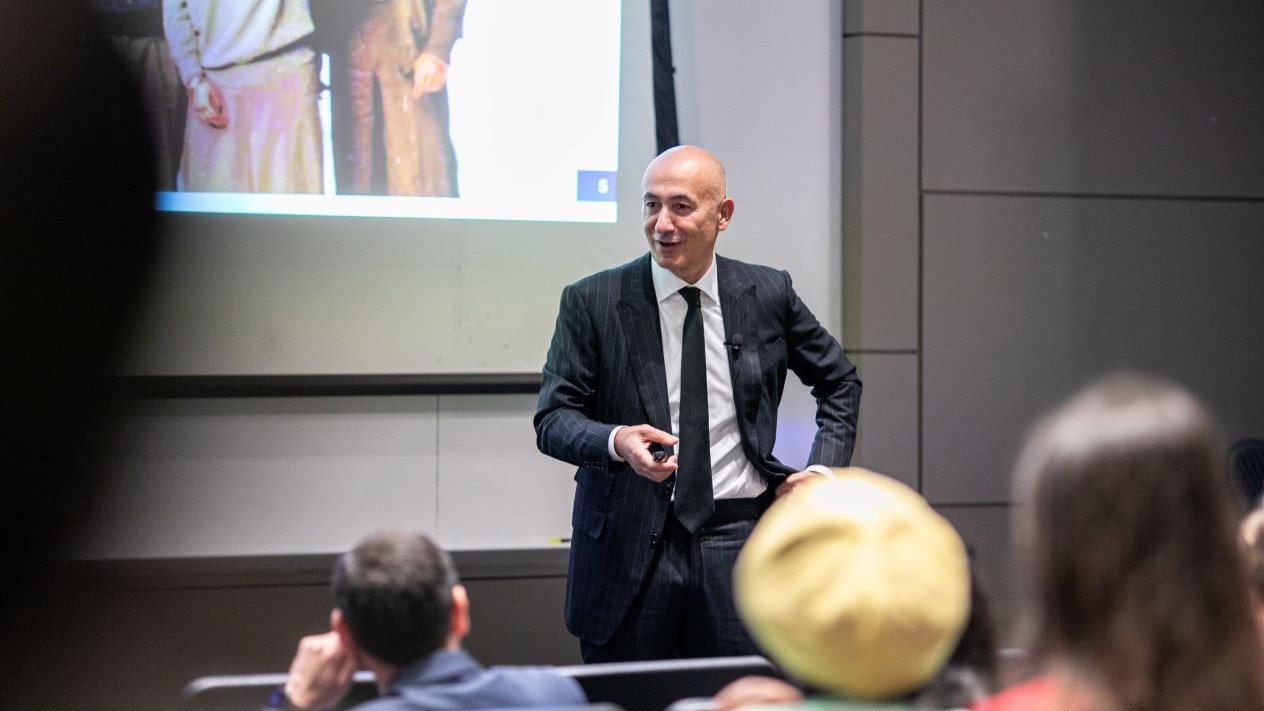
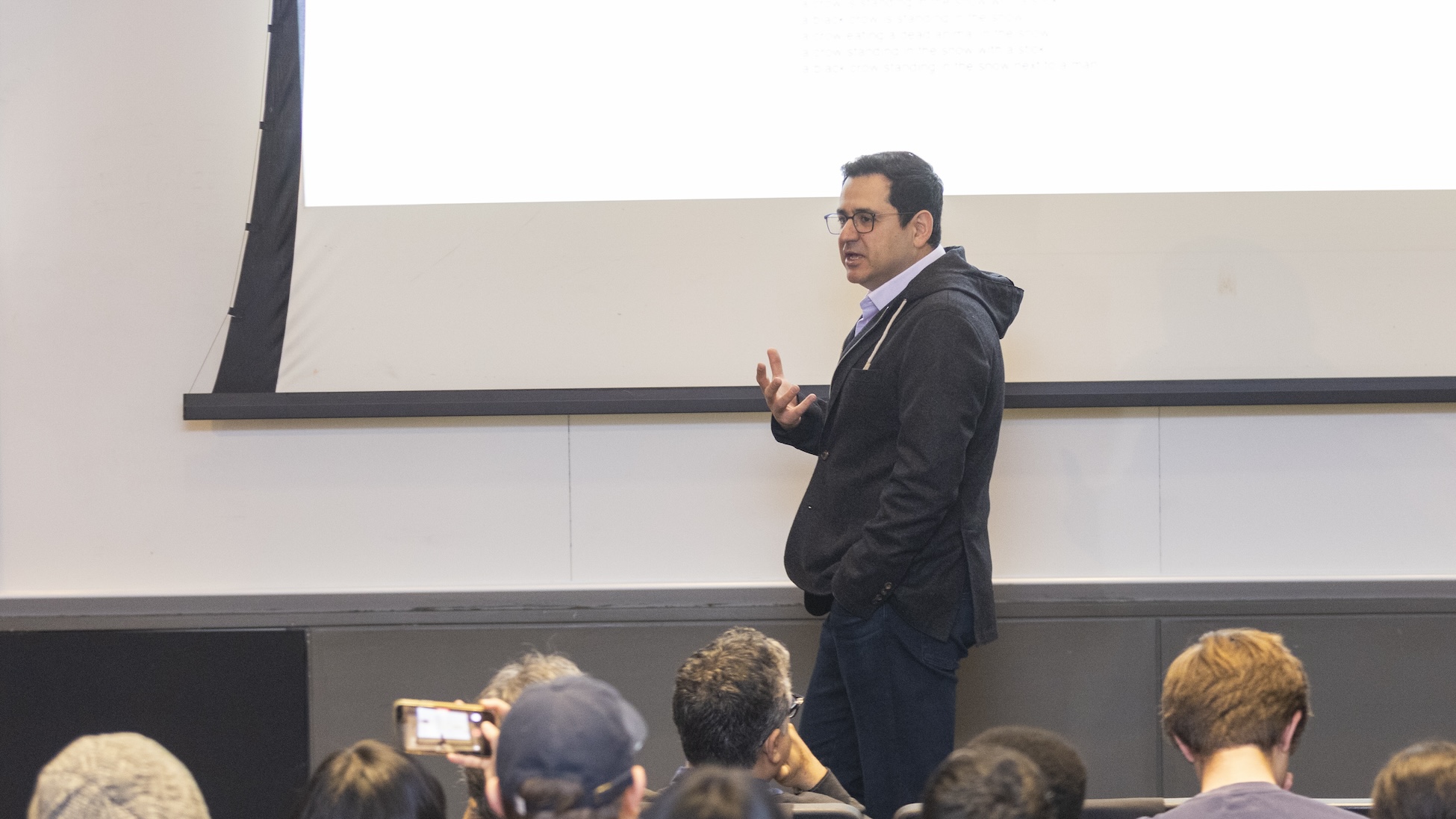
Caption: Erman Ilicak delivers a Tech CEO lecture in Davis Auditorium

Credit: David Dini/Columbia Engineering

Subscribe to Events