A day of innovation, teamwork, and STEM spirit

"We are so happy to have you here, and we hope to do more with New York City schools and our partners to share and promote our love of STEM,” said Dean Chang. “Columbia Engineering has a long history of supporting FIRST Robotics teams with mentors–we have hosted the FIRST Robotics kickoff for multiple years and plan to do so again in 2026.” 

Dean Chang also noted that more than 40 students from the Engineering School had signed up to volunteer. “Many of our engineering students are FIRST alumni, as well. They have personally benefited from this program and they know the impact being on a robotics team in middle or high school can have on a young person's life.”

“Today’s competition is more than just a contest. It is a testament to the dedication, the creativity, and the hard work of each and every one of you,” said Ray while addressing the students. “The innovation and approaches you took to source materials and build your projects were truly remarkable – it’s very inspiring.”

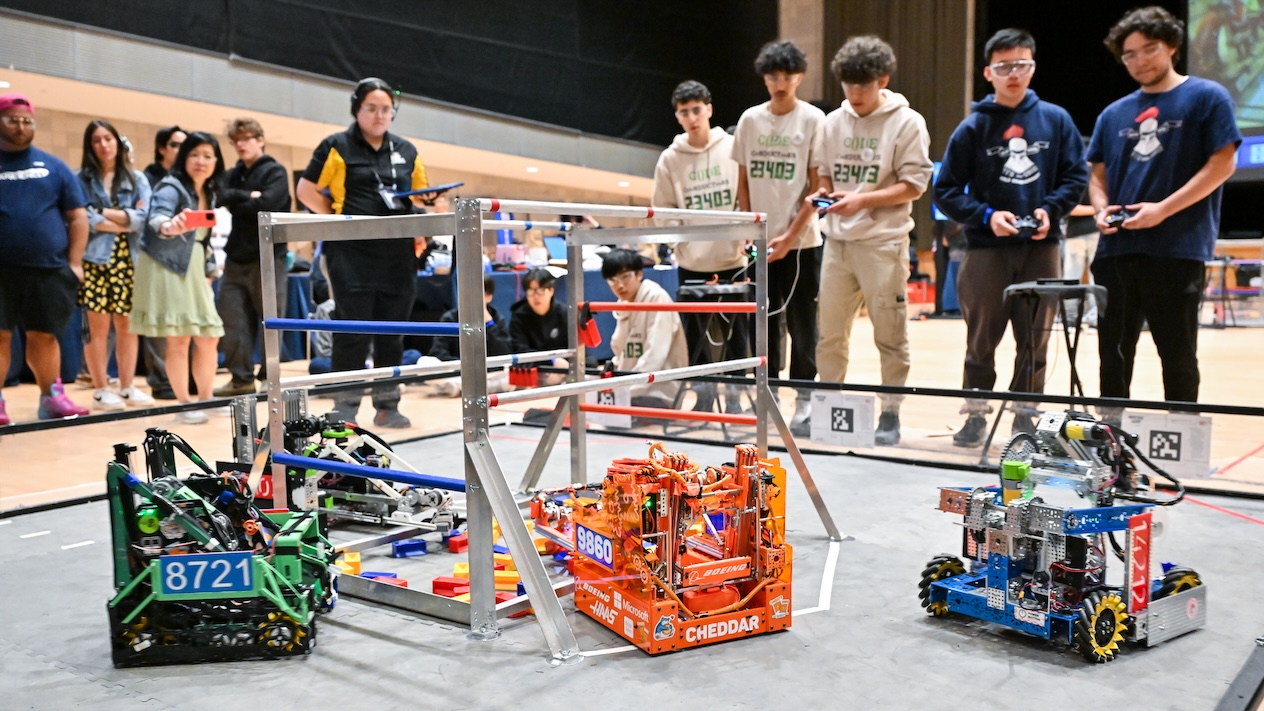
To win the robot challenge, alliances of two teams would compete against another alliance–and challenge their robots with a series of tasks, from collecting blocks and disposing them in the team’s bucket, or retrieving hooked blocks to hang in the middle of the arena. The Mayor’s Cup came to an exciting conclusion when the last two teams of alliances competed for first place. Teams Saturn and Mercury, an alliance team took home the first place trophy. Both teams were made up of students from the Staten Island Technical High School

Image
Four high-school students holding robotic components and smiling for a photo
Columbia student volunteers joined in on the fun, giving demonstrations and lab tours. Credit: Diane Bondareff/Columbia Engineering

Robotics demos and campus exploration

In addition to the full day of competitions, Columbia Engineering faculty members presented a series of robotics demos. Highlights included demonstrations from Hod Lipson’s Creative Machines Lab, Sunil Agrawal’s ROAR Lab, Yunzhu Li’s RoboPI Lab, and Matei Ciocarlie’s ROAM Lab. The School’s Office of Outreach also showcased a creation from their flagship program SHAPE (Summer High School Academic Program for Engineers), a summer program that offers college-level courses taught by Columbia faculty. 

Additional demos were showcased by student groups representing the Engineering School, including Columbia Space Initiative, Columbia Robotics Club, Biomedical Engineering Society, and Columbia University Formula Racing. High school students participating in the competition also had a chance to tour the School and learn more about student clubs from Columbia students who shared demos of their past work.

“Thank you to the students for really putting in the effort to make this day a reality,” said Zigman at the competition. “Many of you will go on to careers in STEM, but for those of you who don’t, you’re going to be incredibly successful because of the mindset and skills you’ve learned that will serve you well in anything you choose.”


Lead Photo Credit: Diane Bondareff/Columbia Engineering


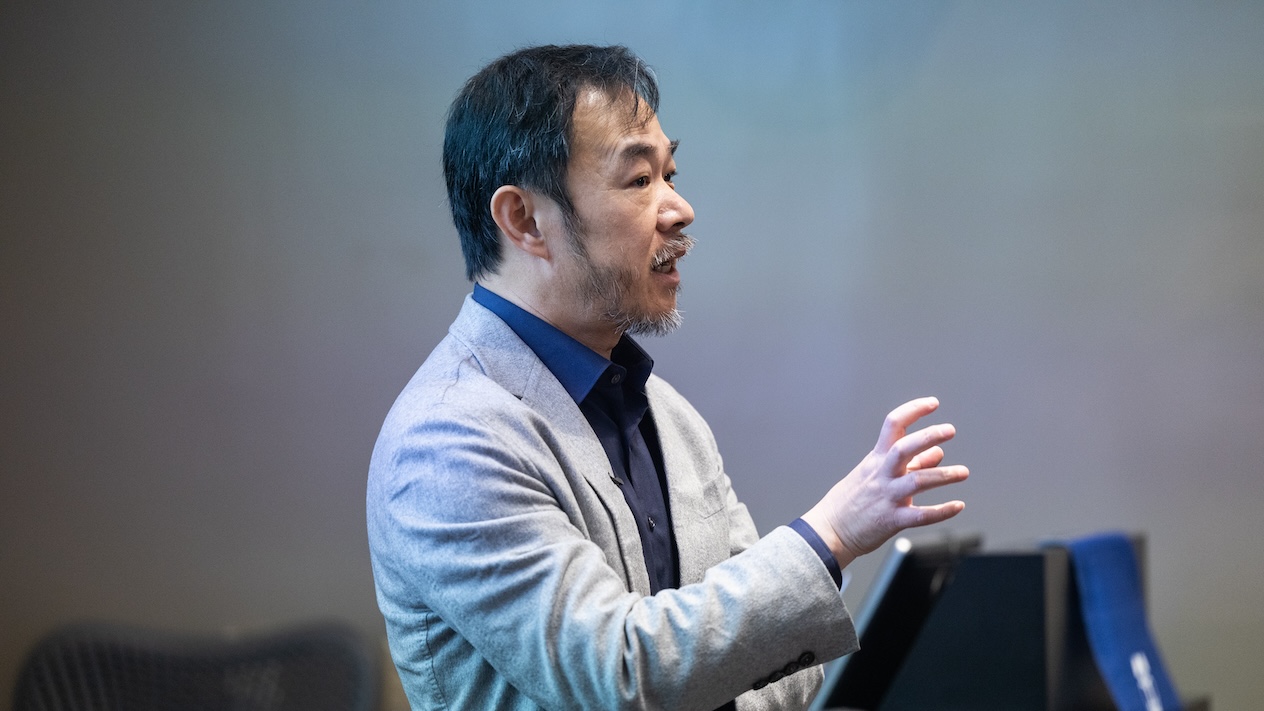
Lead Photo Caption: Guest speaker Eric Xing, president at Mohamed bin Zayed University of Artificial Intelligence

Lead Photo Credit: April Renae/Columbia Engineering

Bringing robotics to the factory floor

The first place prize of $25,000 was awarded to Kathedra, which is developing an AI-guided robotic upholstery system that brings innovation to the $180 billion upholstered furniture market.

A key goal is to free workers from strenuous, repetitive manual work and enable manufacturers to produce diverse chair designs at high volume in the US. Their aim is to solve a critical labor shortage the industry is currently facing.

 “We are so grateful to Columbia for providing the resources. It’s been so amazing to be part of this community,” said David Faes ‘24GS, a co-founder of Kathedra. Faes, a recent alumnus of the School of General Studies, and his co-founder, Oliver Chasan, said furniture manufacturers have enthusiastically welcomed their idea, noting that nothing like it currently exists. The team, which includes mechanical engineering senior Kyle Cash, is connecting with the Catawba Valley Furniture Academy, a reputable college for careers in furniture making, to seamlessly integrate automation into the industry.

By women for women

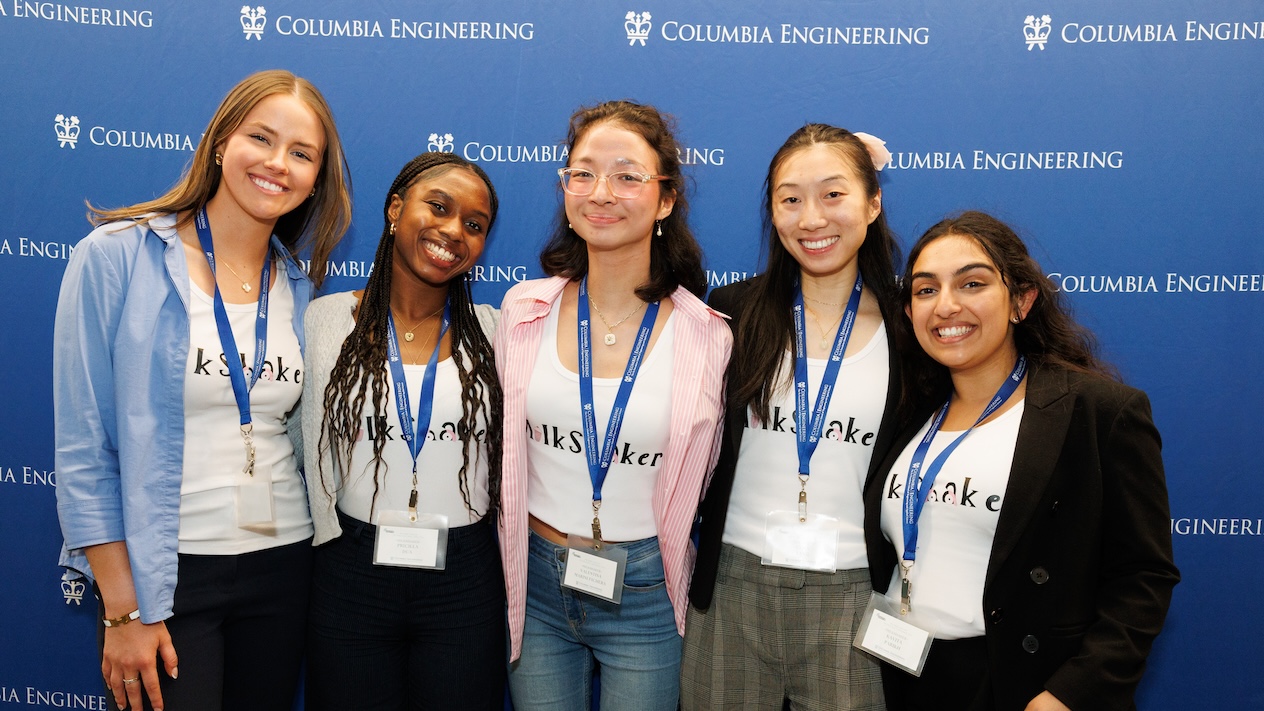
Awarded $15,000, second-place prize went to Milkshaker, co-founded by five Engineering seniors–Hope Hersom, Pricilla Dua, Valentina Marini Fichera, Elise Yang, and Kavita Parikh. This innovation aims to prevent and treat mastitis, an inflammation of the breast tissue causing pain and fever in nursing mothers.

The only known solution is a lymphatic drainage breast massage performed by certified physical therapists, noted Hersom, and the pool of these trained specialists is limited. Even in Manhattan, she said, only two such specialists exist, underscoring how inaccessible the treatment is for the majority mothers.

A bra-like garment, MilkShaker is wearable tech with a built-in mechanism and rechargeable batteries. The device mimics the work of a certified therapist by massaging the breast— pushing fluid from the top and bottom of the breast away from the nipple and milk ducts— to prevent clogging. The team has produced a prototype, with next steps to obtain a patent and ultimately enter into clinical trials.

A breath of fresh air

The third-place winner of a $10,000 prize was awarded to SWERV (Smart Windows Energy Recovery Ventilators). Founded by a three-member team led by Austin Riesenberger, SWERV is hoping to improve indoor air quality, especially for those with asthma. Compared to traditional ventilators with costs ranging from $2,000 to $4,000 and require major renovation, SWERV is window-mounted and efficiently cycles fresh air while recovering heat and moisture.

“I feel great because this is our first seed money that will help us build more prototypes, finalize deals with manufacturers and obtain a patent,” said Riesenberger, a mechanical engineering senior.

Smarter glasses, powered with AI for the visually impaired

Cadre Technologies received this year’s Engineering for Humanity Prize of $10,000. Cadre is producing AI-powered glasses for the visually impaired. Unlike other glasses which do only object detection, this features real-time object recognition, text reading, and facial identification. It processes visual data instantly, converting it into audio feedback to help users navigate their surroundings with confidence. 

“We've conducted 1,357 trials in different parts of India, but we're working to get approval to start trials in the U.S., and this prize money will help achieve that,” said Cadre founder Muneer Khan MS’22, who studied electrical engineering at Columbia.

Since 2021, Chan has been providing not only financial support, but mentorship for startups. “I’ve been where you are today, and I can relate. Sometimes you are smart. Sometimes you are lucky. You need both,” he said in his remarks to attendees. With robust experience in establishing successful startups, Chan urged winners to take advantage of all the networks and resources Columbia offers.

Impressed by the quality of this year’s entries, one of the judges, Lan Huang, a leading scientist, inventor and biotech entrepreneur said selection was based on viability of the start-up, competitive advantage, and team composition.

“It gets better every year,” she said of the annual competition. “I can tell you, as an entrepreneur myself, it’s not the technology that makes a company successful but the team who can stick together to the end.” 


Lead Photo Caption: The MilkShaker team wins second-place prize of $15,000 in startup funding
Lead Photo Credit: Sirin Samman/Columbia Engineering
 

Pooling our insights

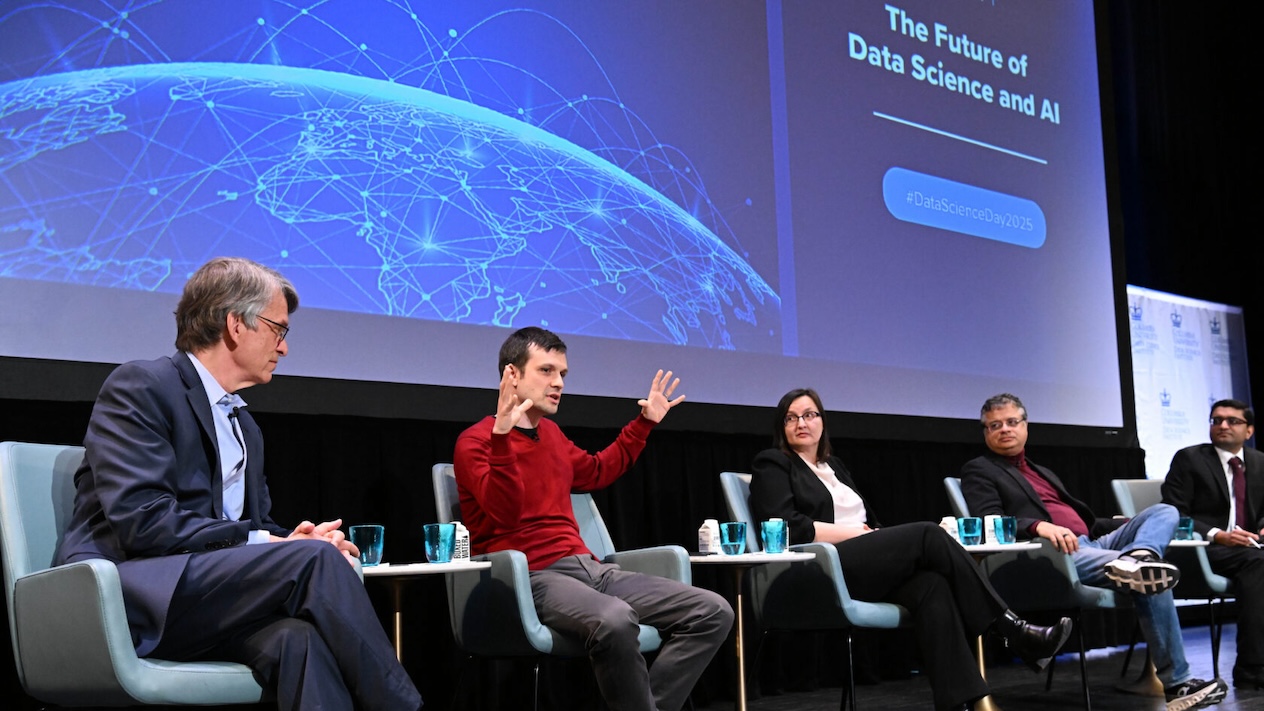
The second half of the workshop focused on these collaborations between academic research and industry partners, with a panel discussion and lightning talks focused on reporting back from real-world attempts to implement AI agents. 

Michael Morris, Chavkin-Chang Professor of Leadership, welcomed the attendees to Columbia Business School by observing that academia and industry each account for roughly half of the research that happens in the United States.

“We really ought to be pooling our insights,” he said. “Business schools can play a natural role in facilitating industry-academia cooperation — I’m hoping the DAPLab will be one of many ways we do this.” 

In her keynote address, cognitive scientist Danielle Perszyk described how her team at Amazon AGI leverages insights from human intelligence to refine its efforts to build reliable AI systems. 

“It's one thing for an agent, whether a human or an AI, to be able to do the same thing like click on an icon or type in a text field in the same environment every time,” Perszyk said. “But the digital world is ever-evolving, and we can't assume that it's going to stay the same even for short periods of time.” 

She described how research into the evolution of human intelligence frames the questions necessary to develop agents that are robust in fast-changing environments. 

In closing the day, Chilton described the journey to building and deploying these technologies as “a business problem, a sociology problem, and a cognitive science problem that draws from history, science, language arts, visual arts, and interaction.” 

For her, AI agents won’t just automate tasks — they will open entirely new sources of value, the same way databases, the internet, and the cloud have.

“Every faculty member involved in DAPLab has deep collaborations throughout the university,” she said. “We also have a strong track record of delivering results for industry problems through sponsored research.”

The DAPLab is currently identifying partners to work together on a shared research agenda to develop next-generation systems to support reliable, safe, and efficient agent automation. To learn more, visit DAPLab’s website or contact co-directors Eugene Wu or Zhou Yu


Lead Photo Caption: Zhou Yu, associate professor of computer science and co-director of DAPLab

Lead Photo Credit: David Dini/Columbia Engineering


Lead Photo Caption: Ion Stoica during his Mar. 28 visit to Columbia Engineering as the guest speaker for the School’s Lecture Series in AI

Lead Photo Credit: Brandon Vallejo/Columbia Engineering

Recognizing the importance of open conversations about career journeys, Columbia Engineering Dean Shih-Fu Chang and Columbia University Interim President Katrina Armstrong, both joined the event; Dean Chang gave introductory remarks and President Armstrong kicked off the discussion and shared her own experience as a woman in STEM. 

Armstrong talked about her unconventional career path– from studying architecture as an undergraduate to completing medical school and ultimately rising through the ranks in higher education in leadership roles at the University of Pennsylvania, Harvard, and now, at Columbia. She encouraged attendees to regularly check in with themselves, emphasizing the importance of making changes before reaching burnout. She also highlighted the value of finding what works for each individual. She shared a personal anecdote about how she became known for letting her kids sleep in their school clothes instead of pajamas—a simple adjustment that made hectic mornings a little easier.

“The best advice I ever received was to be yourself because you're not going to change who you are,” Armstrong said. “And if you try to be somebody else, you're going to be so much less effective than just being who you are.”

Building connections

The second half of the event consisted of breakout sessions between small groups of students and women faculty members from across Columbia. With cups of coffee in hand, students and professors–women in STEM– exchanged stories, laughter, and insights. 

A common theme professors shared with students was the importance of advocating for yourself and pursuing what you're passionate about. University Professor and Mikati Foundation Professor of Biomedical Engineering Gordana Vunjak-Novakovic emphasized that when you truly love what you do, it never feels like work—even when challenges arise. Christine Hendon, associate professor of electrical engineering, encouraged students to believe in themselves, even when others doubt their ideas. 

"If someone says it won’t work, figure it out, run some simulations, test for tolerance analysis, and if it looks feasible—go for it," Hendon said. "When you finally get to the point where it works, it’s the best feeling ever.”

In this relaxed setting, conversations flowed and what started as casual chats soon turned into meaningful discussions about careers, research, and personal experiences. 

“This event showcases the magic of Columbia,” said Githika, “and how there is a community that wants to not just collaborate with each other, but grow with each other.”


Lead Photo Caption: Columbia faculty, students and staff gathered in Carleton Commons March 7 for a special networking opportunity for women in STEM. 
Lead Photo Credit: Diane Bondareff/Columbia University


Lead Photo Caption: Sami Haddadin (left) and Dean Shih-Fu Chang (right).

Lead Photo Credit: Eileen Barroso/Columbia University

Subscribe to Events