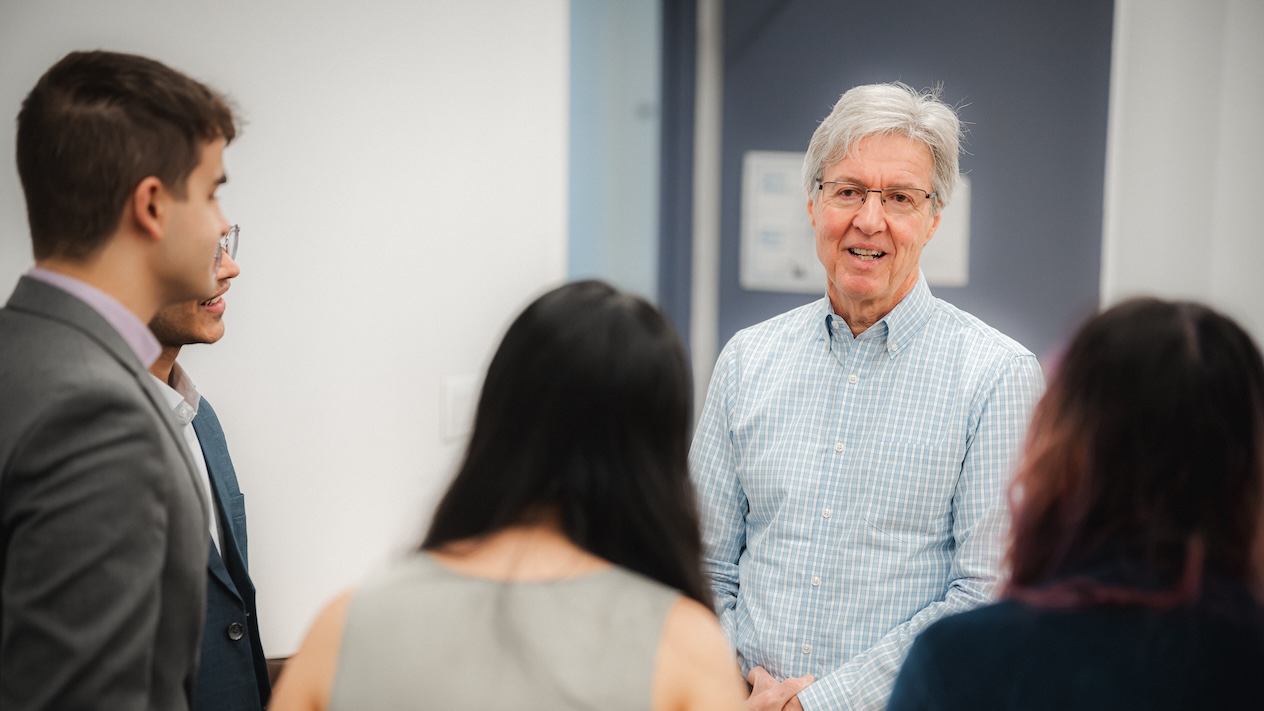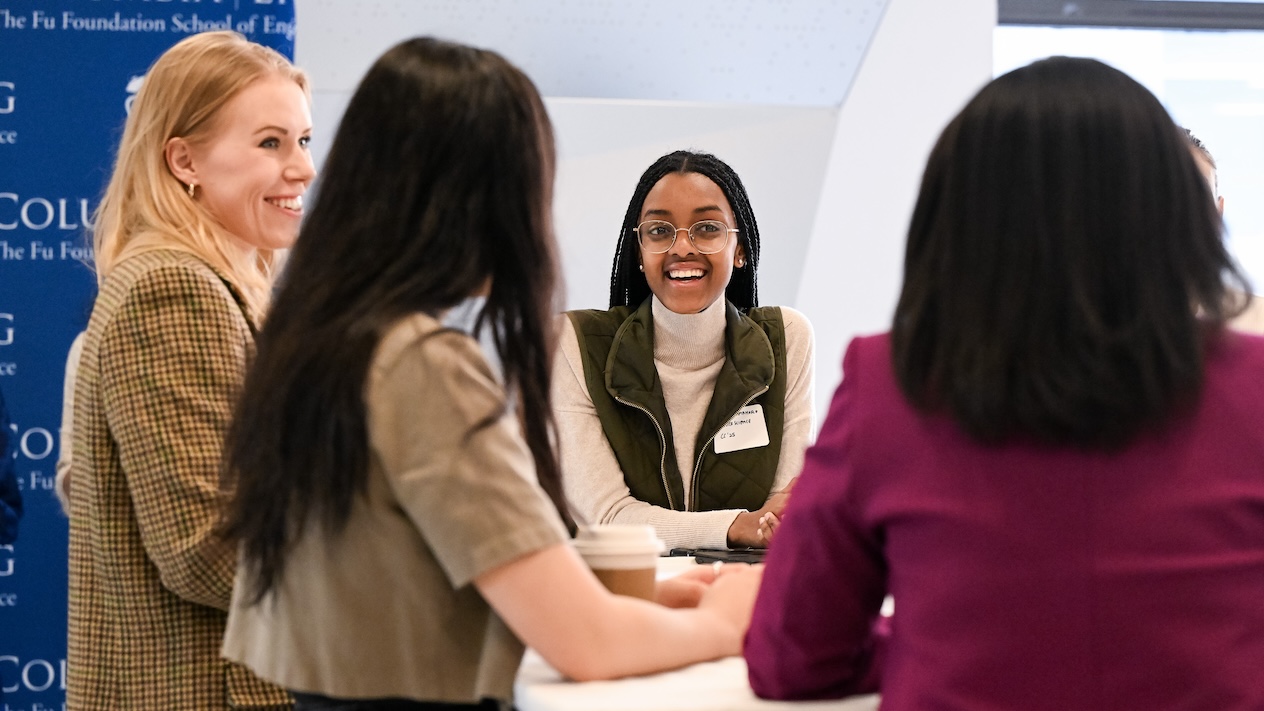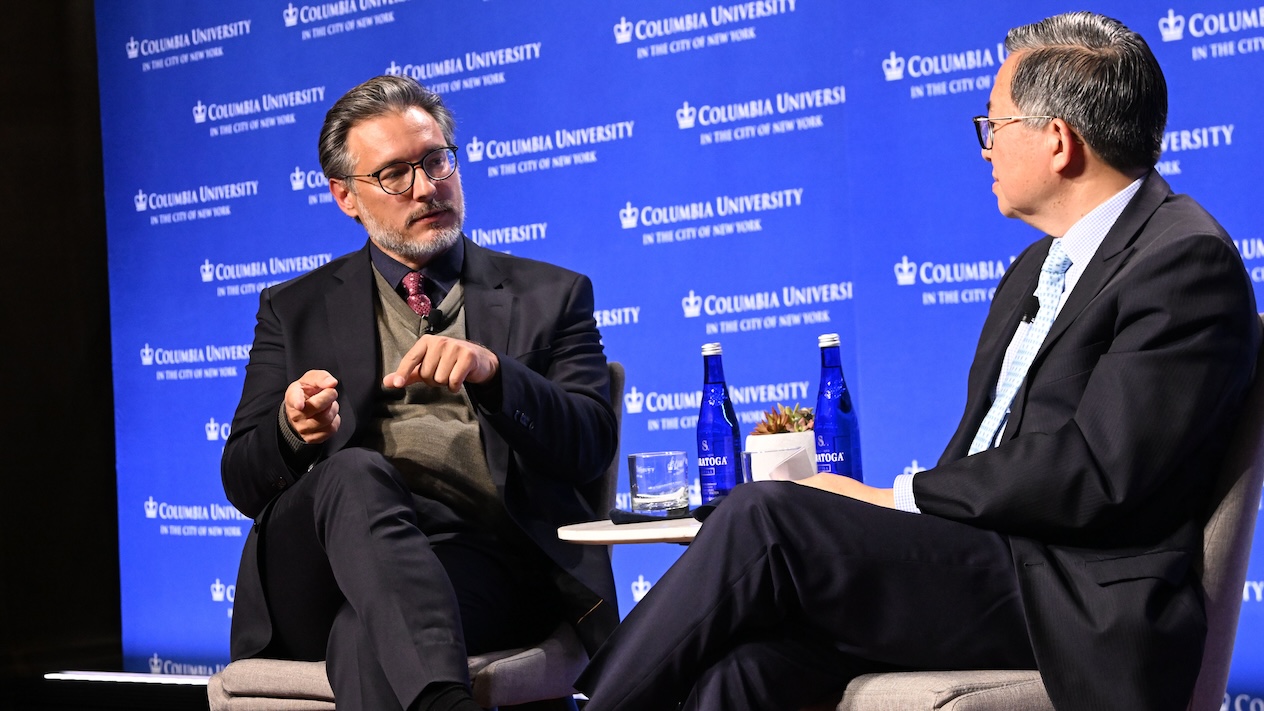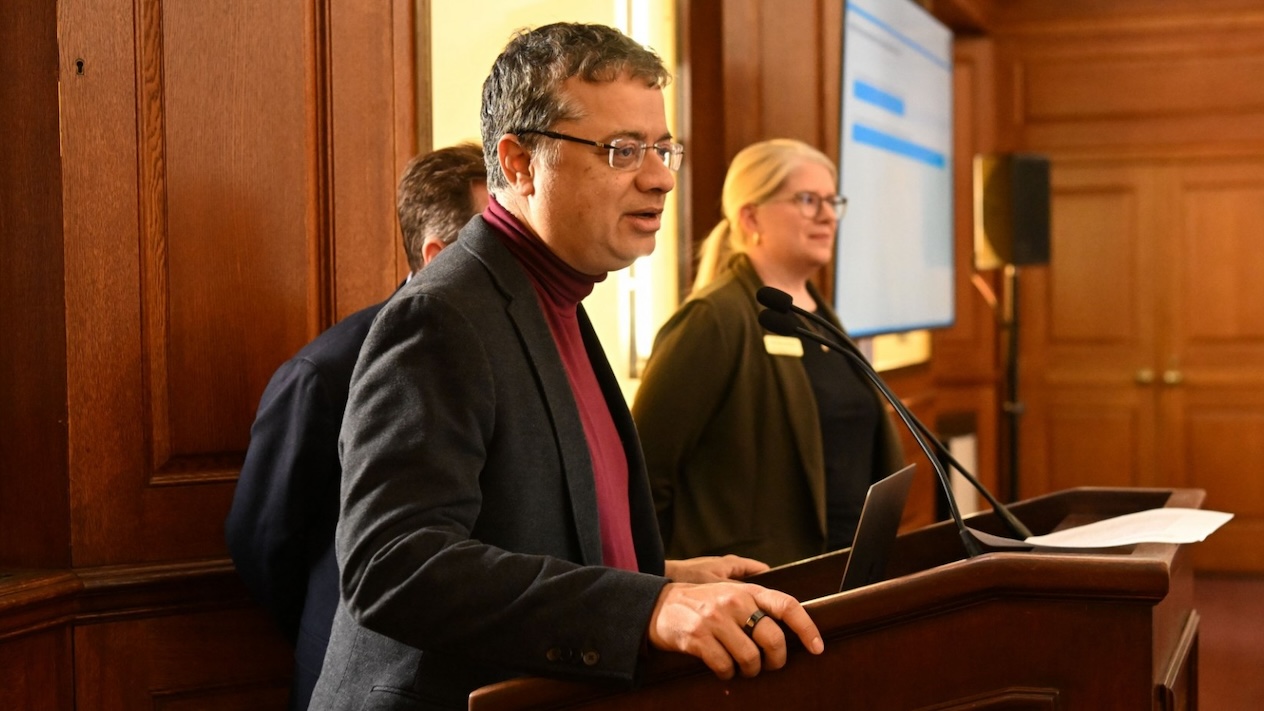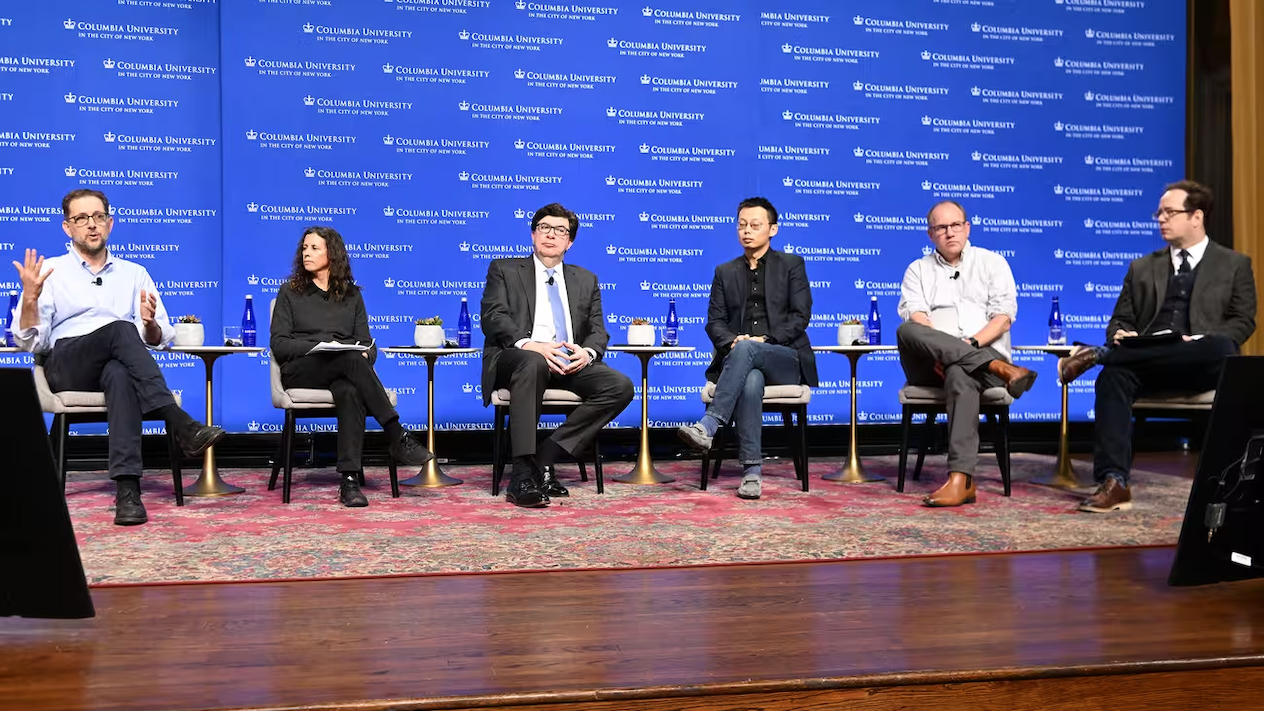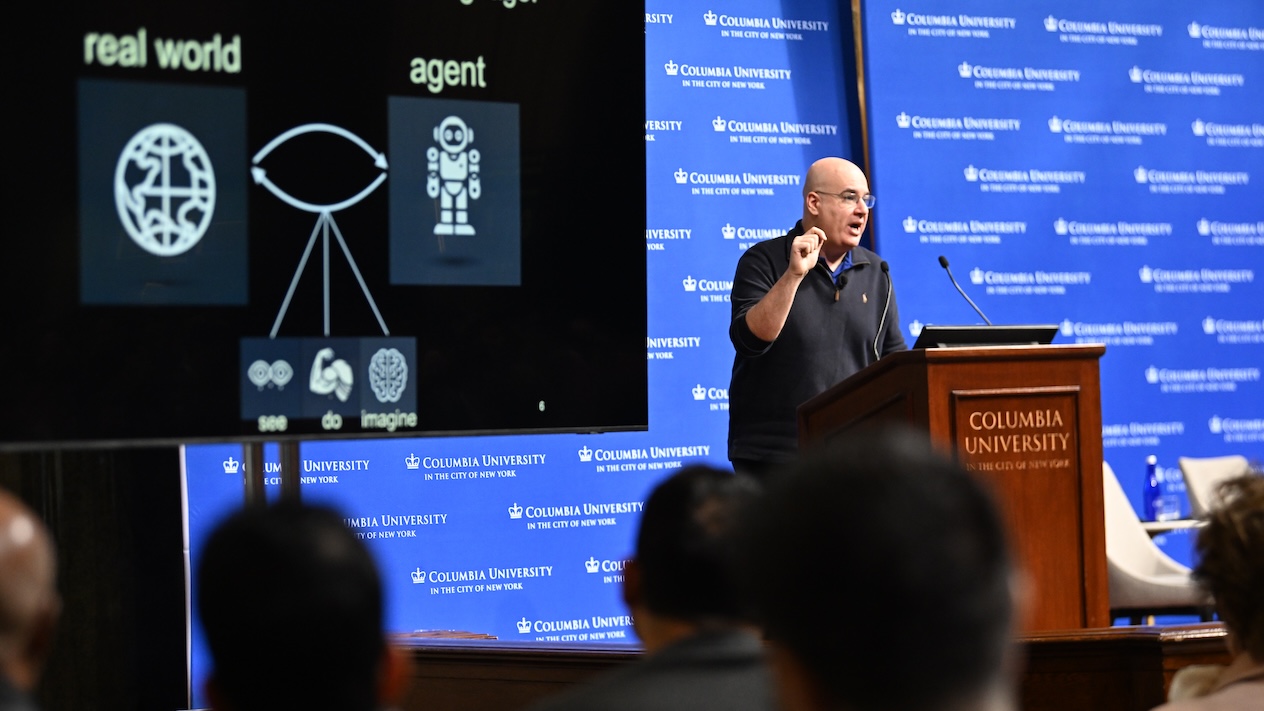
“Many people truly grasped AI’s rapid evolution when ChatGPT emerged, but AI research at Columbia had been thriving for years,” said Vishal Misra, vice dean for computing and AI at Columbia Engineering and professor of computer science. “This event was a chance to spotlight the work happening across the University and underscore our unique interdisciplinary approach to AI.”
Columbia leverages its broad academic strengths to explore AI beyond just technological development from medicine to law and business to journalism.
“AI is transforming every field,” said Richard Zemel, the Trianthe Dakolias Professor of Engineering and Applied Science in the Department of Computer Science, and event co-host. “Columbia’s approach ensures we are not just advancing AI technology, but also examining its broader implications and shaping policies for its responsible use.”
A showcase and network opportunity
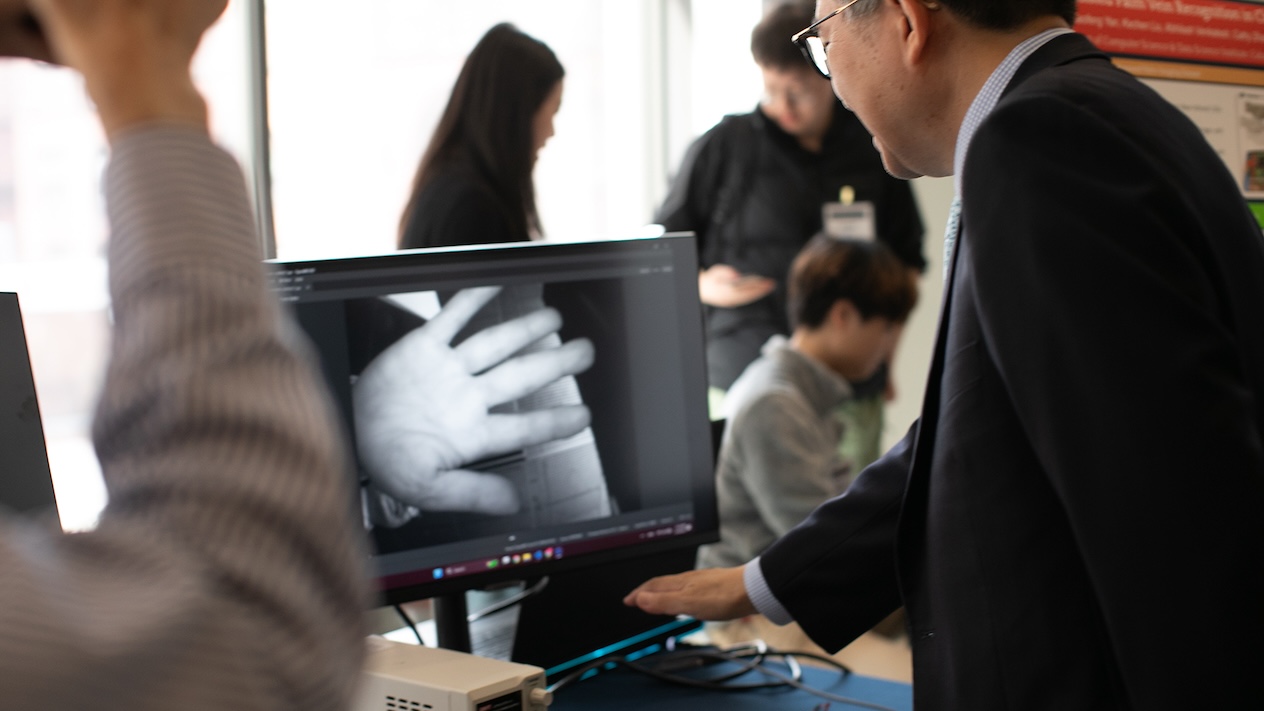
“I'm a researcher and I love to share what I've been doing,” said Yunzhu Li, assistant professor of computer science. Li and his students presented a robot equipped with advanced tactile sensors that significantly improved its ability to perform tasks requiring precise gripping. Li emphasized the importance of participating in these types of demo events, noting that they create valuable opportunities for collaboration.
“These sessions open the door for partnerships with fellow professors and, of course, students who can bring fresh ideas and perspectives to the research,” he added.
Demo Session Highlights
Photo Credit: David Dini/Columbia Engineering
The steady hum of conversation between participants and the crowd of attendees filled the space, and discussions ranged from technical breakthroughs to real-world applications of the projects.
“We have only scratched the surface with our research and need more collaborators,” said Judah Goldfelder, a demo session participant and Engineering PhD student in the Creative Machines Lab. His project, developed in partnership with Google, focused on reducing buildings’ carbon emissions by five percent. Advocating for an open-source model, he convinced Google to make the project publicly accessible, enabling contributors to collaborate via GitHub.
This initiative produced a publicly available toolkit to help researchers develop AI-powered heating and cooling systems, reducing energy waste and pollution. The open-source benchmark aims to standardize research efforts in this area and foster collaboration across institutions. “Scaling this project requires more collaborators, and I got a lot of inquiries about the project at this event,” Goldfelder said.
The AI demo session featured 13 projects from across the School. Visit this project page for a list of the day’s demo descriptions and participants.
Lead Photo Credit: David Dini/Columbia Engineering
Engineers at Ground Zero: Film Screening and Discussion
Photos by Timothy Lee
What was your initial reaction when you arrived at Ground Zero?
When I went down to the site after September 11, I just felt utter awe at two buildings of this size coming down–seeing the destruction and pile of debris that was down there, and knowing that there was a significant loss of human life at the site and the surrounding neighborhoods.
How did your experience at Ground Zero impact you personally and professionally in the years that followed?
In terms of impacting my life personally, I lost quite a few friends on that day. One former employee from Leslie E. Robertson was actually killed during the attacks of 9/11, plus a lot of the workers from the Port Authority who we worked with at the World Trade Center. I had quite a few friends who worked for various companies in the towers who lost their lives on 9/11 as well.
Professionally, it really changed my career trajectory. I had worked in the design end of structural engineering up until that point. For 10 months I was down at Ground Zero working six days a week, and it really moved my career in structural engineering from a design aspect to a forensic engineering standpoint, investigating causes of building collapses, fires, structural issues in buildings, and so forth.
I still work in this area today, conducting forensic investigations on all sorts of buildings and projects around the country and around the world.
What did structural engineers learn from 9/11?
Structural engineers after 9/11 learned quite a few things.
First, when designing new structures, we have learned to look more closely at progressive collapse. There were many revisions in codes, both international and around the U.S.
Examples such as having more hardened fireproofing, meaning the fireproofing adherence to the structural steel. In terms of egress, it is important to make sure stairs are separated on extremely tall structures above a certain height.
Better communication systems were also set within high-rise buildings–training of personnel and occupants within these buildings for evacuations is vital. This ensures there would be an orderly, expeditious evacuation of the structure if something were to occur. Also, including a service elevator dedicated to fire personnel on structures above a certain height is now a requirement.
These are just examples of probably 20 to 30 different modifications and recommendations that were made for engineers and architects when designing high-rise structures following 9/11.
What do you hope viewers will walk away knowing and understanding after watching this film?
I hope that people who watch this film get an understanding of what structural engineers did down at the site. There are a lot of documentaries and stories that describe the view of first responders, firefighters, and victims, what they did and how they helped that day.
What I hope people learn from this is that there were structural engineers and architects at Ground Zero who assisted first responders in stabilizing structures, recovering victims, as well as finding survivors.
Lead Photo Caption: Alumnus James Feuerborn during a talk at the Feb. 17 film screening of “Engineers at Ground Zero”
Lead Photo Credit: Timothy Lee
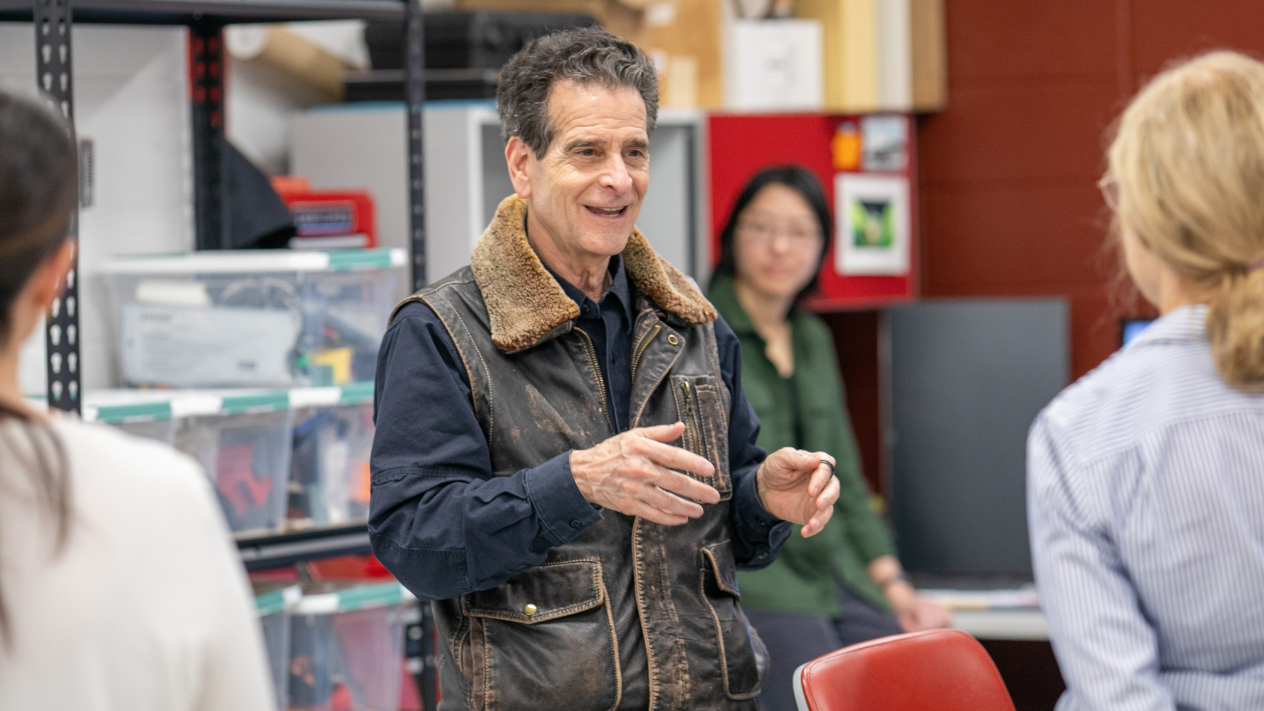
Dean Kamen Tech CEO talk and Columbia visit
Credit: David Dini/Columbia Engineering