Sail… or Fail? Snapshots from the ESC Boat Contest
Credit: Brandon Vallejo / Columbia Engineering
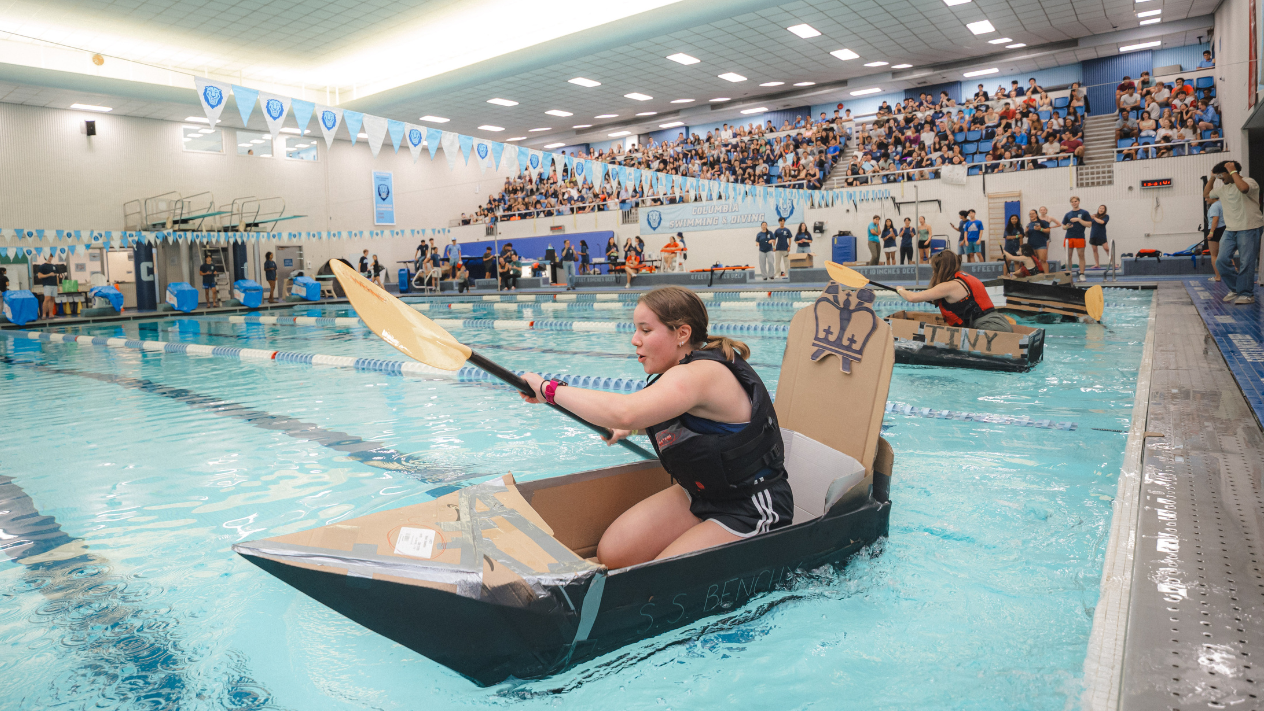
Lead Photo Caption: Setting Sail: Students test out their cardboard creations in Uris Pool.
Lead Photo Credit: Brandon Vallejo / Columbia Engineering
Highlights from Orientation Week
Credit: Tim Lee Photography/ Diane Bondereff/ Columbia Engineering
Academic Assembly
Columbia Engineering’s Academic Assembly held Aug. 27 marked the start of the academic journey for the engineering Class of 2029. Also known as the “Beanie Ceremony,” students receive a custom “Class of 2029” beanie as a part of a longstanding tradition. “First-years in the engineering school had to wear their beanies all year until they weren't first-years anymore,” said Vice Dean Morrison. “We won't make you do that, though. Wear them today. Maybe hold on to them, pull them out at graduation. It'll be a fun memento of your time here.”
The assembly also featured remarks from Assistant Professor of Computer Science Brian A. Smith, recent alum Alex Moreno BS’23, MS’24, and the Engineering Student Council President Janie Zhang BS’26. They each offered words of advice for the first-year students.
“Columbia presents so many opportunities for you to discover your niche, but you have to take advantage of them to reap the rewards,” said Moreno, who was the School’s 2023 Campbell Award recipient. “I wouldn't be where I am today without approaching every day with curiosity and the motivation to learn more about what I could do with my education.”
“[Engineering for Humanity] means that we as engineers have a responsibility to the planet and the people we build for,” advised Zhang as she closed off the assembly. “In practice, it looks like staying informed, being curious, asking hard questions – even if you might not know or like the answer – and most of all, staying empathetic.”
The day before Academic Assembly, Columbia Engineering also welcomed transfer and combined plan students to campus in a special ceremony.
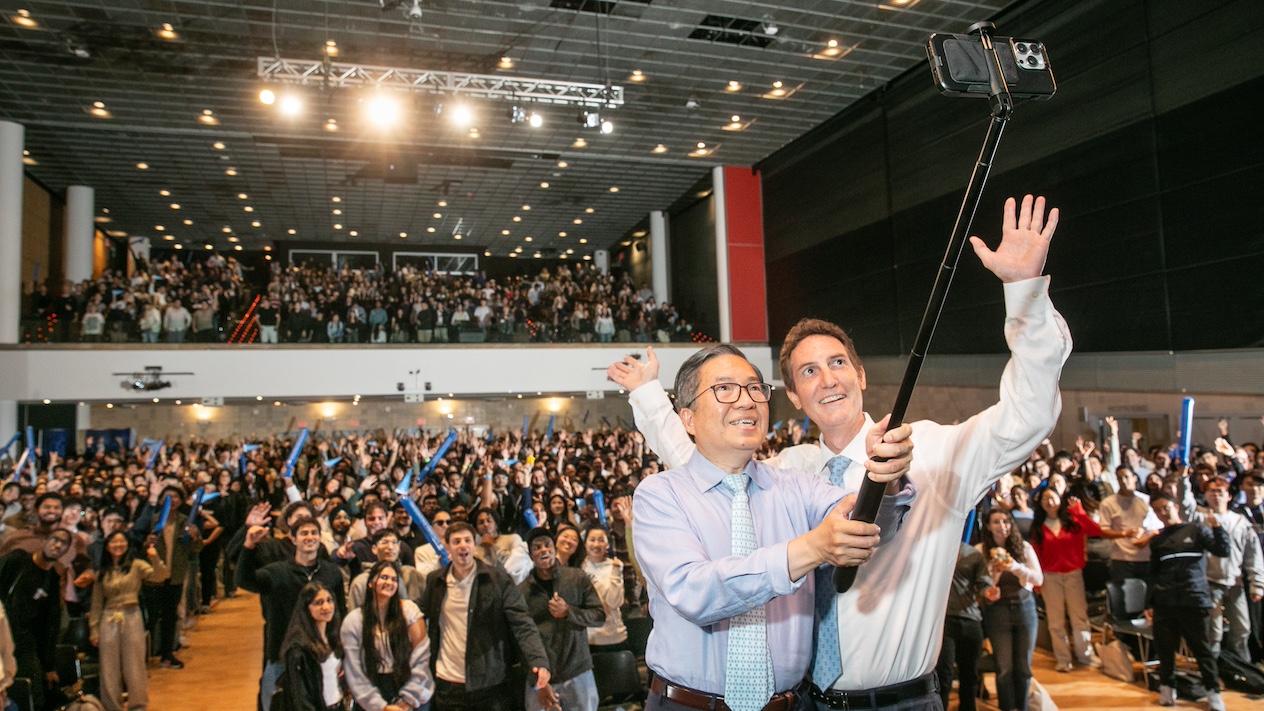
Caption: Columbia Engineering Dean Shih-Fu Chang and Senior Vice Dean of Academic Programs Barclay Morrison III take a selfie with new graduate students.
Credit: Tim Lee Photography/Columbia Engineering
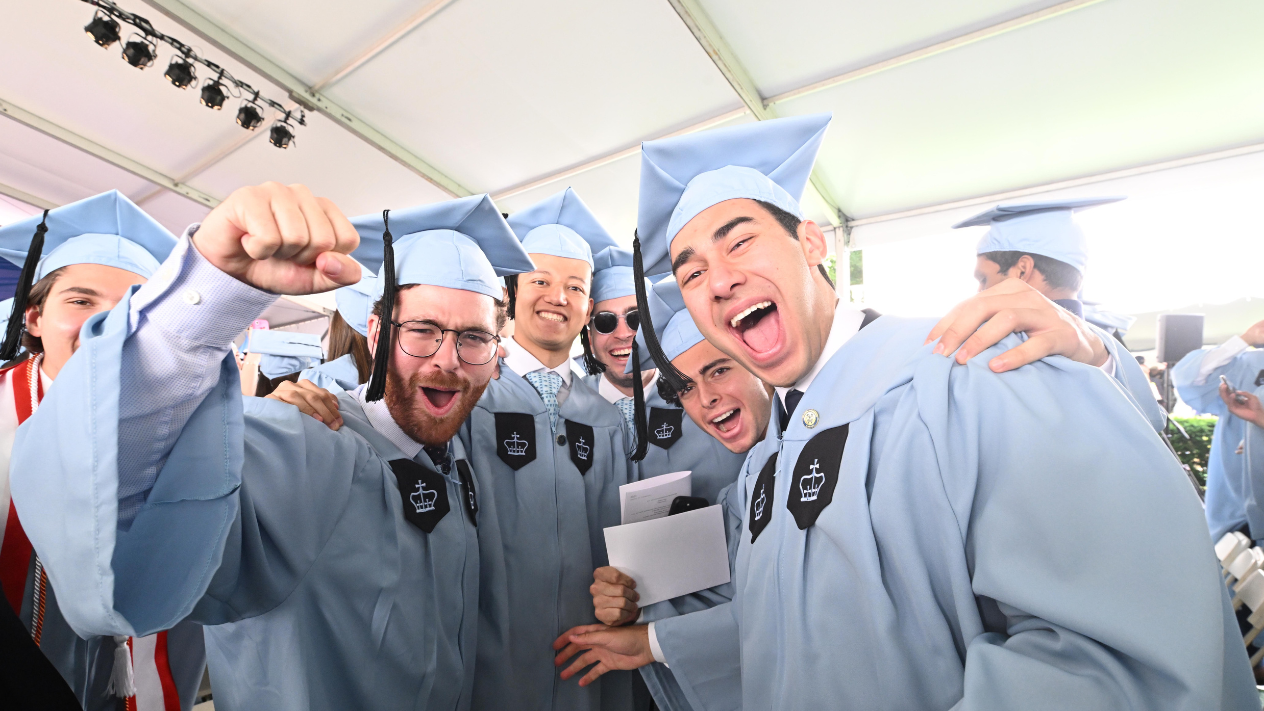
Class Day 2025
Highlights from our Class Day Ceremonies
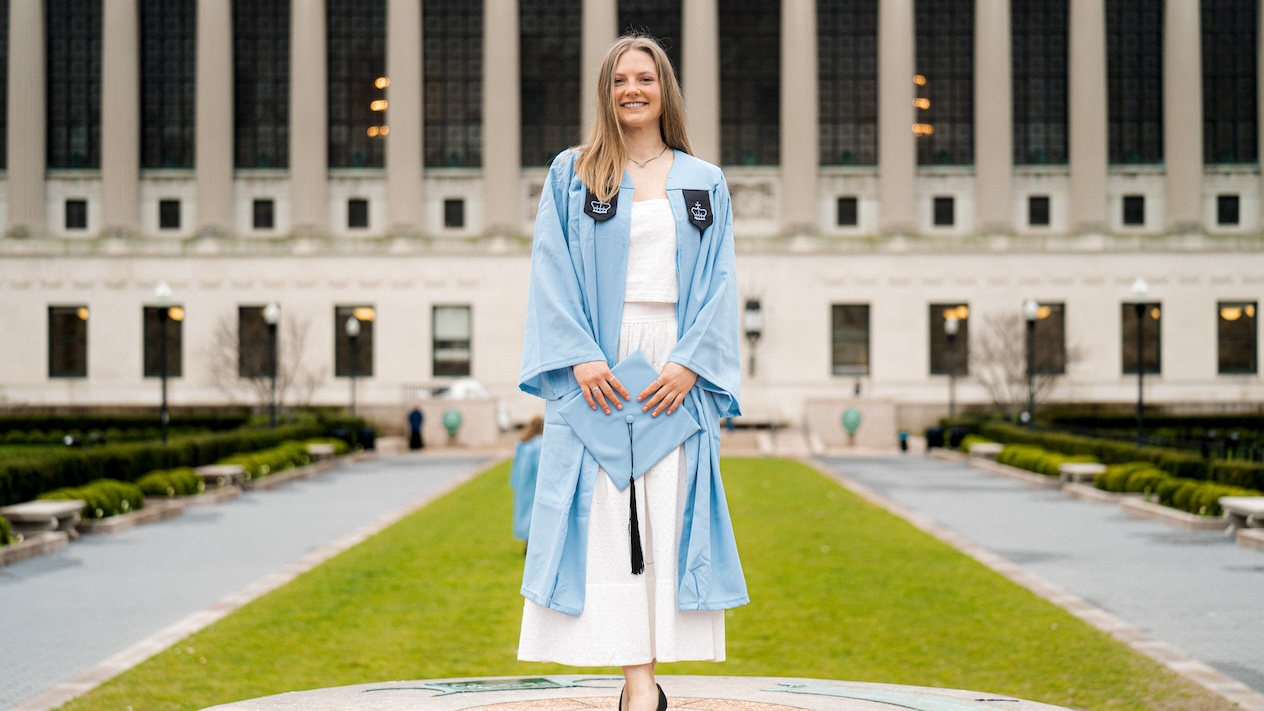
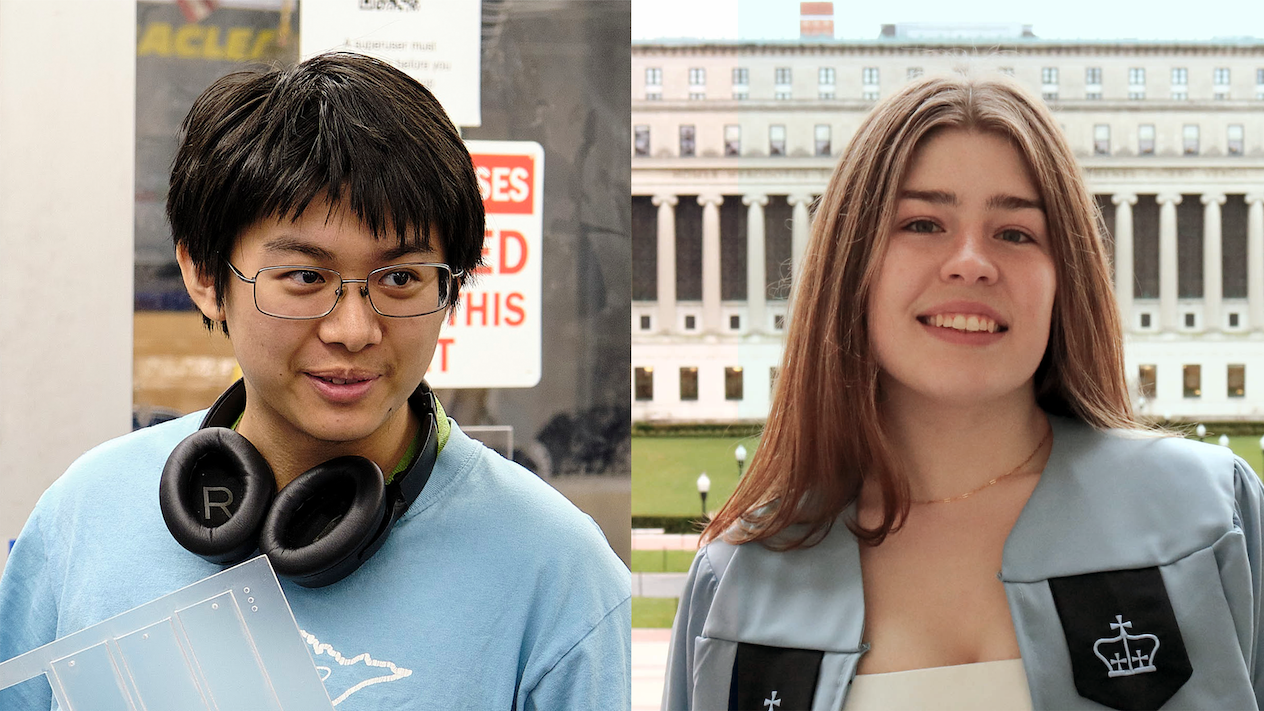
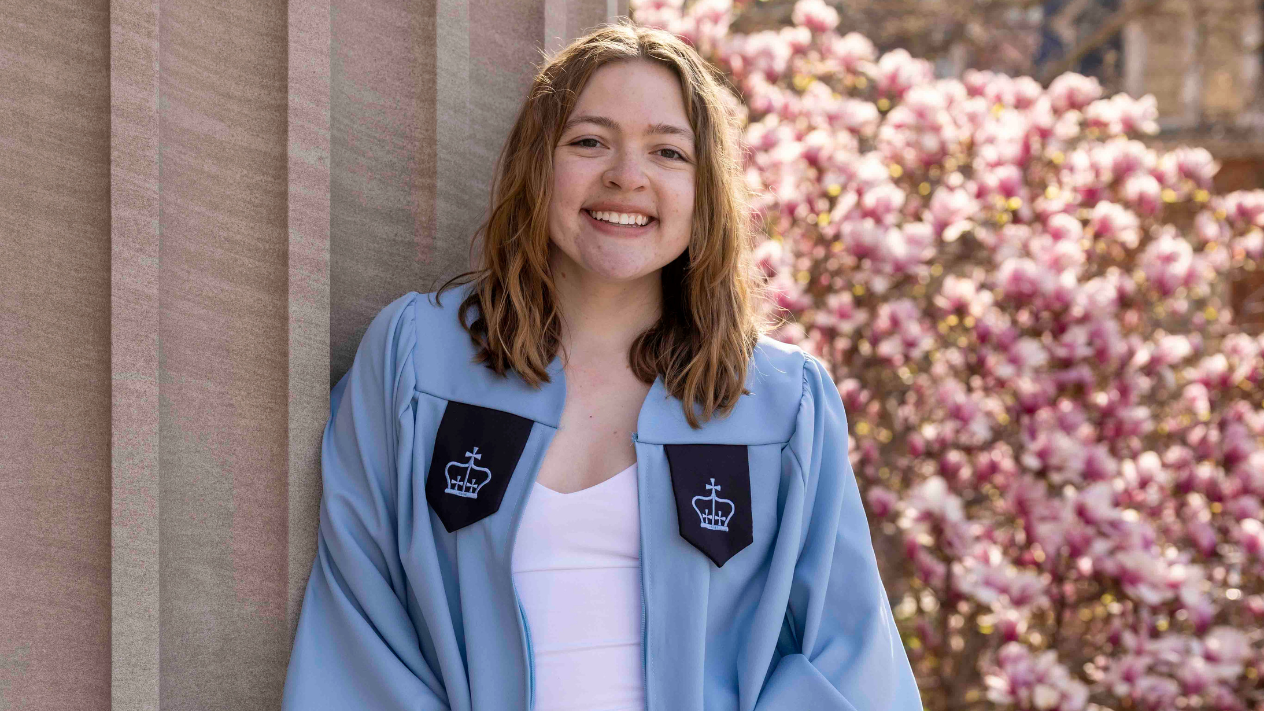
Vice Dean of Academic Programs Barclay Morrison presented several awards, including the George Vincent Wendell Memorial Medal to Kathryn Lampo. Jennifer Oettinger was recognized as Salutatorian, and Valedictorian Andrew Yang was also recognized as the Illig Prize recipient.
In his remarks, Yang, a double major in applied physics and applied mathematics, used an analogy from his own research into materials at the nanoscale to highlight the importance of waves.
“Waving hi, in orientation week, to some of your now closest friends. Tearful waves goodbye to your parents after convocation . . . In 1807, Joseph Fourier showed how waves sum to form beautiful functions. The sum of our interactions forms this beautiful community.”
He urged his fellow students to continue to take risks, despite their fears. “Look among us: We are SEAS. And we’re gonna make waves!”
Columbia Engineering Alumni Association (CEAA) President Reid Ellison welcomed the Class to the alumni network and recognized the recipients of the CEAA Distinguished Faculty Teaching Awards: Computer Science Professor Luca Carloni and Lecturer in the Discipline of Industrial Engineering and Operations Research Yaren Kaya.
Dean Chang addressed the Class and noted that their first year coincided with his first year as interim dean of the School. He emphasized the problem-solving nature of engineering and how students were prepared to make an impact on society.
“We live in a time when new and bold ideas and creative solutions are critically needed,” said Chang. “It is a time when engineers and applied scientists are needed. Particularly, engineers who think broadly and deeply about how engineering and technology affect society and how they can improve humanity. At Columbia, we call this our Engineering for Humanity vision. And you are the best ambassadors for this vision!”
Dean Chang presented two Columbia Engineering faculty awards. Asher Williams, assistant professor of chemical engineering, received the Janette and Armen Avanessians Diversity Award, and Michael Massimino, professor of professional practice in the Department of Mechanical Engineering, received the Edward and Carole Kim Award for Faculty Involvement.
Dean Chang introduced Provost Angela Olinto. Provost Olinto congratulated the group, calling them the most “stellar” group of graduates. “And as an astrophysicist I don’t use that word lightly!” She then shared a greeting from Acting President Claire Shipman.
Later that afternoon, faculty, students and their families gathered for the 2025 Graduate Class Day. Columbia Engineering Graduate Speaker Raman Odgers, addressed the class and advised his fellow graduates to see uncertainty in a positive light.
“Uncertainty isn’t always negative. It leads us to the joy of unexpected opportunities and new friendships,” he said.
“Uncertainty protects us from becoming just like the tools that we create as engineers, and gives us the power to use that Columbia education to choose and shape the future not just of our own lives but of the world.”
Vice Dean Morrison recognized the Graduate Student Life Leadership Award recipients: Kimberly Ruth Kroupa and Xialong Wu.
The graduates then heard from Class Day Speaker Harsh Jain ‘14BUS, CEO and co-founder of Dream Sports, India’s leading sports technology company and a global pioneer in digital sports entertainment.
Jain, who received a degree from Columbia Business School, stressed the importance of passion. He shared how his love for fantasy football inspired him to bring the concept to India, which had no fantasy sports at the time. Gaining traction in a new market took some time and he urged graduates to be persistent. “Now as you enter the real world, I have only one piece of advice. Learn how to fail. Pick yourself up and keep going.”
Each of Columbia’s 19 Schools celebrates their graduates with their own dedicated Class Day ceremony. On Tuesday, May 20, the Engineering School held a hooding ceremony for its doctoral students. Columbia University celebrated all graduates at Commencement on Wednesday, May 21, 2025.
Graduation Awards
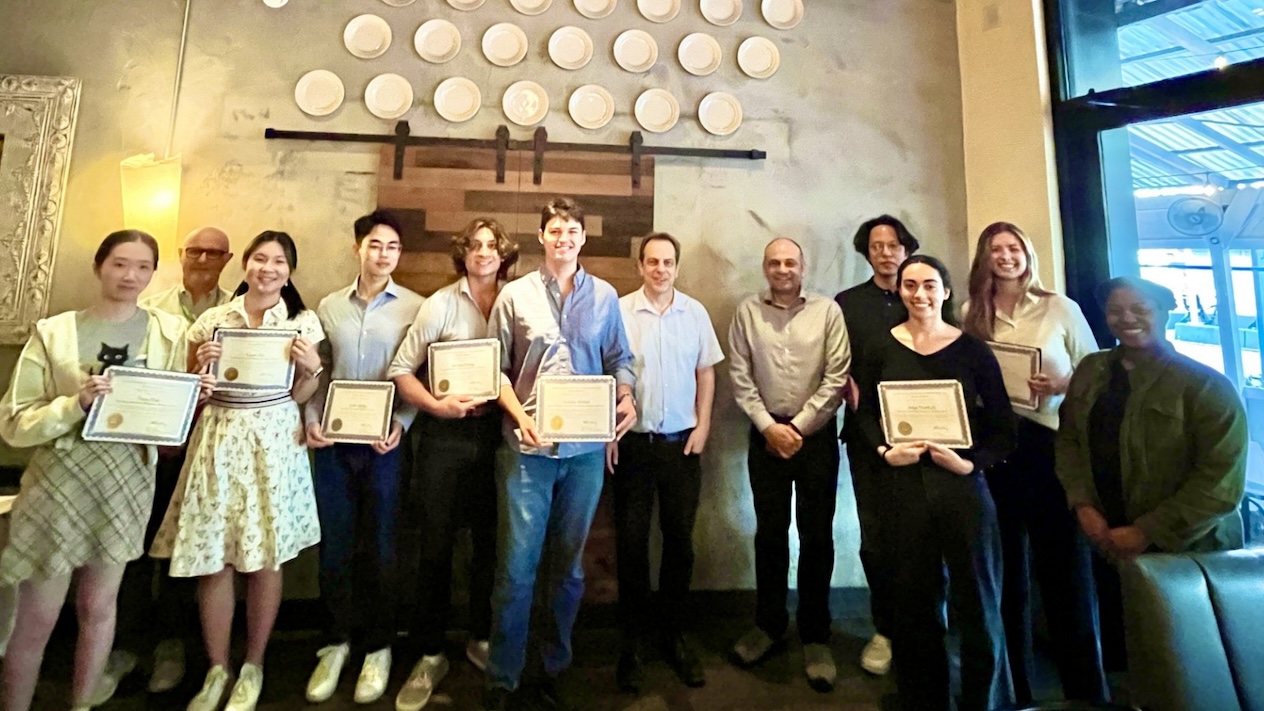
A selection of honorees
STUDENT AWARD WINNERS
Zvi Galil Award for Improvement in Engineering Student Life
Columbia Space Initiative
Bernard Jaffe Prize for the Encouragement of Inventiveness in Engineering
Alec Batts
School of Engineering and Applied Science Scholar Athlete Award
Andrew David Fouty
Campbell Award
Kathryn Lampo
School of Engineering and Applied Science Student Activities Award
Sandhya Sethuraman
Thomas "Pop" Harrington Medal
Hayden Flook
George Vincent Wendell Memorial Award
Kathryn Lampo
Robert D. Lilley Award for Socially Responsible Engineering
Engineers Without Borders
Morton B. Friedman Memorial Prize for Excellence
Jingping Nie
Graduate Student Life Leadership Awards
Kimberly Ruth Kroupa
Xiaolong Wu
Graduate Speaker
Raman Odgers
Valedictorian and Illig Prize
Andrew Yang
Salutatorian
Jennifer Oettinger
FACULTY/ALUMNI AWARD WINNERS
CEAA Distinguished Faculty Teaching Awards
Luca Carloni
Professor of Computer Science
Yaren Kaya
Lecturer in the Discipline of Industrial Engineering and Operations Research
Presidential Teaching Award
Peter Kinget
Bernard J. Lechner Professor of Electrical Engineering
Faculty Mentoring Award
Kathy McKeown
Henry and Gertrude Rothschild Professor of Computer Science
Columbia Honorary Doctor of Letters
Zvi Galil
Columbia Engineering Dean Emeritus
Edward and Carole Kim Award for Faculty Involvement
Michael Massimino
Professor of Professional Practice in the Department of Mechanical Engineering
Janette and Armen Avanessians Diversity Award
Asher Williams
Assistant Professor of Chemical Engineering
Society of Columbia Graduates Great Teacher Award
Hardeep Johar
Senior Lecturer in Discipline in Industrial Engineering and Operations Research
CAA Alumni Medalist
John Mullervy BS’00
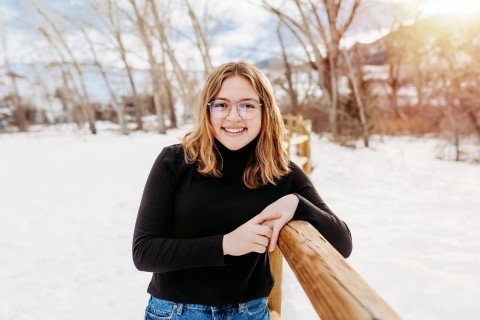
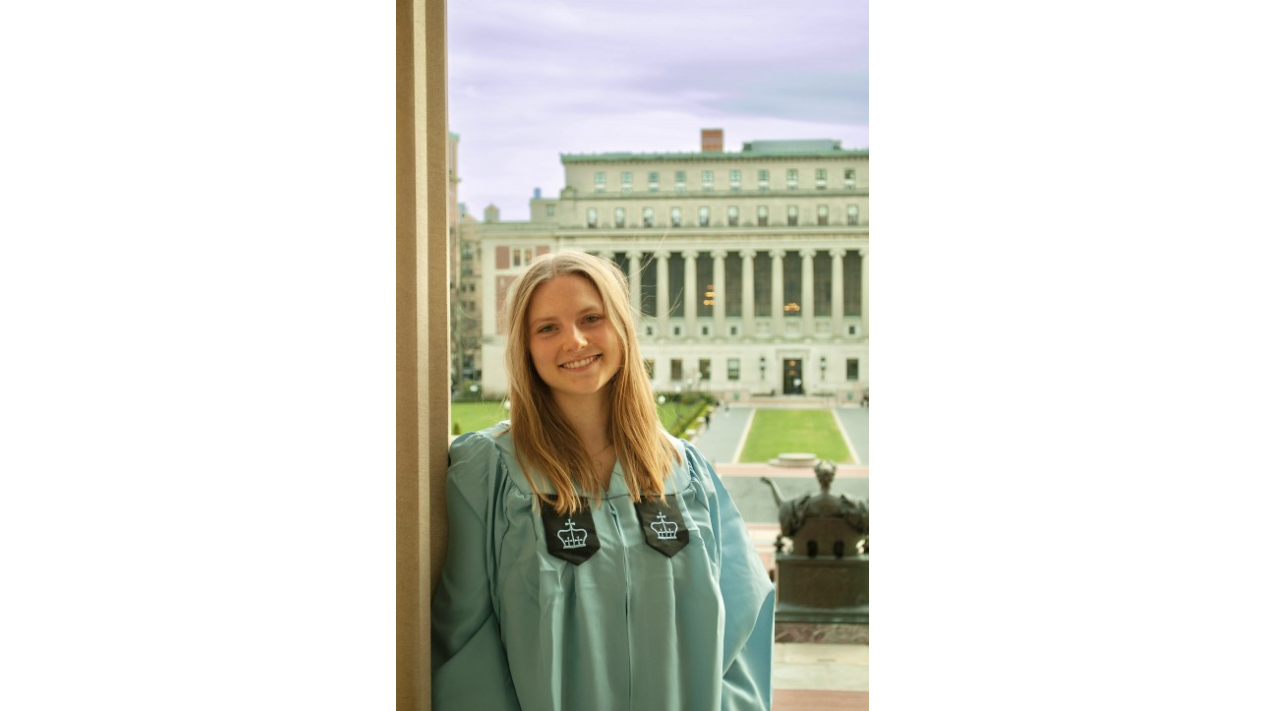
Kathryn (Kate) Lampo has always aimed higher than most—literally. “I was the kid who wanted to be an astronaut,” she said.
As a senior majoring in mechanical engineering, she’s inching even closer to achieving that childhood dream. After graduation this spring, Kate, the current co-president of Columbia Space Initiative (CSI), will soon begin her professional journey in the aerospace field.
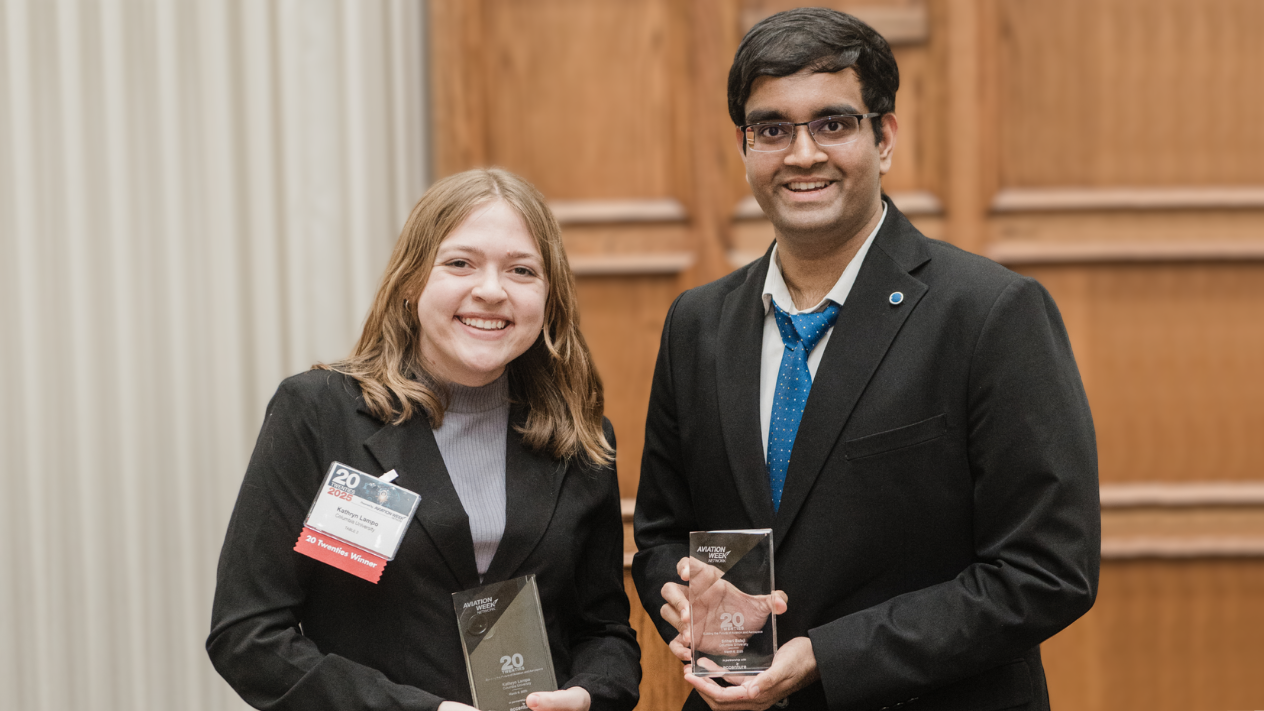
Kate has recently been named a recipient of the 2025 Campbell Award, an honor presented to a graduating student who shows exceptional leadership and Columbia spirit as exemplified by the late Bill Campbell ’62CC, ’64TC. She has received numerous accolades this past year, including a Marshall Scholarship and was honored with Aviation Week Network’s 20 Twenties Class of 2025 award. Advised by Mechanical Engineering Professors Mike Massimino and Matei Ciocarlie, Kate conducts research in Ciocarlie’s Robotic Manipulation and Mobility Laboratory, where she works on designing and building robotic manipulators. She will be continuing her studies in space robotics at the University of Oxford following graduation.
Thinking back — what first drew you to Columbia Engineering?
Honestly, the city! I grew up in the suburbs of Denver, and while I loved Colorado (and still do), I knew that I wanted to move somewhere completely different for college. Columbia also seemed like a place brimming with opportunity, and I knew that I would grow in significant ways at Columbia Engineering.
Did you always know you wanted to get into the aerospace engineering field?
I did! When I was younger, I was the kid that wanted to grow up to be an astronaut. I’ve always been fascinated by the scientific potential inherent in exploring our universe, and as my aspirations developed throughout middle and high school, I became more and more interested in building the vehicles that allow us to do so. To me, aerospace engineering has always been a great way to combine my love for space with my enjoyment of designing and building things. I’ve been able to refine those aspirations further here, and am now focused on robotics for space applications.
What’s a moment at Columbia that shifted how you see yourself—or your future?
I think the most valuable thing that Columbia has taught me is to believe that anything is possible.
My freshman year, I worked in a team as a part of the Columbia Space Initiative (CSI) that built a lunar gripping and anchoring tool for a NASA competition. After being selected as national finalists, we got to travel to the Johnson Space Center in Houston, TX to test the tool in the Neutral Buoyancy Laboratory, which is a microgravity astronaut training center.
To have that opportunity so early on was a phenomenal experience, and it made me realize that I could do serious engineering as early as my freshman year. That has inspired me to pursue every outlandish opportunity since, and while plenty of my efforts have been unsuccessful, my penchant for trying has opened up many other doors for me throughout college.
“The most valuable thing that Columbia has taught me is to believe that anything is possible.”
Kathryn LampoBS'25
How has the School’s guiding principle, Engineering For Humanity, resonated with your experience at Columbia?
I’ve been lucky enough to have had many teaching opportunities that embody the concept of Engineering for Humanity to me. I’ve spent a lot of time working on educational STEM outreach in Title I middle schools across the city, developing and delivering lessons on space science and engineering to thousands of kids. I’ve also been a teaching assistant for first-year students for the last two years, which is something that I’ve found to be incredibly rewarding.
In my mind, a big part of Engineering for Humanity is making STEM opportunities accessible to anyone that wants to pursue them. Coming up with creative and novel solutions that benefit humanity requires integrating diverse perspectives, which is something that Columbia has made clearly evident to me.
If you could send one piece of advice to your first-year self, what would it be?
Relax! My first-year self (like many first-years) was overly stressed and trying to do way too much. Four years is a long time, and I would encourage her to authentically explore her interests instead of trying to join every extracurricular she came across. There’s no rush—and taking time for rest is important!
Share some words to live by or a message to your fellow grads?
While I often think the phrase is used in a negative way, I really like the expression “throw everything at the wall and see what sticks.” I’m a big believer in trying things with the understanding that not everything will work out, but something is bound to stick. I think it’s worthwhile to be open to new and unfamiliar experiences, and to pursue things that seem improbable.
What are your plans this summer and after Columbia?
This summer, I’m excited to spend some time resting at home in Colorado with my family and friends. In the fall, I’m off to Oxford to start my MSc in Engineering! I’ll be studying robotic planning for space environments.
What will you miss the most about your time at Columbia Engineering?
Easily the Columbia Space Initiative (CSI)! CSI has been such a home for me during my four years at Columbia—I joined the first week of my freshman year, and I haven’t left since. From the jump, the club provided me with truly phenomenal aerospace opportunities, from testing a lunar gripping tool in NASA’s Neutral Buoyancy Laboratory to calling an astronaut on the ISS to building a pair of satellites to launch in the next couple of years. Beyond that, CSI has also given me some of my closest friends and my strongest community here. I’ll miss it very dearly!