ABOUT COLUMBIA ENGINEERING
Columbia Engineering, based in New York City, is one of the top engineering schools in the U.S. and one of the oldest in the nation. Also known as The Fu Foundation School of Engineering and Applied Science, the School expands knowledge and advances technology through the pioneering research of its more than 200 faculty, while educating undergraduate and graduate students in a collaborative environment to become leaders informed by a firm foundation in engineering. The School’s faculty are at the center of the University’s cross-disciplinary research, contributing to the Data Science Institute, Earth Institute, Zuckerman Mind Brain Behavior Institute, Precision Medicine Initiative, and the Columbia Nano Initiative. Guided by its strategic vision, “Columbia Engineering for Humanity,” the School aims to translate ideas into innovations that foster a sustainable, healthy, secure, connected, and creative humanity.
ABOUT COLUMBIA BUSINESS SCHOOL
Columbia Business School is the only world-class, Ivy League business school that delivers a learning experience where academic excellence meets with real-time exposure to the pulse of global business. Led by Dean Glenn Hubbard, the School’s transformative curriculum bridges academic theory with unparalleled exposure to real-world business practice, equipping students with an entrepreneurial mindset that allows them to recognize, capture, and create opportunity in any business environment. The thought leadership of the School’s faculty and staff members, combined with the accomplishments of its distinguished alumni and position in the center of global business, means that the School’s efforts have an immediate, measurable impact on the forces shaping business every day. To learn more about Columbia Business School’s position at the very center of business, please visit www.gsb.columbia.edu.
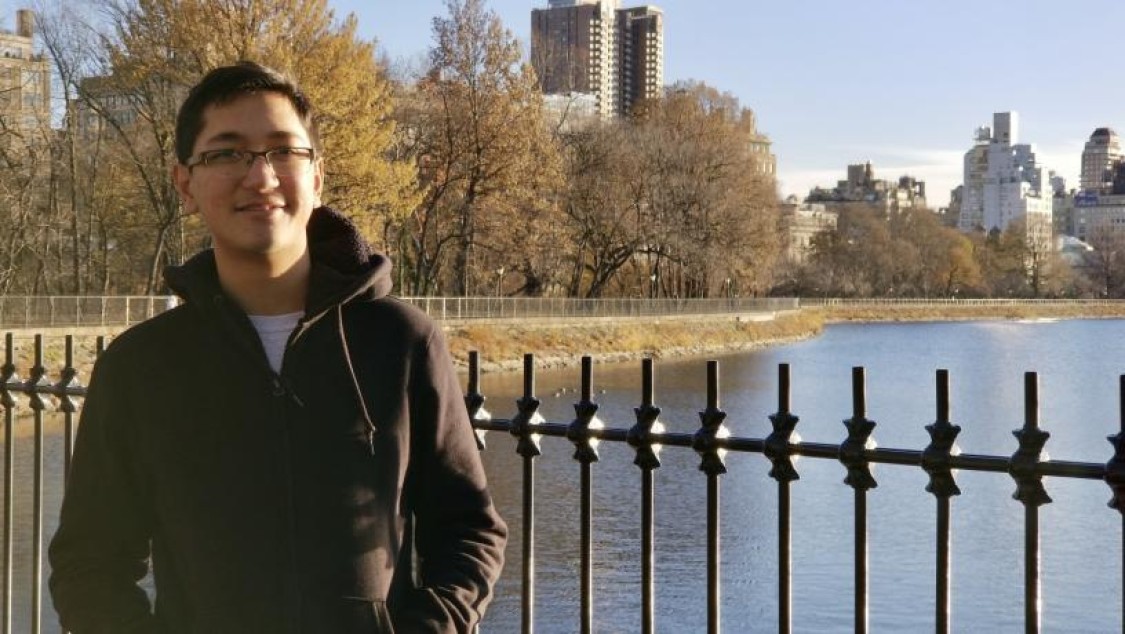
Pranav Shrestha, Salutatorian
Major: Computer Science
Hometown: Kathmandu, Nepal
Why Columbia Engineering?
Growing up in Nepal, America and an Ivy League education are the proverbial shining city on the hill. A lot of us could not even dream of such an experience—less than 10 people from the entire country are accepted at Ivy League schools. Such an education and the mentorship that entailed was always a distant dream, and the perk of the New York experience put Columbia at the top of the list for me.
Why Computer Science?
I’ve always been fascinated by developing an understanding of how the world works, and computer science offers an entire world governed by simple logical rules and explicit algorithms whose beauty and effectiveness captivate me.
What was your favorite course and professor?
Hands down, Computer Vision with Carl Vondrick. I loved its succinct coverage of everything from the physics involved and traditional algorithms to the state-of-the-art deep learning papers! Professor Vondrick’s teaching style, challenging yet engaging assignments, and straightforward assessments definitely added to the charm. My only regret was not taking it earlier.
How has your education and experience primed you for your career?
Columbia Engineering has played an essential role starting from my very first internship. I was part of the Columbia Center for Career Education’s Startup Internship Program, which was an incredible opportunity as a freshman. This helped me secure my internship with Qualcomm and eventually the research role I’ll be joining full-time.
How have you been spending your time away from Columbia?
I’ve been staying with my brother in Dallas attempting to stay as occupied as possible—keeping healthy with short jogs and light workouts, catching up with friends, taking time for introspection and exploring interests within and beyond computer science.
What are your plans for after graduation?
I’ll be joining Qualcomm’s research department working on machine learning compression, primarily the study and deployment of models for Internet of Things devices and low-power chips, and eventually pursuing further studies in a related field. While we’re still a long way away, I’d love to work on projects like the brain-computer interface.
Who are the most inspirational people in your life?
My parents have always been the biggest inspirations for me. The amount of work and sacrifice my parents have had to make for us to be who we are today has been one of my biggest motivators. I also want to thank my brother who has always been my biggest supporter. He was my first teacher, sparking a joy of learning from a very early age, and has always pushed me to pursue new adventures whether it’s hiking a 14er or learning to ski despite my fear of heights. For everything, I’m eternally grateful!
Words to live by?
“Time wasted enjoying is not time wasted.” For over a decade, it’s been a reminder to never feel guilty about the ways I spend my time; to be kind to myself and learn to enjoy life. It’s also a subtle nudge to seek out things I’d enjoy doing.
What does engineering for humanity mean to you?
For me, it’s the ability to look beyond our current obligations and projects to consider our impact on society. Whether it’s on a global scale like tackling misinformation or for smaller communities, engineering for humanity orients us towards our visions of a better society.