Inside the Science for Women’s Health Innovation Symposium
Photos by David Dini/Columbia Engineering

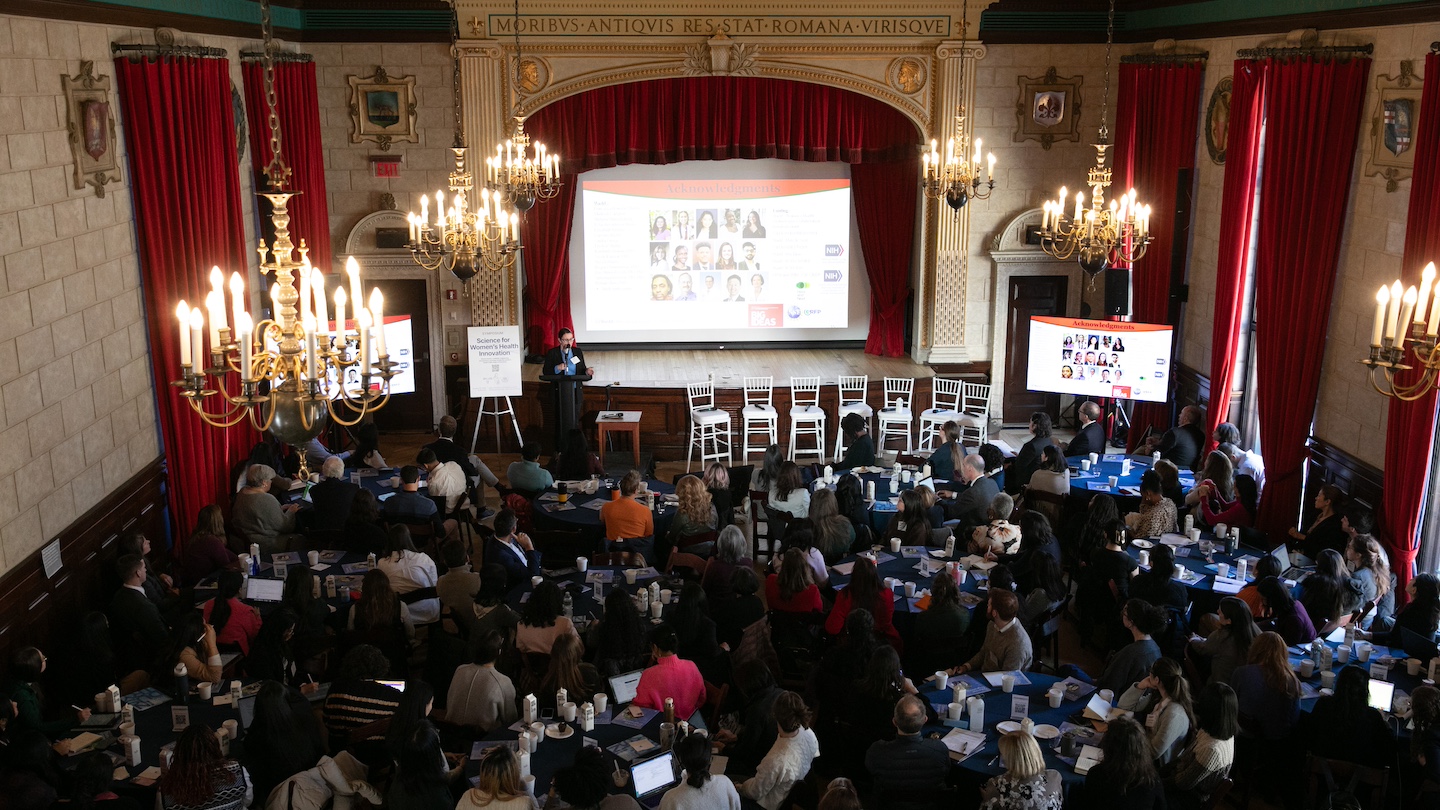


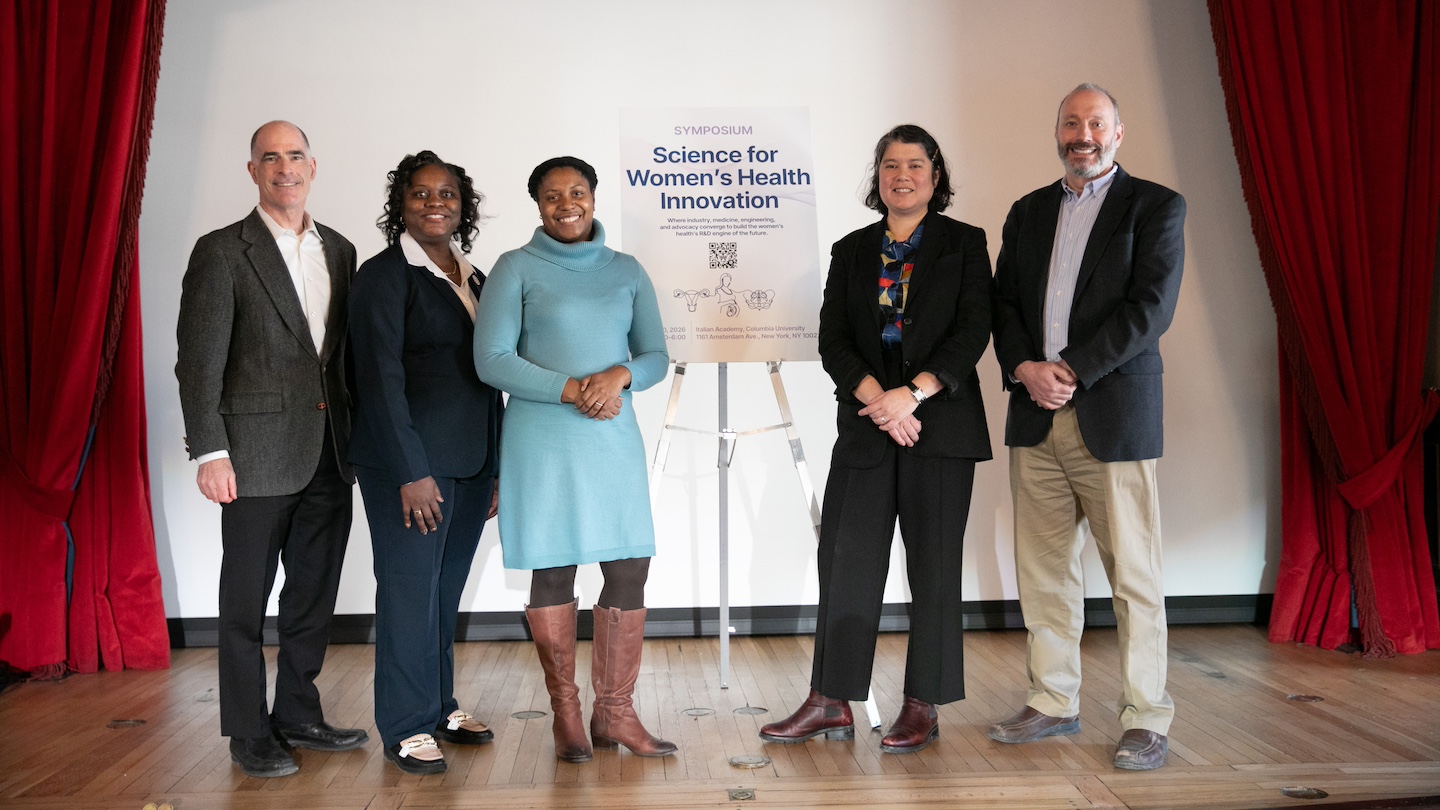
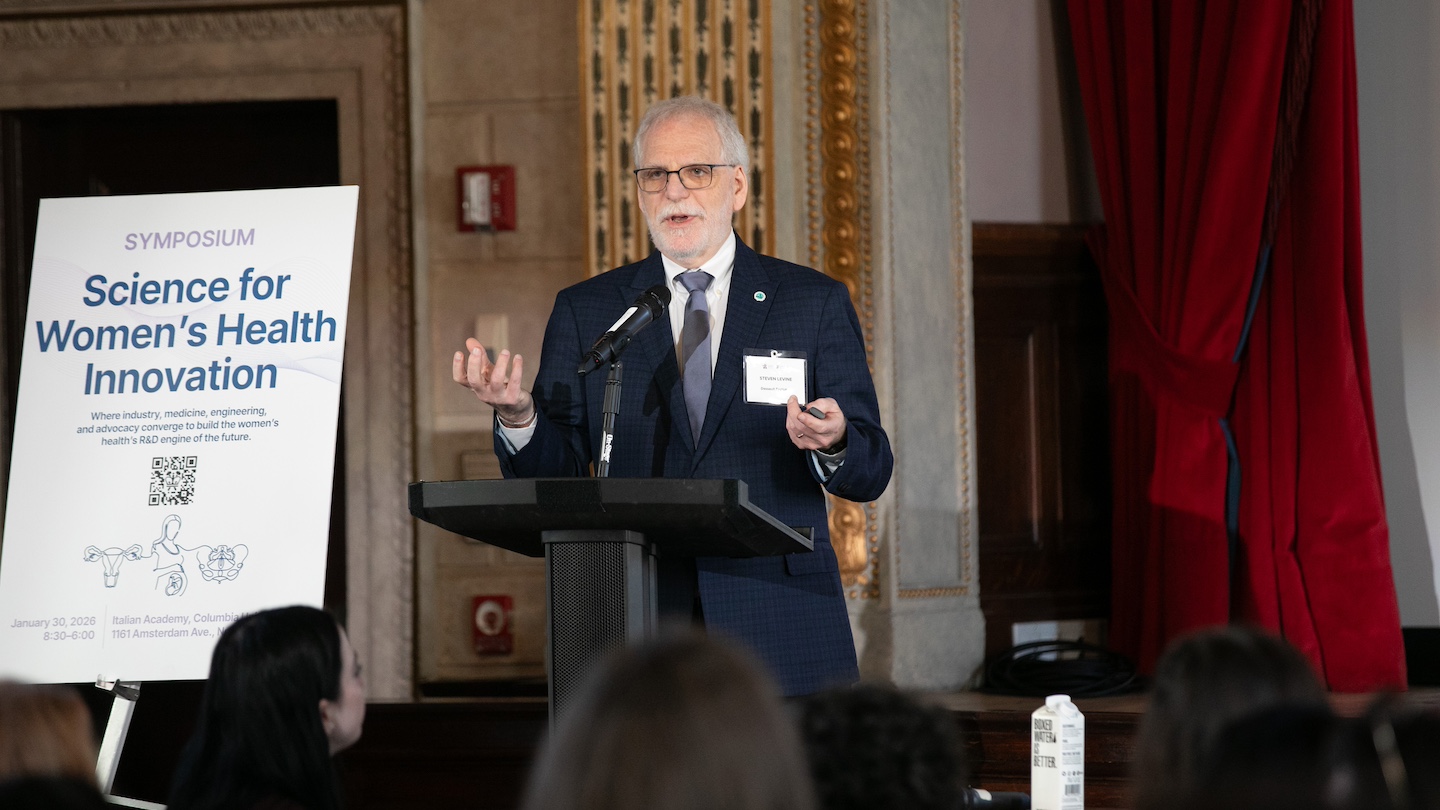



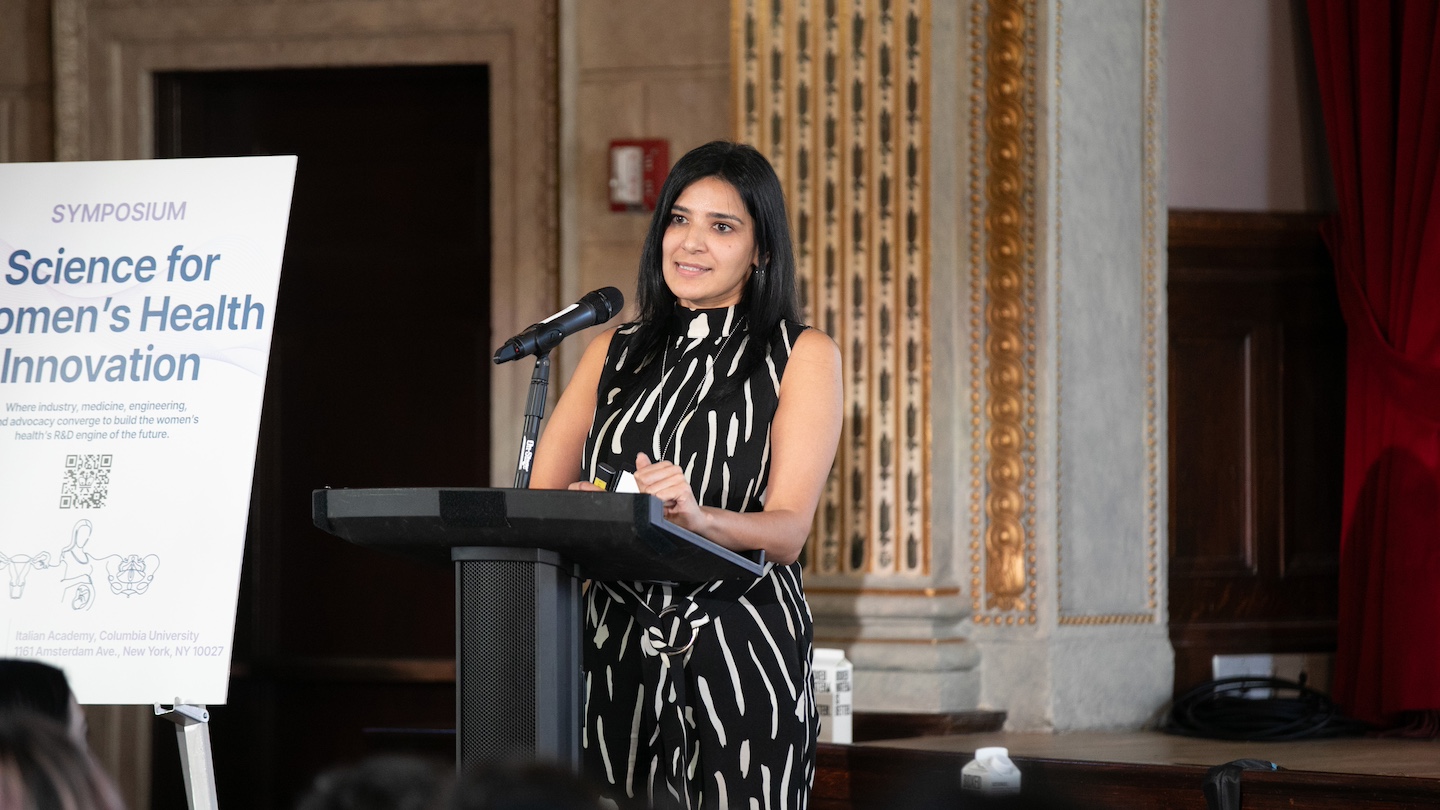

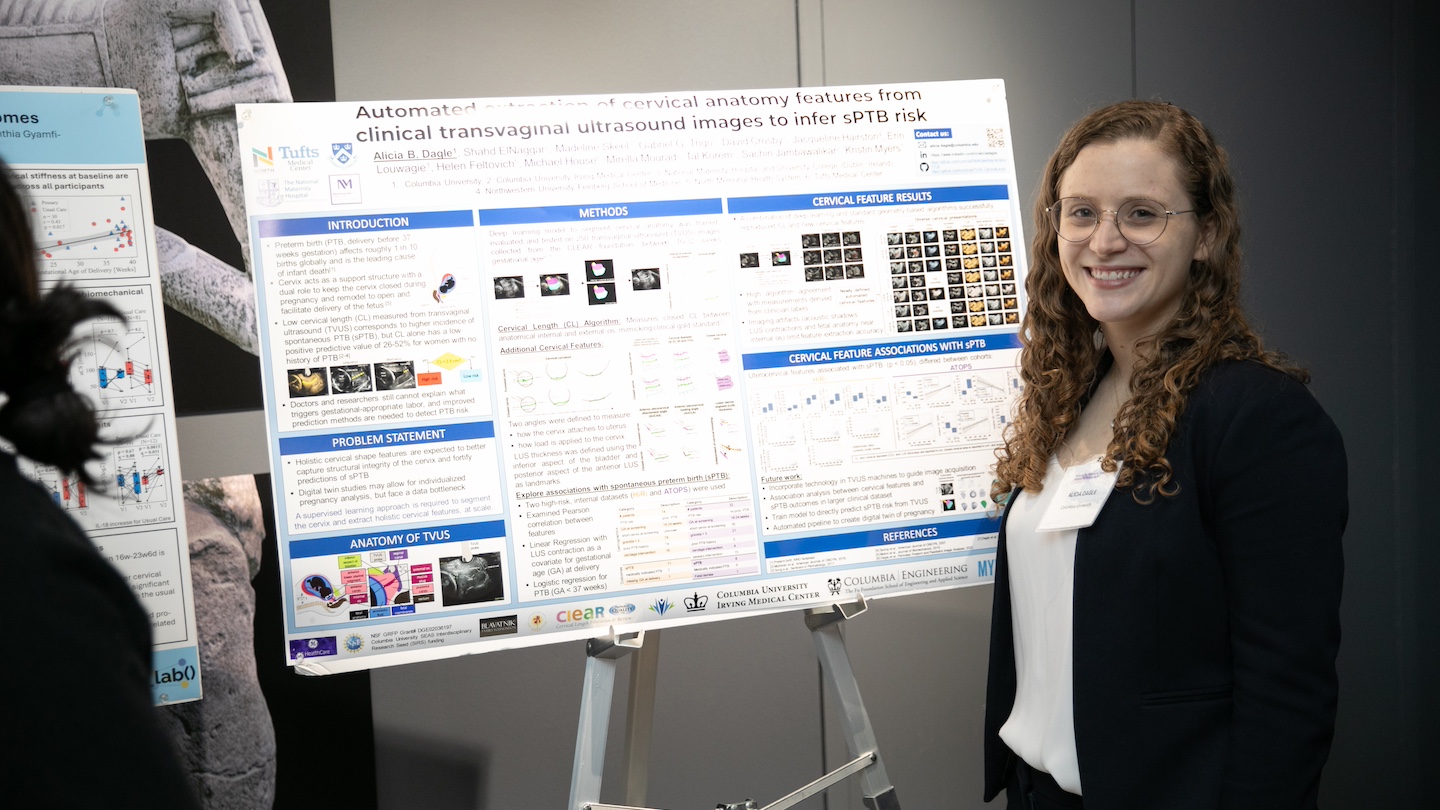

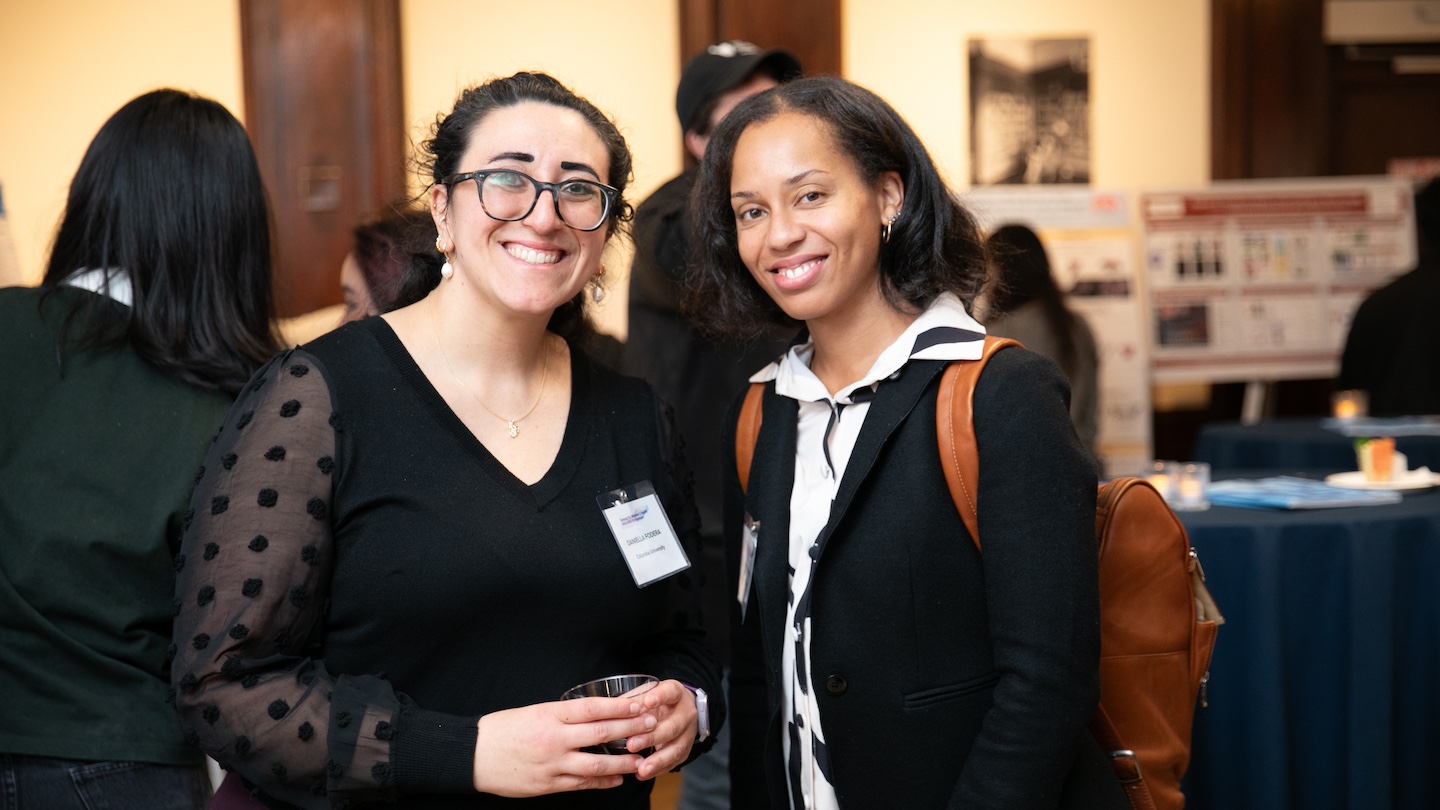

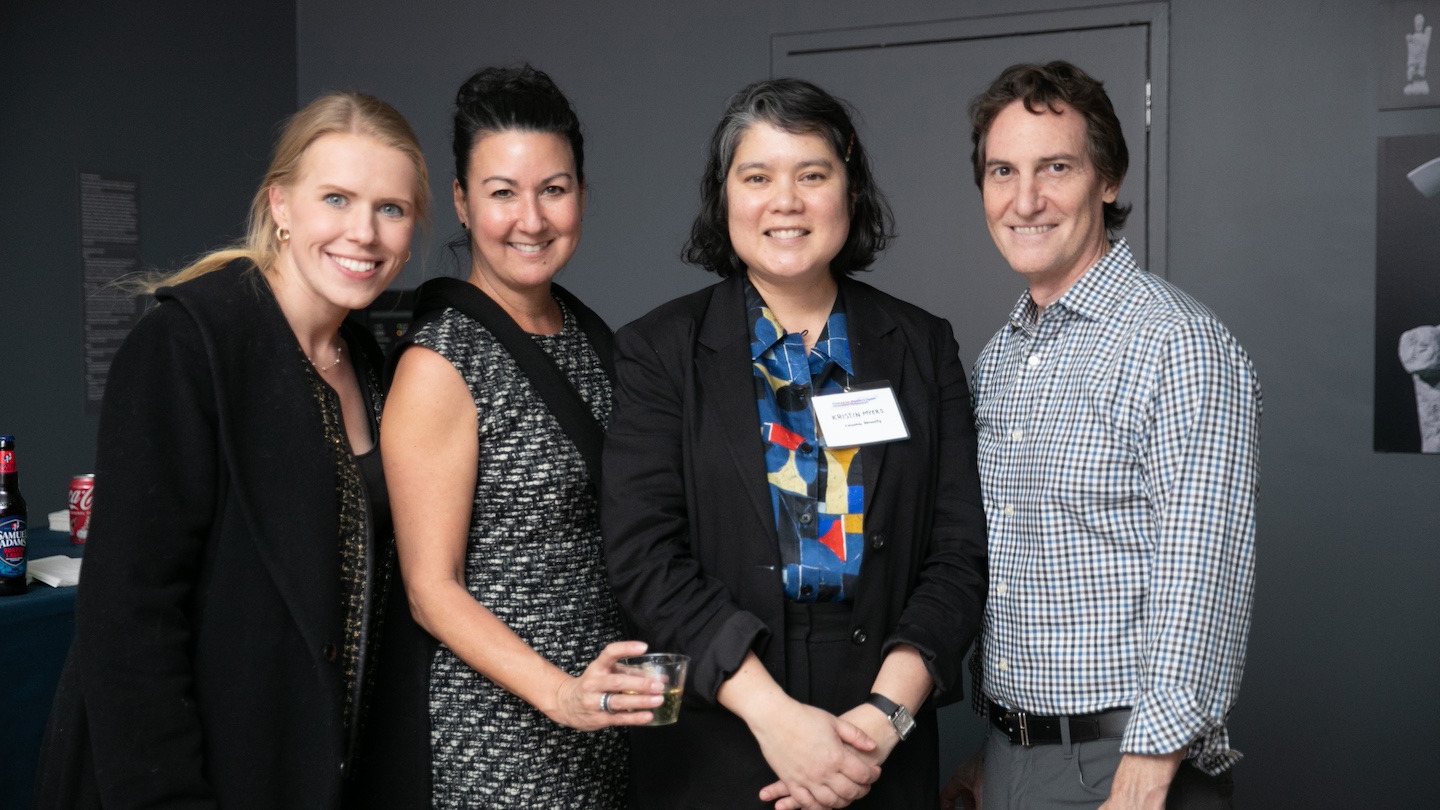
A major theme of the conference was the application of engineering principles and data analysis techniques to a wide range of underaddressed problems in women’s health.
“Our field can learn from other areas of engineering, such as automotive and aerospace, that already use physics- and data-driven digital twins and models to accelerate product design and solutions,” said co-organizer Kristin Myers, a professor of mechanical engineering at Columbia Engineering. “Women’s health challenges mirror a lot of the major outstanding challenges in health more generally, such as designing sensors and monitors that fit a patient’s need while conveying actionable information to a medical provider.”
The daylong event featured keynotes from Silvia Blemker, professor of biomedical engineering at the University of Virginia; Steven Levine, the senior director of virtual human modeling at Dassault Systèmes; and Sandra Brown, the dean of the College of Nursing and Allied Health, Southern University and A&M College. The expert panels covered gynecologic health, preterm/pregnancy health, pelvic floor health, commercialization and the regulatory path, and education and workforce.
Lead Photo Caption: Christine Hendon, associate professor of electrical engineering, who develops innovative imaging technologies to study human tissue and disease.
Lead Photo Credit: David Dini/Columbia Engineering
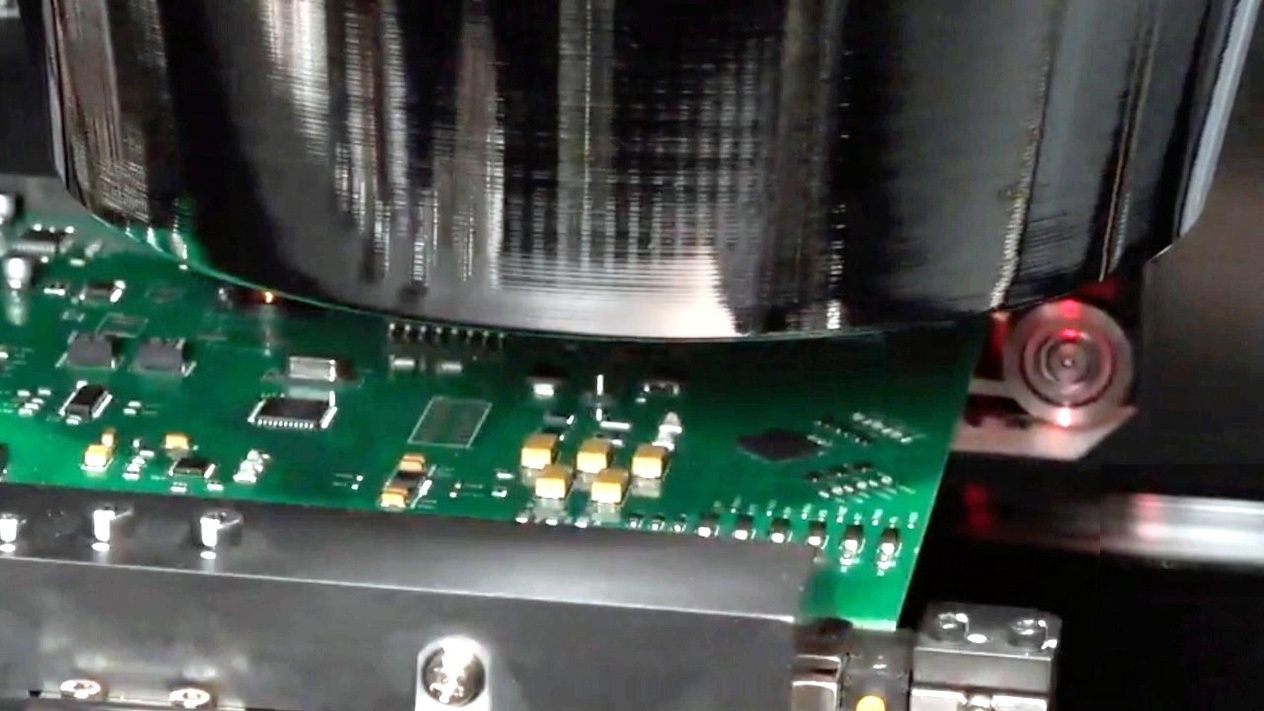
Columbia’s Micro Phase Shifting 3D imaging method in action in a visual inspection system developed by Omron
Dr. Masaki Suwa, the head of corporate research and development at Omron, and the president and CEO of OMRON SINIC X Corporation, said, “Our Automated Optical Inspection (AOI) solutions play a central role in ensuring the quality of printed circuit boards. Because Columbia’s MPS technology is robust to spurious reflections when inspecting mirror-like surfaces such as solder joints, dies, and chip surfaces, it has proved essential to reliable 3D inspection. As electronic components continue to miniaturize, a technology like MPS that can capture 3D shapes with high precision will become increasingly important to printed circuit board manufacturing.”
It is rare for a technology developed in a university laboratory to achieve large-scale adoption in a fast-moving and highly demanding field such as factory automation.
“The successful commercialization of Micro Phase Shifting underscores both the strength of Columbia’s creative fundamental research and the value of close collaboration between academia and industry to bring breakthrough innovations into real-world manufacturing environments,” said Ofra Weinberger, director of Columbia Technology Ventures at Columbia University.
”When we began this research project, we were motivated by a fundamental question: How do you recover accurate 3D information when light behaves in complex and non-ideal ways?” said Gupta. “We showed that by coding light smartly, one could separate the true 3D signal from the noise due to interreflections — a long-standing open problem in 3D imaging. Seeing that idea evolve into a method deployed at scale to help ensure the reliability of critical technologies has been a career highlight.”
By creating an approach adopted by industry, the researchers demonstrated the value of academic research in bringing fresh ideas and rigorous thinking to business.
“Academic researchers explore a wide spectrum of problems, ranging from theoretical questions that seek to advance the knowledge base of the field to novel solutions to known practical problems,” Nayar said. “It is exciting to see one of our innovations solving a critical problem in the manufacturing of products we use on a daily basis.”
For more information about MPS technology, please visit the project page.
Lead Photo Caption: An artist’s rendering of micro phase shifting.
Lead Photo Credit: Anna Collevecchio/Columbia Engineering

“Mechanism design is a fundamental aspect of mechanical engineering,” explained Hod Lipson, James and Sally Scapa Professor of Innovation in the Department of Mechanical Engineering and director of Columbia’s Creative Machines Lab, where the work was done. “It is an important aspect of many fields, ranging from robotics to aerospace and even toy design. But like electronics and chemistry, it is one of those fields where simulation is easy while creativity is difficult, and so it lends itself well for generative AI.”
The AI doesn’t always have an answer.
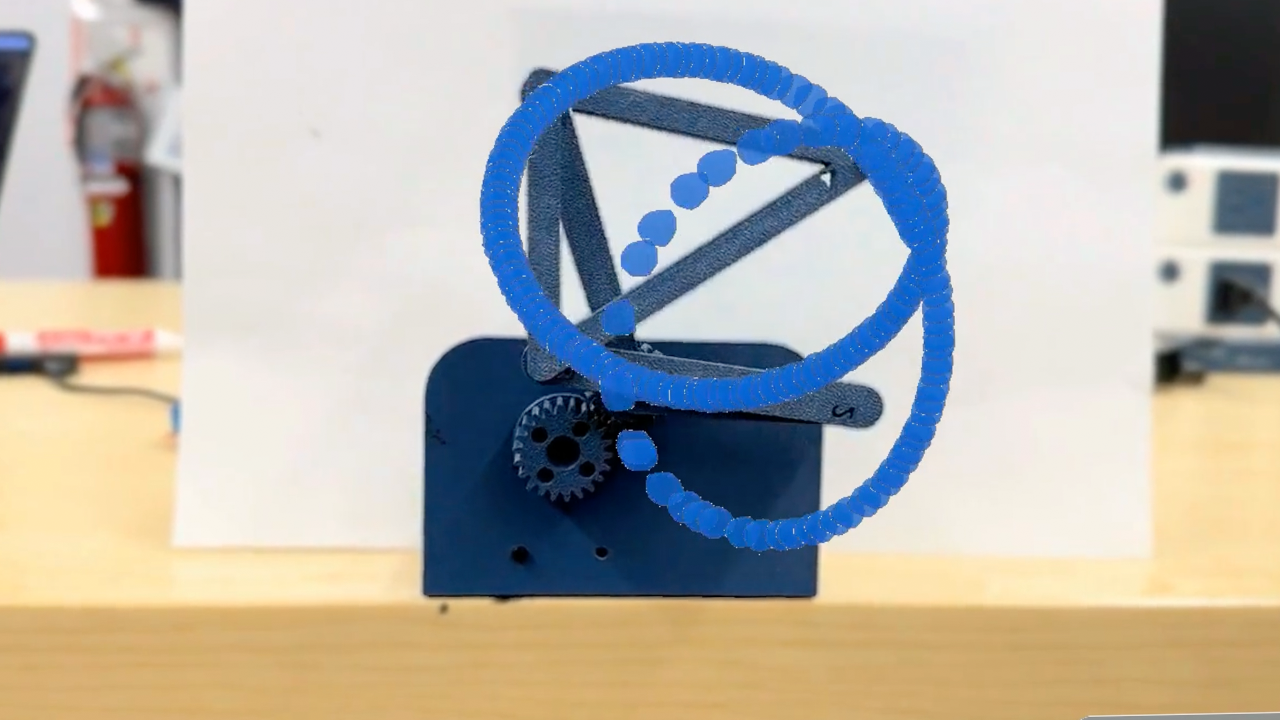
A new AI is learning to design mechanical mechanisms. When prompted with a shape of a heart, it designed the mechanism on the left. When a physical copy of the design was built, the mechanism traced out the heart shape on the right. Credit: Creative Machines Lab
“When the AI is confounded, it produces a blurry design,” said Jiong Lin, who led the work. “The blurry response could indicate that it cannot complete the design, or that there is more than one solution. We don’t really know.”
The researchers lament that they don’t understand how the AI reaches its designs. “We don’t really know how it thinks. We can test it and find its limits, but it can’t yet teach us new design principles,” said Jialong Ning, who co-led the work. “It’s like the AI developed a kind of gut intuition that it can’t explain.”
Risks and limits
The researchers acknowledge that these are early days for automating mechanical design. So far, the AI can only design planar mechanisms with a single degree of freedom, composed only of rigid linkages connected with revolute joints. “This is just the beginning. Our goal is to expand this process from 2D to 3D, to multiple degrees of freedom, and from rigid linkages to other types of components such as springs, gears, wheels, soft materials, and even other kinds of actuators,” Lipson added.
The work is part of Lipson’s decades-long quest to automate creativity. Serving as a design engineer in his early career, Lipson set his target on designing machines that can design other machines. “Instead of solving problems one at a time, I concluded we should try to design a machine that can solve problems autonomously. Then, all we would have to do is point it at the problem we want to solve.”
The vision of automating creativity was challenged by skeptics who insisted that creativity was uniquely human. “With generative AI, we are beginning to see the rise of truly creative machines,” Lipson says, who named his lab after this quest. “AI’s newfound ability to create code, materials, circuits, molecules – and now mechanisms – will ultimately allow us to reach new parts of the design space we could not explore with our naked human imagination. We have been stuck in a tiny corner of the possible for too long; we are about to unleash a vast new world of engineering possibilities.”
Lead Photo Caption: Sample of input curves and the generated mechanisms. Color represents speed.
Lead Photo Credit: Creative Machines Lab
About the Study
Title: Generative Synthesis of Kinematic Mechanisms
Conference: NeurIPS 2025
Authors: Jiong Lin, Jialong Ning, Judah Goldfeder, and Hod Lipson. Jinchen Ruan built the physical copy of the machine.
Funding: The study was supported by US National Science Foundation (NSF) AI Institute for Dynamical Systems (DynamicsAI.org).
Photos by
Eileen Barroso, Diane Bondareff, and David Dini