Learn more about Sanat Kumar and his research

Sanat Kumar's work has reshaped the way researchers think about polymers, particularly in confined geometries. And, as both an engineer and an educator he's reshaping how to think about the problems we tackle and their impact on society.
Highly dexterous robot hand even works in the dark
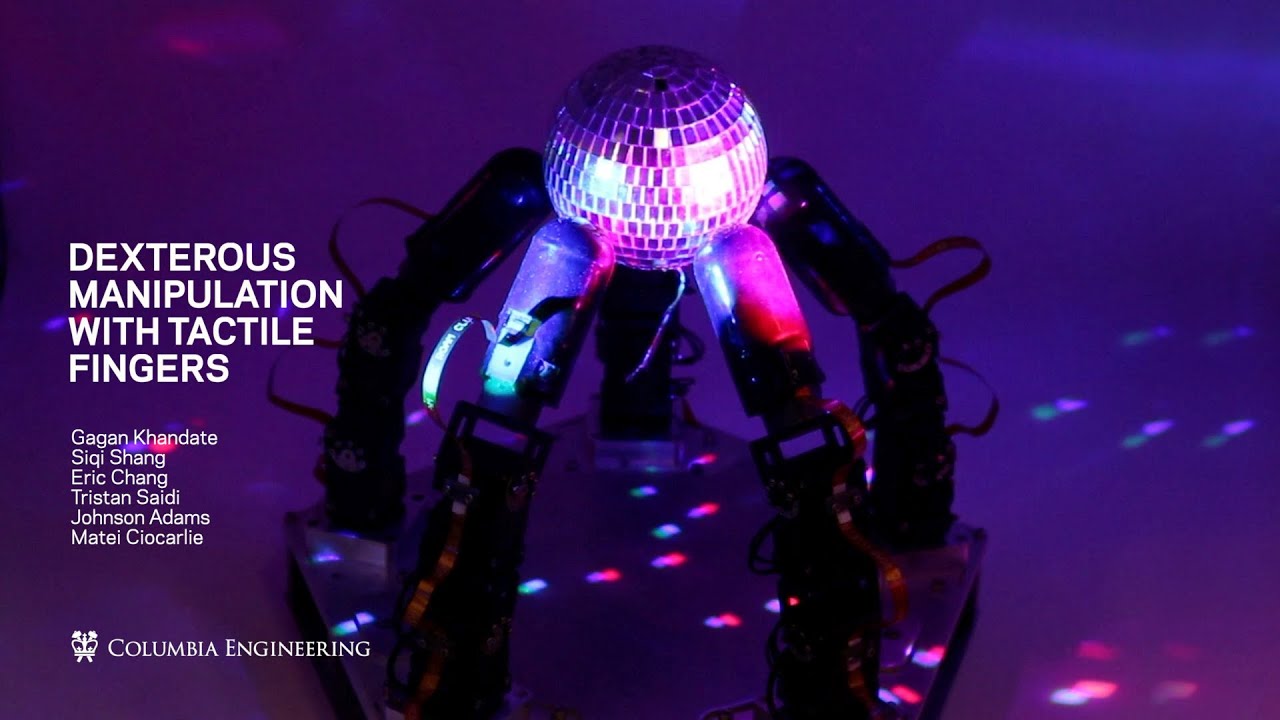
Researchers at Columbia Engineering have demonstrated a highly dexterous robot hand, one that combines an advanced sense of touch with motor learning algorithms in order to achieve a high level of dexterity.
As a demonstration of skill, the team chose a difficult manipulation task: executing an arbitrarily large rotation of an unevenly shaped grasped object in hand while always maintaining the object in a stable, secure hold. This is a very difficult task because it requires constant repositioning of a subset of fingers, while the other fingers have to keep the object stable. Not only was the hand able to perform this task, but it also did it without any visual feedback whatsoever, based solely on touch sensing.
In addition to the new levels of dexterity, the hand worked without any external cameras, so it's immune to lighting, occlusion, or similar issues. And the fact that the hand does not rely on vision to manipulate objects means that it can do so in very difficult lighting conditions that would confuse vision-based algorithms--it can even operate in the dark.
“While our demonstration was on a proof-of-concept task, meant to illustrate the capabilities of the hand, we believe that this level of dexterity will open up entirely new applications for robotic manipulation in the real world,” said Matei Ciocarlie, associate professor in the Departments of Mechanical Engineering and Computer Science. “Some of the more immediate uses might be in logistics and material handling, helping ease up supply chain problems like the ones that have plagued our economy in recent years, and in advanced manufacturing and assembly in factories.”
Leveraging optics-based tactile fingers
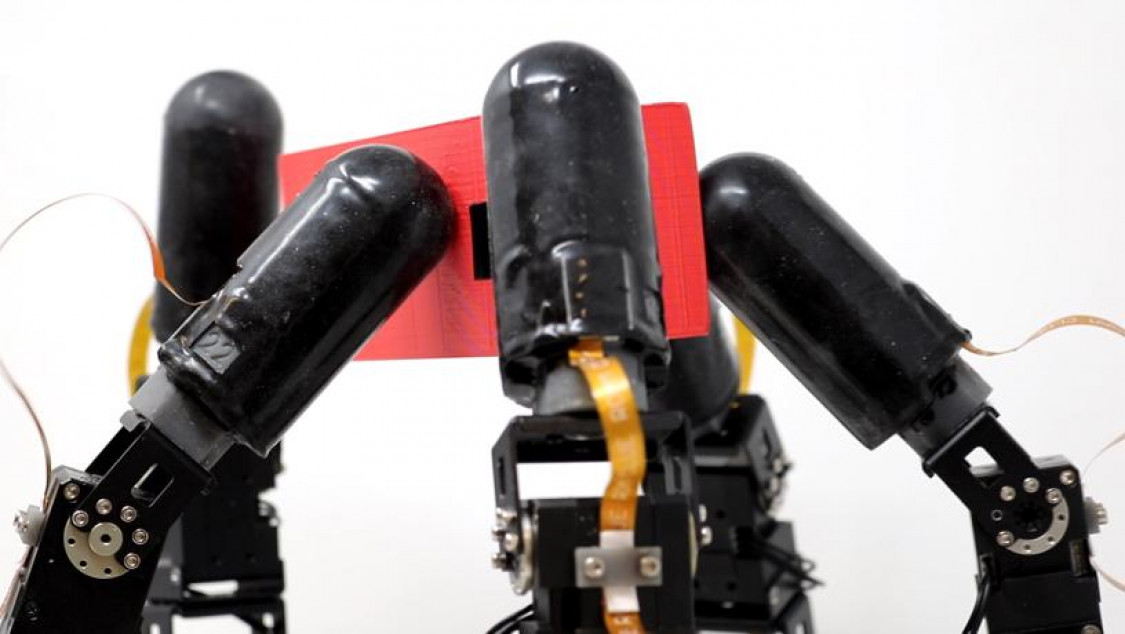
In earlier work, Ciocarlie’s group collaborated with Ioannis Kymissis, professor of electrical engineering, to develop a new generation of optics-based tactile robot fingers. These were the first robot fingers to achieve contact localization with sub-millimeter precision while providing complete coverage of a complex multi-curved surface. In addition, the compact packaging and low wire count of the fingers allowed for easy integration into complete robot hands.
Teaching the hand to perform complex tasks
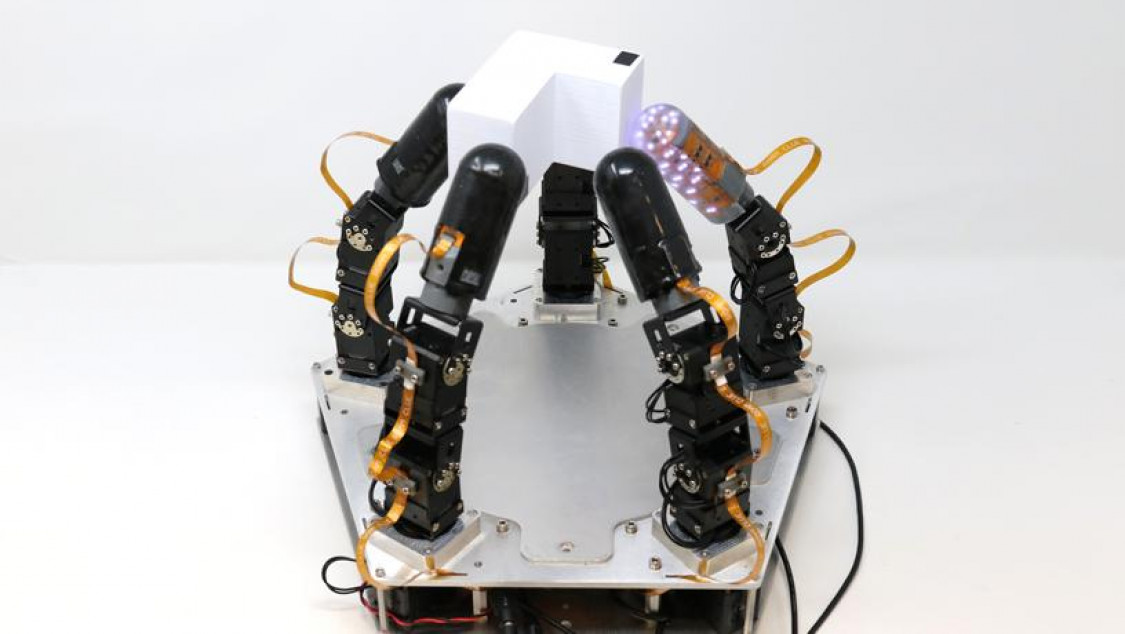
For this new work, led by CIocarlie’s doctoral researcher, Gagan Khandate, the researchers designed and built a robot hand with five fingers and 15 independently actuated joints--each finger was equipped with the team’s touch-sensing technology. The next step was to test the ability of the tactile hand to perform complex manipulation tasks. To do this, they used new methods for motor learning, or the ability of a robot to learn new physical tasks via practice. In particular, they used a method called deep reinforcement learning, augmented with new algorithms that they developed for effective exploration of possible motor strategies.
Robot completed approximately one year of practice in only hours of real-time
The input to the motor learning algorithms consisted exclusively of the team’s tactile and proprioceptive data, without any vision. Using simulation as a training ground, the robot completed approximately one year of practice in only hours of real-time, thanks to modern physics simulators and highly parallel processors. The researchers then transferred this manipulation skill trained in simulation to the real robot hand, which was able to achieve the level of dexterity the team was hoping for. Ciocarlie noted that “the directional goal for the field remains assistive robotics in the home, the ultimate proving ground for real dexterity. In this study, we've shown that robot hands can also be highly dexterous based on touch sensing alone. Once we also add visual feedback into the mix along with touch, we hope to be able to achieve even more dexterity, and one day start approaching the replication of the human hand.”
Ultimate goal: joining abstract intelligence with embodied intelligence
Ultimately, Ciocarlie observed, a physical robot being useful in the real world needs both abstract, semantic intelligence (to understand conceptually how the world works), and embodied intelligence (the skill to physically interact with the world). Large language models such as OpenAI’s GPT-4 or Google’s PALM aim to provide the former, while dexterity in manipulation as achieved in this study represents complementary advances in the latter.
For instance, when asked how to make a sandwich, ChatGPT will type out a step-by-step plan in response, but it takes a dexterous robot to take that plan and actually make the sandwich. In the same way, researchers hope that physically skilled robots will be able to take semantic intelligence out of the purely virtual world of the Internet, and put it to good use on real-world physical tasks, perhaps even in our homes.
The paper has been accepted for publication at the Robotics: Science and Systems Conference (Daegu, Korea, July 10-14, 2023), and is currently available as a preprint.
ABOUT THE STUDY
CONFERENCE: Science and Systems Conference (Daegu, Korea, July 10-14, 2023)
STUDY: "Sampling-based Exploration for Reinforcement Learning of Dexterous Manipulation”
AUTHORS: Authors are all from Columbia Engineering: Gagan Khandate and Tristan Luca Saidi (Computer Science), Siqi Shang, Eric Chang, Johnson Adams, and Matei Ciocarlie (Mechanical Engineering). The tactile sensors were developed in collaboration with Ioannis Kymissis (Electrical Engineering).
FUNDING: This work was supported in part by the Office of Naval Research grant N00014-21-1-4010 and the National Science Foundation grant CMMI-2037101.
The authors declare no financial or other conflicts of interest.
The Future of Software-Controlled Cooking

Watch how Columbia mechanical engineers constructed a cheesecake using 3D food printing techniques.
Research produced by Dr. Jonathan Blutinger and his team at the Creative Machine Labs at Columbia University (directed by Prof. Hod Lipson) and Prof. Christen Cooper, Pace University Nutrition and Dietetics.
Addressing food printing challenges
Food printing technology has existed since Lipson’s lab first introduced it in 2005, but to date the technology has been limited to a small number of uncooked ingredients, resulting in what many perceive as less than appetizing dishes. Blutinger’s team broke away from this limitation by printing a dish comprising seven ingredients, cooked in situ using a laser. For the paper, the researchers designed a 3D-printing system that constructs cheesecake from edible food inks — including peanut butter, Nutella, and strawberry jam. The authors note that precision printing of multi-layered food items could produce more customizable foods, improve food safety, and enable users to control the nutrient content of meals more easily.
“Because 3D food printing is still a nascent technology, it needs an ecosystem of supporting industries such as food cartridge manufacturers, downloadable recipe files, and an environment in which to create and share these recipes. Its customizability makes it particularly practical for the plant-based meat market, where texture and flavor need to be carefully formulated to mimic real meats,” Blutinger said.
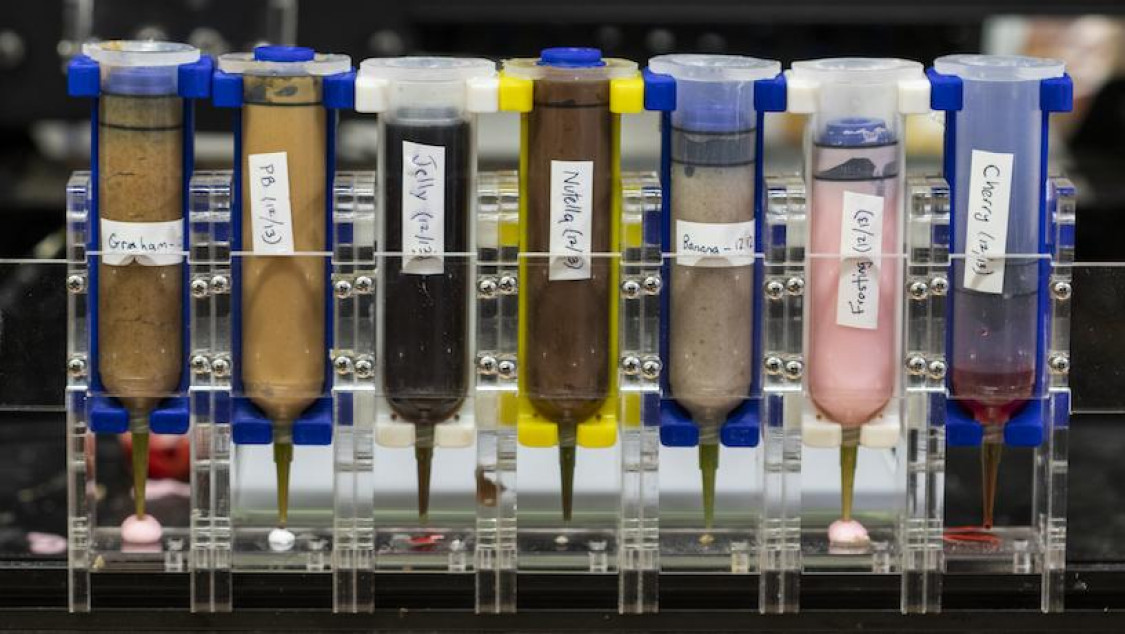
To demonstrate the potential of 3D food printing, the team tested various cheesecake designs, consisting of seven key ingredients: graham cracker, peanut butter, Nutella, banana puree, strawberry jam, cherry drizzle, and frosting. They found that the most successful design used a graham cracker as the foundational ingredient for each layer of the cake. Peanut butter and Nutella proved to be best used as supporting layers that formed “pools” to hold the softer ingredients: banana and jam. Multi-ingredient designs evolved into multi-tiered structures that followed similar principles to building architectures; more structural elements were needed to support softer substrates for a successful multi-ingredient layered print.
Is 3D food printing healthy?
“We have an enormous problem with the low-nutrient value of processed foods,” Cooper said. “3D food printing will still turn out processed foods, but perhaps the silver lining will be, for some people, better control and tailoring of nutrition--personalized nutrition. It may also be useful in making food more appealing to those with swallowing disorders by mimicking the shapes of real foods with the pureed texture foods that these patients--millions in the U.S. alone--require.”
The potential of 3D food-printing
Laser cooking and 3D food printing could allow chefs to localize flavors and textures on a millimeter scale to create new food experiences. People with dietary restrictions, parents of young children, nursing home dieticians, and athletes alike could find these personalized techniques very useful and convenient in planning meals. And, because the system uses high-energy targeted light for high-resolution tailored heating, cooking could become more cost-effective and more sustainable.
“The study also highlights that printed food dishes will likely require novel ingredient compositions and structures, due to the different way by which the food is ‘assembled,’ ” said Lipson. “Much work is still needed to collect data, model, and optimize these processes.”
Blutinger added, “And, with more emphasis on food safety following the COVID-19 pandemic, food prepared with less human handling could lower the risk of foodborne illness and disease transmission. This seems like a win-win concept for all of us.”
About the Study
JOURNAL: npj Science of Food
STUDY: “The Future of Software-Controlled Cooking”
AUTHORS: Jonathan David Blutinger (1, Christen Cupples Cooper (2), Shravan Karthik(1), Alissa Tsai (1), Noa Samarelli (1), Erika Storvick (1), Gabriel Seymour (1), Elise Liu (1), Yoran Meijers (1,3) and Hod Lipson (1)
- Department of Mechanical Engineering, Columbia Engineering
- Department of Nutrition and Dietetics, Pace University
- Department of Food Technology, Wageningen University, Netherlands.
FUNDING: The study was supported by NSF AI Institute for Dynamical Systems, grant 2112085, and by a grant from the Redefine Meat Ltd.
The authors declare no financial or other conflicts of interest.
ABOUT THE STUDY
JOURNAL: Science Advances
TITLE: "Liquid solution centrifugation for safe, scalable, and efficient isotope separation"
AUTHORS: Joseph F. Wild, Heng Chen, Keyue Liang, Jiayu Liu, Stephen E. Cox, Alex N. Halliday, Yuan Yang
FUNDING: This work was supported by the U.S. Department of Energy, grant number DE-SC0022256, and the seed funding support from Columbia University’s Research Initiatives in Science and Engineering (RISE) competition, started in 2004 to trigger high-risk, high-reward, and innovative collaborations in the basic sciences, engineering, and medicine.
A provisional patent (U.S. 63/425,181) has been filed related to this work. The authors declare that they have no other competing interests.
ABOUT THE STUDY
JOURNAL: Nature Materials
AUTHORS: Claudia Cea(†1), Zifang Zhao(†1), Duncan J. Wisniewski(1), George D. Spyropoulos(1§), Anastasios Polyravas(1), Jennifer N. Gelinas(*2,3), Dion Khodagholy(*1)
- Department of Electrical Engineering, Columbia University, New York, NY 10027, USA
- Department of Neurology, Columbia University Medical Center, New York, NY 10032, USA.
- Institute for Genomic Medicine, Columbia University Medical Center, 630 W 168th St. New York, NY 10032, USA
§ Current address: Department Information Technology, Waves, UGhent Technology Campus, iGhent, Technologiepark 126, 9052 Zwijnaarde, Belgium
FUNDING: This work was supported by the National Institute of Health grants R01NS118091, R21 EY 32381-01, and RF1NS128669, National Science Foundation 1944415 and 2219891, and the Odysseus program from the Research Foundation – Flanders (FWO) G0F9421N.
The authors declare no financial or other conflicts of interest.
About the Study
Journal: Nature Human Behaviour
Study title: “Neuronal activity in the human amygdala and hippocampus enhances emotional memory encoding.”
Authors: Salman Ehtesham Qasim (Department of Psychiatry, Icahn School of Medicine at Mount Sinai), Uma Rani Mohan (Surgical Neurology Branch, NINDS, National Institutes of Neurological Disorders and Stroke), Joel Stein (Department of Radiology, University of Pennsylvania), and Joshua Jacobs (Departments of Biomedical Engineering, Neurological Surgery, Columbia University). Both Qasim and Mohan were graduate students in Joshua Jacobs’ lab at Columbia Engineering when beginning this project.
This work was supported by NIH grants U01-NS113198 and R01-MH104606.
COI: The authors declare no financial or other conflicts of interest.
New “camera” has incredibly fast shutter speed of around 1 picosecond
Revealing Atomic Structures with a "Neutron" Camera. Credit: Oak Ridge National Laboratory
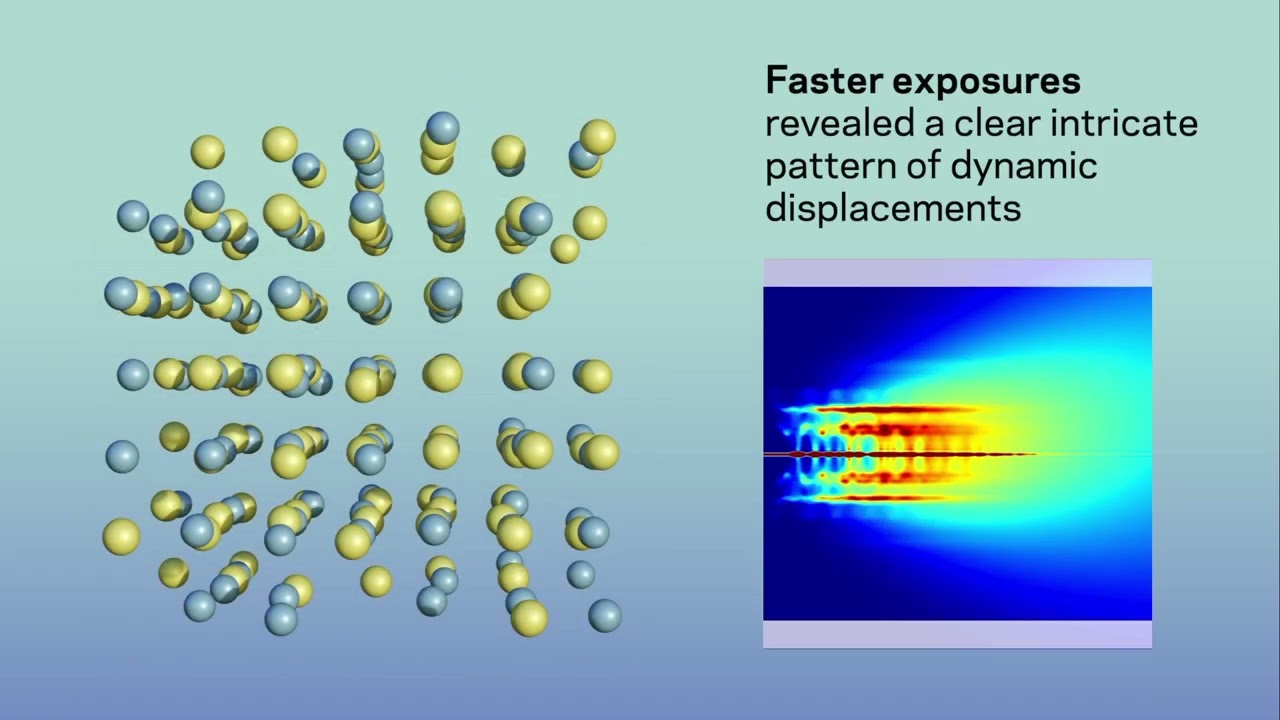
Researchers at Columbia Engineering and Université de Bourgogne report that they have developed a new kind of "camera" that can see the local disorder. Its key feature is a variable shutter speed: because the disordered atomic clusters are moving, when the team used a slow shutter, the dynamic disorder blurred out, but when they used a fast shutter, they could see it. The new method, which they call variable shutter PDF or vsPDF (for atomic pair distribution function), doesn't work like a conventional camera--it uses neutrons from a source at the U.S. Department of Energy’s Oak Ridge National Laboratory (ORNL) to measure atomic positions with a shutter speed of around one picosecond, or a million million (a trillion) times faster than normal camera shutters. The study was published February 20, 2023, by Nature Materials.
“It’s only with this new vsPDF tool that we can really see this side of materials,” said Simon Billinge, professor of materials science and applied physics and applied mathematics. “It gives us a whole new way to untangle the complexities of what is going on in complex materials, hidden effects that can supercharge their properties. With this technique, we’ll be able to watch a material and see which atoms are in the dance and which are sitting it out.”
New theory on stabilizing local fluctuations and converting waste heat to electricity
The vsPDF tool enabled the researchers to find atomic symmetries being broken in GeTe, an important material for thermoelectricity that converts waste heat to electricity (or electricity into cooling). They hadn’t previously been able to see the displacements, or to show the dynamic fluctuations and how quickly they fluctuated. As a result of the insights from vsPDF, the team developed a new theory that shows just how such local fluctuations can form in GeTe and related materials. Such a mechanistic understanding of the dance will help researchers to look for new materials with these effects and to apply external forces to influence the effect, leading to even better materials.
Research team
Billlinge’s co-lead on this work with Simon Kimber, who was at the University of Bourgogne in France at the time of the study. Billinge and Kimber worked with colleagues at ORNL and the Argonne National Laboratory (ANL), also funded by the DOE. The Inelastic neutron scattering measurements for the vsPDF camera were made at ORNL; the theory was done at ANL.
Next steps
Billinge is now working on making his technique easier to use for the research community and applying it to other systems with dynamic disorder. At the moment, the technique is not turn-key, but with further development, it should become a much more standard measurement that could be used on many material systems where atomic dynamics are important, from watching lithium moving around in battery electrodes to studying dynamic processes during water-splitting with sunlight.
About the Study
JOURNAL: Nature Materials
STUDY: “Dynamic crystallography reveals spontaneous anisotropy in cubic GeTe”
AUTHORS: Simon A. J. Kimber, Batiment Sciences Mirande; Jiayong Zhang, Oak Ridge National Laboratory; Charles H. Liang, University of Chicago; Gian G. Guzman-Verri, Universidad de Costa Rica; Peter B. Littlewood, University of Chicago, Argonne National Laboratory; Yongqiang Cheng, Oak Ridge National Laboratory; Douglas L. Abernathy, Oak Ridge National Laboratory; Jessica M. Hudspeth, ESRF, The European Synchrotron; Zhong-Zhen Luo, Northwestern University; Mercouri G. Kanatzidis, Northwestern University; Tapan Chatterji, Institut Laue-Langevin; Anibal J. Ramirez-Cuesta, Oak Ridge National Laboratory; Simon J. L. Billinge, Columbia Engineering, Columbia University, Brookhaven National Laboratory.
FUNDING: S.J.L.B. acknowledges support from the US DOE, Office of Science, Ofice of Basic Energy Sciences, under contract no. DE- SC0012704. C.H.L. acknowledges support from NSF GRFP DGE-1746045. G.G.G.-V. acknowledges support from the Vice-Rector for Research at the University of Costa Rica (project no. 816-C1-601). Work at Argonne (P.B.L.) is supported by the US DOE, Ofice of Science, Ofice of Basic Energy Sciences, Materials Sciences and Engineering, under contract no. DE-AC02-06CH11357. At Northwestern University (M.G.K.), work on thermoelectric materials is primarily supported by the US DOE, Ofice of Science, Ofice of Basic Energy Sciences, under award no. DE-SC0014520. This work was supported by the Programme of Investments for the Future, an ISITE-BFC project (contract no. ANR[1]15-IDEX-0003) (S.A.J.K.).
The authors declare no financial or other conflicts of interest.