Campus
Climate Week 2026 in Photos
In celebration of Climate Week NYC, Columbia Engineering convened conversations on the breakthroughs reshaping our path to sustainability.
Columbia Engineering participated in Climate Week NYC, September 22-25, by hosting ten events. In panel discussions, keynotes, poster sessions, lightning talks, and informal conversations, more than 1,800 participants took part in vital discussions about how engineering can positively impact the Earth in the face of climate change.
"Climate Week brings together leaders, researchers, policymakers, and climate-focused professionals from various sectors to collaborate and advance solutions,” said Shih-Fu Chang, dean of Columbia Engineering. “With gatherings such as these, we can work toward a more sustainable world and a more secure future.”
Click here to watch videos of the sessions.
Securing Access to Raw Materials
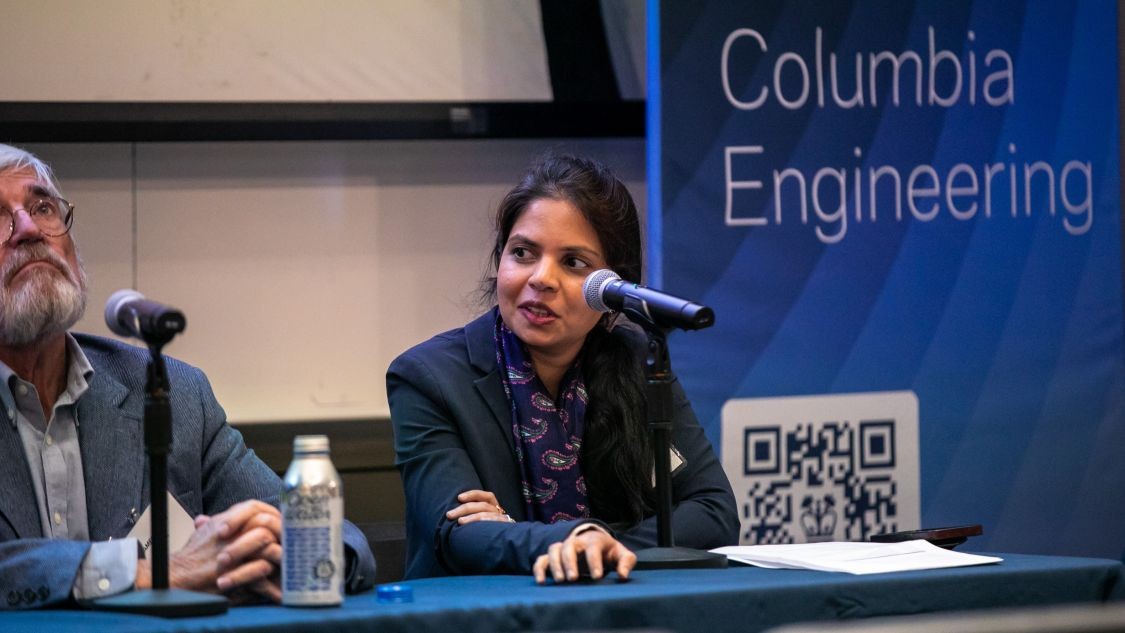
Columbia Engineering kicked off Climate Week NYC 2026 with the Columbia Lenfest Center for Sustainable Energy’s symposium on sustainable energy, resource, and environmental solutions. Experts from government, industry, finance, and academia shared their insights on the current state of play and future development of the mining and energy sectors. Across both of the day’s panels, speakers emphasized the urgency of developing the capacity to mine and refine critical materials in the United States. One of the many important uses for these resources is the transition, currently underway, from an energy system based on fossil fuels to one based on renewable sources of energy.
Read more here.
Better Data for Clean Air
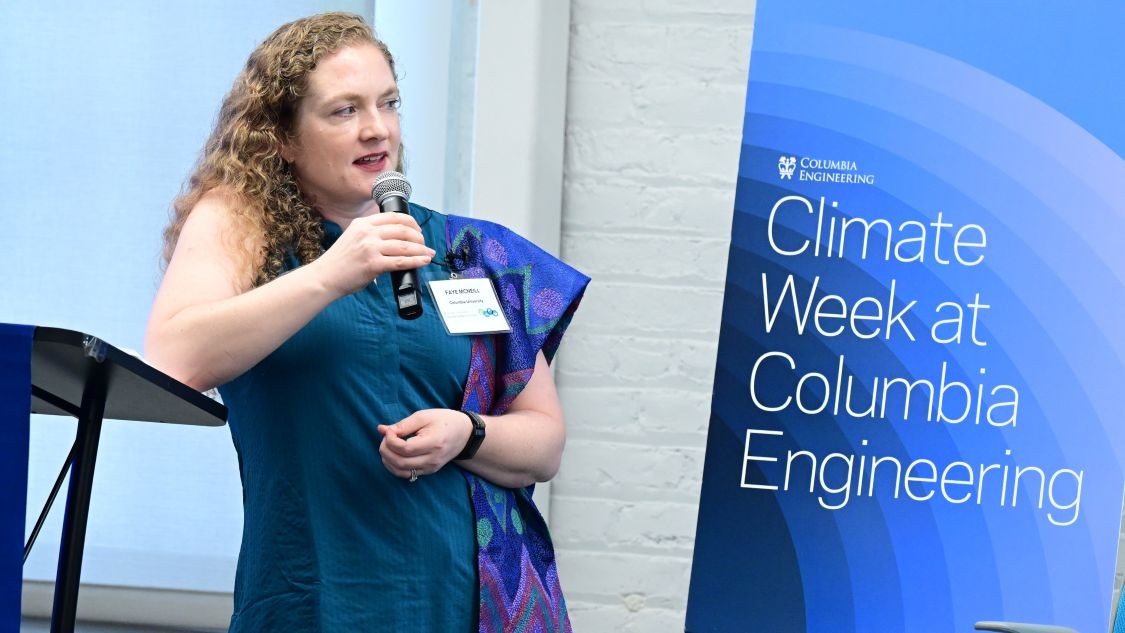
The twin challenges of air pollution and climate change must be addressed hand in hand, alongside economic development in the Global South. On Sept. 22, Columbia Engineering and Columbia Climate School convened an international group of speakers who highlighted innovations in sensing, data science, industry-academic partnerships, and funding strategies that are accelerating progress towards cleaner air and sustainable climate.
Visit the Clean Air Toolbox for Cities.
Making New York City a Hub for Sustainable Materials

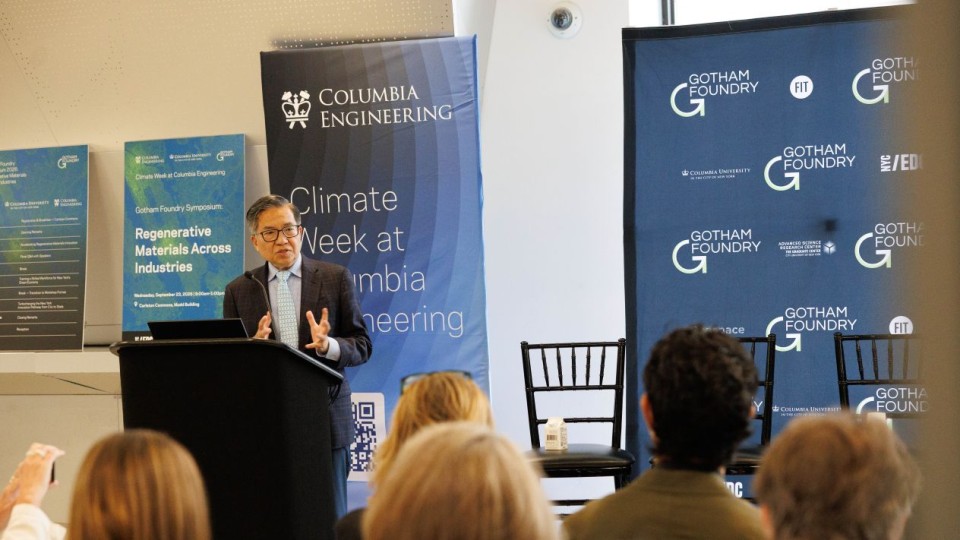
One year after its launch during Climate Week NYC 2025, Gotham Foundry convened its first symposium Sept. 23 on Columbia University's Morningside Heights campus. The program brought together researchers, entrepreneurs, city leaders, and community innovators to brainstorm together on how New York City can accelerate the regenerative material industry, from lab innovation and market implementation to reskilling and upskilling a diverse workforce. Headquartered in West Harlem, Gotham Foundry is a partnership between Columbia University, the New York City Economic Development Corporation (NYCEDC), Genspace, CUNY Advanced Science Research Center (ASRC), and SUNY’s Fashion Institute of Technology (FIT).
Read more here.
Using Electrochemistry to Transform the Energy System and Chemical Industry
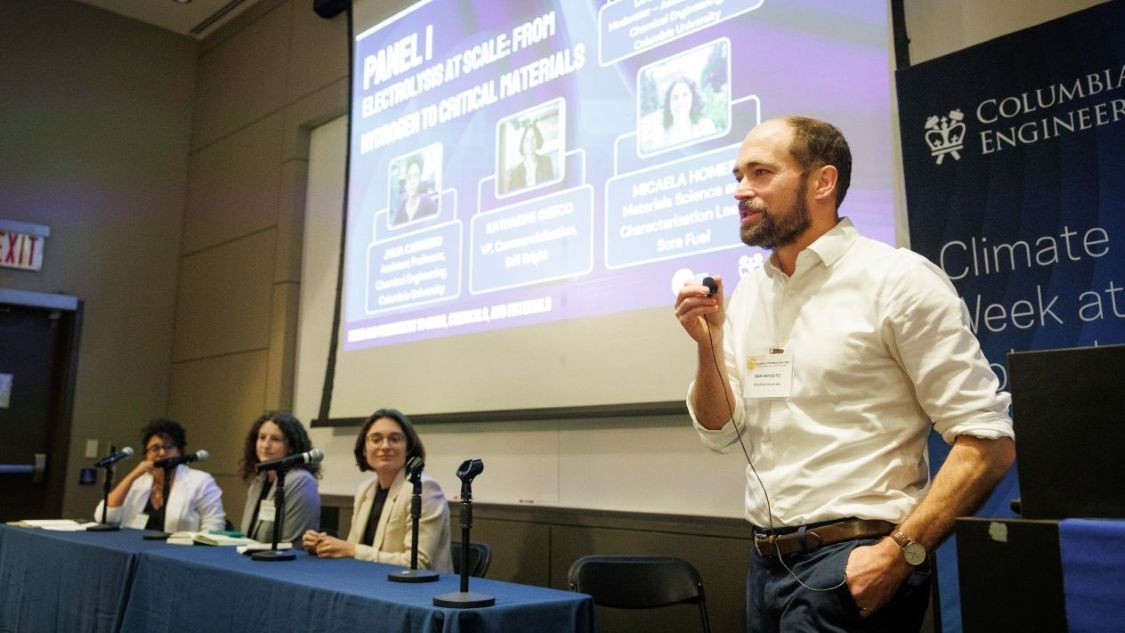
The Columbia Electrochemical Energy Center (CEEC) hosted its annual Fall Symposium Sept. 23 on Columbia’s Morningside Heights campus. The event brought together a wide range of participants to explore how electrochemical technologies can help meet the world’s growing energy demands. Over the course of the day, attendees followed the path of energy and minerals from mines to grids, chemicals, and materials — and through the process of recycling. Speakers and attendees focused on three challenges: making batteries safe, manufacturable, and affordable at grid scale; making electrolyzers cost-competitive with century-old incumbent technologies; and developing manufacturing processes that don't recreate the environmental burdens the energy transition aims to avoid.
Read more here.
Deploying AI Agents to Forecast the Climate
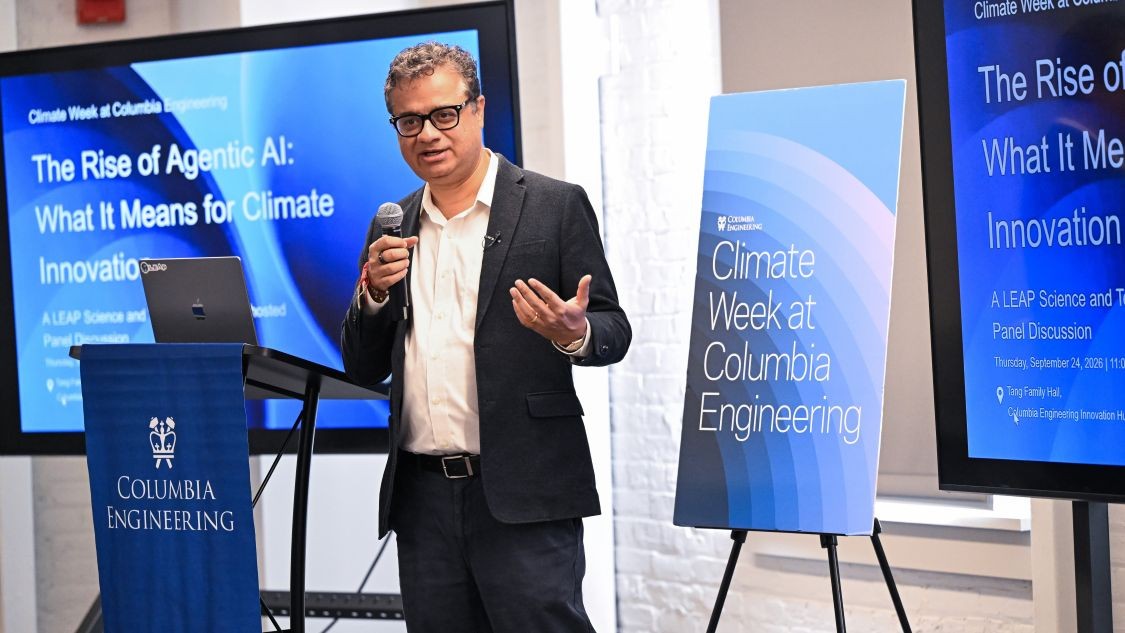
LEAP, an NSF-funded center based at Columbia, hosted a dynamic panel of researchers and leaders from companies such as Nvidia, AWS, and Google. The speakers explored how agentic AI systems are increasingly capable of helping scientists understand the Earth system. The panel discussed how the technology contributes to systems modeling, climate predictions, and adaptive decision-making in a conversation that explored both the opportunities and challenges that agentic AI presents for accelerating climate solutions.
Learn more about LEAP.
Building a Path to Fusion Energy
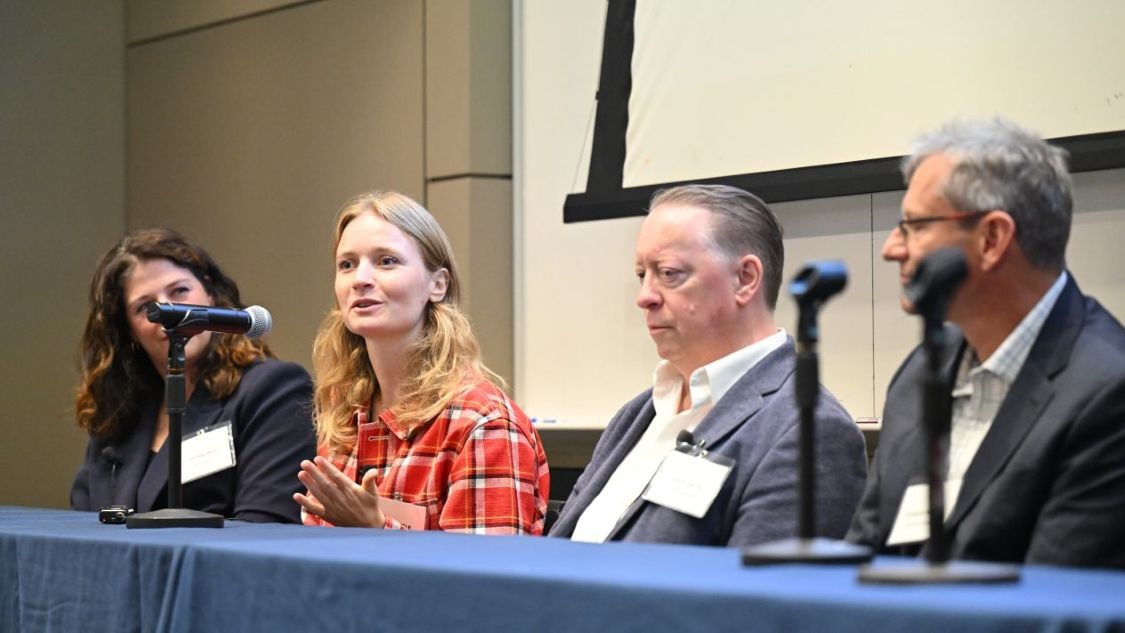
The Columbia Fusion Research Center and the Max Planck Institute for Plasma Physics cohosted this dynamic symposium on research, innovation, and collaboration necessary to bring fusion power plants into service. The event featured experts representing key domains for the development of fusion technology, including industry, government, philanthropy, and academia. A major theme of the event was the importance of partnership across institutions, countries, and sectors of society.
Read the full article here.
Deploying Power Electronics to Revolutionize Mobility
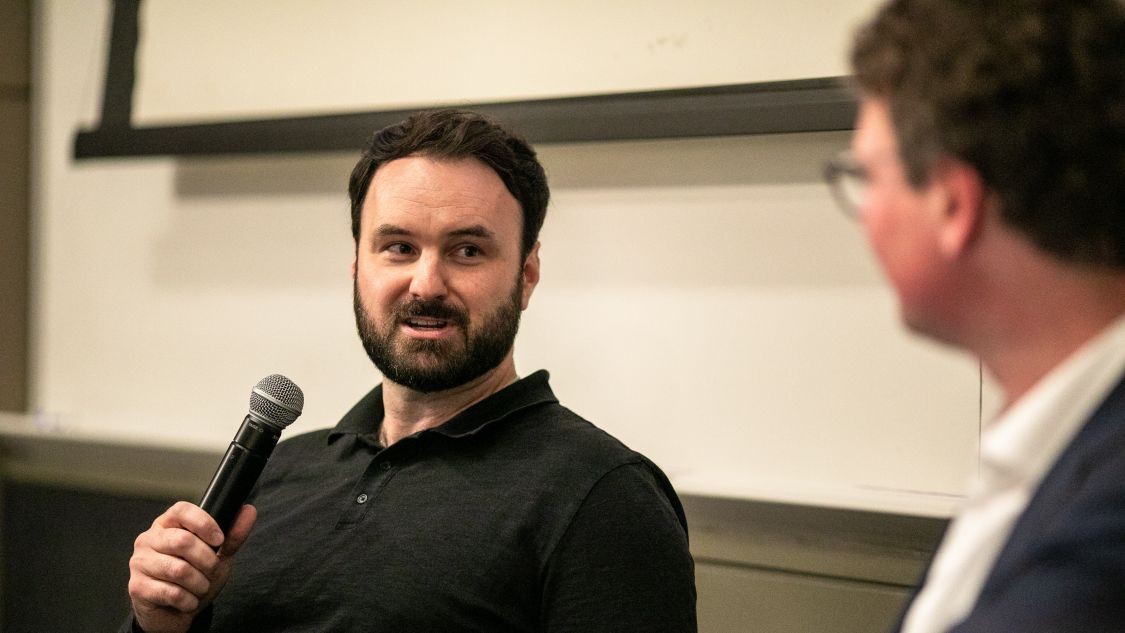
Columbia Engineering’s celebration of Climate Week NYC 2026 concluded with a symposium co-hosted by the Institute of Electrical and Electronics Engineers (IEEE) and the Columbia Center of Advanced Electrification (CCAE). The event brought together researchers, industry practitioners, and policymakers to discuss advances in electrification with a special focus on energy storage systems in 2026. The symposium emphasized system-level integration, modeling, control, safety, and sustainability across transportation, power grids, and digital infrastructure.
Read the full recap.