
How Fusion Fits into our Energy Portfolio
by Matt Bowen
I spend most of my time thinking about fission, not fusion. But when I compare the two energy sources, three issues come to mind: safety, waste, and nonproliferation. On each count, fusion seems like it would have some real advantages.
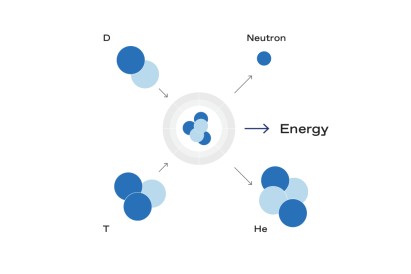
Fission, which currently provides nearly one-fifth of U.S. electricity, splits heavy atoms like uranium. This produces isotopes that are intensely radioactive and hot. Fusion, on the other hand, joins light nuclei. The primary byproduct is helium, a noble gas with no particular safety concerns. While both processes generate energy, the materials involved, the associated risks, and the policy implications diverge sharply.
First, fusion has some appealing safety features. In a fission plant, systems are required to cool the nuclear fuel and keep it from melting. Failure to keep the fuel cool can result in large releases of radiological material to the surrounding environment, such as what happened at the Fukushima Daiichi nuclear power plant in 2011. While fusion plants would still have flammable and radioactive materials on site, the inherent safety challenges are less severe, certainly in comparison to today’s light water reactors.
Second, when it comes to nuclear waste management, fusion would also have advantages. Spent nuclear fuel (SNF) from commercial fission reactors is radioactive for many thousands of years, and the societal challenge to disposing of these materials has proven to be formidable. While technical solutions exist, no country has managed to dispose of SNF, though Finland has built a facility and appears close to starting operations. Conversely, we already have facilities for disposing of the low-level nuclear waste that fusion will produce.
Third, there are considerations related to the global nonproliferation regime (i.e., trying to prevent the spread of nuclear weapons). Creating fuel for fission requires transforming natural uranium into enriched uranium (that is, enriched in the isotope uranium-235). The same type of facilities that create this material can also be modified to create highly enriched uranium, however, which can be used in a nuclear weapon. Fission reactors also produce plutonium, which, if separated from the spent nuclear fuel, could similarly be used in a nuclear explosive device.

Fusion systems do not involve uranium or uranium enrichment facilities, nor do they produce plutonium. A fusion plant using deuterium-tritium fuel would still produce energetic neutrons that could be used to irradiate uranium or thorium and produce fissile material. And fusion lifecycles still involve materials and facilities that are export-controlled, given their relevance to potential nuclear weapons programs. Still, on the whole, fusion presents fewer nonproliferation concerns than fission.
These are real advantages. But for the moment, only fission is a commercial reality. Even if and when fusion is commercialized, nobody knows what the plants will cost. Cost estimates at this stage carry enormous uncertainty, and historically in the nuclear world, estimates tend to rise over time. The policy environment matters too: without strong environmental policies, fusion will have to compete against cheap natural gas — a difficult proposition for any low-emission energy technology.
A serious, comprehensive strategy to address climate change cannot rely on commercial fusion arriving at a known date. But if the engineering succeeds and the costs come in at a manageable level, fusion could be transformative. I root for it to succeed. The world could surely use this kind of breakthrough.
Matt Bowen is a Senior Research Scholar in Columbia’s School of International and Public Affairs. He served as associate deputy assistant secretary in the Office of Nuclear Energy at the US Department of Energy and as a senior advisor in the Office of Nonproliferation and Arms Control at the National Nuclear Security Administration.
Get in Touch
Image

Senior research scholar in the faculty of international and public affairs |