
Why Fusion was Always 30 Years Away
by Carlos Paz-Soldan
We need new sources of energy. Climate change and geopolitical realities have long demanded a rapid transition from fossil fuels. Now, the explosive growth of data centers is driving energy demand even higher. This reality requires an all-of-the-above energy strategy — the work my colleagues and I do at Columbia’s Fusion Research Center is focused on making sure fusion is part of that mix.
Why fusion? It’s the holy grail of energy sources. Each atom in the universe contains an enormous amount of energy. Fusion frees that energy by merging — that is, fusing — atoms that are readily available on Earth. It’s the same process that powers the Sun. A fusion plant would produce clean electricity in almost any location with no direct carbon emissions, no risk of meltdown, and no long-lived radioactive waste -- unlike conventional fission reactors. And unlike wind and solar, it wouldn't depend on the weather. You could build a plant somewhere, and it would produce energy steadily, even ramping up and down to meet demand. The fuel is made from common isotopes of hydrogen derived from seawater and lithium, and it’s incredibly potent. One kilogram of fusion fuel contains as much energy as six million kilograms of natural gas.
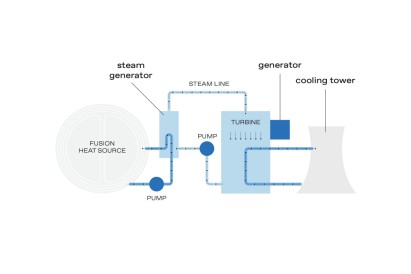
So why don't we have it yet? Creating fusion conditions on Earth is extraordinarily difficult. The sun uses its enormous gravity to compress and heat its fuel. Engineers and physicists are racing to build machines that achieve temperatures of hundreds of millions of degrees — hotter than the center of the sun — and hold that superheated plasma in place long enough for fusion reactions to occur. At the same time, those machines must maintain extremely cold temperatures just feet away inside of a superconducting magnet. It is one of the great unsolved technical challenges of our time.
So why has fusion been "thirty years away" for decades? The honest answer is that, for much of that time, it was funded at a sub-critical level. Fusion's fortunes have roughly tracked societal pull - such as the price of oil - sometimes with a time lag. The 1970s energy crisis triggered a surge of funding, but when prices fell in the late 1980s, budgets collapsed. For twenty years the program stagnated, not because the physics was impossible but because nobody was investing enough to solve all the necessary problems.
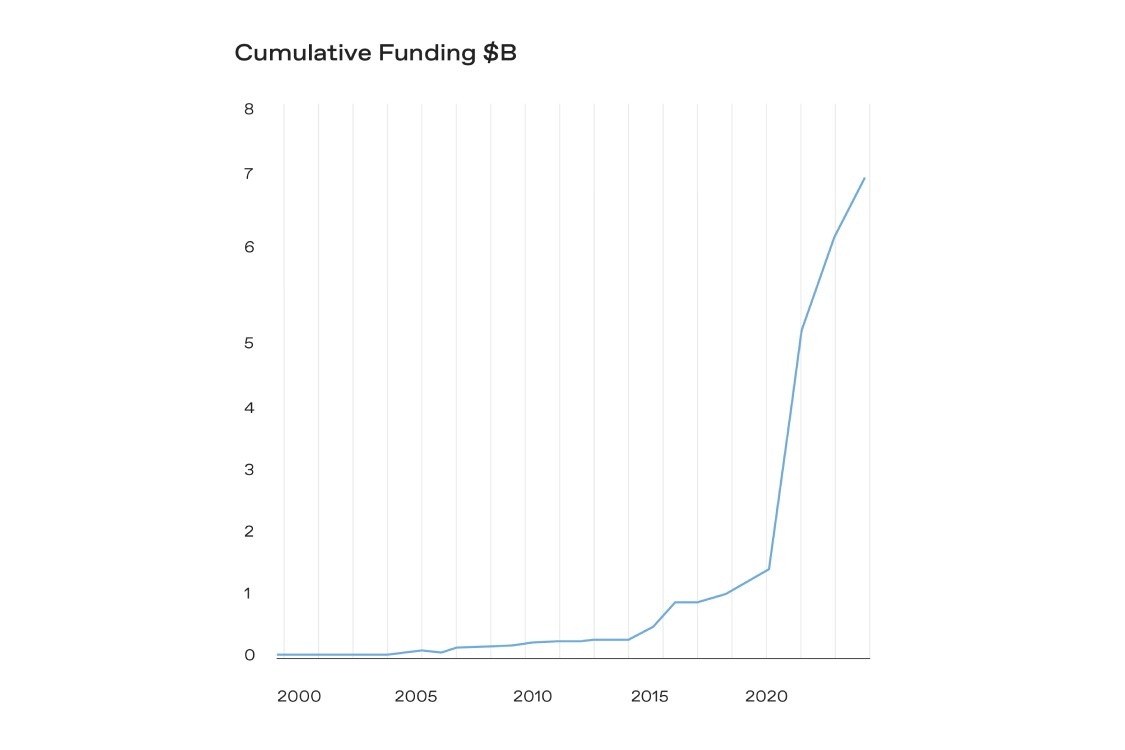
That has changed. Breakthroughs in superconducting magnets and laser-driven fusion ignition have compounded in recent years. An explosion of private-sector startups has brought billions in new venture capital funding. The federal government has launched a milestone-based program — modeled on the approach that helped build SpaceX — in which companies receive public funding only when they hit defined technical targets, though it needs to grow. Also, a landmark regulatory decision means fusion plants will not be governed under the same framework as fission reactors, which could matter more for the economics of fusion power than any advance a physicist makes in the lab.
These forces are converging on what the field calls a "decadal timescale.” This isn’t a promise that fusion will arrive in exactly ten years, but it shows that a credible path to pilot plants is on the horizon. The timeline still depends on sustained investment and technical progress. If we fund this work seriously and create the fusion workforce of the future, it will happen. If we don’t fund it, other countries will, and they could reach the goal ahead of the U.S.
Over the next four days, you’ll hear from colleagues with expertise in fusion science and technology, government, and the private sector. Whether you’re new to fusion or looking to learn more, I hope their insights sharpen your thinking about the future of this transformative technology.
Carlos Paz-Soldan is the director of the Columbia Fusion Research Center and an associate professor of applied physics and applied mathematics at Columbia Engineering.
Get in Touch
Image

Associate professor of applied physics and applied mathematics at Columbia Engineering; Director of Columbia Fusion Research Center |