Explore Available Programs
Summer Programs
Dive into engineering principles and practices during intensive summer sessions, culminating in group-based projects to solve real design challenges.
School Year Programs
Take Saturday classes on Columbia’s campus in areas like organic chemistry and electronics and develop hands-on lab and research skills.
Outreach
Learn more about programs at Columbia that support local students in discovering and pursuing careers in STEM.
The 2025-2026 Student Handbook
Download the latest edition of the Student Handbook.
View the PDF

Visit the Columbia Engineering Bulletin for official information on academic policies.
Academic Policies Applying to All Students at Columbia Engineering
-
Academic Research
- Administrative Policy Library: University policies for sponsored projects.
- Managing Research and Externally Funded Projects: Policies guiding management of projects sponsored by governmental and private organizations.
- Policies on Federally-funded Projects: Agency-specific guidance for project management.
-
Communication and IT
- Student Email Communication Policy: Policies governing how the University communicates with students by email.
- Information Technology Policies: Full scope of policies governing use and access to information technology.
-
Ethical Conduct
- Non-Retaliation Policy: Statement on the University prohibition on retaliation against those who report or seek guidance on ethical or compliance issues.
- Policies and Procedures on Discrimination and Harassment: Faculty and student policies on discrimination and harassment, reporting options, investigation and disciplinary process.
- Gender-Based Misconduct Policies for Students: Sexual respect and integrity policy, reporting protocol, and counseling resources.
-
Events & Activities
- Policy on Partisan Political Activity: Rules prohibiting the University from participating or intervening in any political campaign and the rules governing anyone connected with the University regarding participation in political campaign activities.
- University Event Policies: Guidance in planning and scheduling events or meetings.
-
Leave of Absence
- Involuntary Leave of Absence: Policy for how involuntary leave is determined and managed.
- Leave for Military Duty: Policies on military leave of absence.
- Voluntary Leave of Absence Policy: Circumstances and process for withdrawal from school.
-
Personal Information
- Policy on Access to Student Records (FERPA): Your rights to access your educational records or release them to others.
- Social Security Number Usage: Policies about when you must provide your Social Security Number to the University.
-
Reporting Complaints and Resolving Disputes
Find information about the formal and informal processes of resolving disputes and registering a complaint or grievance in the Student Handbook. See the sections, “Formal Complaint Procedures,” and “Student Grievances, Academic Concerns, and Complaints.”
-
Student Conduct
- Student Conduct: Rules of University conduct and discipline.
- Community Standards: The rationale and principles of academic integrity as a student in the Columbia Engineering community.
-
Undergraduate Academic Policies
- Academic Standing for Undergraduates: Policies regarding academic performance.
- Academic Integrity: Policies and information about academic integrity.
Graduate Academic Policies
-
Registration
Steps to Register:
- Meet with your Academic Advisor in your Department to discuss your Program Plan.
- Review the Registrar’s Directory of Classes.
- Review Registration Timeline.
- Log on to your SSOL (Student Services Online) account.
- During your scheduled registration appointment, register for classes using SSOL.
Registration for MS Students:
Beginning with registration in April 2022, master’s students will be able to register for a maximum of 15 credits, including courses for which the student is registering on the waitlist. As has been past policy and practice, graduate students may not take more than 15 credits per semester, and students are reminded that they are billed per credit.
In addition, graduate students are reminded that if they drop classes after the last day of the Change of Program (add/drop) period, they will be charged tuition for the dropped classes.
Master’s students at Columbia Engineering will be limited to the following parameters:
- 1st Year students will only be able to be simultaneously registered and waitlisted for credits up to 15 credits.
- 2nd Year students will only be able to be simultaneously registered and waitlisted for credits up to 12 credits for 36 credits programs or 9 credits for 30 programs.
For example, if you are a 2nd-year student registered for 10 credits and want to waitlist a class for 3 credits, you will not be able to. Your total waitlisted/registered credits would be 13, which would be above the 12 credit max. You will either need to register or waitlist a class that is 2 credits or drop a class you are registered for to waitlist the 3-credit class.
If you are a 1st-year student, currently registered for 9 credits and waitlisted for 3 credits, and want to register for an open 4-credit course, you will not be able to. Your total waitlisted/registered credits would be 16, which is above the 15 max. You will need to either drop a class or remove yourself from a waitlist.
Registration for Doctoral Students:
Doctoral students cannot register part-time. There are three full-time registration categories for Doctoral students. Please make sure to confirm your registration category with your department administrator.
- Full Residence Unit (RESI G0001, call number 13369) – “R.U.” is for students who will be taking courses or who will still be within their first six semesters. The completion of six R.U.s is a requirement for the MPhil and PhD degrees.
- Extended Residence (EXRS G0001, call number 13367) – “E.R.” is for students who are beyond the first six semesters of their PhD program and are serving as Teaching Assistants (TAs), Research Assistants (RAs), Research Fellows, or as Core Preceptors.
- Matriculation and Facilities (MTFC G0001, call number 13368) – “M&F” is exclusively for PhD students who are beyond their first six semesters, who will not be teaching, and who are instead:
- completing a degree requirement such as a language examination or qualifying examination
- preparing the dissertation proposal, or
- writing or distributing the dissertation.
Please note: students should not register for M&F for over two semesters. In extenuating circumstances, students may petition Graduate Student Affairs for a third term of M&F.
For more information about each registration category, please see the Residence Unit Student Guide.
Doctoral students must register continuously until they distribute to their committee the copy of the dissertation that will be evaluated at the defense; if the dissertation defense is scheduled for a subsequent term, students need not register again.
Part-Time vs. Full-Time Registration
Part-time and full-time statuses depend on your degree and number of points (equal to "credits" at other institutions). One point of credit represents one hour of contact with a professor each week for the length of the term. Most classes are three credits.
Degree Credits Required Max Time Allowed Part-Time Half-Time Full-time MS 30-36 depending on degree program
Please check with your department
5 years Less than 6 credits Min 6, less than 12 credits Min 12+ credits Doctoral (PhD only)
60 credits (includes approved advanced standing) 7 years NA NA All Doctoral candidates are required to register full-time.
Please refer to this link for registration rules.
Doctoral (EngScD) 60 credits 7 years Must obtain approval, please inquire with the Office of Graduate Student Affairs Must obtain approval, please inquire with the Office of Graduate Student Affairs 12 credits+ All students should plan their academic programs with their department. Should a graduate student need more time to complete their degree program, a petition for an extension to their program must be submitted to the department and the Office of Graduate Student Affairs.
International Students (F-1 or J-1) are required to be full-time. These students should contact ISSO to inquire about dropping courses at any point during their program. Since the cost of tuition generally increases each academic year, students are encouraged to complete their program in the shortest time possible that fits with their own schedule and constraints.
-
Course , Grading Option, and Status Changes
Adding/Dropping Courses After Change of Program Period
Graduate Students are cautioned that there are no refunds for courses dropped after the University's Change of Program Period. Even if you are adding a course, the cost of the new course will not be “offset” by dropping (swapping) with a discarded course. Students will be charged in full for both courses.
Because of this, we encourage students to be fully advised as to their intended course load each term. Students who desire to add or drop courses after the add/drop timeline will need to complete the Registration Adjustment Form and submit the request to their department. SSOL cannot be used for this purpose as faculty and school approval are required.
Changing Degree Program After Change of Program Period
The change of program period only allows you to add or drop courses. If a graduate student wants to “transfer” into another department, they must complete at least one semester in their current program and submit an admissions application for the program that they wish to enroll in the future. If the student is admitted, then their degree program status will change.
For further questions about transferring, please check with Graduate Admissions.
Changing Course Grading Options
Graduate students must speak to their department before selecting P/F for a course.
If approved, please review the timeline established by the Registrar’s office for students wishing to change their grading options (i.e. Letter Grade to Pass/Fail etc.). The Registration Adjustment Form is used for this purpose as well.
Pass/Fail courses do not count towards the degree. After the last day of the change of grade option period, there is no uncovering or changing of P/F or letter grades under any circumstances.
Changing Status
Apply for advanced standing, a degree level change (lower), a concentration change, a leave of absence, or readmission.
-
Cross-Registration
Columbia University Cross-Registration
The following should be noted:
- All students will need departmental permission to take non-program-related courses.
- If approved, students can take courses outside of their requirements. However, they should be aware that these courses may not count towards their degree program.
- Students who take undergraduate courses through Engineering will be charged graduate-level tuition for those courses.
- Cross-registration requests require approval from both non-Engineering schools and the graduate student’s department.
- Please be aware of eligibility requirements when registering. Some courses may be restricted.
- Students wishing to take graduate courses at the Columbia Business School (CBS) must follow Business school registration procedures and receive approval from their department.
- Students wishing to obtain academic credit for courses taken at Columbia but outside of the School of Engineering will need to inquire about advanced standing.
Columbia Engineering Cross-Registration
Cross-registration within Columbia Engineering must be approved by the graduate student’s home department and the host department. For example, if you are a MECE student and you want to register for a CS course, then you will need to obtain approval from MECE and CS.
-
Questions About Enrollment and Registration
Graduate students with questions about enrollment, registration, or degree requirements should contact their respective Department's student affairs officer.
Related Resources
Explore the Bulletin
The links below take you to the locations within the Bulletin where you can read more about the requirements and available courses at each stage of the program, including special considerations for pre-professional programs.
- First-Year/ Sophomore Program Courses
- Junior/ Senior Program Courses
- Undergraduate Minors
- Pre-Med Preparation Courses
- Pre-Law Preparation Courses
For the most up-to-date information on Columbia Engineering advising for undergraduates, visit The James H. and Christine Turk Berick Center for Student Advising (CSA).
The Basics
To earn the Bachelor of Science degree from The Fu Foundation School of Engineering and Applied Science you must:
- Complete the First-Year Sophomore technical requirements
- Take at least 27 points of nontechnical coursework
- Satisfy specific requirements for your major
- Earn 128 points
You must register for at least 12 credits per semester, and may not register for more than 21 points per semester without approval from the Committee on Academic Standing. You are expected to complete all requirements within 8 terms.
First-Year and Sophomore Technical Requirements
- Calculus: Depends on initial placement level
- Physics: At least 2 semesters
- Chemistry: At least 1 semester depending on major
- ENGI E1102: The Art of Engineering
- Computer Science: Placement depends upon programming experience and major
- Lab requirement for selected major: Chemistry and/or Physics lab depending on major
You are required to take Calculus, Physics, Chemistry, and Gateway Lab during your first year at SEAS.
Nontechnical Requirements
You must complete at least 27 points of nontechnical coursework, including:
- University Writing: ENGL CC1010
- Core Humanities sequence: two semesters of Literature Humanities, Contemporary Civilization, or Global Core courses
- Art Humanities or Music Humanities
- Principles of Economics
- Three or four elective courses (9-11 points)
You are required to complete University Writing in your first year; most students complete the Core Humanities sequence in their second year.
Majors
Columbia Engineering students must complete the requirements for a major. You will declare your major online during the first semester of your sophomore year.
Library Resources for Engineering
-
Top Engineering Databases
Jump right to the resource you need. Here are a few of the most commonly accessed databases for engineers:
-
Search the Library Catalog
Find books, journals, archives, and other materials across the Columbia University Libraries system.
-
Engineering Research Guides
See detailed guides for each branch of engineering that walk you through the kinds of resources available and how to find them. Save yourself time and start your research project here.
-
Reserve a Space
You can reserve a private space in the Science & Engineering or other libraries for quiet study or small group work.
-
Software Tools
Numerous software tools are available to you on workstations throughout the Science & Engineering Library. See the list and find instructions on how to gain access.
-
Expert Librarian Assistance
Receive guidance in finding the resources you need from the Science & Engineering Librarian, William B. Vanti. Reach him at [email protected] or (212) 851-7138.
-
Library Hours, Location, & Contact Information
Hours:
Monday - Friday 9:00AM to 3:00AM
Saturday 10:00AM to 11:00PM
Sunday 11:00AM to 3:00AMLocation:
401 Northwest Corner Building
550 West 120th Street
New York, NY 10027Contact:
Phone: (212) 851-2950
E-mail: [email protected]
Website
-
Strategic Planning
You have an ambitious, early-stage, and multi-PI research idea. We can help build your idea into a center-scale vision through:
- Brainstorming and vision development
- Exploring funding possibilities and aligning your vision with funder priorities
- Developing your team
- Giving you competitive insights
- Engaging potential funding partners early in the process
-
Identifying Funding Sources
Once you have a well-articulated vision, we can help you find the most appropriate funding opportunities. We can:
- Develop a curated list of funding sources that align with your vision
- Monitor changing funding agency priorities and programs
- Strategically assess your competitive strengths and gaps
- Help you navigate funding agency relationships
- Leverage your funding success and find additional sources of support
-
Crafting a Successful Proposal
With the right funding sources identified, we support you through the process of creating and submitting your proposal, maximizing your chances of success. We help by:
- Providing project management services, keeping your team on the same page and your proposal on track
- Providing templates and support as you write proposal components
- Furnishing expertise for budget development
- Reviewing your proposal and preparing you for site visits
The funding to empower you to pursue your most ambitious research goals is out there. We’re ready when you are. Get in touch to start the conversation.
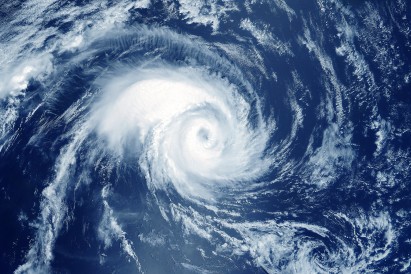
LEAP - $25 million
Learning the Earth with Artificial Intelligence and Physics, a new center established by a National Science Foundation grant, focuses on higher-fidelity climate modeling.
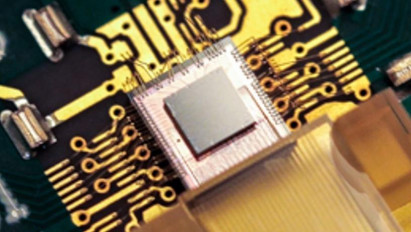
CUbiC - $35 million
Supported by a five-year grant from the JUMP 2.0 initiative, the Center for Ubiquitous Connectivity advances energy-efficient mobile communications technologies.

ARNI - $20 million
Established by a grant from the National Science Foundation, the interdisciplinary AI Institute for Artificial and Natural Intelligence will pursue advances in neuroscience and AI.