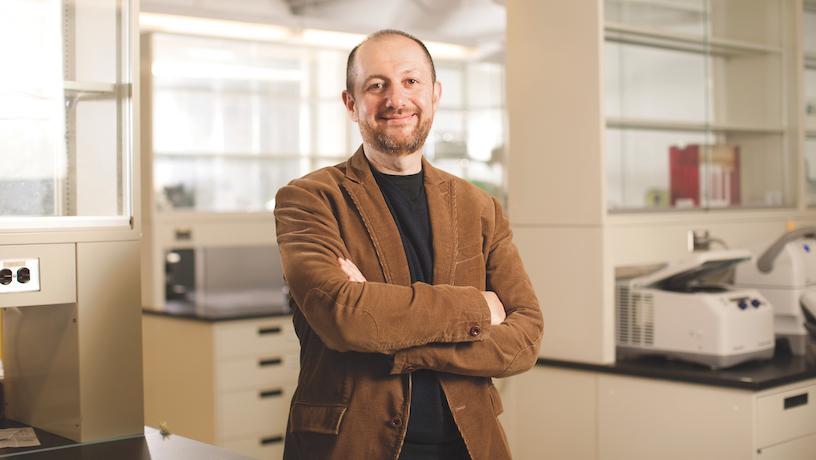
“Specifically, we found that potassium ions mitigate the formation of undesirable chemical compounds that deposit on the surface of lithium metal and prevent lithium ion transport during battery charging and discharging, ultimately limiting microstructural growth,” says the team’s PI Lauren Marbella, assistant professor of chemical engineering.

Her team’s discovery that alkali metal additives suppress the growth of non-conductive compounds on the surface of lithium metal differs from traditional electrolyte manipulation approaches, which have focused on depositing conductive polymers on the metal’s surface. The work is one of the first in-depth characterizations of the surface chemistry of lithium metal using NMR, and demonstrates the power of this technique to design new electrolytes for lithium metal. Marbella’s results were complemented with density functional theory (DFT) calculations performed by collaborators in the Viswanathan group in mechanical engineering at Carnegie Mellon University.

“Commercial electrolytes are a cocktail of carefully selected molecules,” Marbella notes. “Using NMR and computer simulations, we can finally understand how these unique electrolyte formulations improve lithium metal battery performance at the molecular level. This insight ultimately gives researchers the tools they need to optimize electrolyte design and enable stable lithium metal batteries.”

The team is now testing alkali metal additives that stop the formation of deleterious surface layers in combination with more traditional additives that encourage the growth of conductive layers on lithium metal. They are also actively using NMR to directly measure the rate of lithium transport through this layer.
 

Columbia Engineering

Columbia Engineering, based in New York City, is one of the top engineering schools in the U.S. and one of the oldest in the nation. Also known as The Fu Foundation School of Engineering and Applied Science, the School expands knowledge and advances technology through the pioneering research of its more than 220 faculty, while educating undergraduate and graduate students in a collaborative environment to become leaders informed by a firm foundation in engineering. The School’s faculty are at the center of the University’s cross-disciplinary research, contributing to the Data Science Institute, Earth Institute, Zuckerman Mind Brain Behavior Institute, Precision Medicine Initiative, and the Columbia Nano Initiative. Guided by its strategic vision, “Columbia Engineering for Humanity,” the School aims to translate ideas into innovations that foster a sustainable, healthy, secure, connected, and creative humanity.


ABOUT THE STUDY

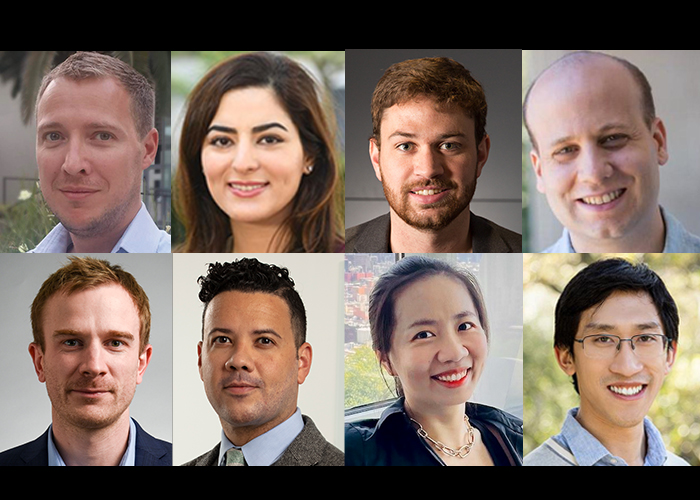
The study is titled “Leveraging Cation Identity to Engineer Solid Electrolyte Interphases for Rechargeable Lithium Metal Anodes.” Authors are: Richard May 1; Yumin Zhang 1; Steven R. Denny 1; Venkatasubramanian Viswanathan 2,3; Lauren E. Marbella 1

  1.  Department of Chemical Engineering, Columbia Engineering
  2. Department of Materials Science and Engineering, Carnegie Mellon University
  3. Department of Mechanical Engineering, Carnegie Mellon

The study was funded by the Alfred P. Sloan Foundation through a Scialog: Advanced Energy Storage Collaborative Innovation Award (2019-11419, LEM and VV). Richard May is supported by the U.S. Department of Defense through the National Defense Science & Engineering Graduate Fellowship Program.

The authors declare no competing interests.

New York, NY—August 23, 2021—A new way to control the motion of bubbles from researchers at Columbia Engineering might one day help separate useful metals from useless dirt using much less energy and water than is currently needed.

When mining for metals such as the copper used in most electronics and the lithium used in many batteries, only a small fraction of the material that is mined is useful metal, with the vast majority just useless dirt-like particles.

"We have to separate the useful metals from the useless particles, and we do this by blowing air bubbles up through them," said Chris Boyce, assistant professor of chemical engineering at Columbia Engineering. However, "this process utilizes a large amount of energy and water, causing climate change and water shortages, thus creating problems we are trying to prevent. We have this issue in part because we currently cannot control the motion of these bubbles."

Now Boyce and his colleagues reveal that if they vibrate these particles while blowing air up through them, the normally chaotic motion of these bubbles becomes orderly and controllable. The vibrations cause the particles to quickly shift between solid-like to fluid-like behavior, which in turn helps structure the bubbles into regularly spaced triangular arrays.

"I think the simple addition of vibration to go from chaos to order is beautiful," Boyce said. Their study appears August 23 in the journal Proceedings of the National Academy of Sciences.

Having a way to control the behavior of these bubbles can help scale up and optimize separation techniques. "We expect that the ability to create structure in flows can reduce energy and water use in mining as well as improve the efficiency of many clean energy processes," Boyce said.

The researchers now aim to apply this structured bubbling to sustainable mining separation techniques.

Image
hero image
By vibrating particles, researchers at Columbia Engineering reveal the normally chaotic motion of bubbles traveling through such particles can become orderly, findings that could one day help make mining more sustainable.
Columbia Engineering

Columbia Engineering, based in New York City, is one of the top engineering schools in the U.S. and one of the oldest in the nation. Also known as The Fu Foundation School of Engineering and Applied Science, the School expands knowledge and advances technology through the pioneering research of its more than 220 faculty, while educating undergraduate and graduate students in a collaborative environment to become leaders informed by a firm foundation in engineering. The School’s faculty are at the center of the University’s cross-disciplinary research, contributing to the Data Science Institute, Earth Institute, Zuckerman Mind Brain Behavior Institute, Precision Medicine Initiative, and the Columbia Nano Initiative. Guided by its strategic vision, “Columbia Engineering for Humanity,” the School aims to translate ideas into innovations that foster a sustainable, healthy, secure, connected, and creative humanity.

About the Study

The study is titled "Dynamically structured bubbling in vibrated gas-fluidized granular materials."

The study appeared in the journal Proceedings of the National Academy of Sciences on August 23, 2021.

Authors are: Qiang Guo, Yuxuan Zhang, Azin Padash, Kenan Xi, Thomas M. Kovar, and Christopher M. Boyce.

Department of Chemical Engineering, Columbia Engineering.

The researchers received support from the China Scholarships Council and the Bakhmeteff Fellowship for Fluid Mechanics.

Subscribe to Chemical Engineering