We know air pollution is a global problem. Are there particular areas in the world where it’s worse? Is it just around cities or is it spreading beyond?
Air pollution is a global problem. Today, air pollution levels are the most severe in areas of the Global South that are undergoing rapid economic development while at the same time developing air quality management strategies.
For the Clean Air Toolbox, you are the lead in India, and Dan Westervelt is the co-lead in Africa. What are you focused on now as part of this initiative?
Although our initiative is interdisciplinary and not only tech-focused, a lot of our most impactful work keeps coming back to data. A lack of data can hold back progress towards clean air at several stages of the process. In several African countries where Dan is working, there was previously little to no data on the ground that characterized background air pollution levels. Without that information, you can’t quantify the cost of inaction in order to motivate investment in clean air or evaluate whether actions taken locally are actually having an impact.
In India, our work is extending the government monitoring network that has been growing since 2016 to provide neighborhood-level information and insights into priority sources. Side by side with our technical work, we are working to build local capacity in air quality science and air quality management, and helping to establish a knowledge base of best practices for getting high-value, trustworthy data from low-cost sensors.
What about other areas of the world?
The Clean Air Toolbox is focusing on cities in the Global South so we hope to include South America someday. Dan and I do more U.S.-focused work in our other research: for example, Dan has been measuring air quality around New York City and Columbia’s Lamont-Doherty Earth Observatory, and I have collaborations with the U.S. EPA focused on improving their air quality modeling.
The Clean Air Toolbox Columbia faculty aren’t just scientists and engineers they’re lawyers, doctors, and policymakers, too. How is the group working together?
The work our group does crosses disciplinary boundaries the scientists are deeply involved in policy discussions and public health and policy specialists are helping design air pollution data collection, and we are all working with our local partners to build their capacity. Specific examples of contributions outside engineering and air quality science include work by members of our group from the Sabin Center for Climate Law who have done analyses of environmental laws in India to look for opportunities for the Kolkata Municipal Corporation to contribute to air pollution reduction. We also have several members from the Mailman School of Public Health who look at connections between air pollution exposure and health outcomes in women and children in Ghana, India, and elsewhere. And some of our group members have developed economic strategies to encourage the adoption and sustained use of clean cookstoves. The close collaborations that have formed among Clean Air Toolbox researchers with completely different disciplinary viewpoints have been both productive and rewarding, and make me think differently about my research priorities.
What have been some of the successes out of this collaboration to date?
Our work has generated the first air pollution data from highly populated cities such as Kinshasa, Democratic Republic of the Congo. We are leading the state of the science in low-cost sensor applications, building relationships with local decision makers and informing policy in India, and increasing capacity among thousands of local practitioners on air quality management and air pollution science.
How can we as individuals contribute to improving air quality while combating climate change?
Making choices to use public transportation, for example, can definitely help reduce emissions and contribute to cleaner air. However, systemic changes such as transitioning to cleaner energy for electric power and industry are also needed for major change.
What continues to inspire and motivate your work in air quality and climate change?
Air quality is a problem that affects everyone who breathes air, which is to say, all of us! I personally have asthma, and so does my son, so I have experienced this issue in a way that is more personal and immediate than many have. The health burden of air pollution is borne disproportionately by women, children, and those of lower socioeconomic status worldwide. I think that all humans have a right to breathe clean air, and I hope our work pushes things in this direction.
Are you optimistic about the future?
I am optimistic about clean air in the future. In my lifetime we’ve seen major improvements in air quality in the U.S., thanks to the Clean Air Act and subsequent amendments. China invested heavily in addressing their environmental issues throughout the 2010s and things are turning the corner there. We are also seeing changes in India and across the African continent since 2019 when we founded the Clean Air Toolbox, and there are a lot of exciting opportunities for cities and countries in the Global South to learn from one another’s success stories.
Why Earn your EngScD in Chemical Engineering at Columbia?
Columbia gives you a rigorous Ivy League education in the heart of a vibrant global city for unmatched opportunities and impact.
As a student, you’ll benefit from:
- New York City
Join top talent in one of the world’s most exciting and influential cities. Students choose Columbia Engineering over MIT, Berkeley, and others because of the New York City ecosystem of research and enterprise that can’t be found anywhere else.
- Incredible Research Opportunities
Engage with research across a broad range of areas in the Department of Chemical Engineering and beyond. Faculty are working on projects in biopolymers, protein engineering, carbon capture, the biochemistry of DNA sequencing, and more, while centers like the multidisciplinary Columbia Electrochemical Energy Center are developing sustainable technologies to address pressing global problems.
- Holistic Expertise
Tackle challenges from many angles to find nuanced solutions. Faculty within Chemical Engineering collaborate with experts at Columbia in other areas, like public policy, environmental science, and public health, which will expand your perspective and help you learn to develop responsible technologies that keep the big picture in mind.
- Columbia University
With a PhD from Columbia, you’ll join one of the world’s most international, accomplished networks of researchers and alumni. Your Ivy League credential will open doors wherever you go and the relationships you build here will accelerate your career.
Why Earn Your MS/PhD in Chemical Engineering at Columbia?
Columbia gives you a rigorous Ivy League education in the heart of a vibrant global city for unmatched opportunities and impact.
As a student, you’ll benefit from:
- New York City
Join top talent in one of the world’s most exciting and influential cities. Students choose Columbia Engineering over MIT, Berkeley, and others because of the New York City ecosystem of research and enterprise that can’t be found anywhere else.
- Incredible Research Opportunities
Engage with research across a broad range of areas in the Department of Chemical Engineering and beyond. Faculty are working on projects in biopolymers, protein engineering, carbon capture, the biochemistry of DNA sequencing, and more, while centers like the multidisciplinary Columbia Electrochemical Energy Center are developing sustainable technologies to address pressing global problems.
- Holistic Expertise
Tackle challenges from many angles to find nuanced solutions. Faculty within Chemical Engineering collaborate with experts at Columbia in other areas, like public policy, environmental science, and public health, which will expand your perspective and help you learn to develop responsible technologies that keep the big picture in mind.
- Columbia University
With a PhD from Columbia, you’ll join one of the world’s most international, accomplished networks of researchers and alumni. Your Ivy League credential will open doors wherever you go and the relationships you build here will accelerate your career.
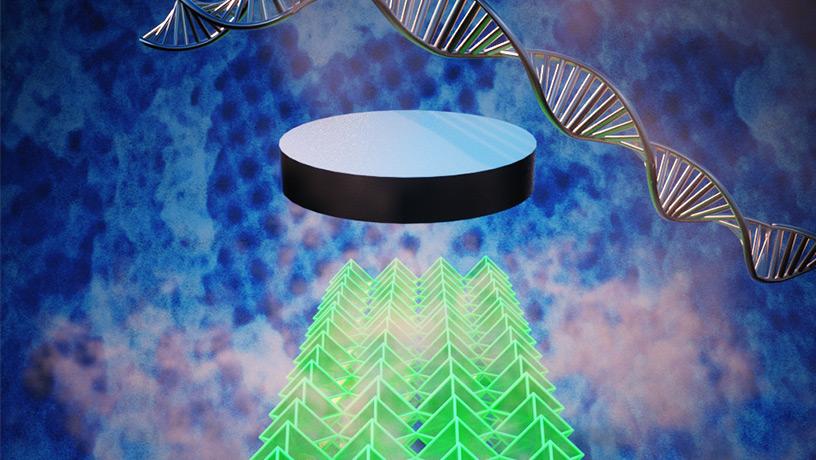
Nano-objects of Desire: Assembling Ordered Nanostructures in 3-D
Research from the Gang lab