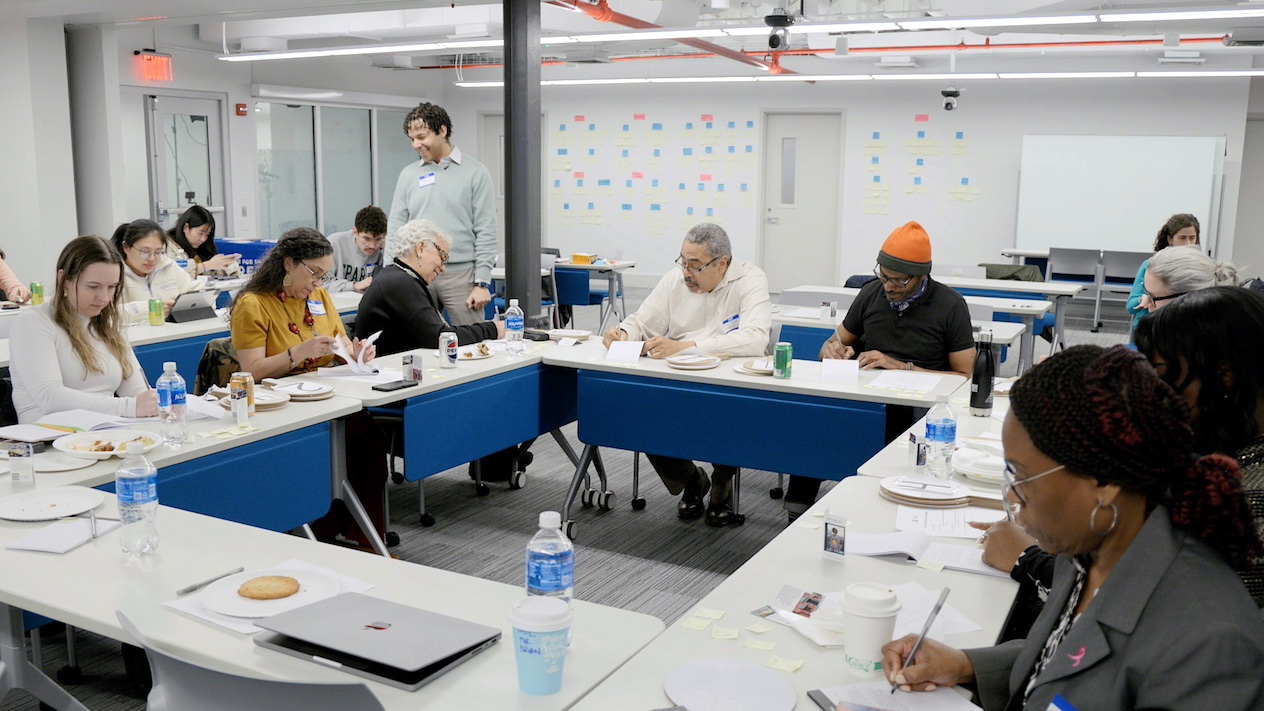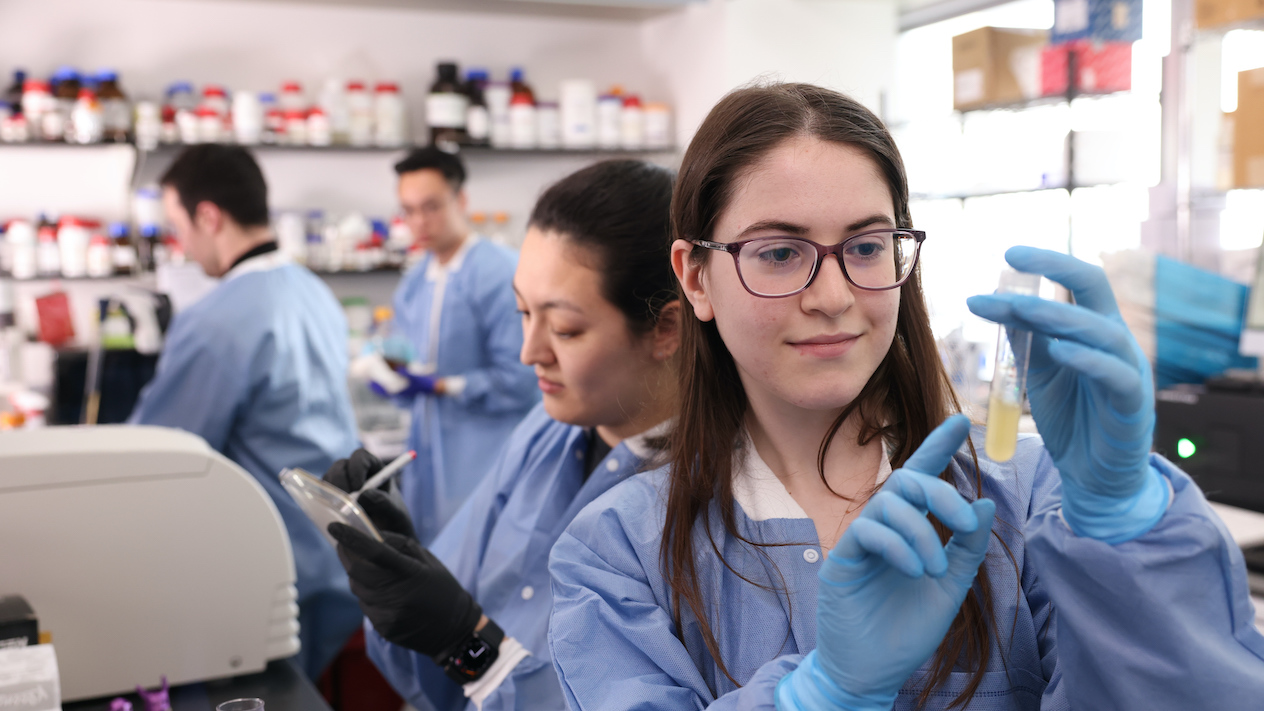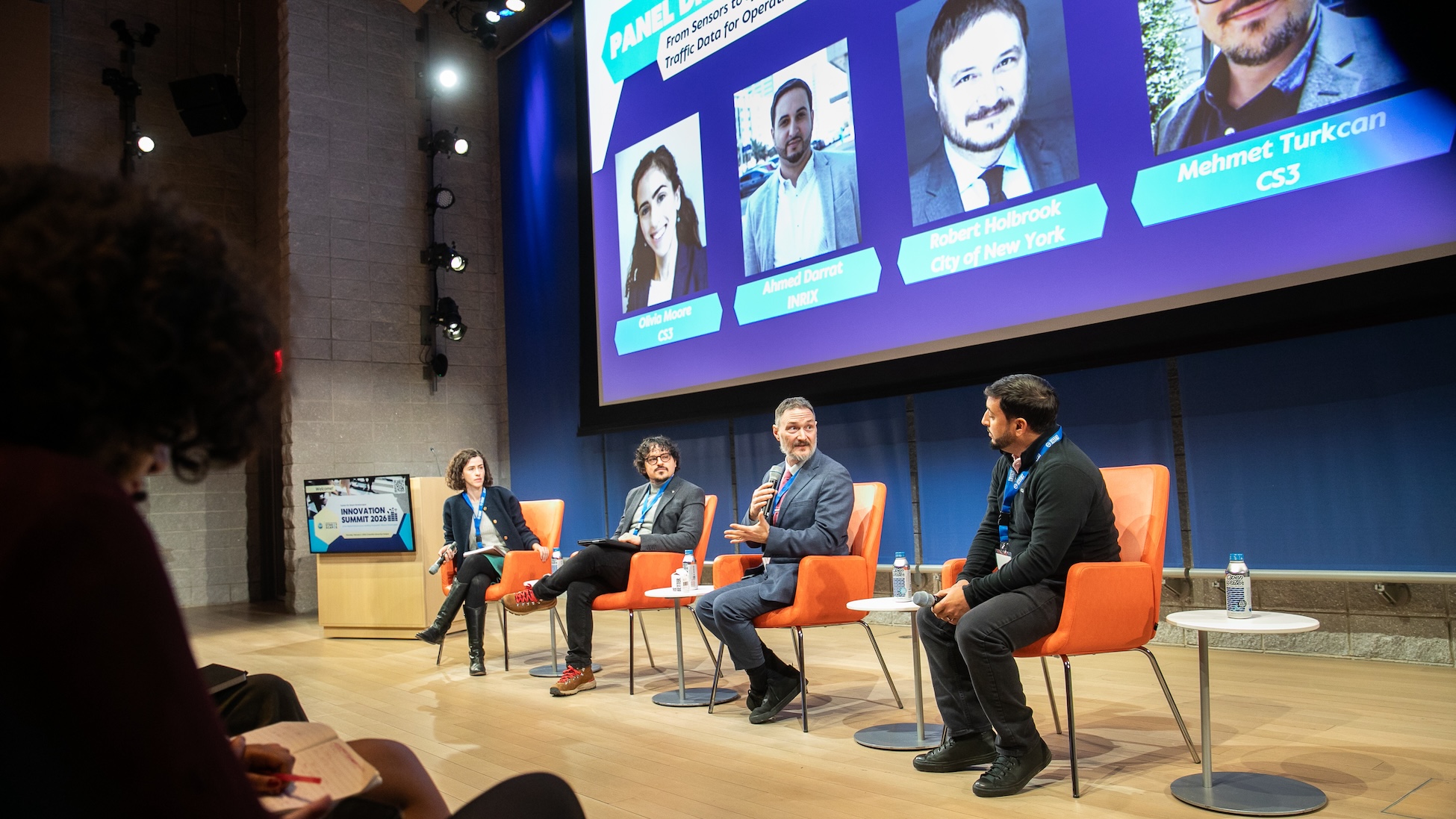
Lead Photo Caption: CS3 hosts a co-design workshop to explore smart streetscapes.
Lead Photo Credit: Jane Nisselson
Opening remarks by Dean of Engineering Shih-Fu Chang, Prof. Rich Zemel, and Prof. Shafi Goldwasser
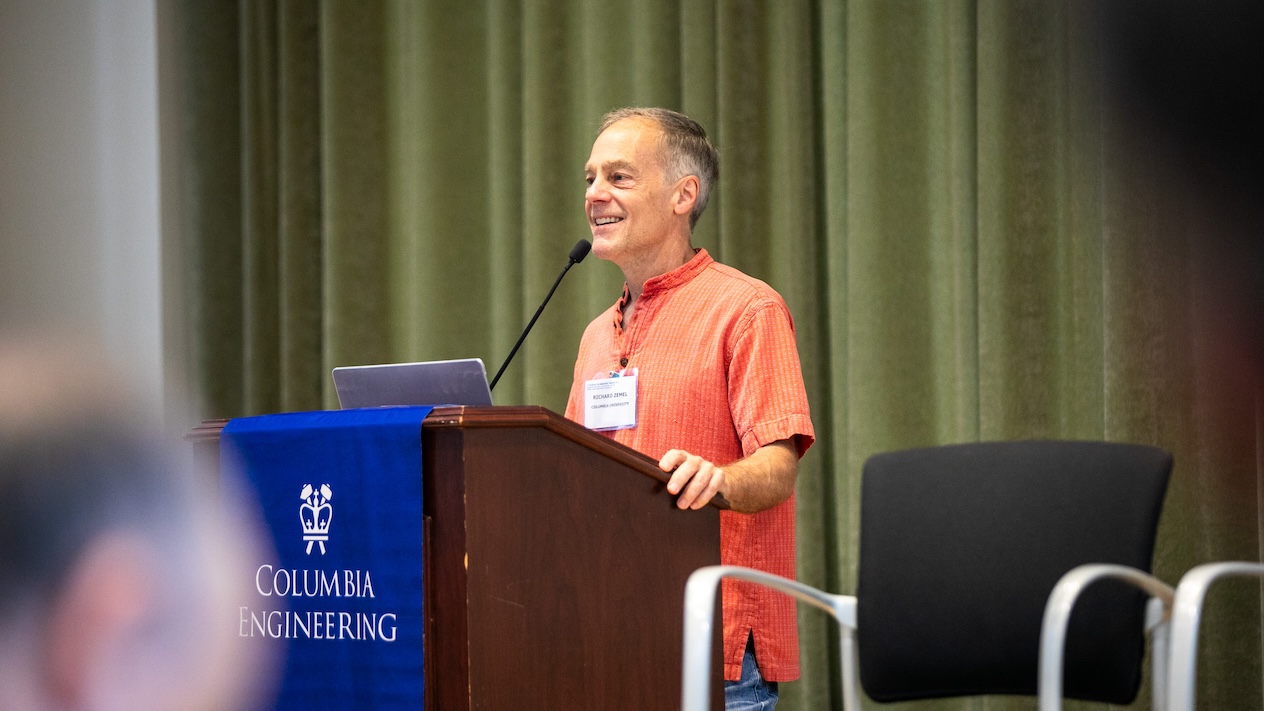
Lead Photo Caption: Richard Zemel, Trianthe Dakolias Professor of Engineering and Applied Science at Columbia Engineering; director of ARNI
Lead Photo Credit: David Dini/Columbia Engineering
Launch Event for New Fusion Research Center
Credit: David Dini/Columbia Engineering
How is the Fusion Research Center helping to achieve this goal?
The new Center will promote basic research, knowledge transfer and technical support, workforce development, and public outreach. We’re actively expanding collaboration with industry partners. One of our most exciting new initiatives is the branded fellowship program, which pairs students with companies on complementary projects. The objective is to enable rigorous and useful research while building a skilled fusion workforce. The Center also plans to launch seed funding calls to support early-stage research, encouraging broader participation across the university and diversifying the research portfolio.
How else does the Center support its industry partners?
We can provide on-call technical expertise to our industry partners, offering rapid support for specialized calculations and design assessments that companies may not have the capacity to handle in-house. Once a master research agreement is in place, new collaborations can be launched very quickly. Our goal is to complement our partners’ core competencies.
Why is Columbia uniquely positioned to lead in this moment?
This is one of the first university centers focused on supporting the fusion industry’s growth. We’re not just pursuing academic milestones, we’re working closely with companies to accelerate their progress and guide our academic work. That alignment is rare, and it reflects something distinctive about Columbia Engineering: a willingness to engage directly with industry to solve urgent global challenges.
Lead Photo Credit: Kailey Whitman
DAPLab Workshop: AI Agents for Work
David Dini/Columbia Engineering
Pooling our insights
The second half of the workshop focused on these collaborations between academic research and industry partners, with a panel discussion and lightning talks focused on reporting back from real-world attempts to implement AI agents.
Michael Morris, Chavkin-Chang Professor of Leadership, welcomed the attendees to Columbia Business School by observing that academia and industry each account for roughly half of the research that happens in the United States.
“We really ought to be pooling our insights,” he said. “Business schools can play a natural role in facilitating industry-academia cooperation — I’m hoping the DAPLab will be one of many ways we do this.”
In her keynote address, cognitive scientist Danielle Perszyk described how her team at Amazon AGI leverages insights from human intelligence to refine its efforts to build reliable AI systems.
“It's one thing for an agent, whether a human or an AI, to be able to do the same thing like click on an icon or type in a text field in the same environment every time,” Perszyk said. “But the digital world is ever-evolving, and we can't assume that it's going to stay the same even for short periods of time.”
She described how research into the evolution of human intelligence frames the questions necessary to develop agents that are robust in fast-changing environments.
In closing the day, Chilton described the journey to building and deploying these technologies as “a business problem, a sociology problem, and a cognitive science problem that draws from history, science, language arts, visual arts, and interaction.”
For her, AI agents won’t just automate tasks — they will open entirely new sources of value, the same way databases, the internet, and the cloud have.
“Every faculty member involved in DAPLab has deep collaborations throughout the university,” she said. “We also have a strong track record of delivering results for industry problems through sponsored research.”
The DAPLab is currently identifying partners to work together on a shared research agenda to develop next-generation systems to support reliable, safe, and efficient agent automation. To learn more, visit DAPLab’s website or contact co-directors Eugene Wu or Zhou Yu.
Lead Photo Caption: Zhou Yu, associate professor of computer science and co-director of DAPLab
Lead Photo Credit: David Dini/Columbia Engineering