Today's Growing Fusion Portfolio
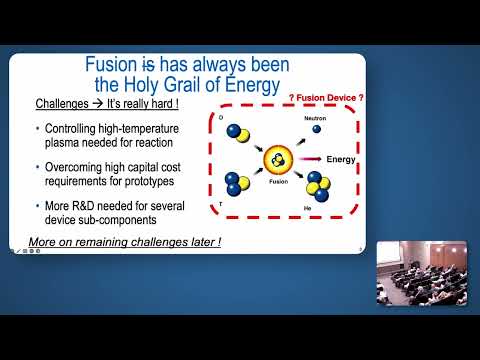
Carlos Paz-Soldan, an associate professor of applied physics and applied mathematics, enraptured alumni attendees with a century of rising and falling interest and research in harnessable nuclear fusion—a promising frontier in the increasingly widespread conversation around energy—and Columbia’s continued role at the forefront.
AI Chatbots
The next day was an invigorating discussion on generative artificial intelligence tools like OpenAI’s ChatGPT, offered to a full-capacity audience of alumni and their families by Kathleen McKeown, Henry and Gertrude Rothschild Professor of Computer Science.
Semiconductor Innovation
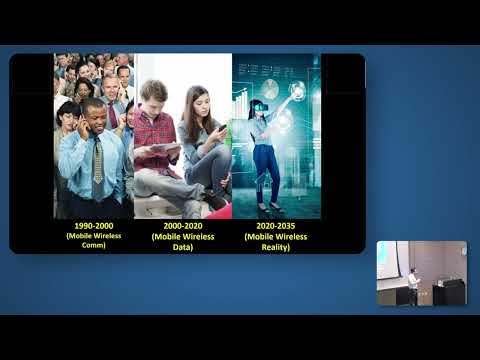
Finally, shedding light on how the landmark CHIPS Act is set to redefine the future of semiconductor technology, Harish Krishnaswamy, associate professor of electrical engineering, gave alumni an exclusive glimpse into the game-changing developments set to shape the world of technology as we know it.
Dean Chang’s State of the School Address
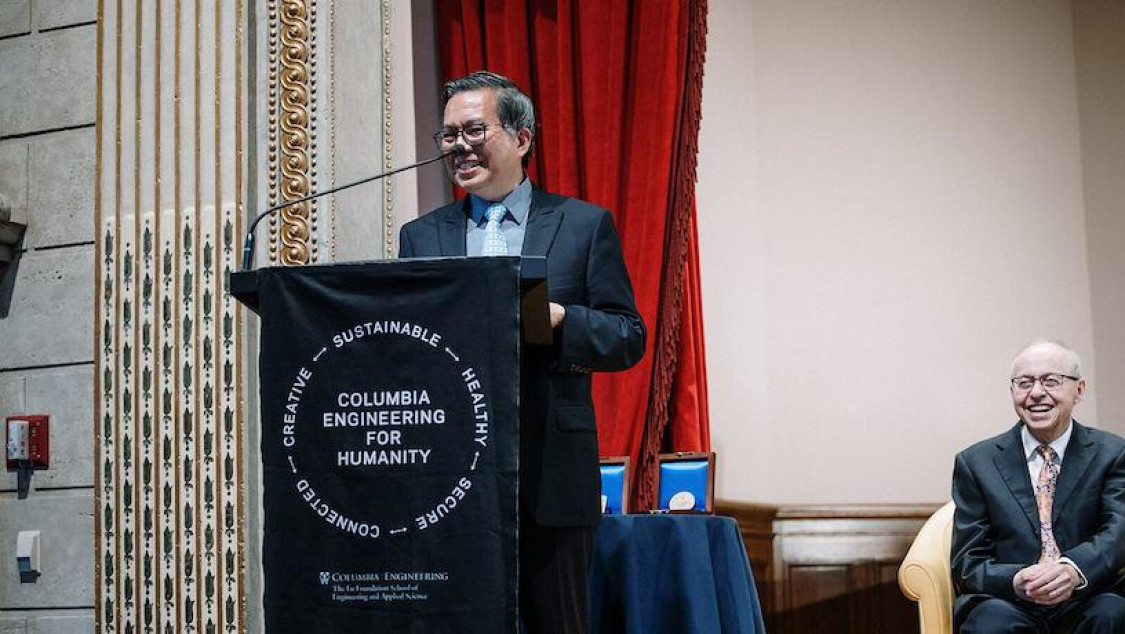
On Saturday, Dean Chang gave a State of the School address to attendees with exciting new updates on the School and plans for the future. Highlights included recent faculty and alumni awards, a review of Class Day and Commencement, and funding wins for new multi-partner centers based at Columbia Engineering such as ARNI, the AI Institute for Artificial and Natural Intelligence. Dean Chang also unveiled Columbia+, a new lifelong learning online platform open to alumni that features online courses, live-streamed and recorded events, and podcasts from across Columbia’s schools and Global Centers. He closed with a look ahead at Columbia’s expansion into Manhattanville and plans for a new engineering building focused on advancing the Engineering for Humanity vision.
Building Bridges
Milestone Class Gatherings
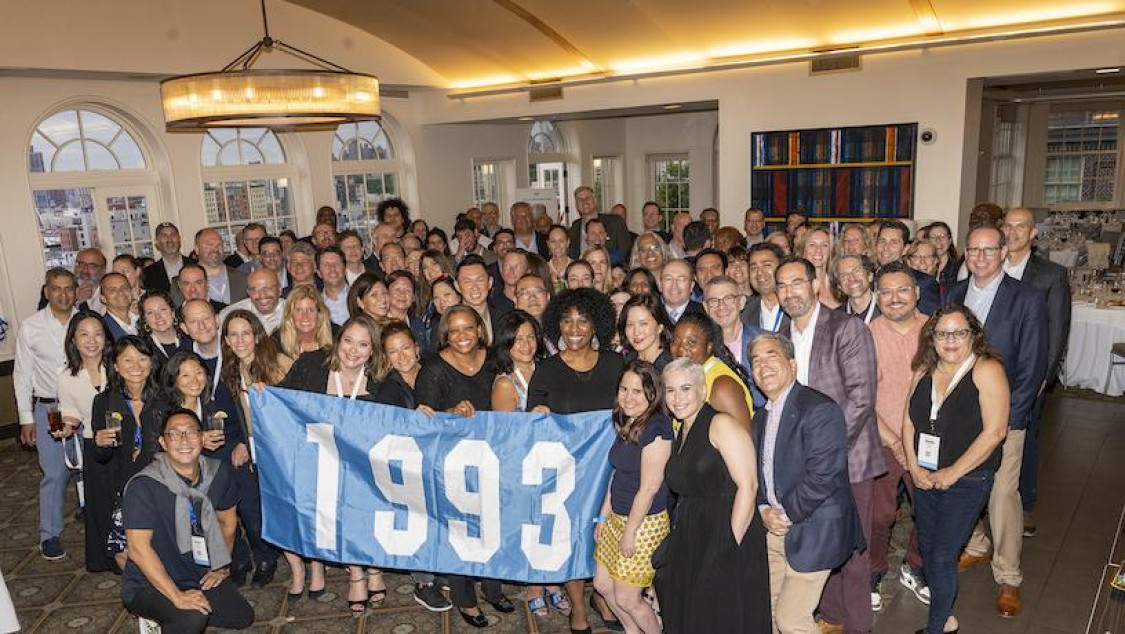
Laughter, anecdotes, and a collective sense of Columbia pride reverberated across campus as alumni volunteers and staff brought former classmates together to celebrate their milestone graduation anniversaries. View class photos.
Chelsea Piers Reception
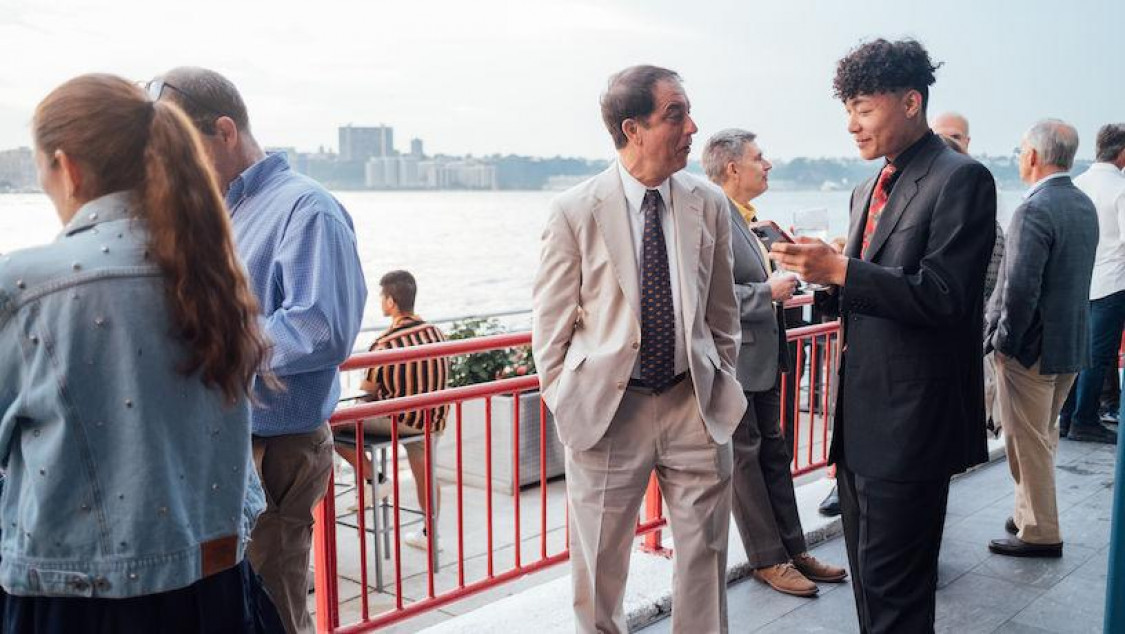
Back by popular demand for its second year, the Chelsea Piers Reception saw generations of alumni bring the dance floor to life. Enjoying floor-to-ceiling views of the New York City skyline, alumni of each of the undergraduate schools mingled and relished in an evening of celebration and connection. View photos.
Engineering Master's and Doctoral Alumni Reception
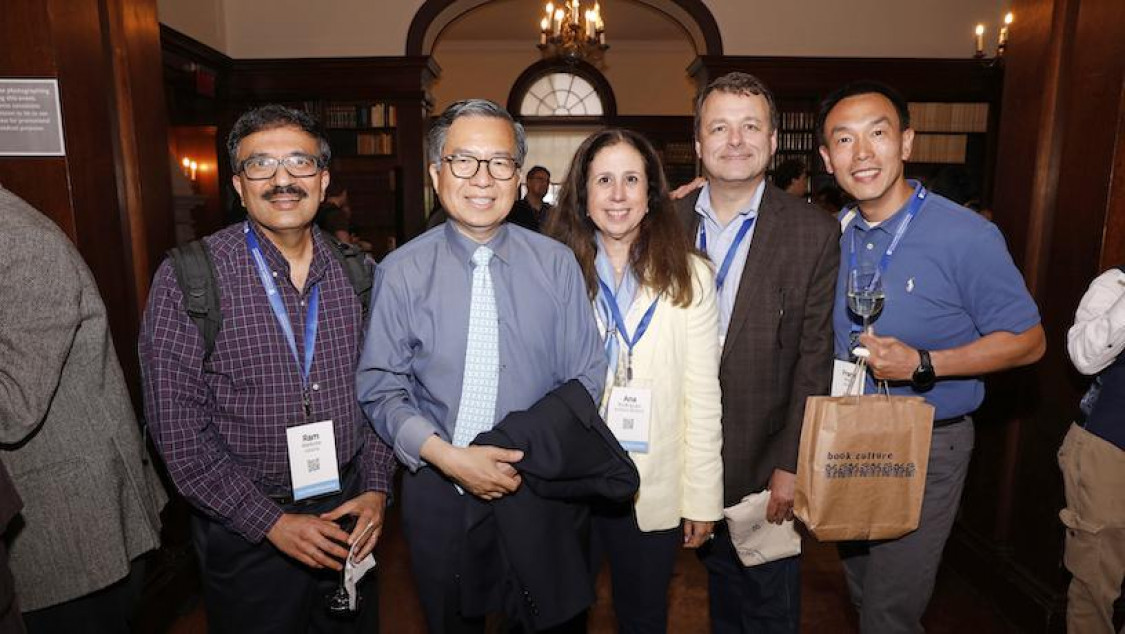
Unique to Columbia Engineering, which offers world-renowned advanced degree programs in addition to its undergraduate degree programs, this first in-person gathering of its kind brought master’s and doctoral alumni together across a diverse range of industries and academic departments in the hallowed library at the Italian Academy. It was a full and lively room. Dean Chang gave remarks and mingled with alumni. View photos.
How He Started His Startup
Yao discusses how his project was born out of classes at Columbia University and how they brought his web plugin into reality.
What makes the clothing industry difficult to analyze
So in sustainability, there's a lot of different dimensions. You have the social aspect, the fair labor aspect, and you have the environmental impact. Within the environmental impact, you have the CO2 emissions, water consumption and you also have issues of microplastics so often used in clothes. You also have to consider If the garment is recyclable or if it's biodegradable. So it's really hard to make it easy for people to understand the impact that they're having while being a consumer for a kind of art that’s constantly evolving.
An early education in entrepreneurship
I've always wanted to make an impact, which is why I was drawn to entrepreneurship. Both my parents emigrated from China to France. The community that they were from was pretty poor in China, and they were trying to improve their conditions. When we were in France, everyone around me was hustling. They were all entrepreneurs, whether they were doing jobs in restaurants or working in different businesses. At the time, I never realized that I was growing up in this environment where everyone was hustling and it's only now that I see how much all that informed my outlook on entrepreneurship and business.
What makes Changing Room different from other companies?
I'd like to think of our company not as a technology-driven company, but as a company that's using technology to fulfill one of our purposes, which is to help people make more effective and conscious decisions. The difference between us and other technology-based companies, from my perspective, is that we're putting more of an emphasis on our mission to really try and have an impact, but only by drawing on all the technologies that are available. We're not building technology for technology’s sake.
Bringing Transparency to Fashion
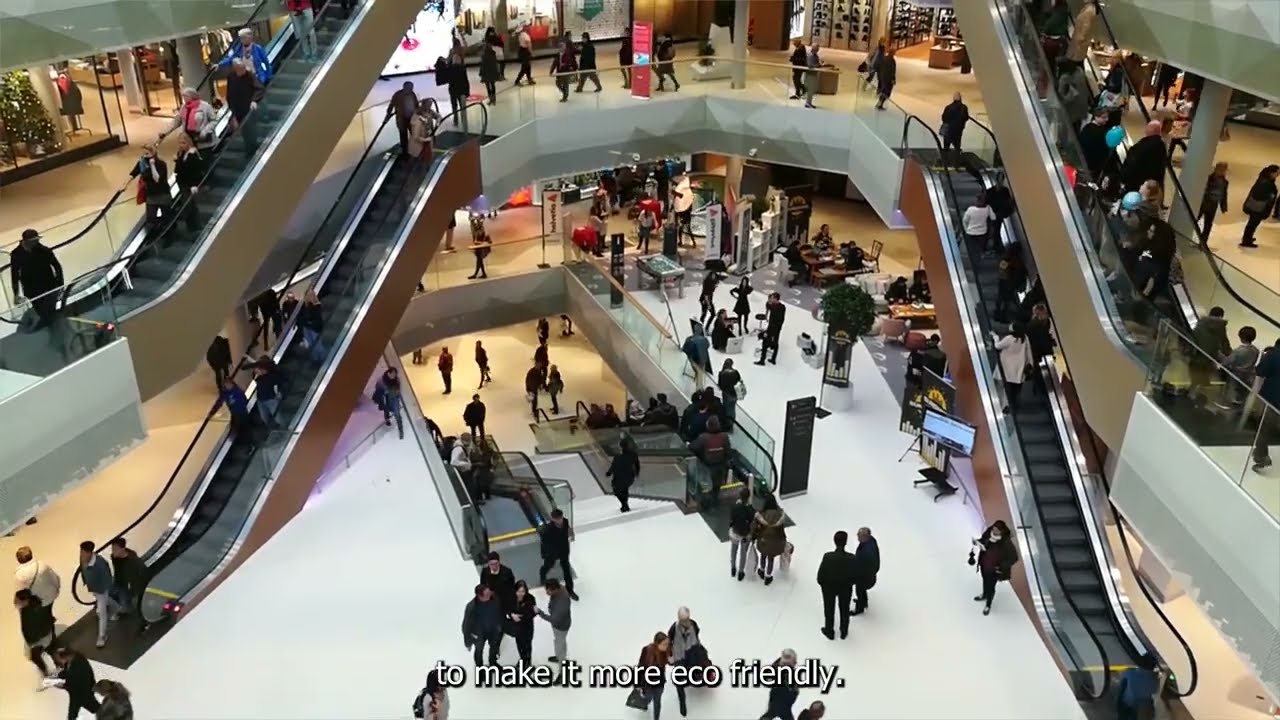
Fast fashion is plagued with major issues, from environmental waste to abusive labor practices. Yao’s product gives consumers an idea of the impact of every purchase, and even offers alternatives.
How companies conceal data on practices
The fashion industry is very opaque, so it's very difficult to actually gather information on the impact of their products. So at the beginning, we tried to actually go very deep into the supply chain and quantify the environmental impact, but it was very difficult because factories are not very open to that idea. So one of our aims and missions is to really create this community and create this movement. We want to empower people with this tool so that they can be more informed and really push brands to give us more information along the way.
The role of consumers
We're trying to best inform users with all the information that's available out there, whether that’s the material used or the labor practices used to manufacture clothing. I'd like to think that by giving people more information about what they're buying, they can actually give a push to the industry–they can decide where they're going to put their money and they can signal to the market that they prefer ethically sourced garments or that they prefer second-hand products. They will say they prefer more transparent brands that put more effort in their supply chains that make products more environmentally friendly.
The Life of an Entrepreneur
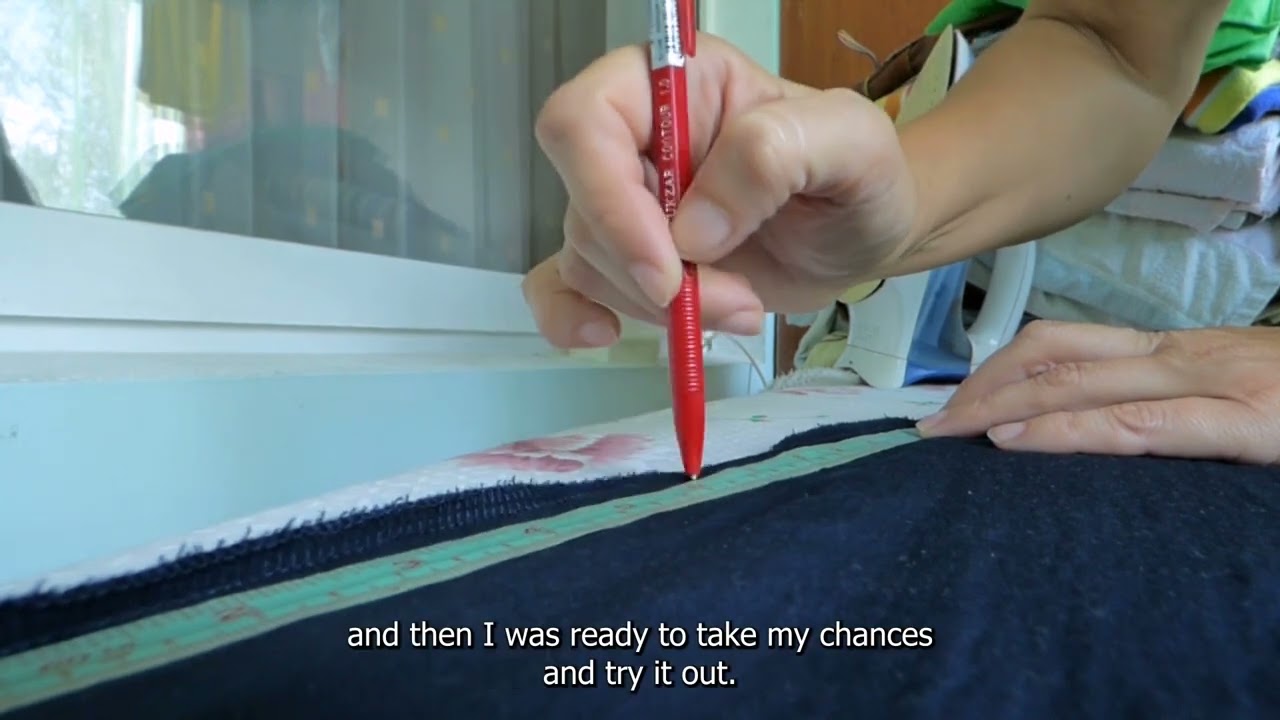
According to Yao, the best way to get into the startup game is to jump right in.
Important to accept an irregular schedule
What it’s like to work in our startup really depends on the week and it depends on our focus. It depends whether we're starting to get to know our consumers, if we’re building the data structure or if we are going to talk to investors to seek new partnerships. We have some members of our team who are on the West Coast of the U.S., so some of our meetings are pushed back a bit later into the day, accordingly. Personally, I am pretty productive later at night. Sometimes I just have this rush of creativity and productivity and I just do my task where I could put some music on and just just get stuff done.
Striking a work/life balance is important
I think what I want to convey to people here is that I don't necessarily believe in working from 9 a.m. to 10 p.m., or even from 9 a.m. to 6 p.m. straight. We want our team members to really be able to take a break when they need to, and if it's a really nice sunny day, and they say they need to go for a walk then they should be able to go for a walk. I don't think you can always be productive because you need some time to be unproductive. You need to have some recreational time in order to actually be able to be creative and productive.
What Was it Like to Break into the Startup Scene?
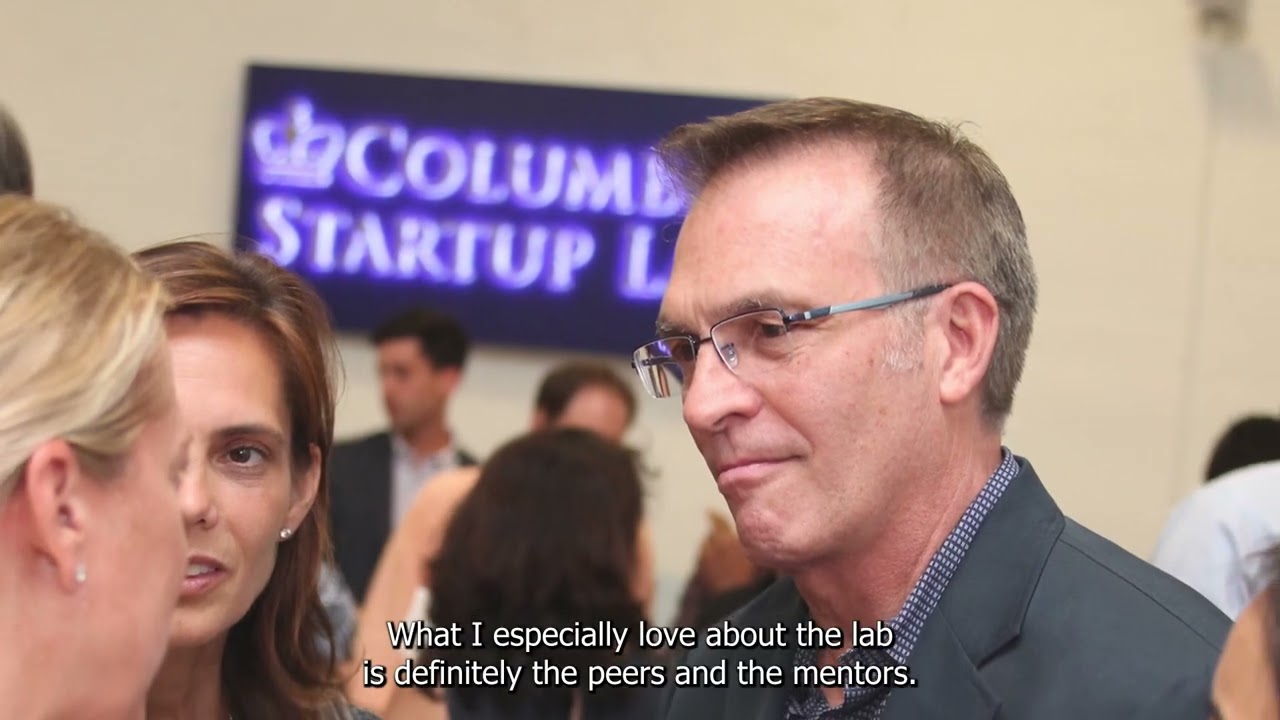
Yao shares his thoughts on how best to put yourself out there to market you product as an entrepreneur.
Learning as you go
I think I've had a steep learning curve. Coming out of my master's program, Changing Room has really been my life. I've learned a lot, whether it's professionally or personally. I've learned to get out of my comfort zone and get out there. The first few times where I went to networking events I probably was one of the youngest entrepreneurs there. Originally I had this imposter syndrome, where I told myself, ‘Oh, I'm so young, what can I bring to the table?’ But I’ve since learned that I am capable and that, while I still have a lot to prove, I know how I want to get there.
Coming to understand your hidden strengths
I think that, over time, I’ve come to understand what my strengths are and what I can actually do. I realized that I'm pretty good at understanding people and managing people in the recruiting aspect of being a founder, whether it's for our work culture or understanding where my strengths lie and especially where my limits are. One of my goals in my role as a founder is to find people who are smarter and better than me at all the things that I'm not an expert at, and get them to do what they do best.