Columbia Students Go Full Throttle with LOX Rocket
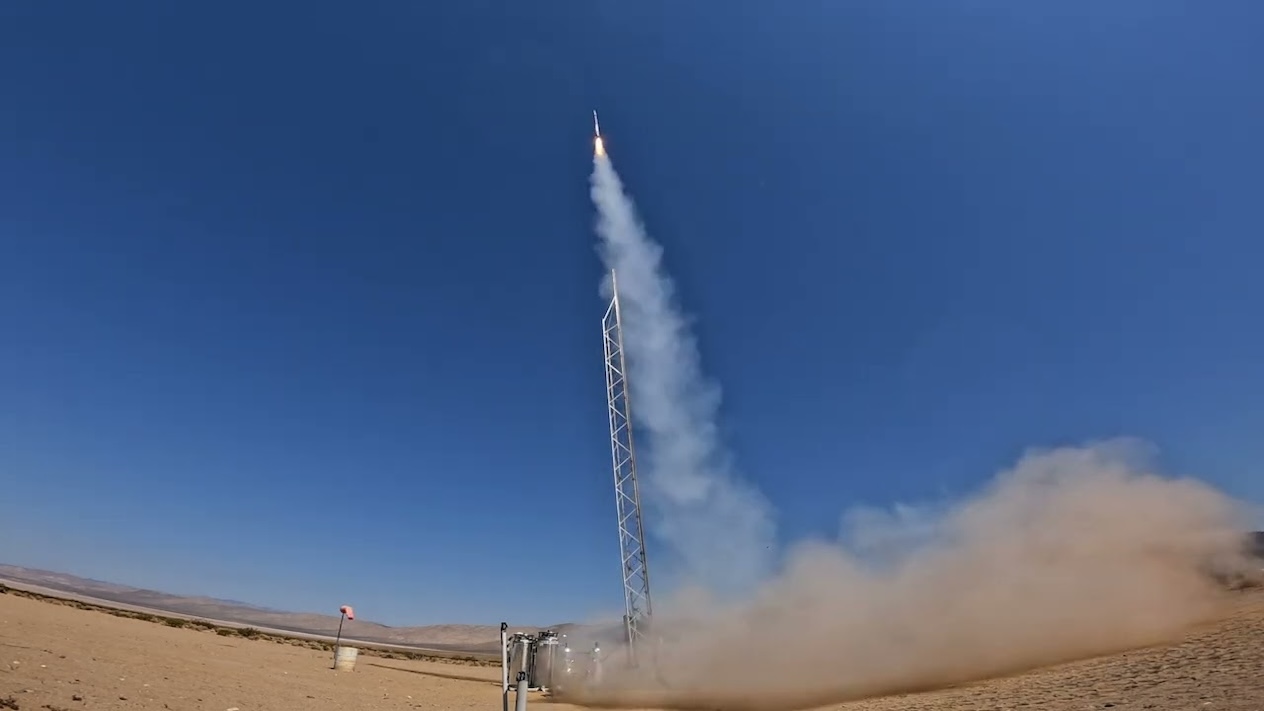
Blast off! CSI Rockets team successfully launch its hybrid rocket using liquid oxygen. Credit: Courtesy of CSI
The successful launch capped off a yearslong effort by nearly 60 undergraduates to design, build, and test the rocket. The project came to fruition at the FAR-OUT 2024-2025 competition, where the rocket reached its target altitude for the first time in team history and achieved full recovery. The team shared video clips of the launch with Columbia Engineering faculty and supporters.
“This is an incredible achievement,” said Hod Lipson, James and Sally Scapa Professor of Innovation and chair of the Department of Mechanical Engineering. “It shows how our engineering education has accelerated from textbooks and lectures to record-breaking experiential learning. This is literally the next generation of rocket scientists.”
“It made my day to see our student team launch this newly designed rocket,” said Shih-Fu Chang, Dean of Columbia Engineering.
Now in its third consecutive year of successful launches, CSI Rockets has become a proving ground for student-led aerospace work. With this milestone behind them, the team is already planning its next move.
“We’re excited for what the next generation will accomplish,” said Sheehan. “This is just the beginning.”
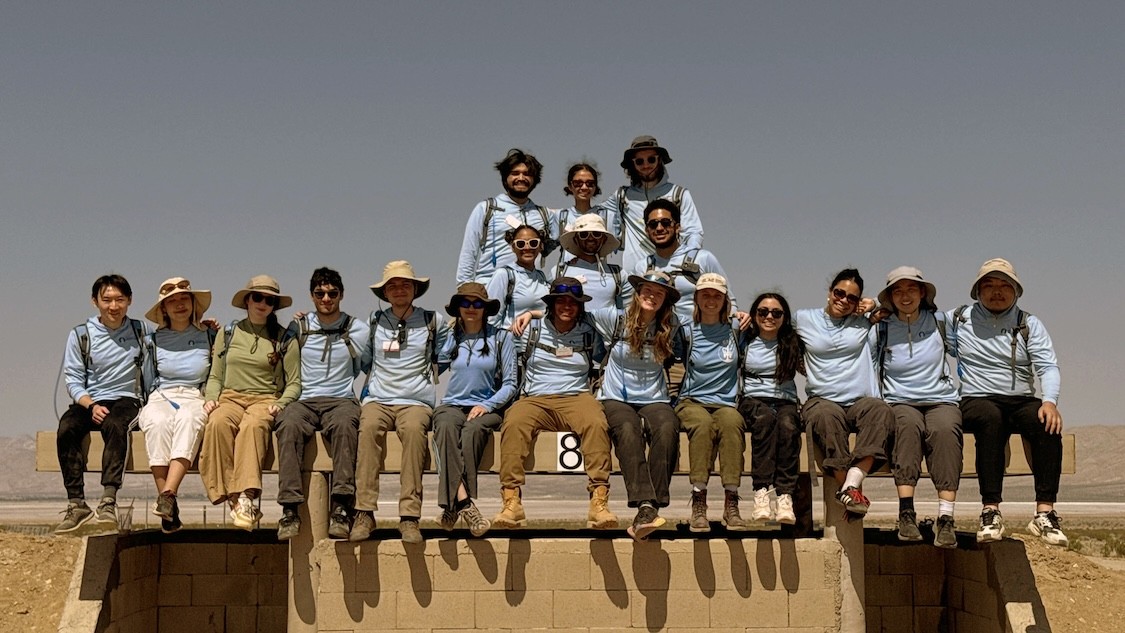
Getting to the Launchpad
The CSI Rockets team is composed entirely of undergraduate students, drawing from a wide range of disciplines and schools across Columbia University. While the group is rooted in engineering, it includes students from Columbia College, Columbia Engineering, and Barnard.
While most teams at FAR-OUT work on the same rocket for two or three years, the Columbia team builds a new rocket each year.
“We do something different with the rocket every year,” said CSI Rockets co-lead Valentina Fichera, who graduated in 2025 with a degree in mechanical engineering. “Everyone was on board with transitioning to liquid oxygen — it forced us to push ourselves.”
This year’s team included about 60 members, with 19 traveling to the desert for the launch. Those undergraduate students were spread across specialized teams focused on propulsion, electronics, airframe, payload, and the combustion chamber.
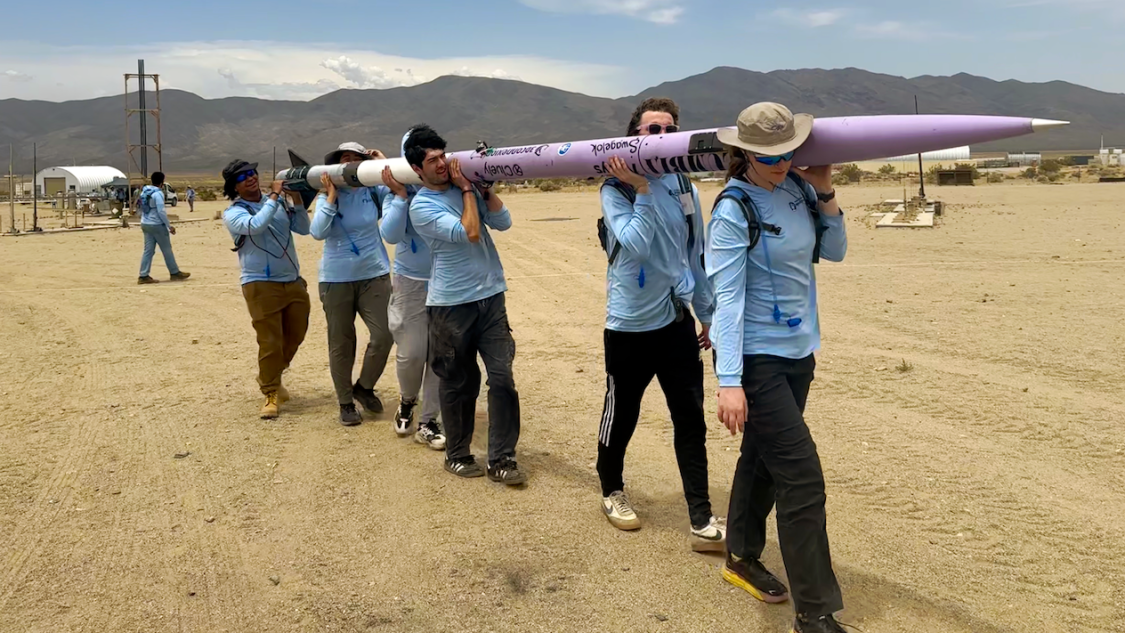
Inside the Rocket
CSI Rockets had previously relied on nitrous oxide hybrid systems. But this year, the team switched to a liquid oxygen hybrid, which is a far more technically demanding system typically used in larger-scale commercial rockets. Few student teams even attempt liquid oxygen hybrids.
“We all wanted that experience,” Fichera said.
“Liquid oxygen exists in a cryogenic state,” explained Sheehan. “So everything from storage to pressurization becomes more complex. We had to overhaul our entire propulsion system.” The team used gaseous nitrogen to pressurize the liquid oxygen and built new components to manage the system safely and effectively.
“We designed for a target apogee of 6,500 feet and reached nearly 5,700. It was our most accurate launch yet,” Fichera said. The launch itself came on the second-to-last window on the final day of the event, after multiple early-morning attempts.
Fichera and Sheehan, who have interned at leading aerospace companies like Firefly and SpaceX, are pursuing engineering positions in industry.
“We spent a lot of time working on the rocket this year,” Fichera said with a laugh.
CSI team members who attended the FAR-OUT rocketry competition:
- Michael Sheehan ’26SEAS (Team Co-Lead)
- Skylar Bogdanowitsch ’26SEAS (Team Co-Lead)
- Valentina Marini Fichera ’25SEAS (Team Co-Lead)
- Jorge Casas '23CC (Team Co-Lead)
- Aadam Awad ’26SEAS (Fluids Co-Lead)
- Vayu Singhal ’26SEAS (Fluids Co-Lead)
- Isabella Singleton ’27SEAS (Airframe Lead)
- Theo Lack ’26SEAS (Rising Fluids Co-Lead)
- Angela De Labra ’27SEAS (Rising Airframe Co-Lead)
- Alex Chen ’25SEAS (Electronics Co-Lead)
- Ania Krzyżańska ’25SEAS (Electronics Co-Lead)
- Tieqiong Zhang ’25SEAS (Electronics Co-Lead)
- Aruzhan Abil ’28CC (Rising Electronics Co-Lead)
- Joss Clegg ’28SEAS (Rising Electronics Co-Lead)
- Christopher Acosta ’25SEAS (Propulsion Combustion Chamber Co-Lead)
- Tingmeng Wang ’27SEAS (Propulsion Combustion Chamber Co-Lead)
- Raisa Effress ’27Barnard (Propulsion Combustion Chamber Co-Lead)
- Naomi Dreicer Liberman ’27SEAS (Rising Propulsion Combustion Chamber Co-Lead)
- Maria Cuevas ’26CC (Payload Co-Lead)
- Siroun Johnson ’26SEAS (Payload Co-Lead)
Lead Photo Credit: Courtesy of Columbia Space Initiative
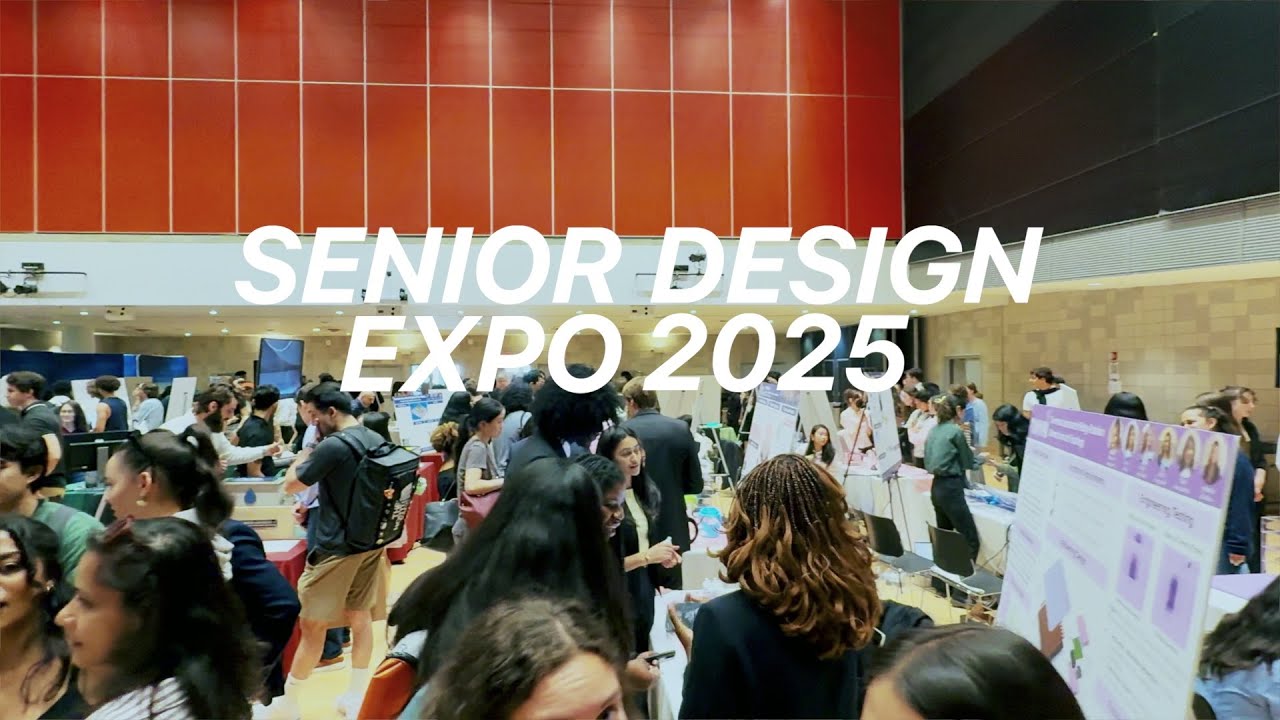
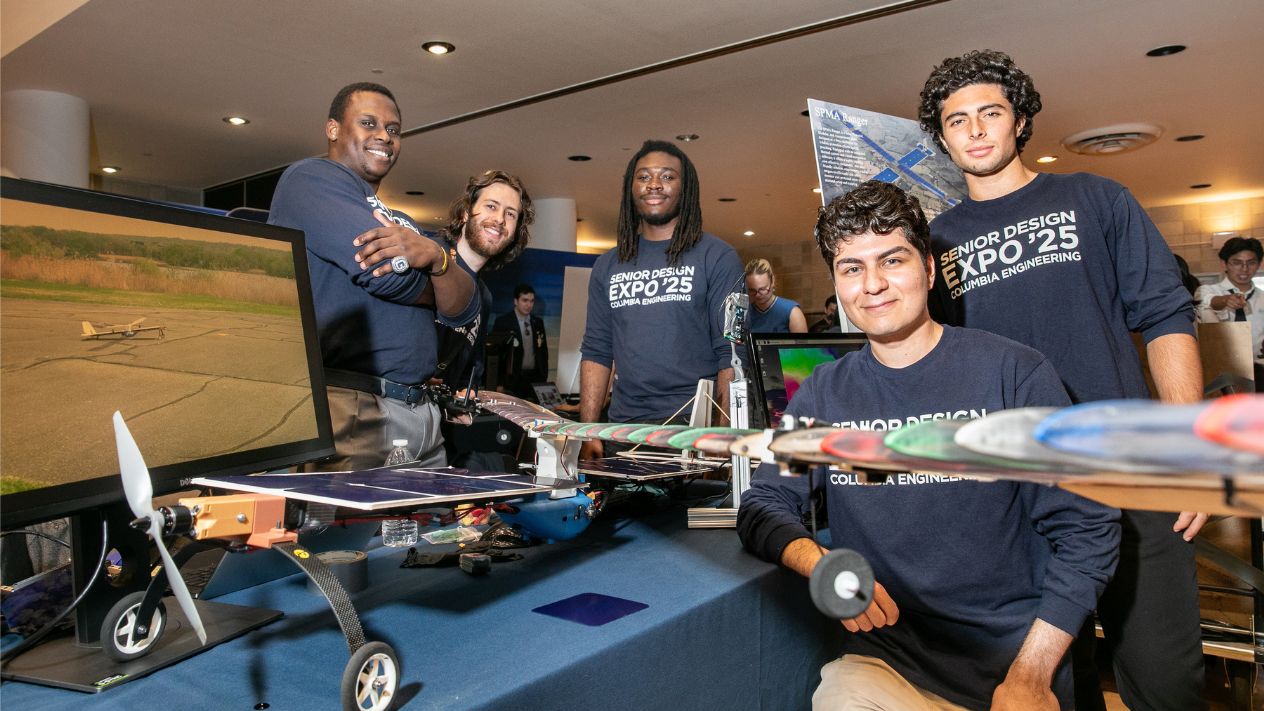
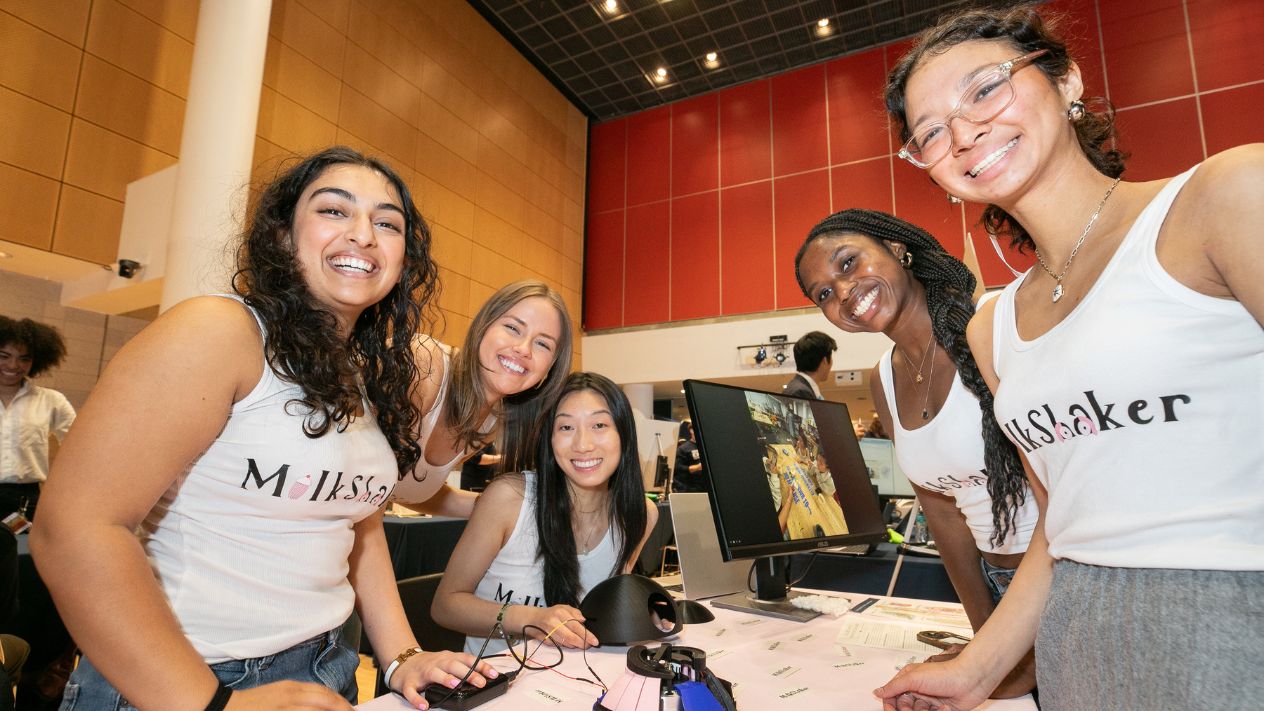
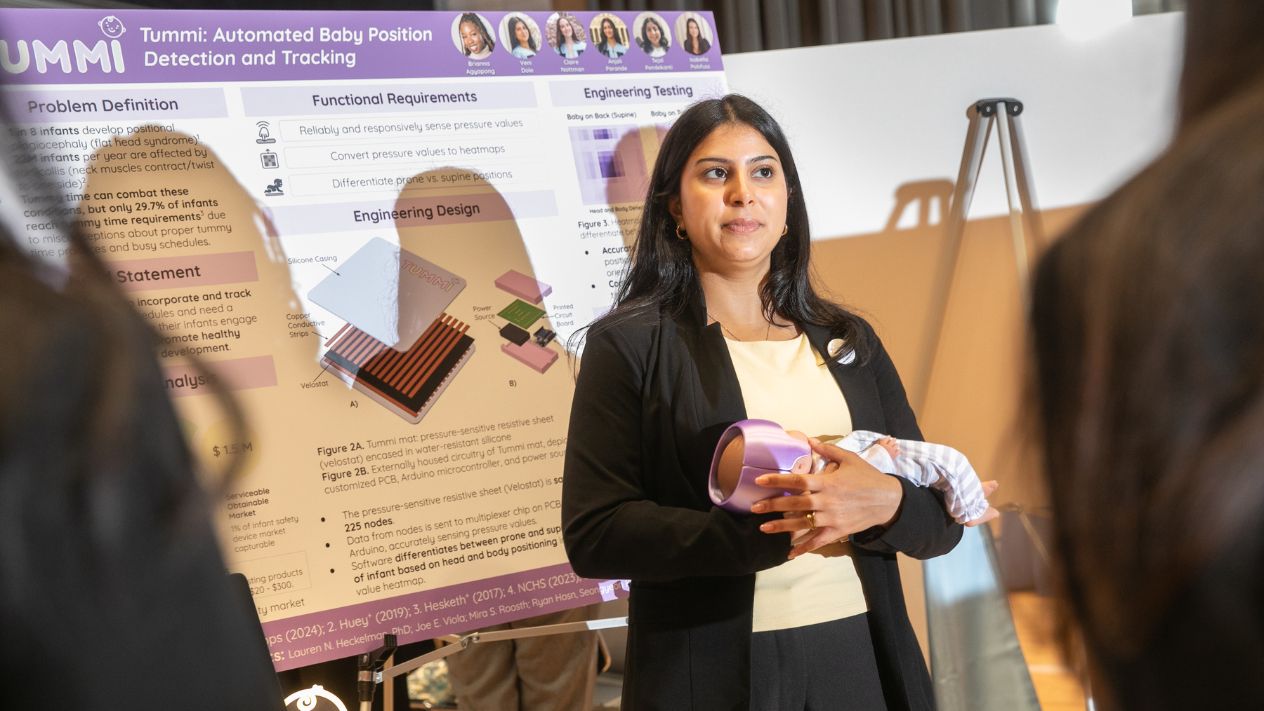
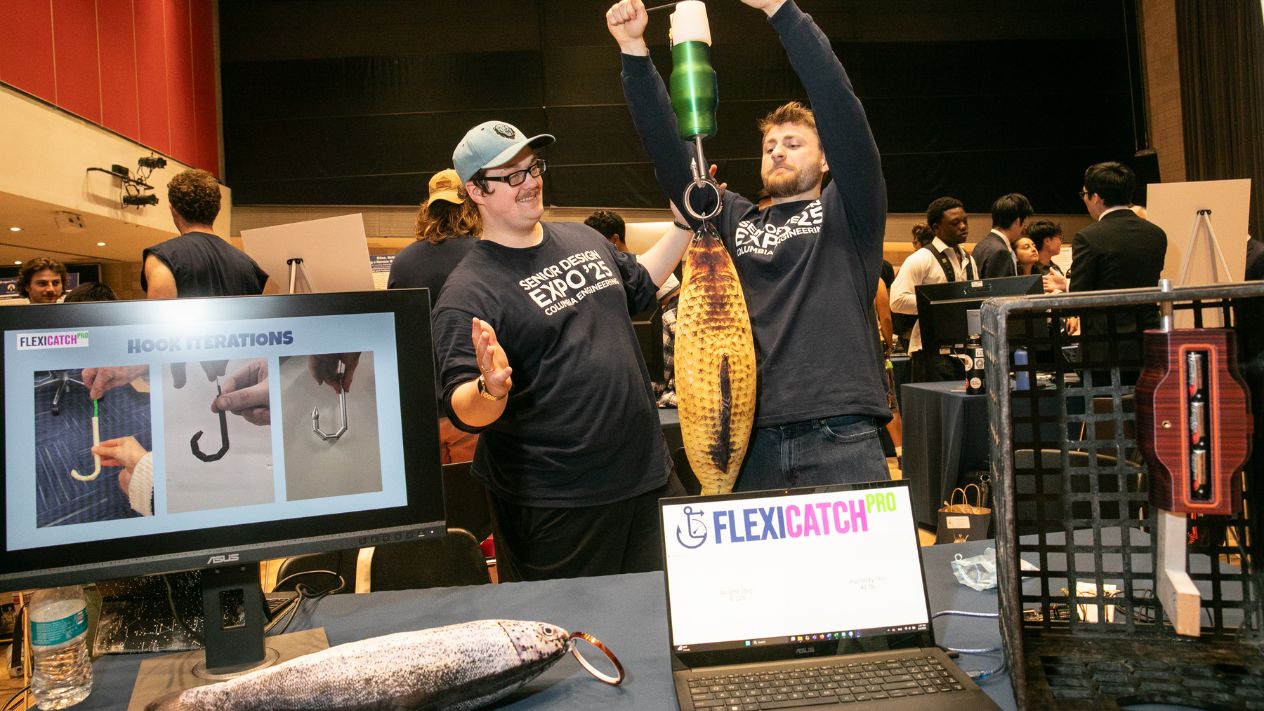
Fresh from their win at the Millard Chan Tech Challenge, the team behind MilkShaker demonstrated a practical and science-backed solution to prevent mastitis, providing professional level care without sacrificing time or requiring special training. Another group of seniors in the Department of Mechanical Engineering showcased a prototype for the CareCruiser, a wheelchair-to-stroller attachment designed to give wheelchair-using parents and caregivers greater independence when navigating with strollers and carseats.
Several projects also tackled infrastructure design, including a civil engineering and engineering mechanics team that unveiled Rethinking Resilience. The project envisions a new sustainable, flood-resilient train station to replace the existing Ardsley-on-Hudson station along the MTA’s Metro-North Hudson Line.
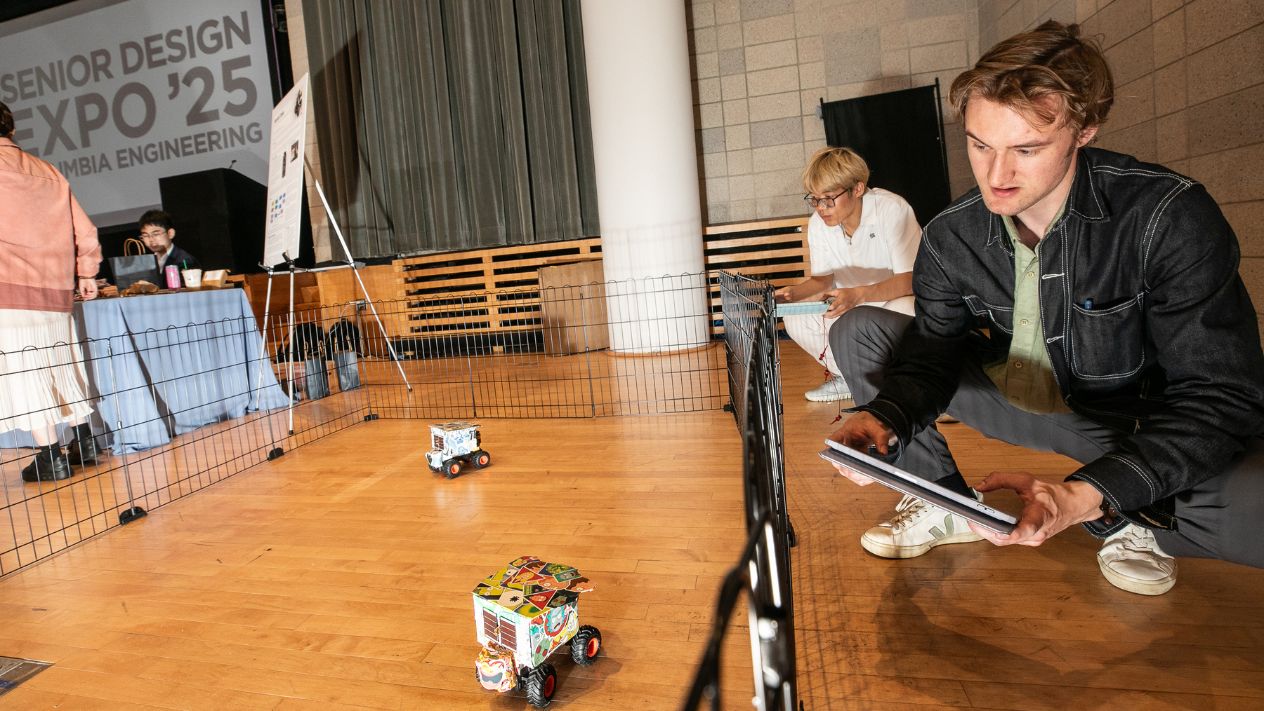
And in the gaming arena, a team from the Department of Electrical Engineering demonstrated their physical tank game using modified remote-controlled cars. By reconfiguring the electronics of remote-controlled cars, the team enabled Bluetooth-based control of both the motors and onboard lasers. Players score by hitting opposing cars with laser pulses, while any car that gets hit is temporarily disabled with a five-second freeze penalty.
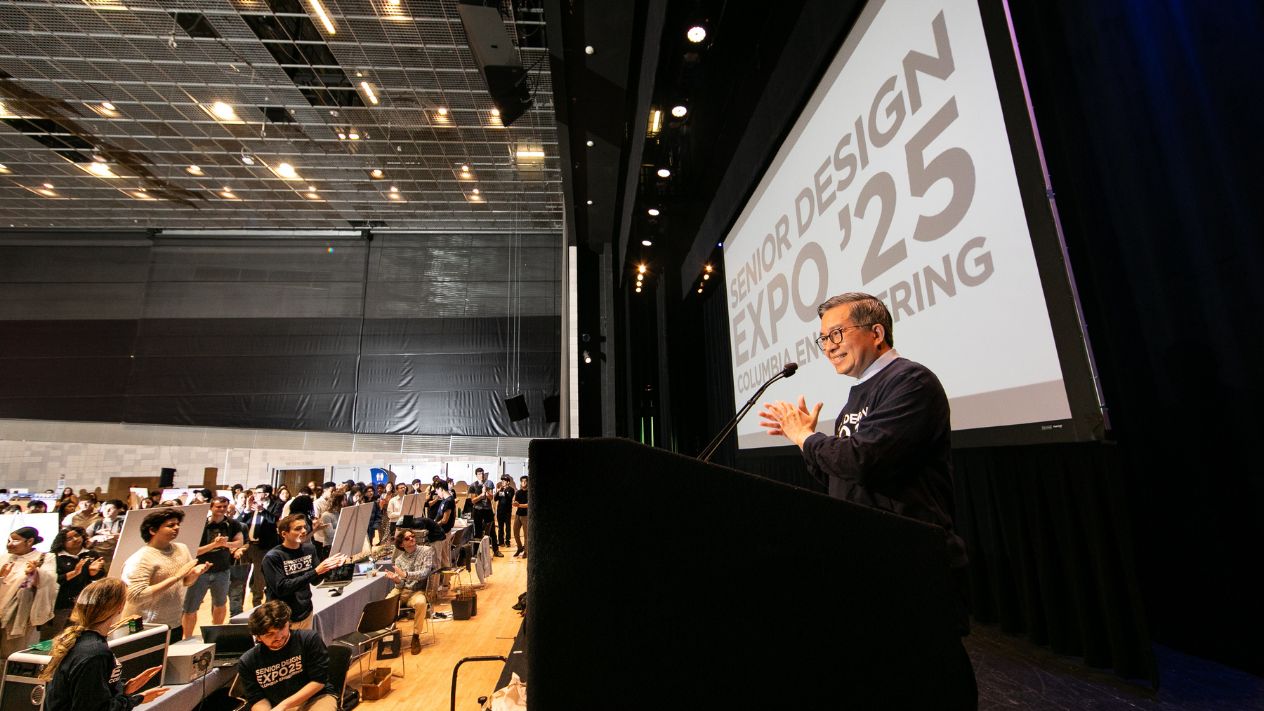
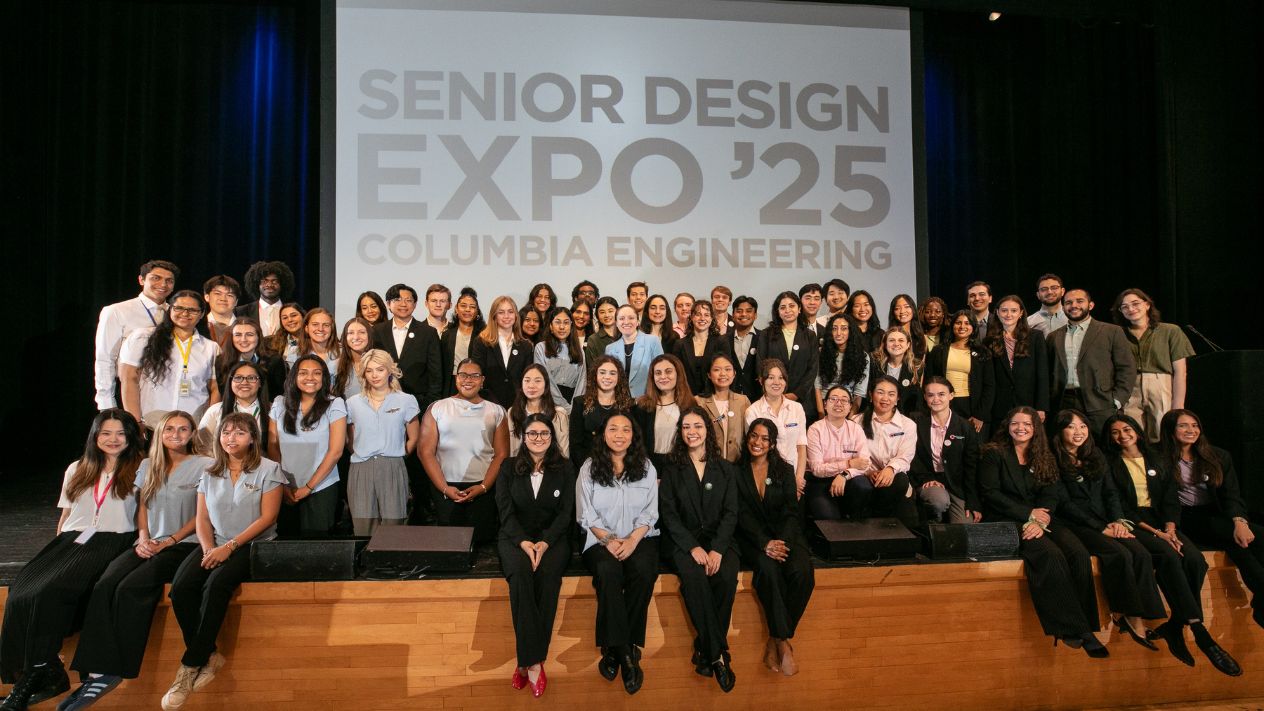
Dean Shih-Fu Chang greeted the students and commended them on their year-long efforts. “You all have started with an idea and brought it to life. That’s what engineers do! We bring ideas to life . . . Today’s showcase truly represents our Engineering for Humanity vision. This is a milestone in your Columbia experience and one I hope you remember for years to come.”
Each year, Columbia Engineering seniors work on a capstone project, aka Senior Design. They are challenged to solve real-world problems with innovative solutions, rooted in their foundational math, science and engineering courses.
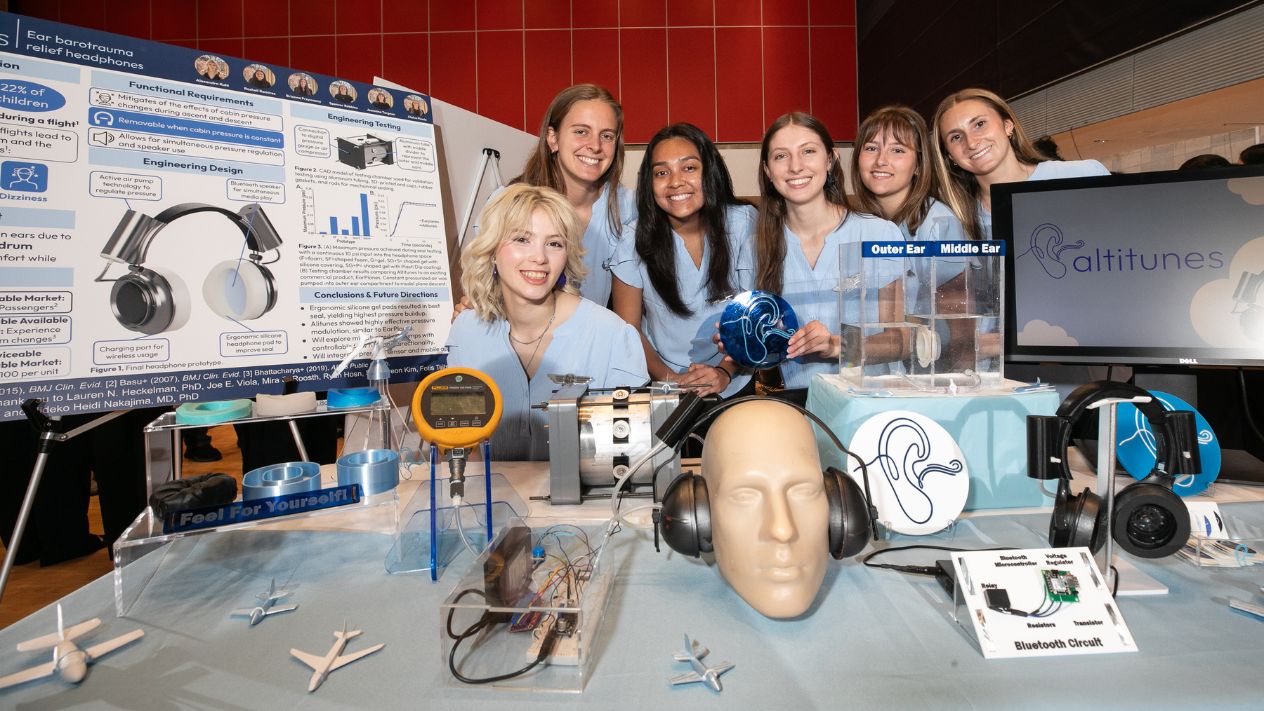
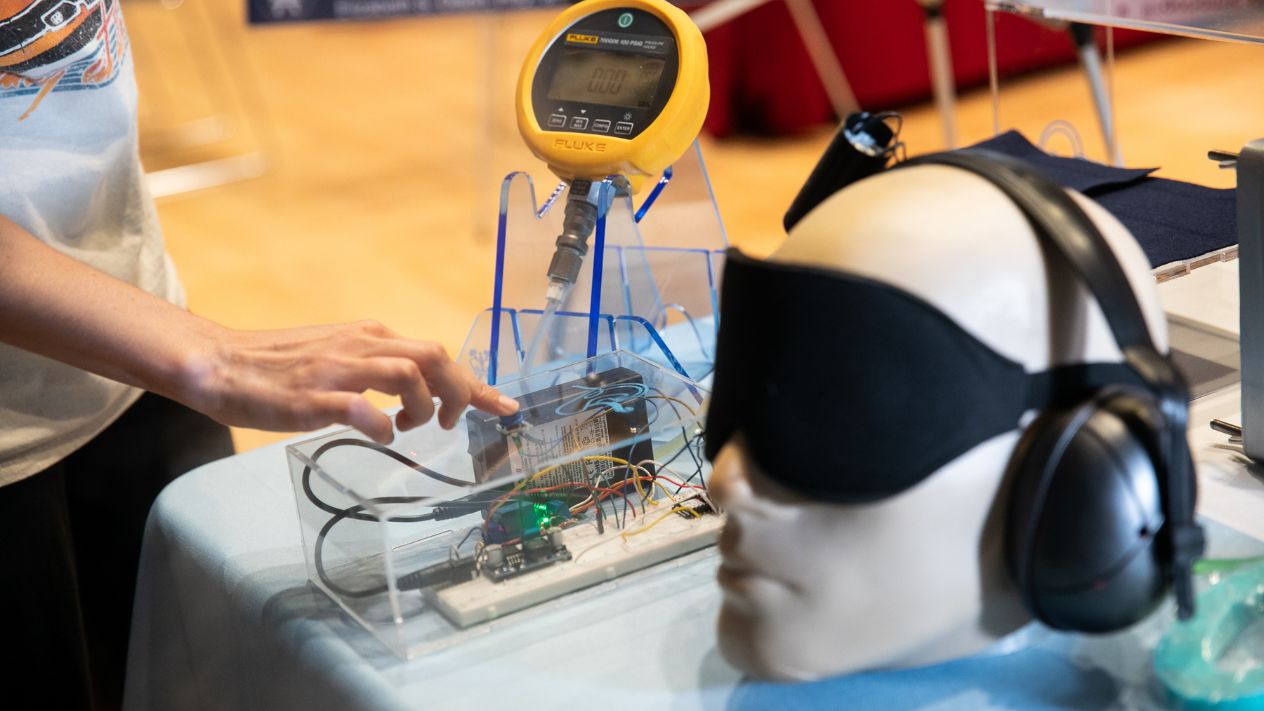
Here’s a look at some of the students and their innovations at Senior Design Expo 2025.
Scenes from Senior Design Expo ‘25
Credit: Timothy Lee/Columbia Engineering
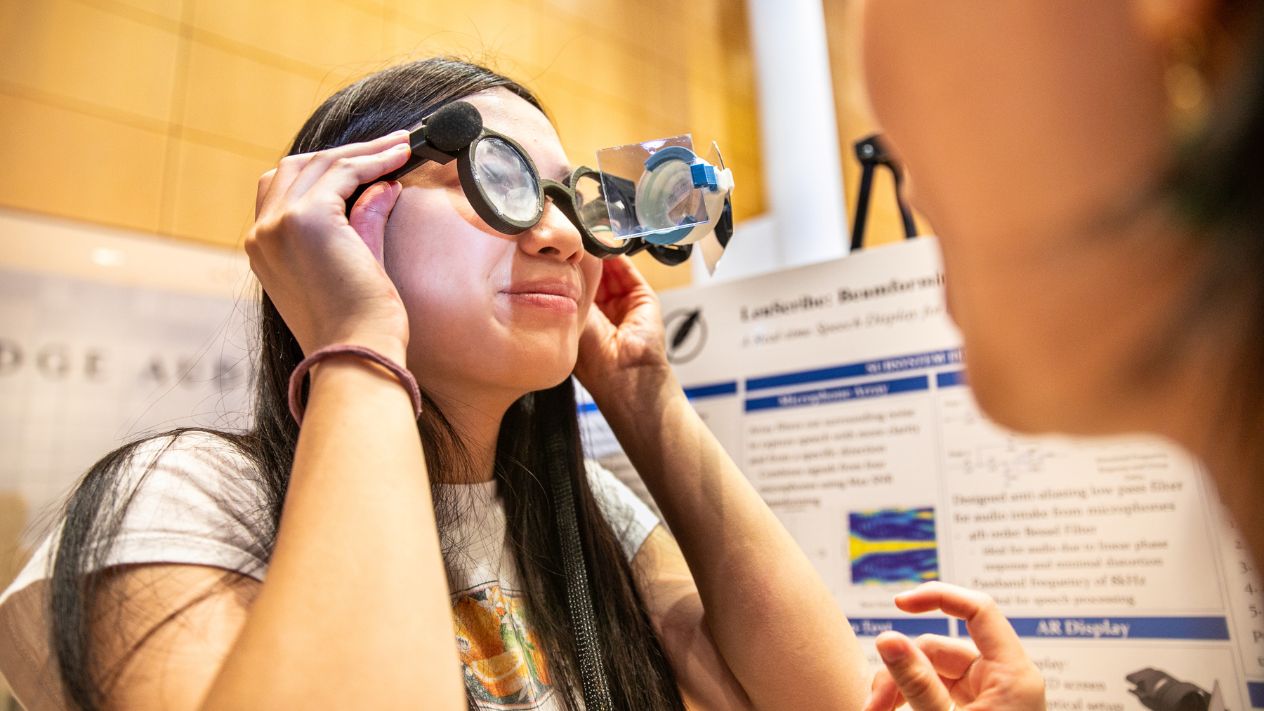



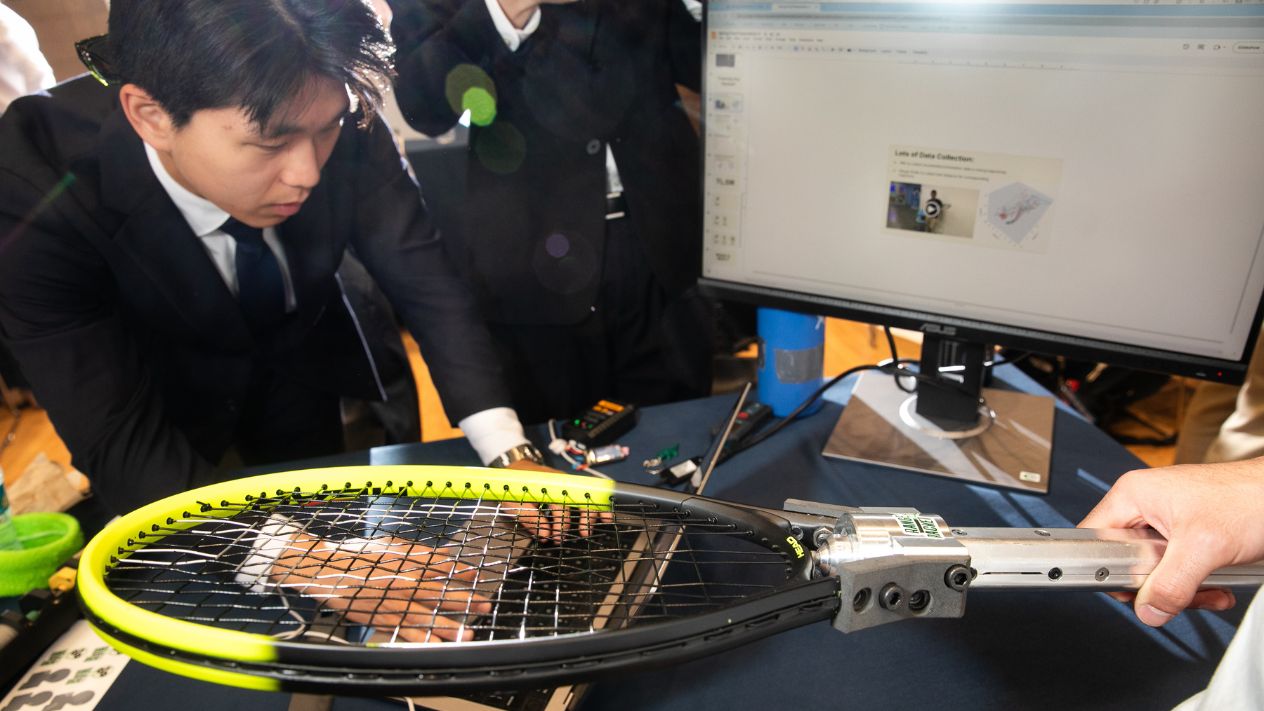
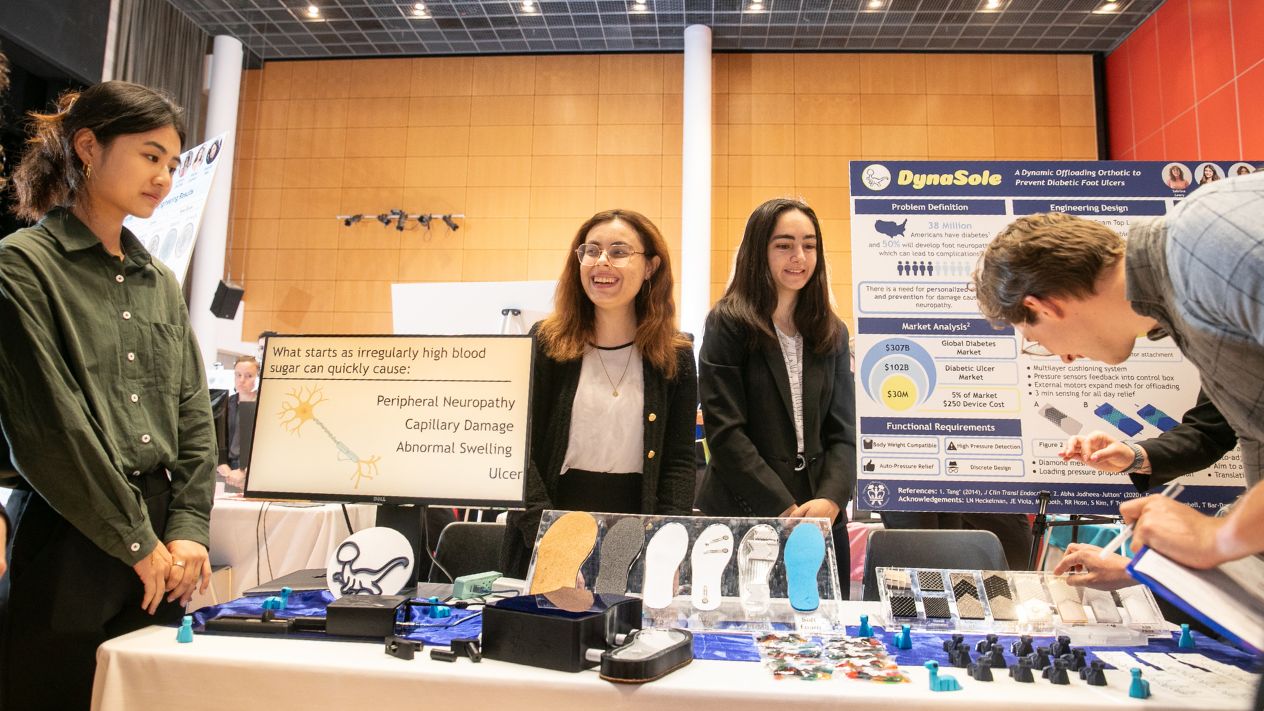
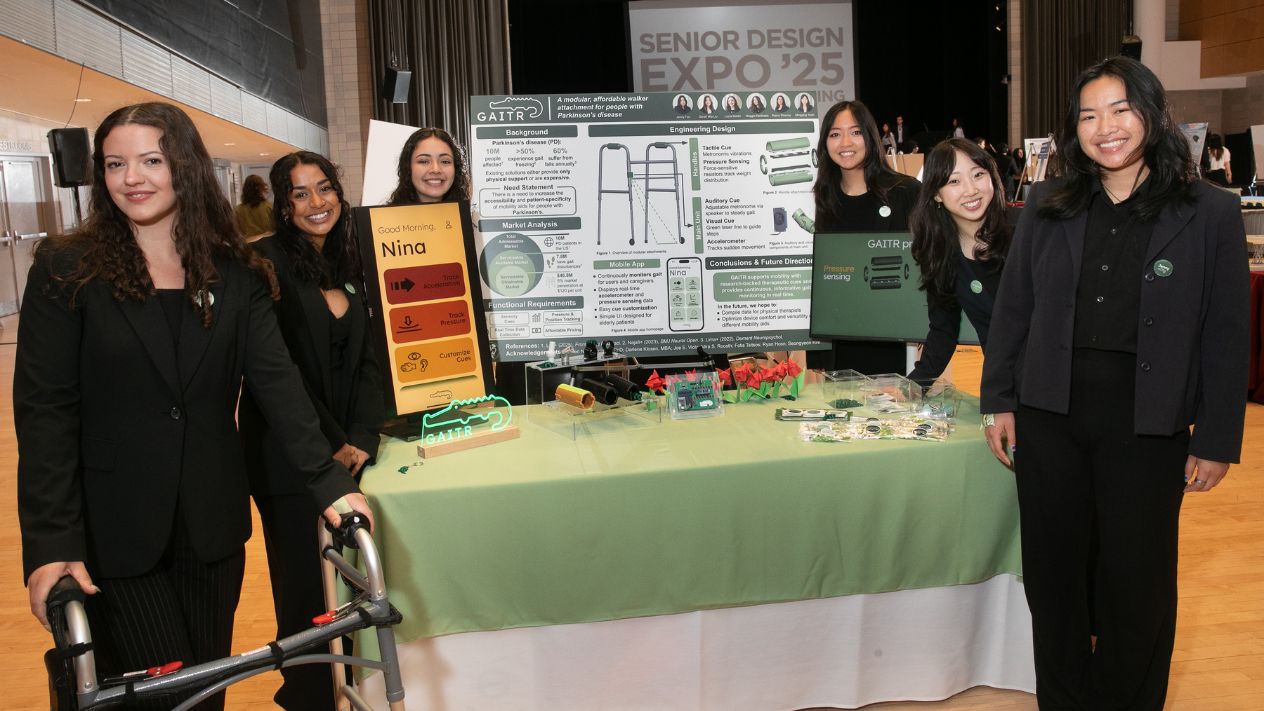
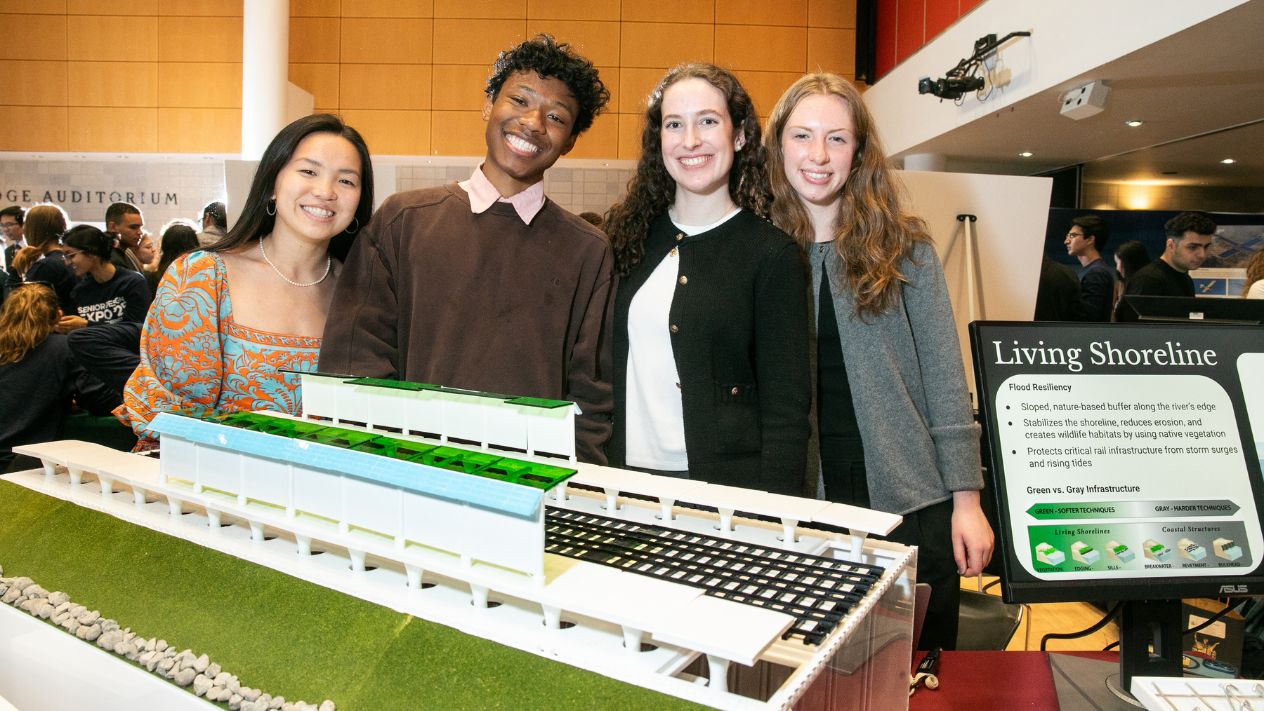



Masthead Caption: A student tries on LenScribe, a compact set of 3D-printed glasses designed for audio input, speech processing, and visual display
Masthead Credit: Timothy Lee/Columbia Engineering
Class Day 2025
Highlights from our Class Day Ceremonies

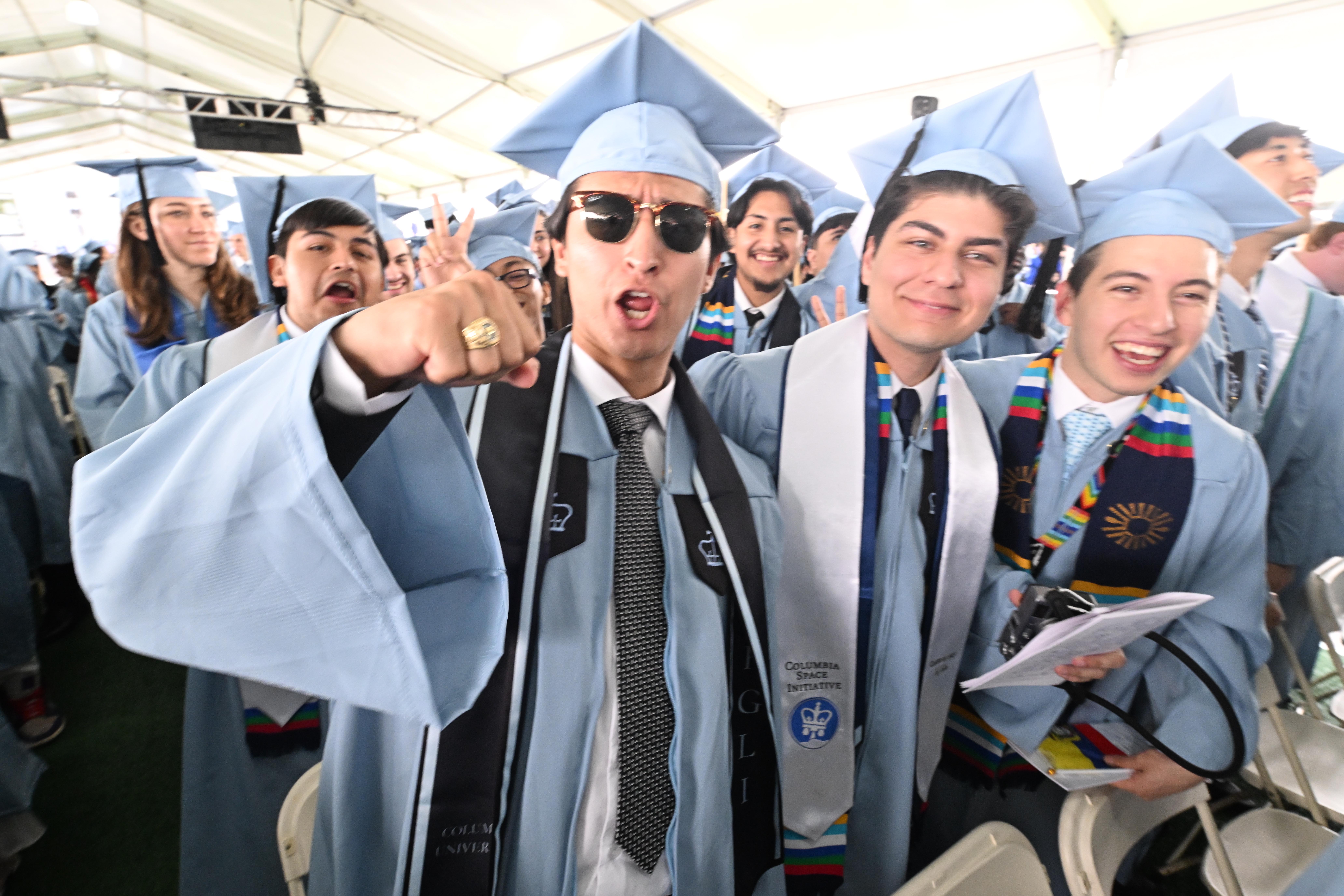
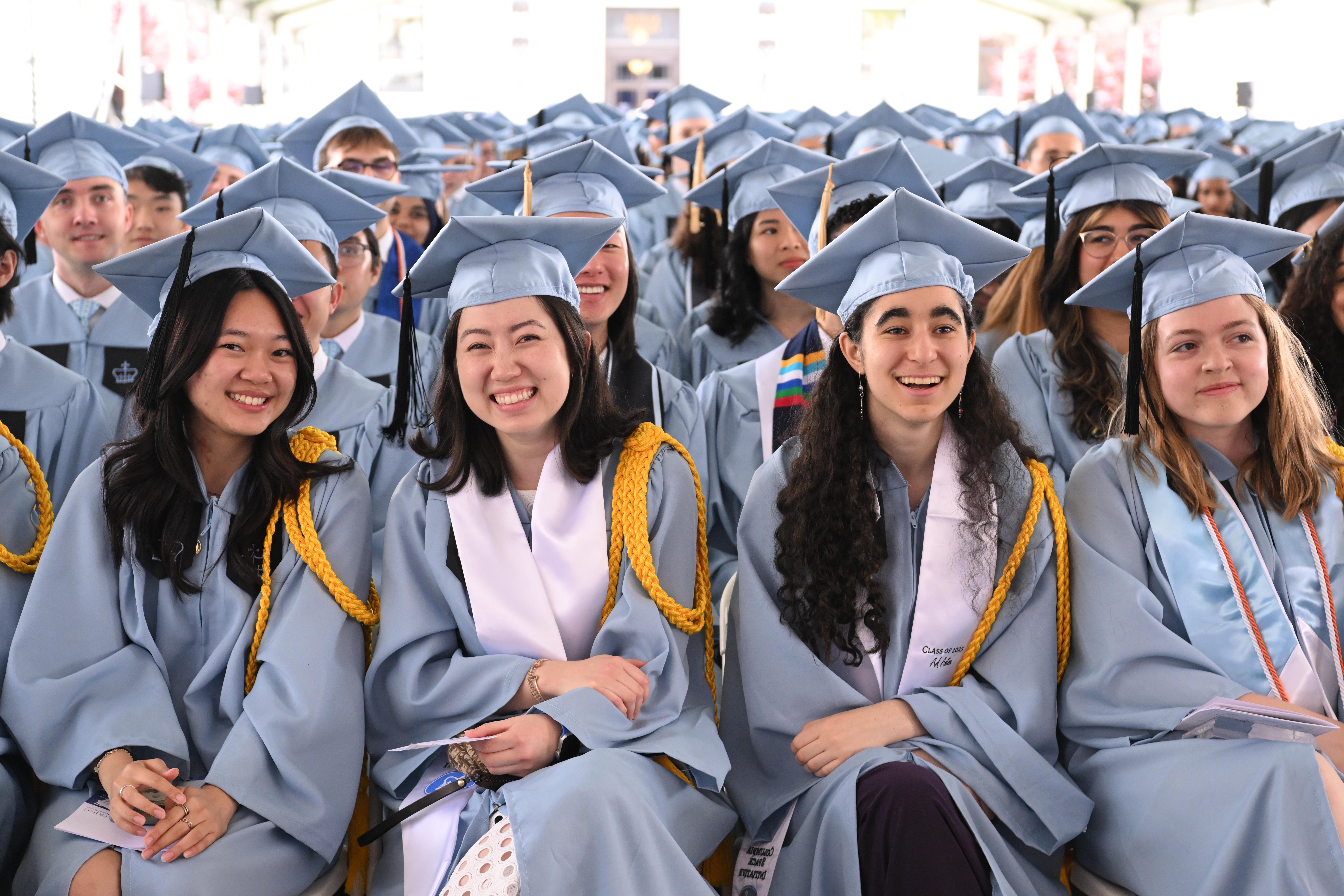

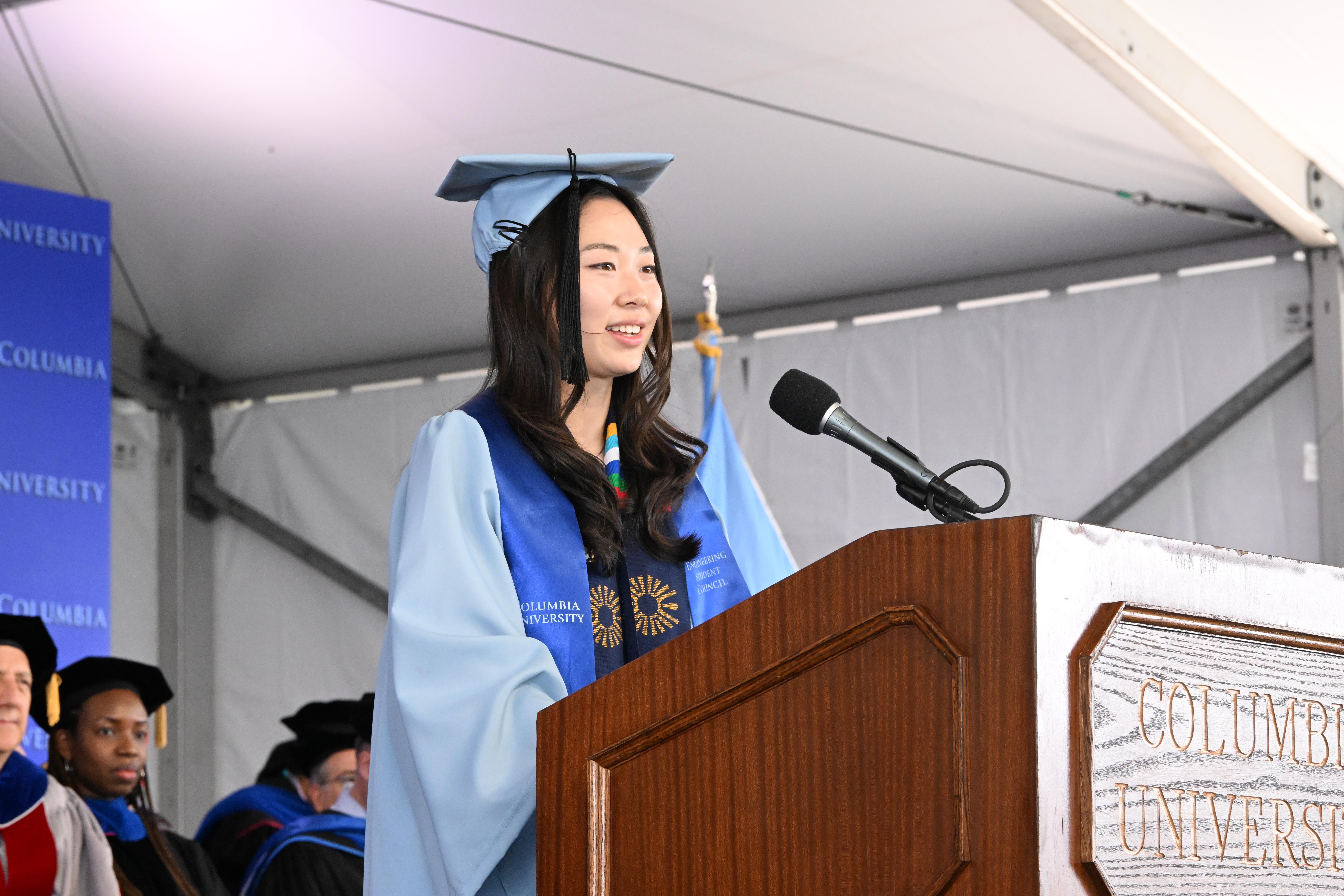
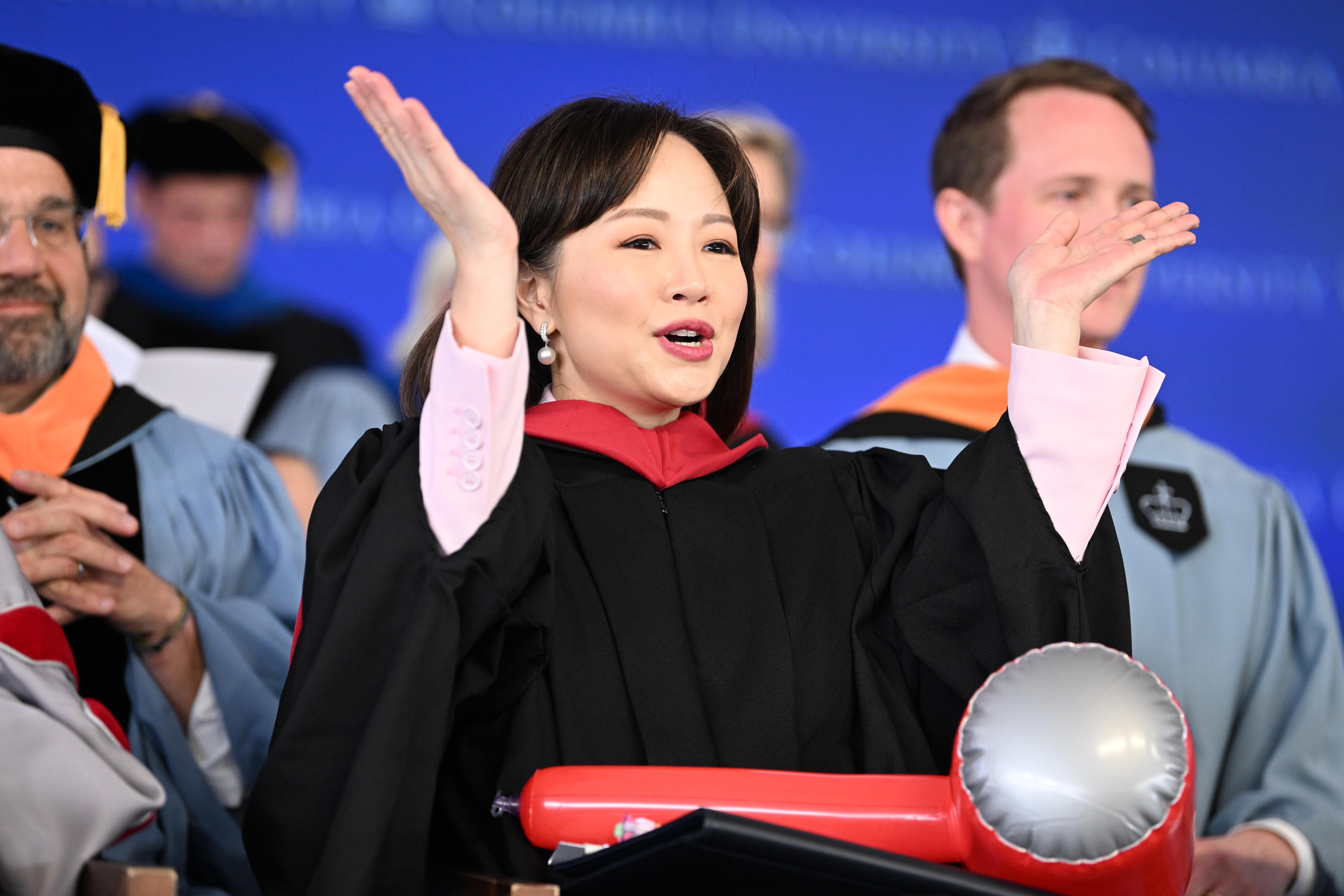

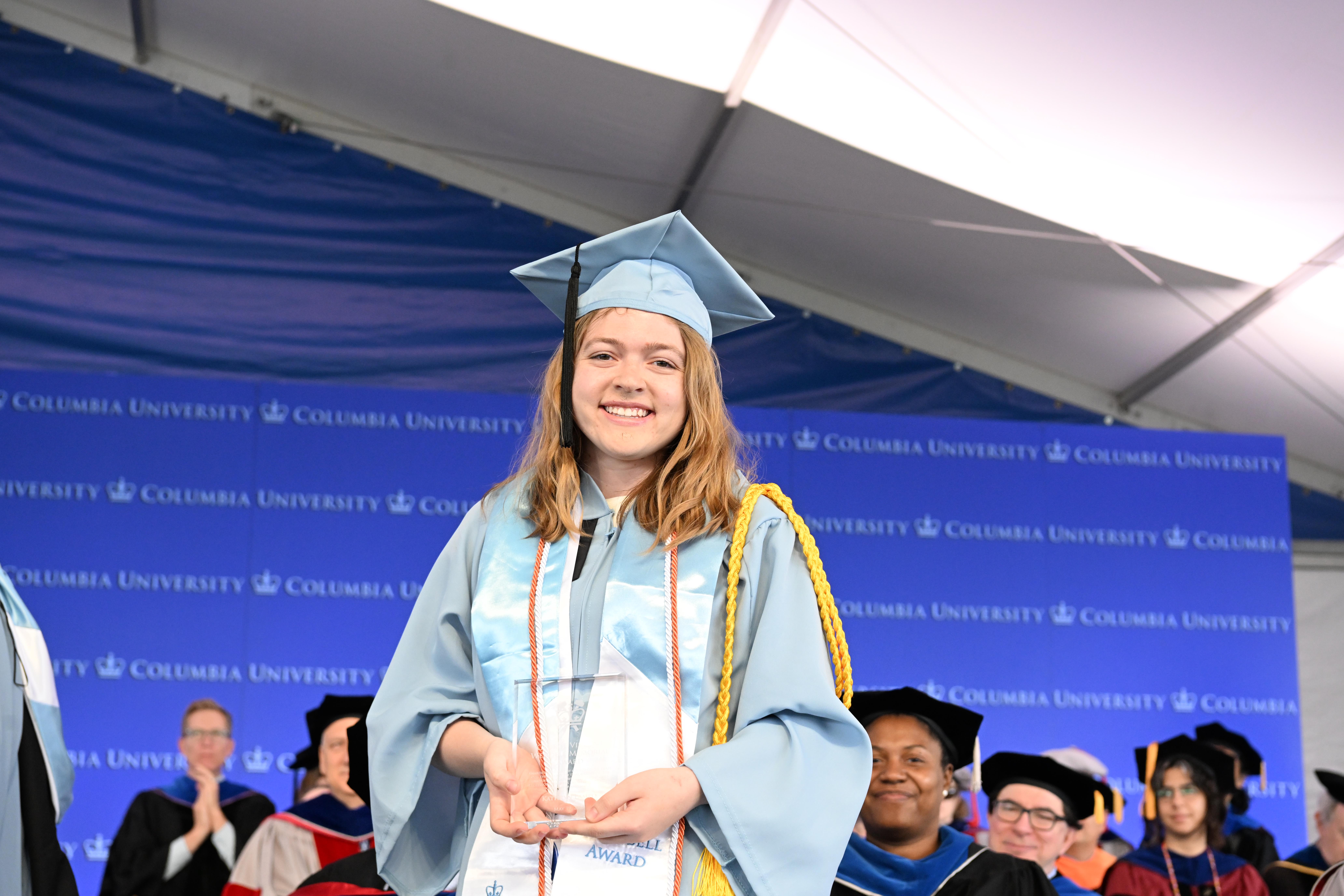
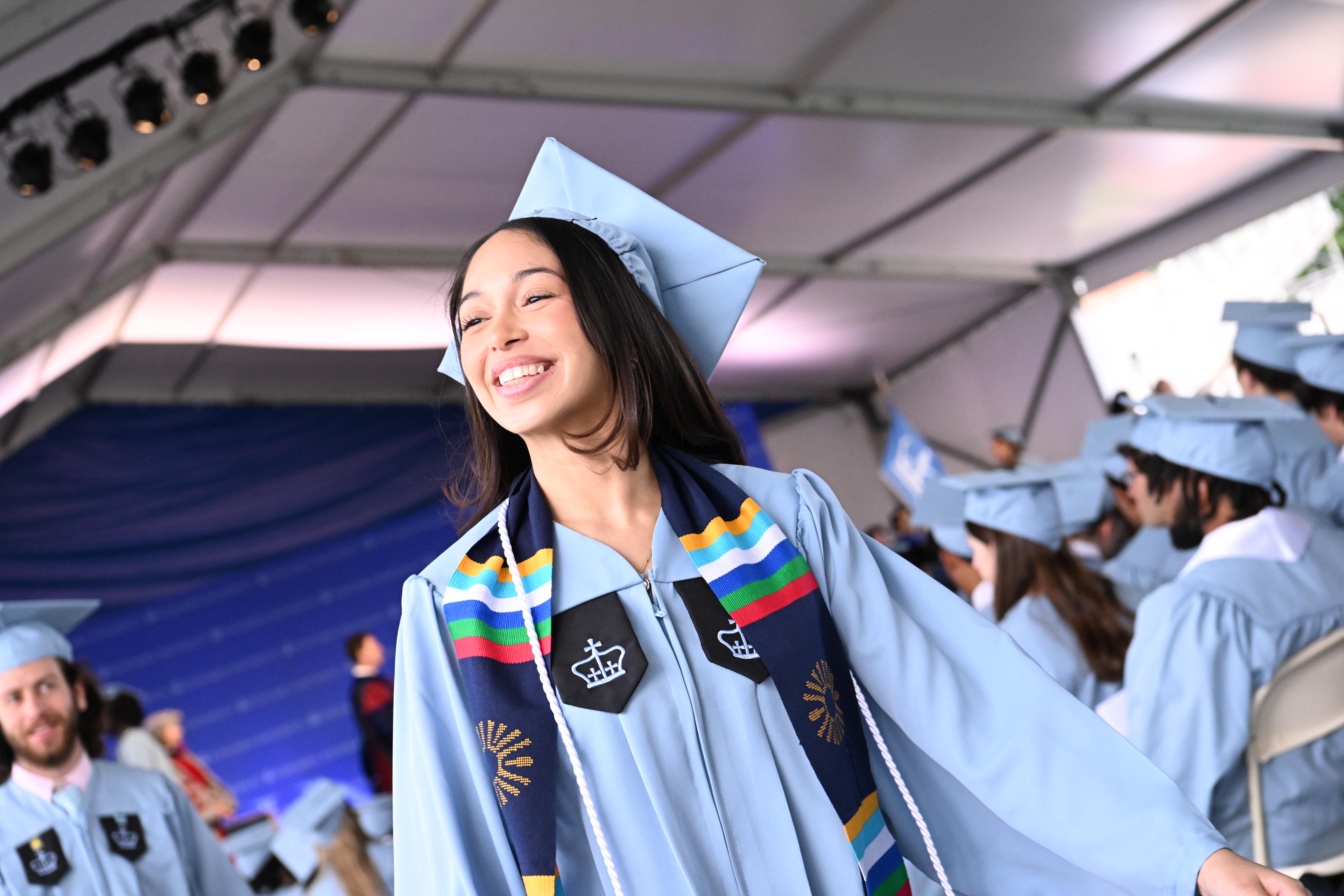
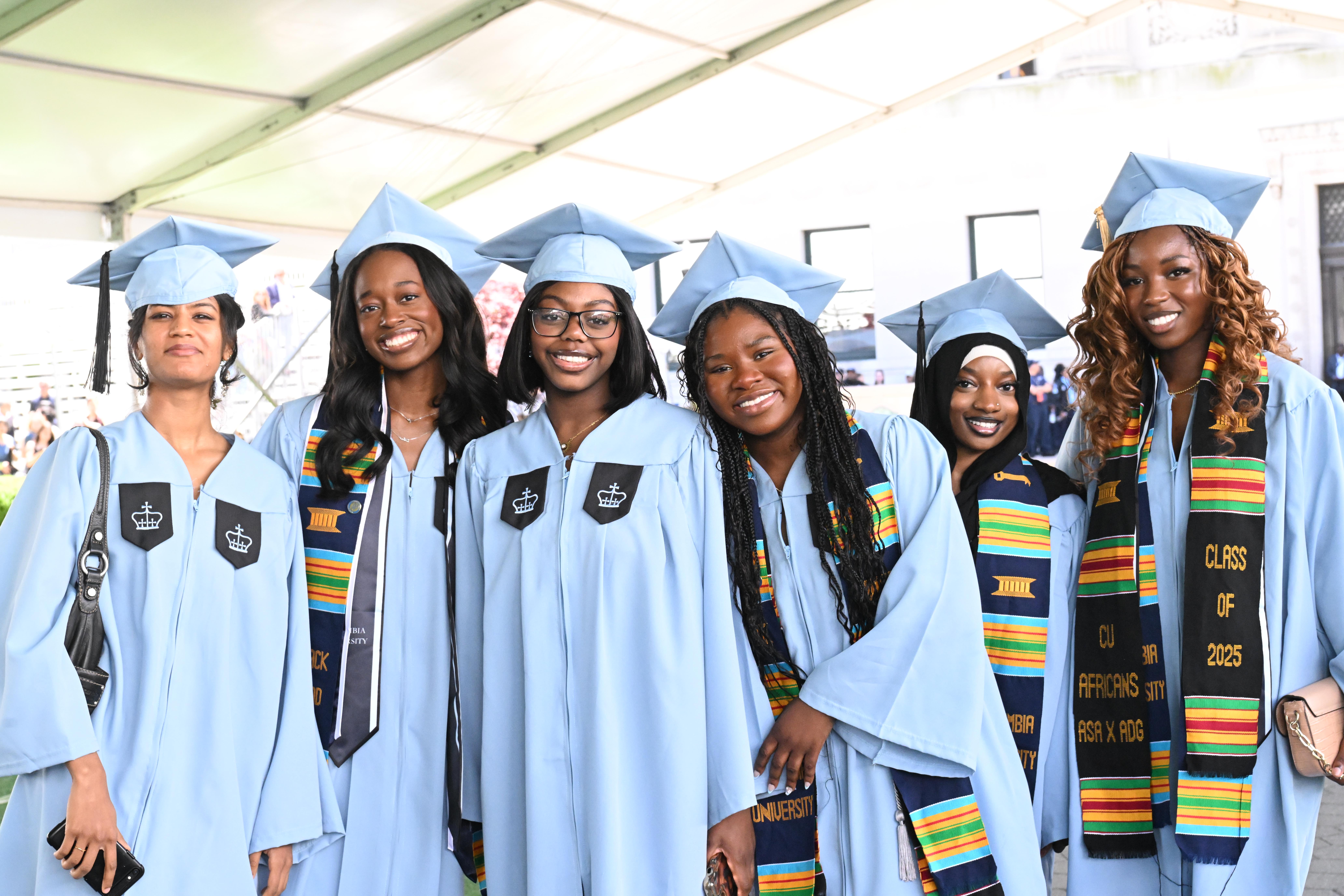
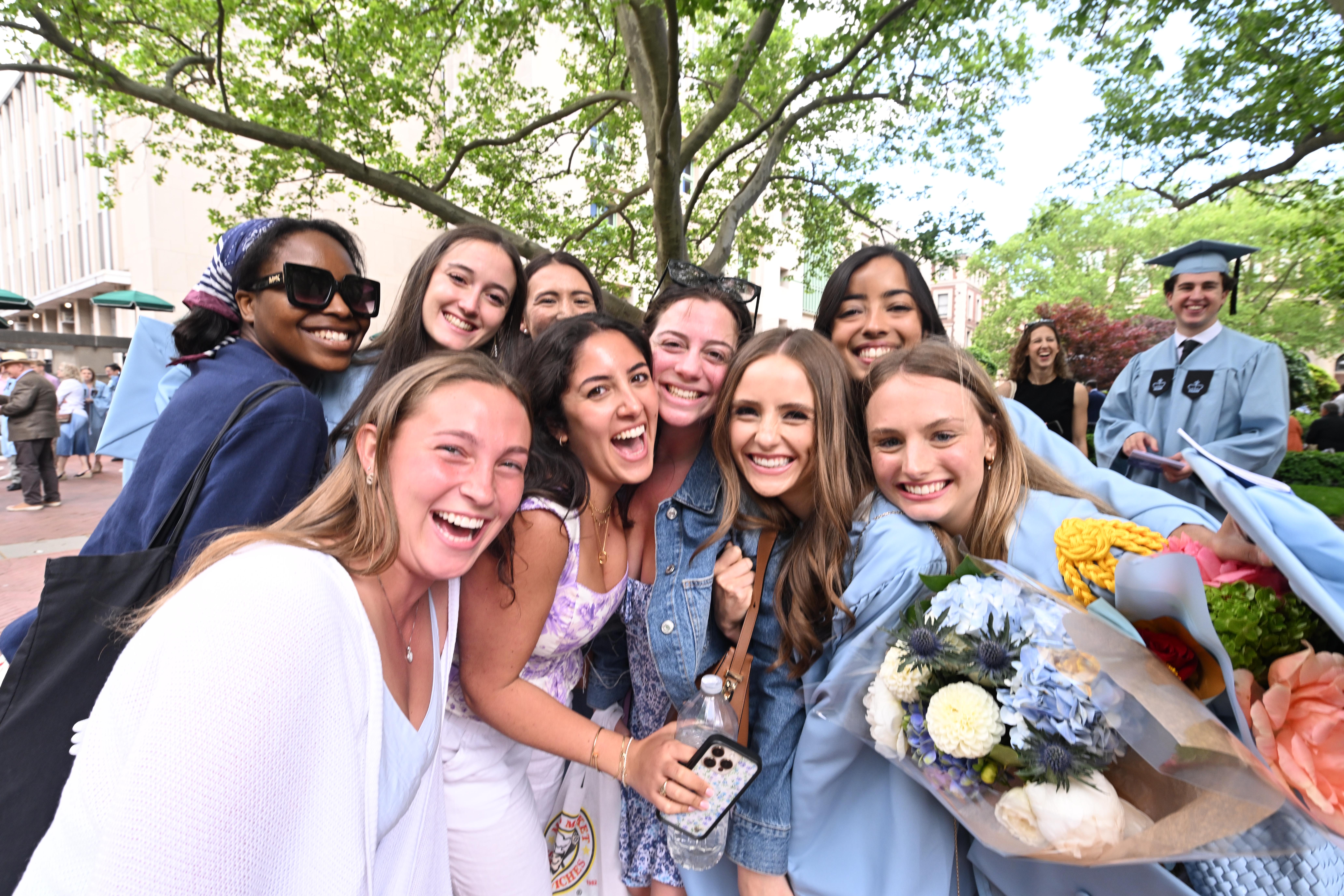
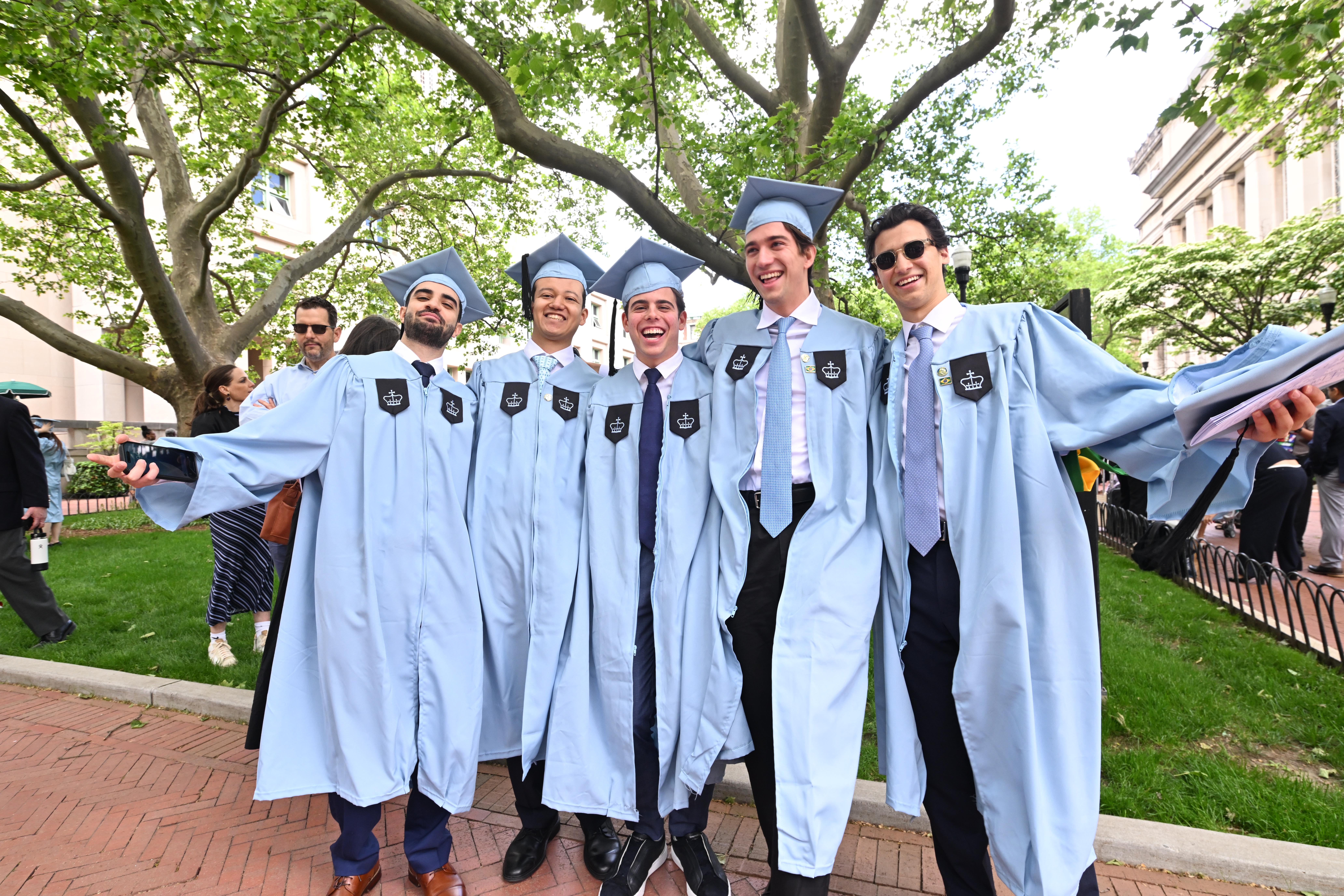
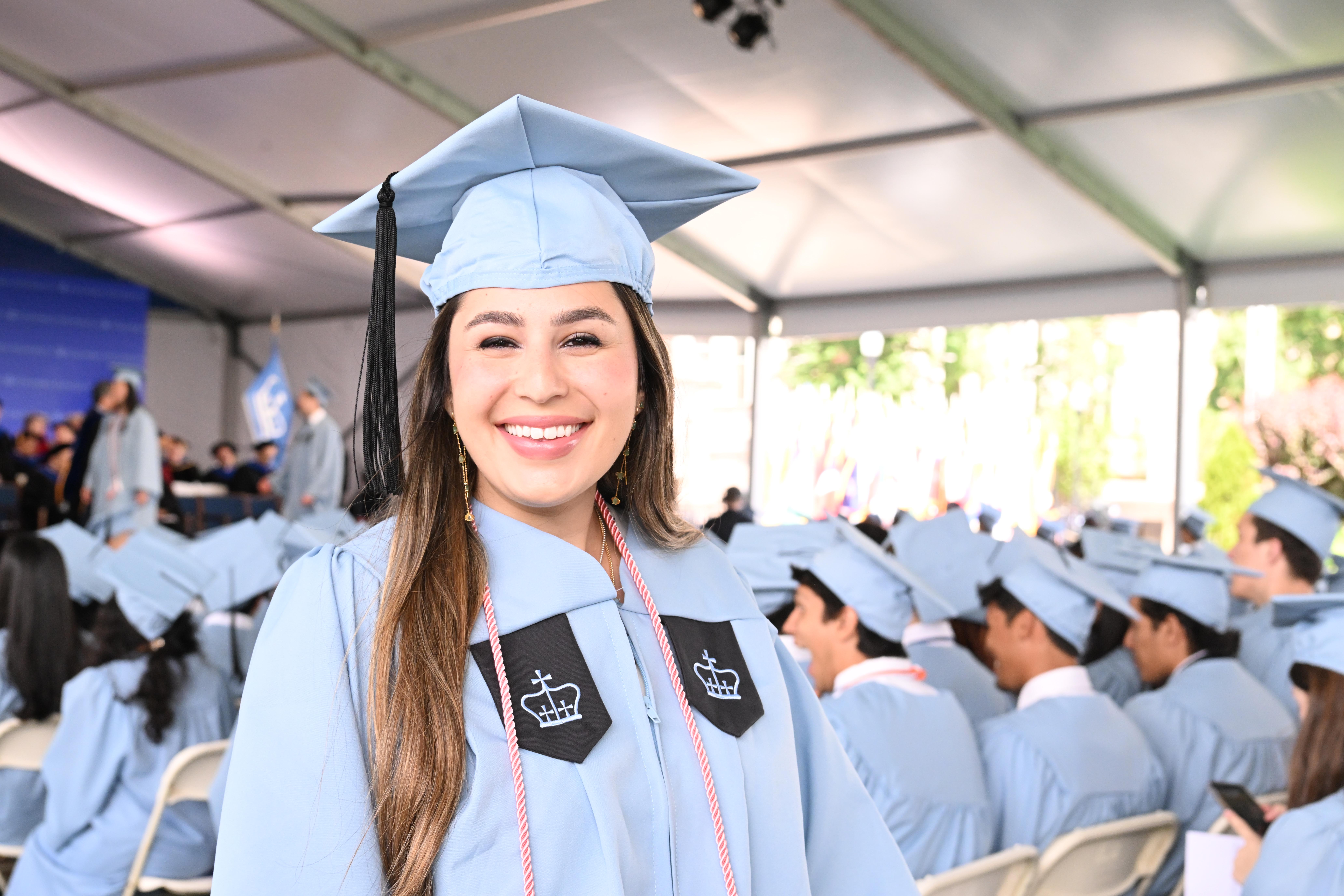
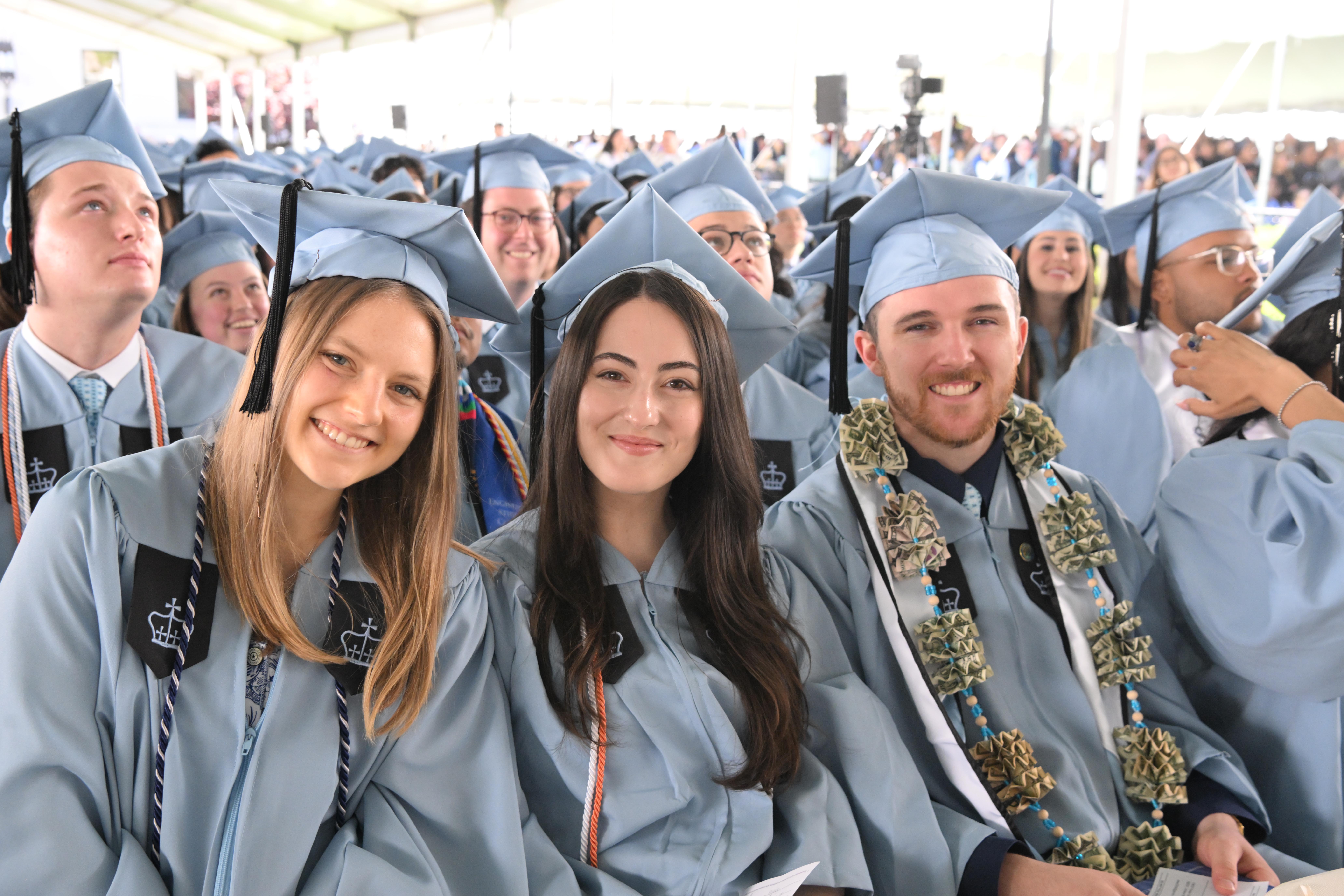
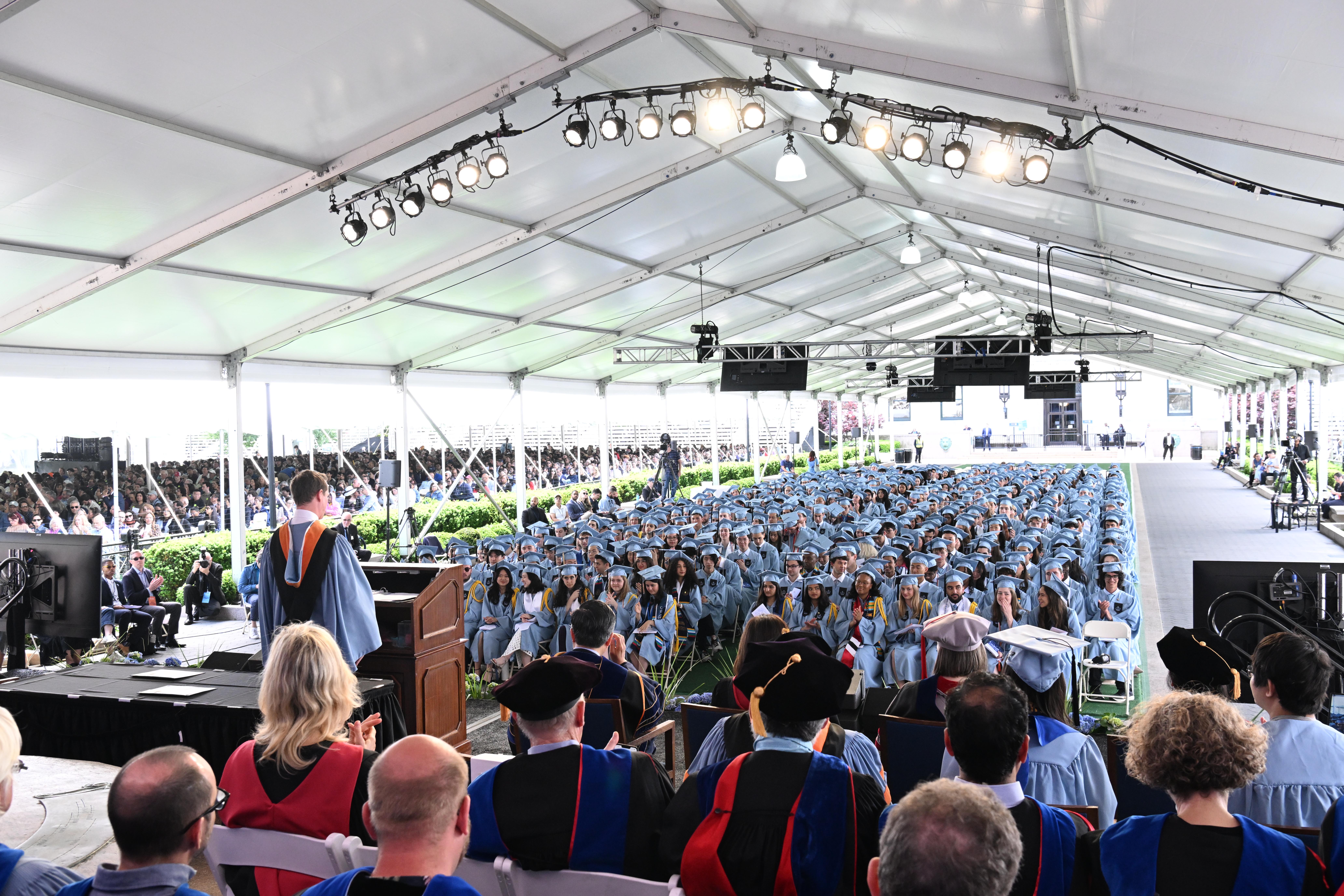
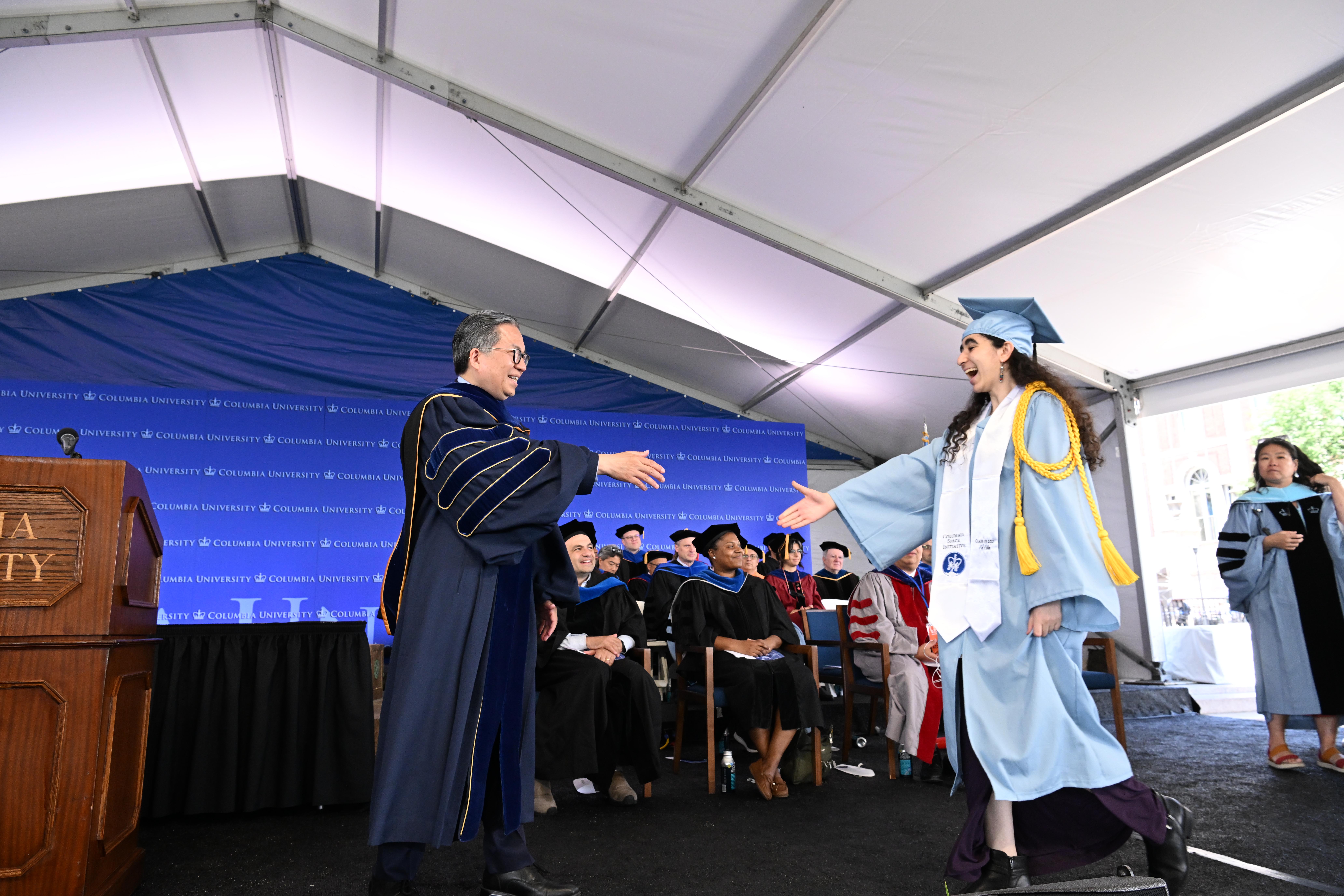


Vice Dean of Academic Programs Barclay Morrison presented several awards, including the George Vincent Wendell Memorial Medal to Kathryn Lampo. Jennifer Oettinger was recognized as Salutatorian, and Valedictorian Andrew Yang was also recognized as the Illig Prize recipient.
In his remarks, Yang, a double major in applied physics and applied mathematics, used an analogy from his own research into materials at the nanoscale to highlight the importance of waves.
“Waving hi, in orientation week, to some of your now closest friends. Tearful waves goodbye to your parents after convocation . . . In 1807, Joseph Fourier showed how waves sum to form beautiful functions. The sum of our interactions forms this beautiful community.”
He urged his fellow students to continue to take risks, despite their fears. “Look among us: We are SEAS. And we’re gonna make waves!”

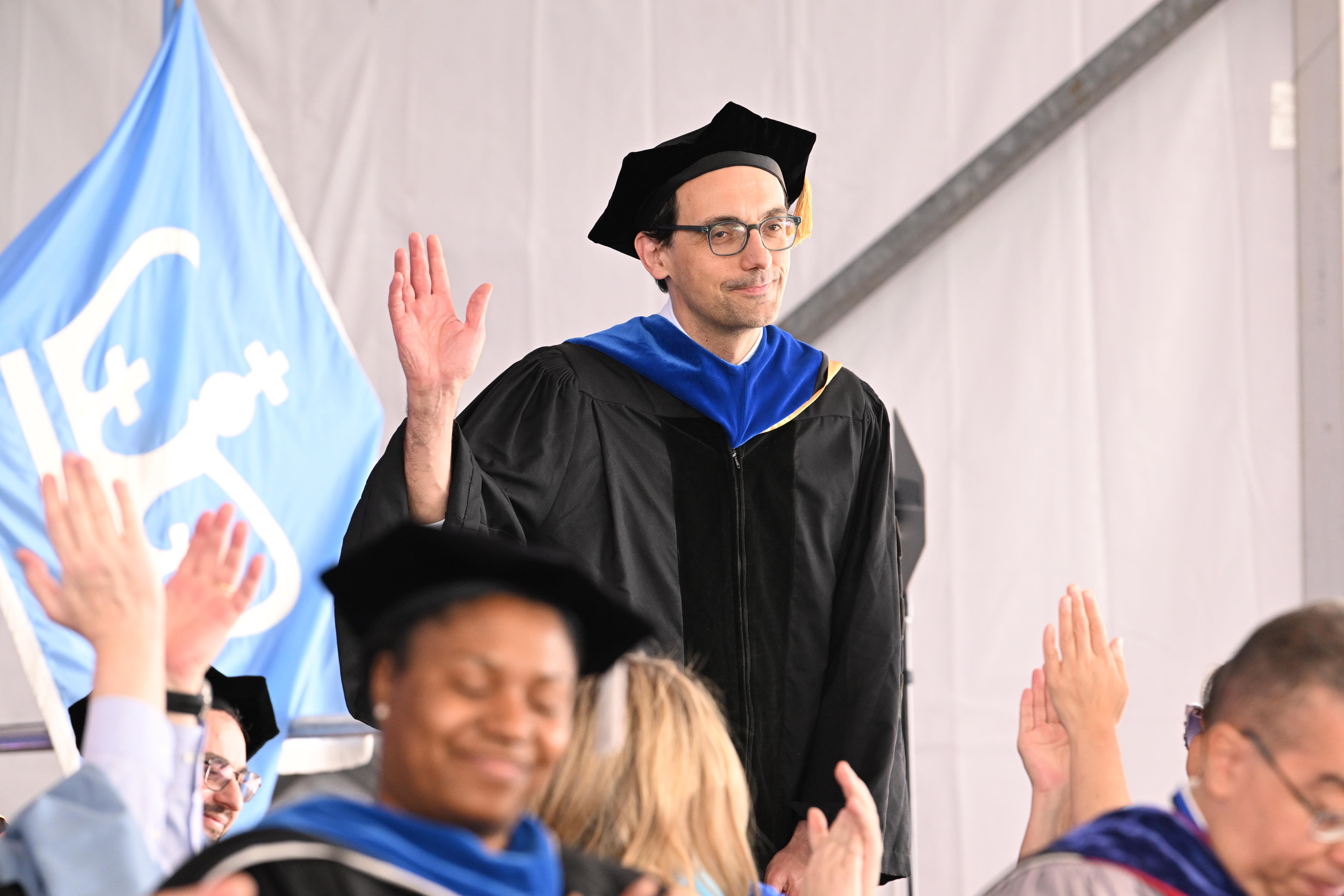
Columbia Engineering Alumni Association (CEAA) President Reid Ellison welcomed the Class to the alumni network and recognized the recipients of the CEAA Distinguished Faculty Teaching Awards: Computer Science Professor Luca Carloni and Lecturer in the Discipline of Industrial Engineering and Operations Research Yaren Kaya.
Dean Chang addressed the Class and noted that their first year coincided with his first year as interim dean of the School. He emphasized the problem-solving nature of engineering and how students were prepared to make an impact on society.
“We live in a time when new and bold ideas and creative solutions are critically needed,” said Chang. “It is a time when engineers and applied scientists are needed. Particularly, engineers who think broadly and deeply about how engineering and technology affect society and how they can improve humanity. At Columbia, we call this our Engineering for Humanity vision. And you are the best ambassadors for this vision!”
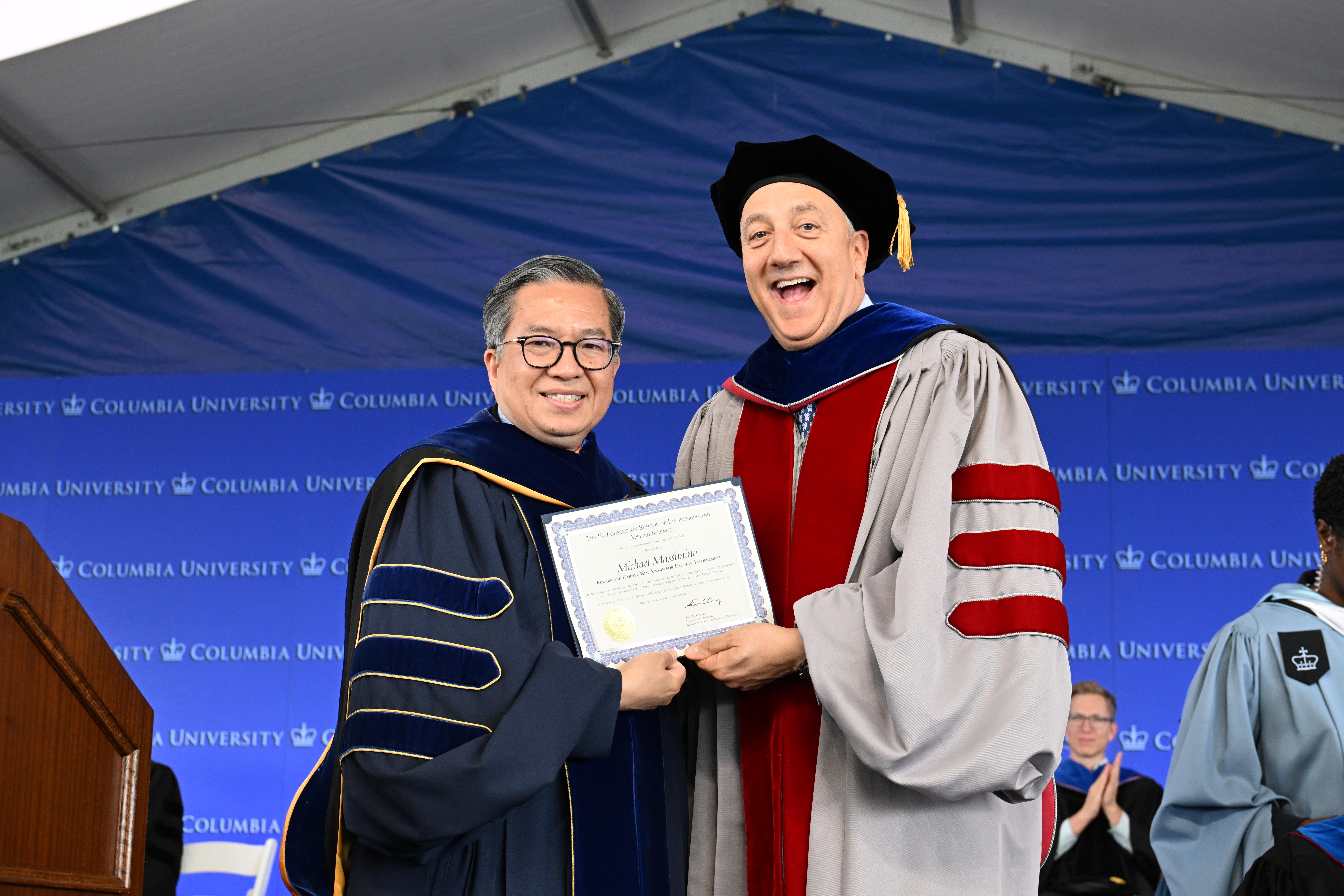
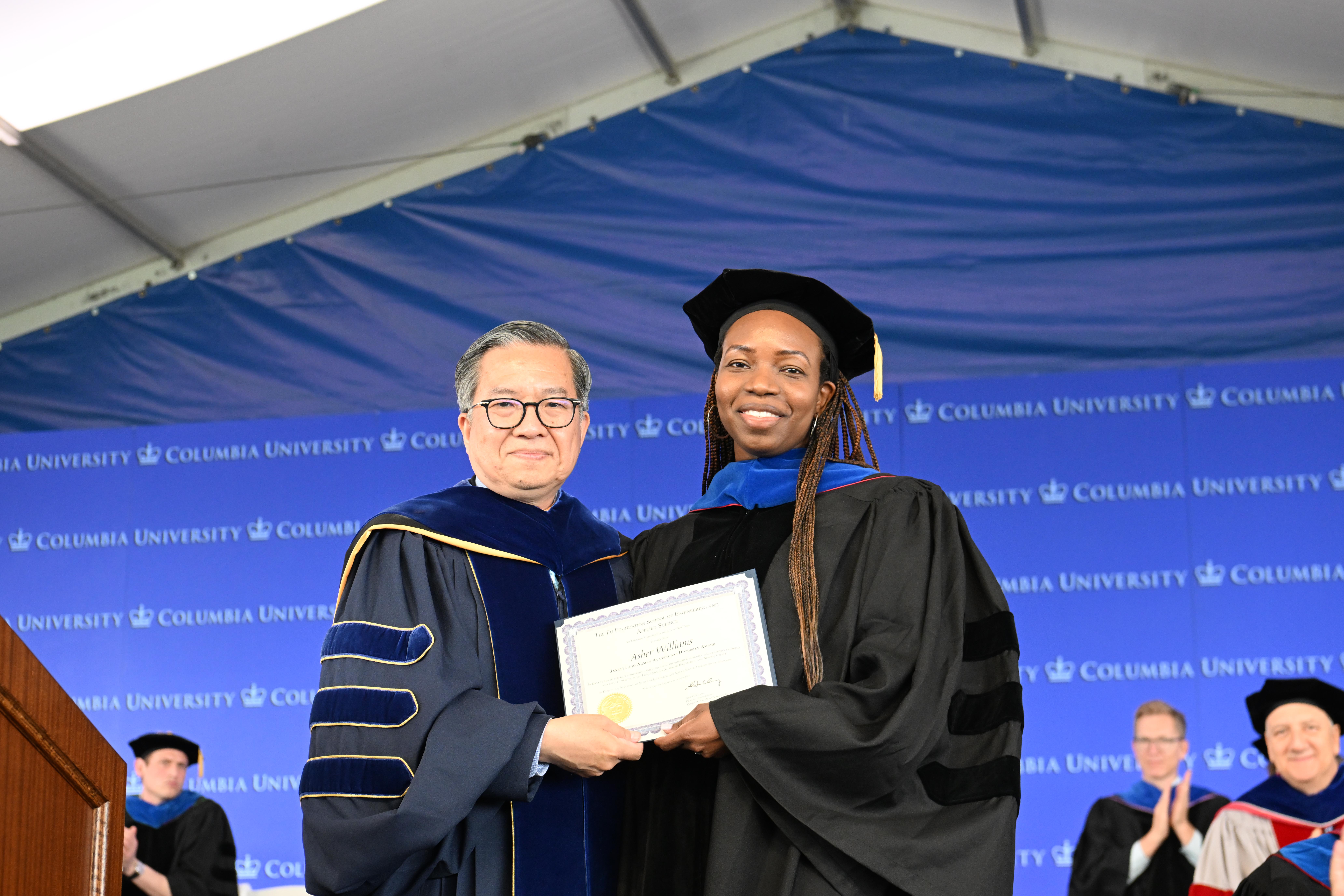
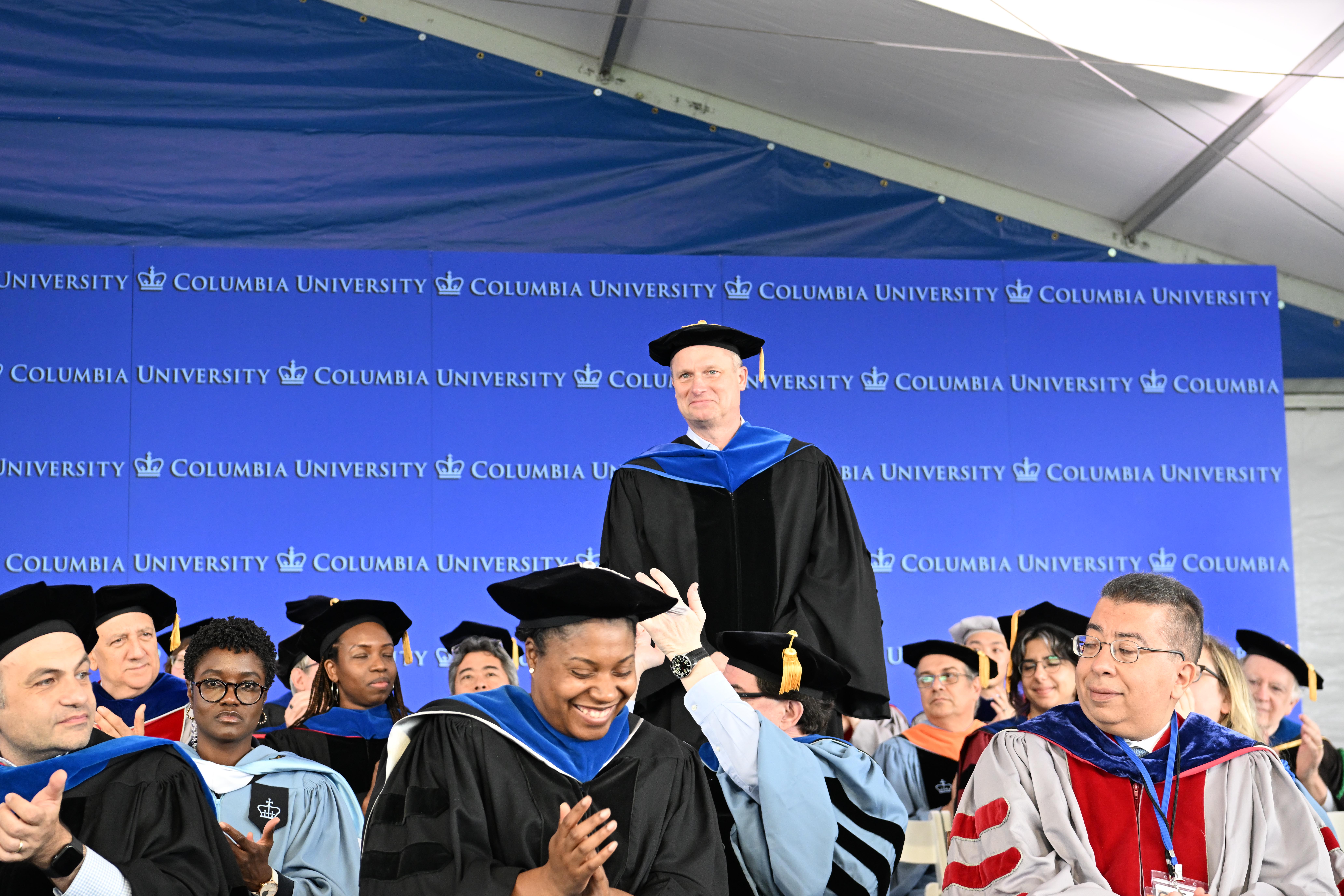
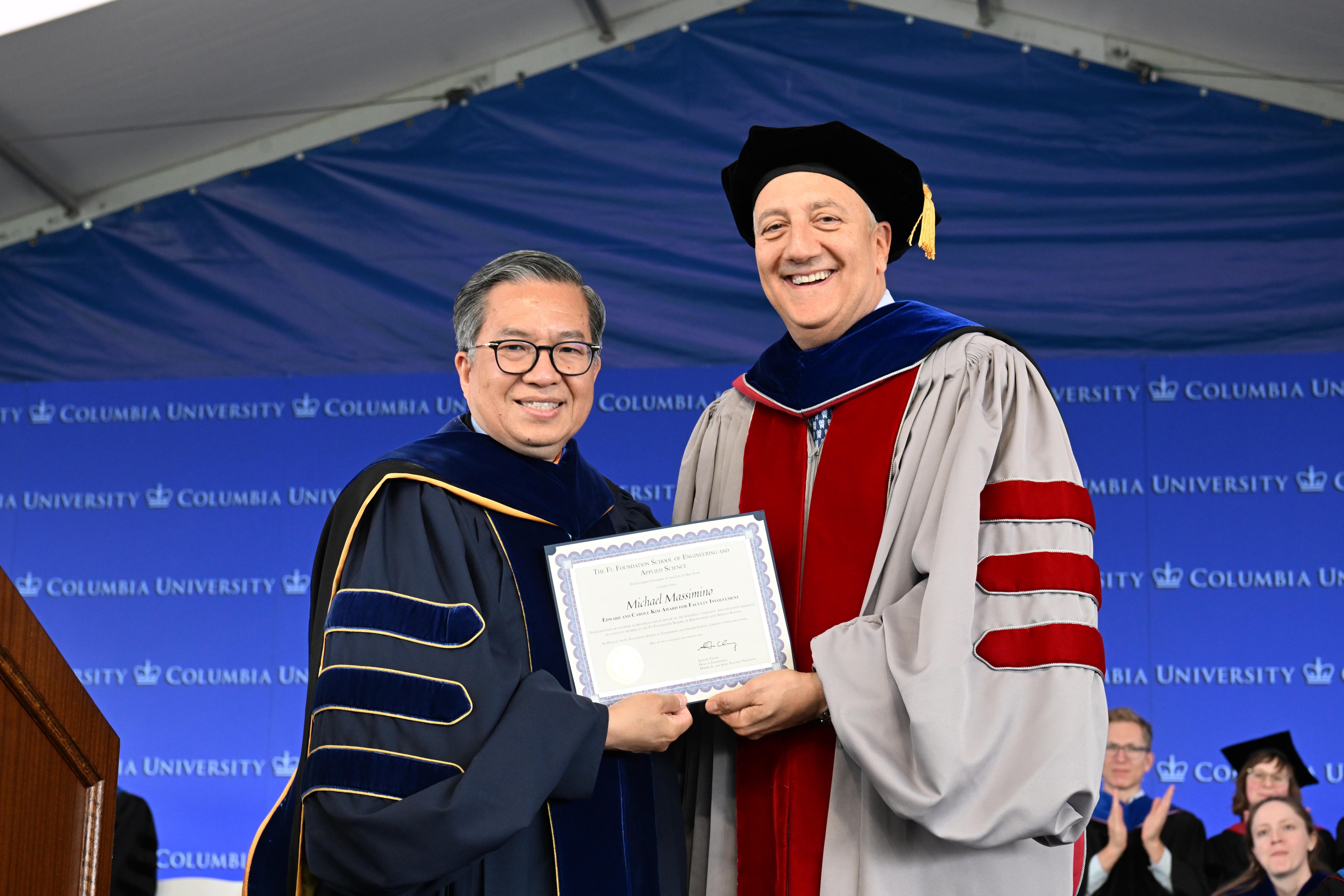
Dean Chang presented two Columbia Engineering faculty awards. Asher Williams, assistant professor of chemical engineering, received the Janette and Armen Avanessians Diversity Award, and Michael Massimino, professor of professional practice in the Department of Mechanical Engineering, received the Edward and Carole Kim Award for Faculty Involvement.

Dean Chang introduced Provost Angela Olinto. Provost Olinto congratulated the group, calling them the most “stellar” group of graduates. “And as an astrophysicist I don’t use that word lightly!” She then shared a greeting from Acting President Claire Shipman.
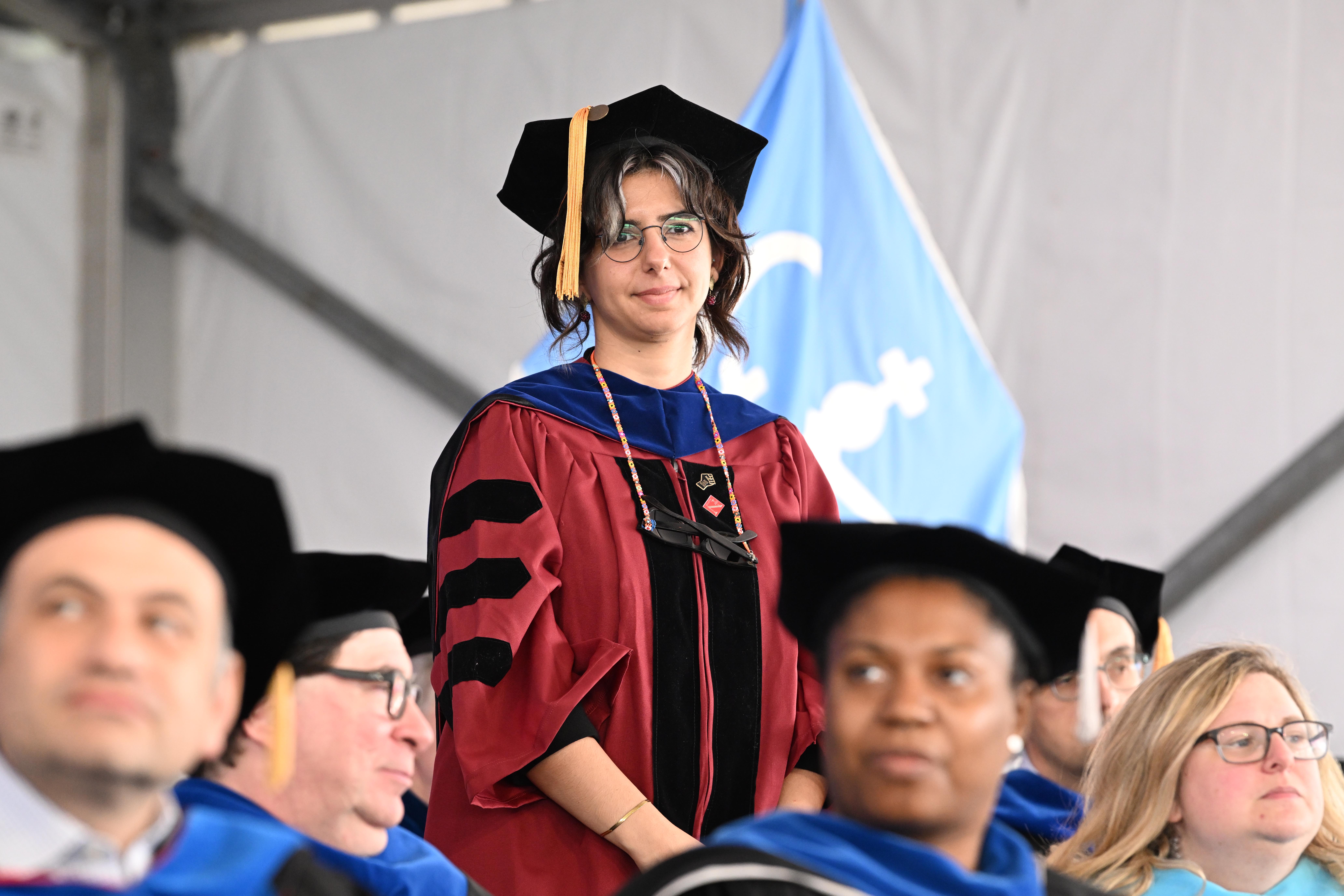
Later that afternoon, faculty, students and their families gathered for the 2025 Graduate Class Day. Columbia Engineering Graduate Speaker Raman Odgers, addressed the class and advised his fellow graduates to see uncertainty in a positive light.
“Uncertainty isn’t always negative. It leads us to the joy of unexpected opportunities and new friendships,” he said.
“Uncertainty protects us from becoming just like the tools that we create as engineers, and gives us the power to use that Columbia education to choose and shape the future not just of our own lives but of the world.”

Vice Dean Morrison recognized the Graduate Student Life Leadership Award recipients: Kimberly Ruth Kroupa and Xialong Wu.
The graduates then heard from Class Day Speaker Harsh Jain ‘14BUS, CEO and co-founder of Dream Sports, India’s leading sports technology company and a global pioneer in digital sports entertainment.
Jain, who received a degree from Columbia Business School, stressed the importance of passion. He shared how his love for fantasy football inspired him to bring the concept to India, which had no fantasy sports at the time. Gaining traction in a new market took some time and he urged graduates to be persistent. “Now as you enter the real world, I have only one piece of advice. Learn how to fail. Pick yourself up and keep going.”
Each of Columbia’s 19 Schools celebrates their graduates with their own dedicated Class Day ceremony. On Tuesday, May 20, the Engineering School held a hooding ceremony for its doctoral students. Columbia University celebrated all graduates at Commencement on Wednesday, May 21, 2025.
Graduation Awards
A selection of honorees
STUDENT AWARD WINNERS
Zvi Galil Award for Improvement in Engineering Student Life
Columbia Space Initiative
Bernard Jaffe Prize for the Encouragement of Inventiveness in Engineering
Alec Batts
School of Engineering and Applied Science Scholar Athlete Award
Andrew David Fouty
Campbell Award
Kathryn Lampo
School of Engineering and Applied Science Student Activities Award
Sandhya Sethuraman
Thomas "Pop" Harrington Medal
Hayden Flook
George Vincent Wendell Memorial Award
Kathryn Lampo
Robert D. Lilley Award for Socially Responsible Engineering
Engineers Without Borders
Morton B. Friedman Memorial Prize for Excellence
Jingping Nie
Graduate Student Life Leadership Awards
Kimberly Ruth Kroupa
Xiaolong Wu
Graduate Speaker
Raman Odgers
Valedictorian and Illig Prize
Andrew Yang
Salutatorian
Jennifer Oettinger
FACULTY/ALUMNI AWARD WINNERS
CEAA Distinguished Faculty Teaching Awards
Luca Carloni
Professor of Computer Science
Yaren Kaya
Lecturer in the Discipline of Industrial Engineering and Operations Research
Presidential Teaching Award
Peter Kinget
Bernard J. Lechner Professor of Electrical Engineering
Faculty Mentoring Award
Kathy McKeown
Henry and Gertrude Rothschild Professor of Computer Science
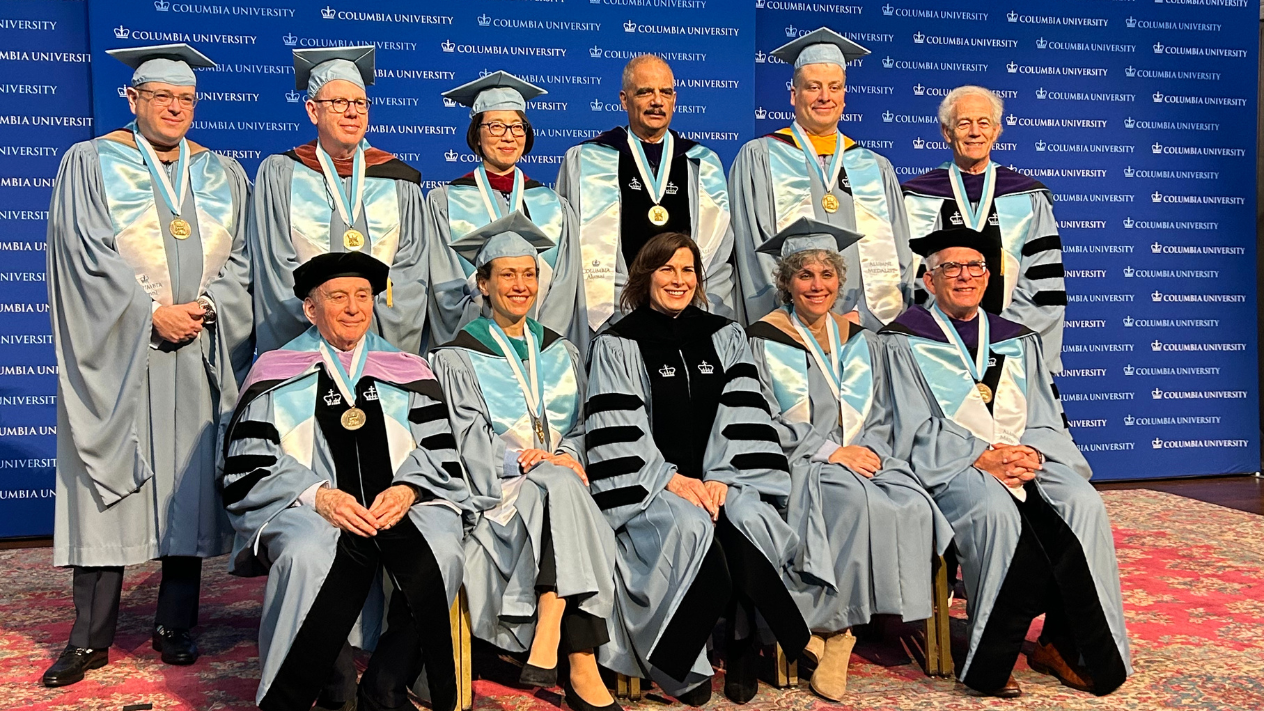
Columbia Honorary Doctor of Letters
Zvi Galil
Columbia Engineering Dean Emeritus
Edward and Carole Kim Award for Faculty Involvement
Michael Massimino
Professor of Professional Practice in the Department of Mechanical Engineering
Janette and Armen Avanessians Diversity Award
Asher Williams
Assistant Professor of Chemical Engineering
Society of Columbia Graduates Great Teacher Award
Hardeep Johar
Senior Lecturer in Discipline in Industrial Engineering and Operations Research
CAA Alumni Medalist
John Mullervy BS’00
Columbia MBAxMS Program: Robotics Challenge
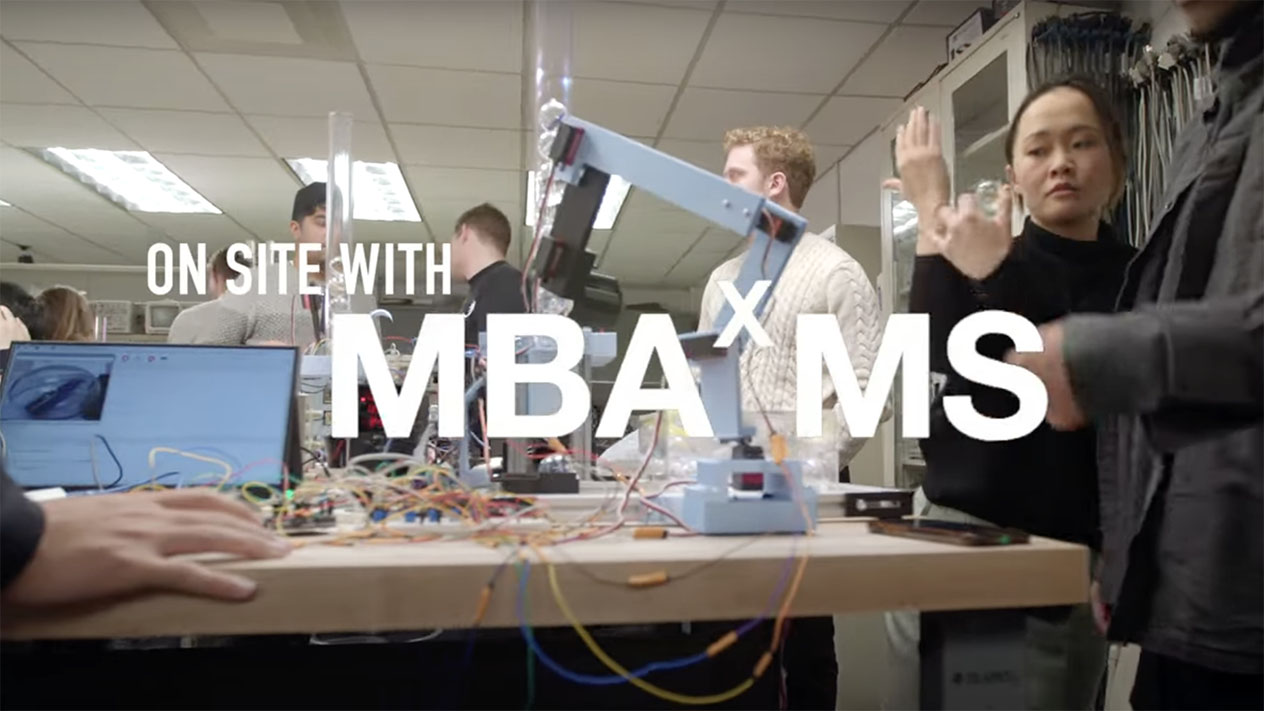
The Fundamental Design Tools course turns business students on to state-of-the art robotics.
Lead Photo Caption: The inaugural graduating class from the MBAxMS dual degree program