About the Study
Journal: Nature Nanophotonics
Title: Widely tunable and narrow-linewidth chip-scale lasers from near-ultraviolet to near-infrared wavelengths
Authors: Mateus Corato-Zanarella, Andres Gil-Molina, Xingchen Ji, Min Chul Shin, Aseema Mohanty, Michal Lipson (all from the Department of Electrical Engineering, Columbia Engineering; Ji now at John Hopcroft Center for Computer Science, Shanghai Jiao Tong University; Shin a research scientist at Reality Labs, Meta; Mohanty at Department of Electrical and Computer Engineering, Tufts University)
Funding: This work was supported as part of the Novel Chip-Based Nonlinear Photonic Sources from the Visible to Mid-Infrared funded by the Army Research Office (ARO) under award no. W911NF2110286. The photonic chips fabrication was done in part at the City University of New York Advanced Science Research Center NanoFabrication Facility, in part at the Columbia Nano Initiative (CNI) Shared Lab Facilities at Columbia University, and in part at the Cornell NanoScale Facility, a member of the National Nanotechnology Coordinated Infrastructure (NNCI), which is supported by the National Science Foundation (Grant NNCI-2025233). M.C.S. is supported by the Facebook Fellowship Award.
COI: M.C.Z., A.G.M, X.J., M.C.S., A.M., and M.L. are named inventors on US provisional patent application 63/275,141 regarding the technology reported in this article.
Header image: Illustration of the integrated laser platform created by the Lipson Nanophotonics Group, where a single chip generates narrow linewidth and tunable visible light covering all colors. Credit: Myles Marshall/Columbia Engineering
ABOUT THE STUDY
CONFERENCE: International Conference on Learning Representations (ICLR) in Vienna, Austria, May 7-11, 2024.
TITLE: “Raidar (geneRative AI Detection viA Rewriting)”
AUTHORS: Chengzhi Mao, Carl Vondrick, and Junfeng Yang from Columbia Engineering; Hao Wang from Rutgers University.
FUNDING: This work is in part funded by a grant from the School of Engineering and Applied Science - Knight First Amendment Institute (SEAS-KFAI) Generative AI and Public Discourse Research Program.
ABOUT THE STUDY
JOURNAL: Nature Nanotechnology
TITLE: "Leaky-wave metasurfaces for integrated photonics"
AUTHORS: Heqing Huang (1,†), Adam C. Overvig (1,2,†), Yuan Xu (1), Stephanie C. Malek (1), Cheng-Chia Tsai (1), Andrea Alu (2,3,*), and Nanfang Yu (1,*)
- Department of Applied Physics and Applied Mathematics, Columbia University
- Photonics Initiative, Advanced Science Research Center, City University of New York
- Physics Program, Graduate Center, City University of New York
- †Authors contributed equally
- *Corresponding authors
FUNDING: The study was supported by the National Science Foundation (grant no. QII-TAQS-1936359 (H.H., Y.X., and N.Y.) and no. ECCS-2004685 (S.C.M., C.-C.T., and N.Y.)), the Air Force Office of Scientific Research (no. FA9550-16-1-0322 (N.Y.)), and the Simons Foundation (A.C.O. and A.A). S.C.M. acknowledges support from the NSF Graduate Research Fellowship Program (grant no. DGE-1644869).
A.C.O., S.C.M., and N.Y. are listed as inventors in a US non-provisional patent application no. 17/110,846; in addition, H.H., Y.X., A.C.O., A.A., and N.Y. are listed as inventors in a US provisional application no. 63/342,475. Both were filed by Columbia University and are related to the technology reported in this article. The remaining authors declare no competing interests.
ABOUT THE STUDY
JOURNAL: Nature Chemical Biology
TITLE: "Engineered bacterial swarm patterns as spatial records of environmental inputs"
AUTHORS: Anjali Doshi (1), Marian Shaw (1), Ruxandra Tonea(1), Soonhee Moon (1) , Rosalia Minyety (1), Anish Doshi (2), Andrew Laine (1), Jia Guo (3,4) & Tal Danino (1,5,6)
- Department of Biomedical Engineering, Columbia University
- Department of Electrical Engineering and Computer Sciences, University of California, Berkeley
- Department of Psychiatry, Columbia University
- Mortimer B. Zuckerman Mind Brain Behavior Institute, Columbia University
- Herbert Irving Comprehensive Cancer Center, Columbia University
- Data Science Institute, Columbia University
FUNDING: This work was supported by an NSF CAREER Award (1847356 to T.D.), Blavatnik Fund for Innovations in Health (T.D.), and NSF Graduate Research Fellowship (A.D., Fellow ID 2018264757).
A.D., M.S., J.G., A.L. and T.D. are named as inventors on a provisional patent application that has been filed by Columbia University with the US Patent and Trademark Office related to all aspects of this work. The remaining authors declare no competing interests.
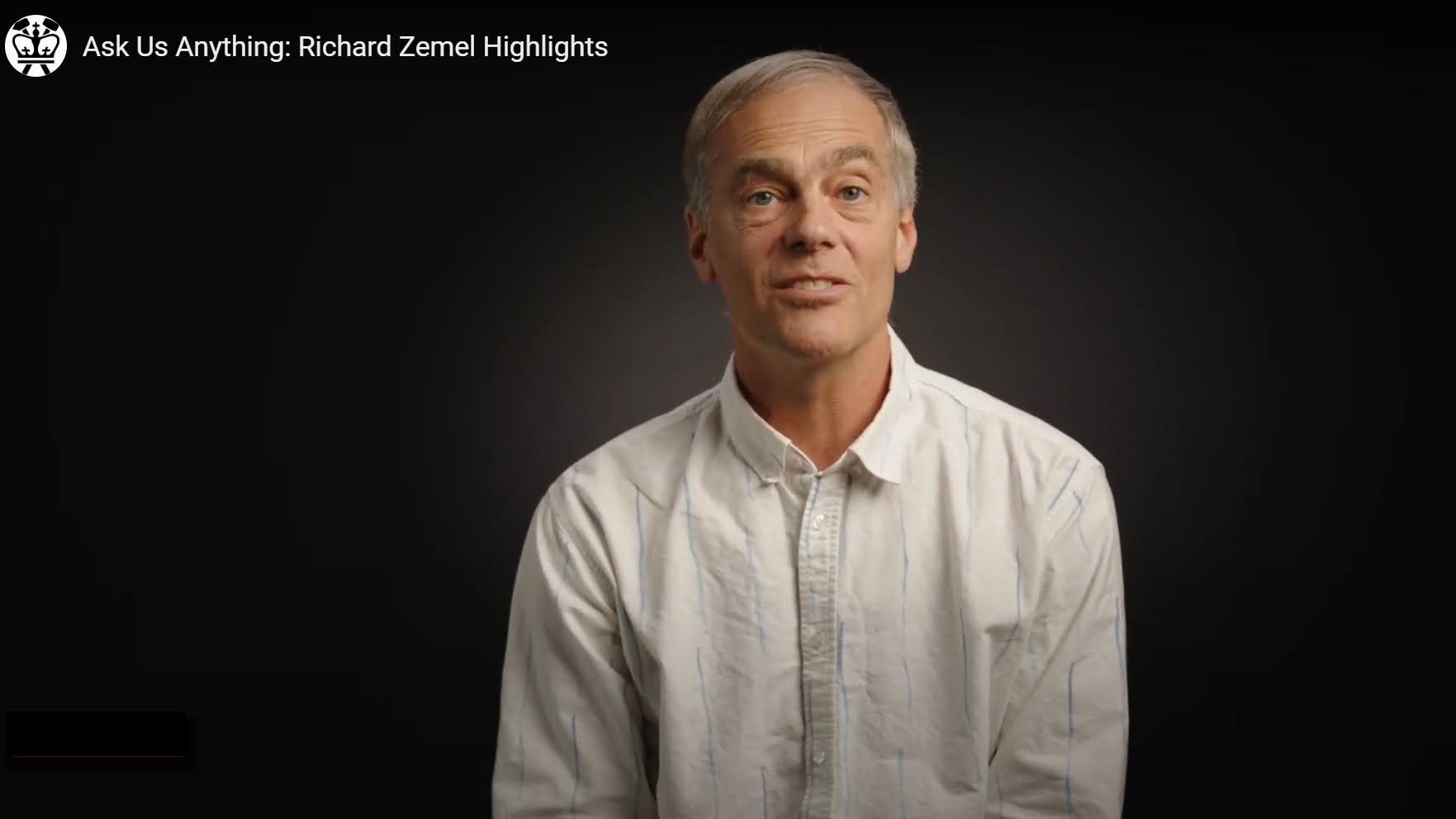
Learn More About Richard Zemel's Research
Learn more about Lorenzo Polvani and his research
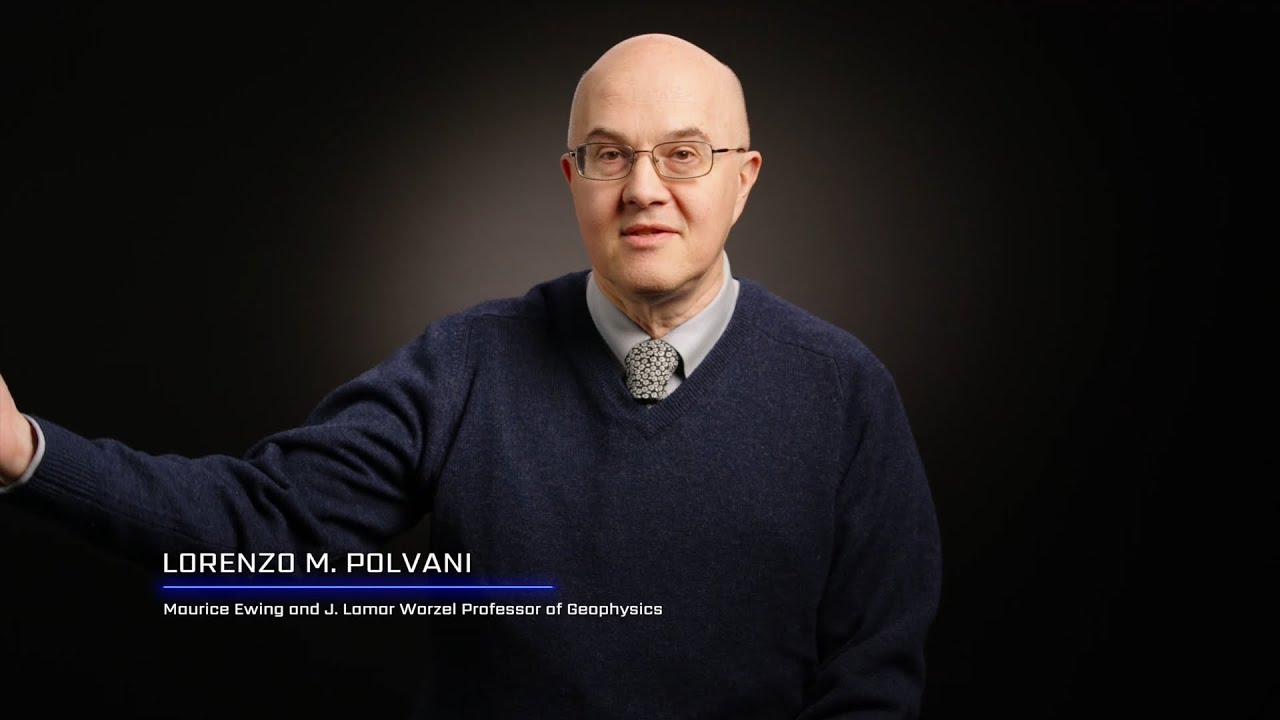
Lorenzo Polvani is the Maurice Ewing and J. Lamar Worzel Professor of Geophysics in the Department of Applied Physics and Applied Mathematics at Columbia Engineering. He is particularly interested in quantifying and distinguishing the effects of anthropogenic forcings from natural climate variability.
ABOUT THE STUDY
JOURNAL: PNAS
TITLE: "The Montreal Protocol is delaying the occurrence of the first ice-free Arctic summer"
AUTHORS: Mark R. England (1) and Lorenzo M. Polvani (2)
- Department of Earth and Planetary Sciences, UC Santa Cruz; now at the University of Exeter
- Department of Applied Physics and Applied Mathematics, and Lamont Doherty Earth Observatory, Columbia University
FUNDING: This research was funded by a grant from the US National Science Foundation to Columbia University. The authors declare no financial or other conflicts of interest.
ABOUT THE STUDY
JOURNAL: PNAS
TITLE: "Implicit learning of convective organization explains precipitation stochasticity"
AUTHORS: Sara Shamekh, Kara Lamb, Yu Huang, Pierre Gentine
Department of Earth of Environmental Engineering, Columbia University, New York, NY, USA
FUNDING: The study was supported by: SS and PG acknowledge funding from European Research Council grant USMILE, from Schmidt Future project M2LiNES and from the National Science Foundation Science and Technology Center (STC) Learning the Earth with Artificial intelligence and Physics (LEAP), Award 2019625 - STC. KDL acknowledges support from LEAP and DOE Grant DE-SC0022323 ``Discovering Physically Meaningful Structures from Climate Extreme Data."
The authors declare no financial or other conflicts of interest.