On September 30, Columbia’s hookup was completed: photons, the quantum particles that make up light, can now be distributed and detected from Long Island to Morningside Heights. Entangled photons, one of the cornerstones of quantum science that enable instant information transfer, will soon follow. 

The network will link different quantum devices, including quantum sensors and computers, that are under development at the partner institutions into a nascent quantum internet. At Columbia, it now reaches three labs: those of Gil Zussman, Sebastian Will, and Alexander Gaeta:  

  • The GlueGil Zussman, Kenneth Brayer Professor of Electrical Engineering, provided access to the optical fibers needed to transport entangled photons; these fibers were originally deployed for the NSF COSMOS testbed. Seed funding from Columbia Engineering and the Data Science Institute allowed the team to expand the network to Qunnect in Brooklyn. An expert in classical networking and communications, Zussman will also help develop new protocols and standards to efficiently send information along the quantum network.
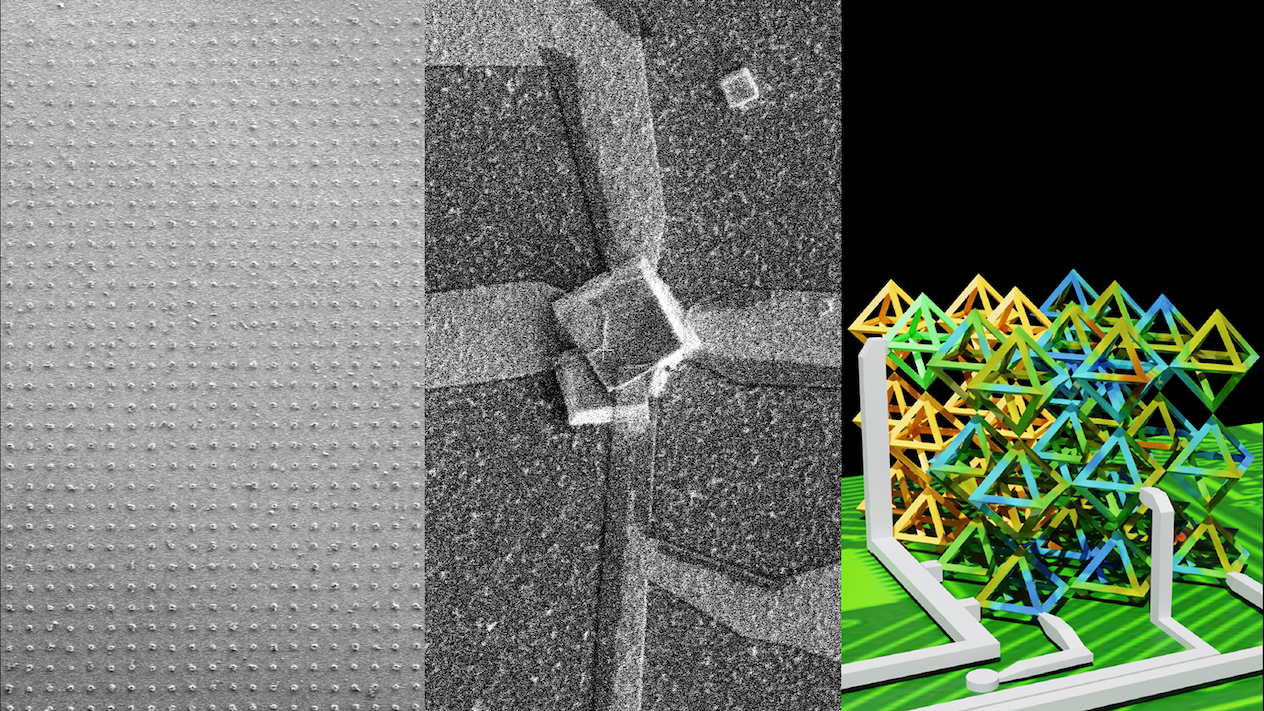
  • The Device: Sebastian Will, associate professor of physics and co-PI on the NQVL grant, is developing quantum devices that will send and receive information via the entangled photons transmitted along the network. His lab has been pioneering techniques to trap individual atoms into arrays that can serve as quantum bits, or qubits—a rapidly evolving approach to quantum computing, one of the goals of the NQVL collaboration.
  • The TranslatorsAlex Gaeta, David M. Rickey Professor of Applied Physics and Materials Science and professor of electrical engineering along with Michal Lipson, Eugene Higgins Professor of Electrical Engineering and professor of applied physics (and a co-PI on the NQVL grant), will make sure the devices at the network’s nodes, like Will’s atomic arrays, can “talk” with the entangled photons, which will be transmitted along the network’s fibers at a different wavelength than the devices can understand. Experts in quantum optics, Gaeta and Lipson have created quantum frequency converters that can change the wavelength of photons without breaking the entangled states that are essential to the network. 

“At Columbia, we are combining our expertise in networks, optics and photonics, and atomic physics to tackle open questions in quantum networking,” said Will. “Now the fun can really begin.”


Lead Photo Caption: Shivalee Shah, MS student in Quantum Science and Technology, and John Drogo, Electrical Engineering PhD student, worked with CUIT and Crown Castle on the fiber connection to Brooklyn.

Subscribe to Applied Physics and Applied Mathematics