Earth and Environmental Engineering
Additional information
-
Professional Experience
- Assistant Professor of Earth and Environmental Engineering, Columbia University, 2026-
- Nevada Gold Mines Professor and Associate Professor, University of Nevada, Reno, 2025-2025
- Nevada Gold Mines Professor and Assistant Professor, University of Nevada, Reno, 2020-2025
-
Professional Affiliations
- Society of Mining, Metallurgy & Exploration (SME)
- American Chemical Society (ACS)
-
Education
- PhD, Materials Engineering, McGill University
- MEng, Mechanical Engineering, McGill University
- BEng, Mechanical Engineering, McGill University
-
Honors & Awards
- Jason Geddes Regents’ Rising Researchers Award, Board of Regents, Nevada Systems of Higher Education, 2025
- Excellent Contribution Award, Editorial Office of Green and Smart Mining Engineering, 2025
- Mousel-Feltner Award for Excellence in Research and/or Creative Activity, College of Science, University of Nevada, Reno, 2024
- Nevada’s Center for Entrepreneurship and Technology Sustainability Leader of the Year Award, 2024
- Doctoral Award, Fonds de recherche du Québec Nature et Technologies, 2014
- Fellow of Brace Water Resources Foundation, McGill University, 2013
- MEDA Doctoral Award, McGill University, 2012
- International SAG Conference Postgraduate Award, SAG Conference, 2011
- BMP Industrial Innovation Scholarship, Natural Sciences and Engineering Research Council of Canada, 2010
Why Study Mining Engineering at Columbia?
As a student here, you’ll benefit from:
-
Global Energy Transition Focus
Tackle the pressing challenge of sourcing minerals for renewable energy technologies and infrastructure.
-
Modernized, Industry-Aligned Curriculum
Our curriculum has been specially designed to reflect current industry practices, incorporating technical advances, emerging trends and vital soft skills such as strong teamwork, communication and problem-solving skills.
-
A Legacy of Leadership
Columbia's School of Mines, founded in 1864, laid the groundwork for engineering education in the U.S. Our Mining program continues that tradition with a renewed focus on climate and sustainability.
-
Sustainability-Centered Engineering
Learn to integrate environmental stewardship and community engagement into every phase of the mining lifecycle.
-
Enhanced Career Prospects
This specialized training will distinguish you from other engineering graduates, making you a highly sought-after professional in the mining industry.
Our dedicated Assistant Director of Graduate Career Placement can provide you with expert advice both during your studies and after graduation. You’ll receive personalized career guidance, application support, tailored workshops, and access to exclusive job opportunities within the earth and environmental engineering sector and beyond.
With strong industry connections, we also facilitate networking events and internships that give you the experience and confidence to stand out in the competitive job market.
-
Major or Minor in Mining Engineering
If you are interested in our department but want to major in another field, you can still minor in Mining Engineering. Due to our broad and multidisciplinary scope, a number of our courses are already required across other engineering departments. As well as developing interdisciplinary knowledge, this structure will ensure your workload is manageable.
What Will I Learn?
Our curriculum integrates fundamental math and science with technical mining engineering practices. You’ll also take nontechnical classes across Columbia’s Core Curriculum. Developing this interdisciplinary knowledge will prepare you to navigate the complex challenges faced by tomorrow’s industry leaders.
Requirements
-
Application Requirements
What we look for:
- Transcripts and school reports. We accept all secondary school qualifications (AP, International Baccalaureate, Cambridge A Levels, National School curricula, etc.). We do not have standardized requirements or “cut-off” test scores for first-year admission but we do expect to see coursework in physics and calculus.
- Teacher recommendations. We would like to learn more about your contributions in the classroom and at school, as well as what you might offer to your Columbia classmates.
- Responses to our Columbia-specific application questions. Your answers will provide us with insight into your intellectual interests and the way in which your curiosity and sense of community might translate to Columbia’s campus.
- A personal statement. We review applications in context, taking into account the multiple, intersecting ways that you have been shaped by your family circumstances. Understanding who you are, what your home responsibilities are, whether you have experienced any systemic and situational barriers and advantages will ensure we can review your application fairly and accurately.
- English language proficiency. If your home language is not English or if your secondary school studies were predominantly in another language, you will need to provide evidence of your English language proficiency. Visit our English Proficiency Requirements for accepted exams and minimum score requirements.
-
Degree Requirements
BS in Mining Engineering
To graduate from our BS program you must complete:
- 18 credits (approximately six courses) of technical Mining Engineering electives during your final two years.
- The Columbia liberal arts core. This is typically satisfied during the first two years, although you can undertake non-technical electives during your final two years.
Minor in Mining Engineering
To earn a minor in Mining Engineering, you must complete:
- Six courses selected from a specified list approved by your undergraduate advisor.
Undergraduate Financial Aid
What matters most to us is your ability to thrive at Columbia.
We offer plenty of financial options to support you through your journey with us. Learn more about the types of aid that are available.
Combined Plan
Find out how you can earn a Liberal Arts degree at your current university and also a BS in Earth and Environmental Engineering from Columbia University.
Careers & Outcomes
With global career opportunities in mining operations, consulting, and environmental management, you won’t just find a job—you’ll join a mission to redefine the future of global energy. Whether working deep underground, in remote landscapes or in cutting-edge offices around the world, your career options as a mining engineer will be both diverse and impactful.
Your training also provides a strong foundation for graduate studies. Many graduates pursue MS and PhD programs in mining, chemical, computer, climate, electrical, and environmental engineering. They have also launched successful careers in transferrable fields such as law, policy, finance, consulting, and medicine.
Department Faculty
Image
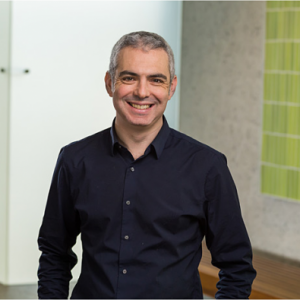
Daniel Steingart | Image
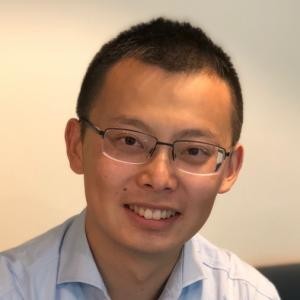
Bolun Xu |
Research and Work Experience Opportunities
Hands-on experience
At Columbia, you don’t have to wait until you graduate to start making a contribution. There are lots of opportunities to gain hands-on experience through research projects and summer internships.
Our faculty-run laboratories always need students to support them with their cutting-edge research spanning across areas such as electrochemical energy, carbon capture, climate modeling, materials recycling, and more.
Student Research Opportunities
Entrepreneurship
Considering launching a startup during your studies or after you graduate? Columbia Engineering Innovation, Design & Entrepreneurship team can help you develop the business acumen to successfully launch your venture.
The team offers specialist entrepreneurship courses, bootcamps, networking opportunities and spaces for prototyping and testing. They also organize competitions with opportunities to win seed funding. This community of talented professors, students and alumni will give you the network of support needed to achieve your entrepreneurial goals.
Entrepreneurship Opportunities
Related Programs
MS in Earth and Environmental Engineering
This MS program explores the most imminent challenges of our time - from sustainable energy and carbon management to safe and secure water and responsible resource management.
BS in Earth and Environmental Engineering
Prepare to apply the tools of engineering to address complex environmental challenges.
Requirements
-
Application Requirements
Mandatory requirements:
- Online application form
- MS and BS degrees from accredited institutions in engineering or a related science discipline, such as earth, climate, environmental science, chemistry, biology, physics, or hydrology.
- Transcripts from every post-secondary institution attended
- Three letters of recommendation
- Resumé or CV
- Personal statement
- $85 non-refundable application fee
- International applicants, or applicants whose undergraduate and/or master’s degree was received in a country in which English is not the official spoken language, must submit:
- Results of an English language test. Accepted tests include the Test of English as a Foreign Language iBT (TOEFL) - including TOEFL iBT Home Edition, International English Language Testing System Academic (IELTS), Pearson Test of English (PTE Academic), or Duolingo English Test (DET). The ETS School Code for the Fu Foundation School of Engineering and Applied Science is 2111.
- Translation of the official transcript(s) and degree/diploma certificate(s) if the institution(s) attended does not issue transcripts in English. The translation must be conducted by a reputable service provider.
Optional Requirements
- Any publications that you have written. Whilst this is not mandatory research, this experience is valued.
- Graduate Record Examination (GRE) General Test Scores (School Code: 2111)
- You may be invited to an interview
-
Degree Requirements
To earn your PhD, you must:
- Complete 60 credits, with up to 30 credits transferable from previous graduate coursework
- Pass a qualifying examination
- Successfully defend your research proposal
Department Faculty
Image
Daniel Steingart | Image

Ngai Yin Yip | Image

Shaina Kelly |
Why Get your Master's in Carbon Management at Columbia?
As a student here, you'l benefit from:
-
Impactful Career Opportunities
This program will provide you with the engineering expertise and strategic vision needed to drive sustainable solutions that tackle the global energy crisis, cut carbon emissions, and ensure long-term ecological stability.
-
Additional Certificate in Carbon Management
You will receive a Certificate in Carbon Management as well as an MS degree from the Department of Earth and Environmental Engineering.
-
Research Opportunities
You’ll undertake hands-on research and collaborate with faculty to help develop solutions and technologies that address multiscale carbon capture, conversion, utilization, and storage research.
-
Access to the Lenfest Center for Sustainable Energy
The MS program is part of the Lenfest Center for Sustainable Energy. As well as access to pioneering research, you’ll have opportunities to attend specialist carbon management events held by the Center, including colloquiums, research conferences and guest lectures.
-
Problem-Solving Skills
Our classes will teach you to critically examine challenging industrial problems and proposed solutions through the application of numerical, experimental, and theoretical frameworks.
-
Multidisciplinary and Diverse Cohort
You will be learning with peers from a wide range of disciplines, professional experiences, and geographic locations. This exposure will help you develop a broad and interdisciplinary understanding of carbon management and its extensive societal implications.
-
Comprehensive Career Support
Our dedicated Assistant Director of Graduate Career Placement can provide you with expert advice both during your studies and after graduation. You’ll receive personalized career guidance, application support, tailored workshops, and access to exclusive job opportunities within the earth and environmental engineering sector and beyond.
What will I learn?
The MS Carbon Management curriculum has been designed to reflect the core research areas of the Lenfest Center for Sustainable Energy. As well as core courses, you will choose a combination of elective courses to ensure your degree aligns with your career goals - whether that’s in industry or in preparation for further education.
Course List
-
Core Courses
- A Better Planet by Design
- Carbon Capture
- Carbon Storage
- CO2 Utilization and Conversion
- Introduction to Carbon Management
-
Electives
- Alternative Energy Resources
- Closing the Carbon Cycle
- Earth and Environmental Engineering Research
- Earth and Environmental Engineering Thesis
- Earth Resources and Sustainable Development
- Energy Sources and Conversion
- Energy System Economics and Optimization
- Humans and the Carbon Cycle
- Industrial Ecology of Manufacturing
- Machine Learning for Environmental Engineering
- Solar Fuels
- Solid and Hazardous Waste Management
- Uncertainty/Risk – Civil Infrastructure Systems
Requirements
-
Application Requirements
Mandatory requirements:
- Online application form
- A bachelor's degree in engineering or a related field from an accredited institution
- Transcripts from every post-secondary institution attended
- Three letters of recommendation
- Resumé or CV
- Personal statement
- $85 non-refundable application fee
- International applicants, or applicants whose undergraduate degree was received in a country in which English is not the official spoken language, must submit:
- Results of an English language test. Accepted tests include the Test of English as a Foreign Language iBT (TOEFL) - including TOEFL iBT Home Edition, International English Language Testing System Academic (IELTS), Pearson Test of English (PTE Academic), or Duolingo English Test (DET). The ETS School Code for the Fu Foundation School of Engineering and Applied Science is 2111.
- Translation of the official transcript(s) and degree/diploma certificate(s) if the institution(s) attended does not issue transcripts in English. The translation must be conducted by a reputable service provider.
Optional requirements:
- Any publications that you have written
- Graduate Record Examination (GRE) General Test Scores (School Code: 2111)
- You may be invited to an interview
-
Degree Requirements
To graduate from our MS Carbon Management program, you must complete:
- 30 credits of graduate coursework
- Additional undergraduate level science courses depending on your academic background
- The combination of credits can either be:
- 24 credits of lecture courses and 6 credits of research culminating in a Master’s Thesis.
- 27 credits of lecture courses, 3 credits of research which involves assisting a faculty member with ongoing analytical or experimental research, and a term paper describing your part in that research.
- 30 credits of lecture courses approved by the Advisor. However, a thesis is strongly recommended.
Your academic plan of studies must be approved by the faculty by the second month of your first semester at Columbia.
Graduate Funding
What matters most to us is your ability to thrive at Columbia.
We offer plenty of financial options to support you through your journey with us. Learn more about the graduate funding opportunities available at Columbia, including fellowships, part-time academic positions, loans, and more.
Careers & Outcomes
As a Carbon Management graduate, you’ll be part of a new generation of engineering and geoscience professionals who are working together to address pressing carbon management challenges. You will be well-equipped to pursue careers in the energy industry, decarbonization and environmental consulting firms, technology startups, environmental and energy NGOs, as well as local, national, and international government agencies.
Our alumni have found positions with top employers including:
- 350Solutions
- Patch
- Carbonvert
- Zachry Group
The MS program is also an excellent springboard for further graduate studies. The curriculum allows you to take independent research in preparation for our doctoral program.
Department Faculty
Image
Shaina Kelly | Image
Ngai Yin Yip | Image
Daniel Steingart |
Student Research Opportunities
At Columbia, you don’t have to wait until you graduate to start making a contribution. There are lots of opportunities to gain hands-on experience through research projects and summer internships.
Our faculty-run laboratories always need students to support them with their cutting-edge research spanning across areas such as electrochemical energy, carbon capture, climate modeling, materials recycling, and more.
See Student Research Opportunities
Entrepreneurship Opportunities
Considering launching a startup during your studies or after you graduate? Columbia Engineering Innovation, Design & Entrepreneurship team can help you develop the business acumen to successfully launch your venture.
The team offers specialist entrepreneurship courses, bootcamps, networking opportunities and spaces for prototyping and testing. They also organize competitions with opportunities to win seed funding.
Related Programs
Dual MS in Climate and MS in Carbon Management
The Climate School offers interdisciplinary dual degree programs with the MS in Climate. Dual programs award two degrees in less time than pursuing the degrees separately.

PhD in Earth and Environmental Engineering
Our PhD opportunities enable you to work together with our leading faculty to solve some of the world’s most pressing environmental challenges.