Earth and Environmental Engineering
Why Get your Master's in Earth and Environmental Engineering at Columbia?
As a student here, you’ll benefit from:
-
Research Opportunities
Engage in research that drives real change and addresses global environmental challenges. You’ll have the chance to assist faculty with their research projects and gain firsthand insight into the vital role of earth and environmental engineering.
-
Faculty Who Are Leaders in the Field
Join a department full of active scholars who are pioneering research in areas like energy-efficient desalination, resource recovery from waste materials, and AI-empowered climate modeling.
-
Flexible Program Options
Don’t interrupt your career. We offer full-time and part-time options so you can fit your MS studies around your professional and personal commitments.
-
Career-focused Electives
Focus your studies in one of three elective specializations including Sustainable Energy, Sustainable Mining and Materials, and Water Resources and Climate Risks. You also have the option to design your own elective specialization to reflect your personal interests and career goals.
-
Comprehensive Career Support
Our dedicated Assistant Director of Graduate Career Placement can provide you with expert advice both during your studies and after graduation. You’ll receive personalized career guidance, application support, tailored workshops, and access to exclusive job opportunities within the earth and environmental engineering sector and beyond.
-
MS/PhD Track Option
If you hold an appropriate bachelor’s degree in Engineering and already know you want to undertake a PhD, you can apply to our MS/PhD Track. You will be considered a doctoral student and will be eligible to receive equivalent funding. If you are not successful, you could still be offered a place on our MS program.
What will I learn?
-
Sustainable Energy Elective Specialization
Explore, design and test energy technologies and infrastructure to address environmental and resource challenges.
Structure:
- Core courses:
- A Better Planet by Design
- Energy Sources and Conversion
- Energy System Economics and Optimization
- Introduction to Carbon Management
- Three-credit research course or six-credit thesis
- Specialized electives
- Core courses:
-
Sustainable Mining and Materials Elective Specialization
Learn how to develop innovative engineering solutions to ensure the sustainable use and transformation of the Earth’s resources.
Structure:
- Core courses:
- A Better Planet by Design
- Industrial Ecology of Manufacturing
- Introduction to Surface and Colloid Chemistry
- Introduction to Sustainable Production of Earth Mineral and Metal Resources
- Three-credit research course or six-credit thesis
- Specialized electives
- Core courses:
-
Water Resources and Climate Risks Elective Specialization
Tackle the urgent challenges of water quality management on this climate-focused elective specialization.
Structure:
- Core courses:
- A Better Planet by Design
- Environmental Data Analysis and Modeling
- Hydrosystems
- Machine Learning for Environmental Engineering and Science
- Management of Water Systems
- Sustainable Water Treatment and Reuse
- Specialized electives
- Core courses:
-
Design your own elective specialization
You also have the option to design your own elective specialization in consultation with your supervisor. This enables you to focus your studies to reflect your individual research and career interests.
Requirements
-
Application Requirements
Mandatory requirements:
- Online application form
- A bachelor's degree in engineering or a related field from an accredited institution
- Transcripts from every post-secondary institution attended
- Three letters of recommendation
- Résumé or CV
- Personal statement
- $85 non-refundable application fee
- International applicants, or applicants whose undergraduate degree was received in a country in which English is not the official spoken language, must submit:
- Results of an English language test. Accepted tests include the Test of English as a Foreign Language iBT (TOEFL) — including TOEFL iBT Home Edition, International English Language Testing System Academic (IELTS), Pearson Test of English (PTE Academic), or Duolingo English Test (DET). The ETS School Code for the Fu Foundation School of Engineering and Applied Science is 2111.
- Translation of the official transcript(s) and degree/diploma certificate(s) if the institution(s) attended does not issue transcripts in English. The translation must be conducted by a reputable service provider.
Optional requirements:
- Any publications that you have written
- Graduate Record Examination (GRE) General Test Scores (School Code: 2111)
- You may be invited to an interview
-
Degree Requirements
To graduate from our MS in Earth and Environmental Engineering program, you must complete:
- 30 credits of graduate coursework
- Some undergraduate level science courses depending on your academic background
- The combination of credits can either be:
- 24 credits of lecture courses and 6 credits of research culminating in a Master’s Thesis.
- 27 credits of lecture courses, 3 credits of research which involves assisting a faculty member with ongoing analytical or experimental research, and a term paper describing your part in that research.
- 30 credits of lecture courses approved by the Advisor. However, a thesis is strongly recommended.
Your academic plan of studies must be approved by the faculty by the second month of your first semester at Columbia.
Graduate Funding
What matters most to us is your ability to thrive at Columbia.
We offer plenty of financial options to support you through your journey with us. Learn more about the graduate funding opportunities available at Columbia, including fellowships, part-time academic positions, loans, and more.
Careers & Outcomes
The U.S. environmental industry comprises nearly 30,000 businesses with total revenues exceeding $150 billion. As a graduate, you’ll be well placed to pursue environmental and climate-facing careers in industry, government, start-ups, finance, and operations. Potential pathways for earth and environmental engineering graduates include:
- Consultant
- Environmental Engineer
- Environmental Scientist
- Geotechnical Engineer
- Hydrologist
- Natural Resource Specialist
Our alumni have found positions with top employers including:
- U.S. Environmental Protection Agency (EPA)
- Equinor
- NYC Department of Environmental Protection
- AECOM
- Lawrence Livermore National Laboratory
The MS program is also an excellent springboard for further graduate studies. The curriculum allows you to take independent research in preparation for our doctoral program.
Department Faculty
Image
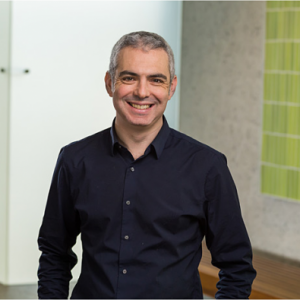
Daniel Steingart | Image
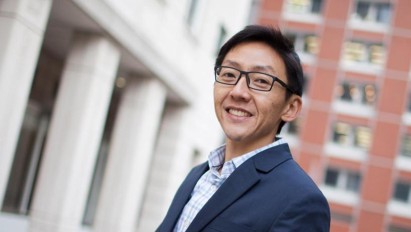
Ngai Yin Yip | Image

Shaina Kelly |
Student Research Opportunities
At Columbia, you don’t have to wait until you graduate to start making a contribution. There are lots of opportunities to gain hands-on experience through research projects and summer internships.
Our faculty-run laboratories always need students to support them with their cutting-edge research spanning across areas such as electrochemical energy, carbon capture, climate modeling, materials recycling, and more.
See Student Research Opportunities
Entrepreneurship Opportunities
Considering launching a startup during your studies or after you graduate? Columbia Engineering Innovation, Design & Entrepreneurship team can help you develop the business acumen to successfully launch your venture.
The team offers specialist entrepreneurship courses, bootcamps, networking opportunities and spaces for prototyping and testing. They also organize competitions with opportunities to win seed funding.
Related Programs

MS in Carbon Management
Our MS in Carbon Management program equips future environmental engineers with the tools to balance carbon management and sustainable resource production.
PhD in Earth and Environmental Engineering
Our PhD opportunities enable you to work together with our leading faculty to solve some of the world’s most pressing environmental challenges.
Why Study Earth and Environmental Engineering at Columbia?
As a student here, you’ll benefit from:
-
Field-Leading Faculty
Join a department full of active scholars publishing pioneering research in areas like energy-efficient desalination, resource recovery from waste materials, and AI-empowered climate modeling.
-
Research Opportunities & Project-Based Learning
Our curriculum offers the perfect balance of theory and practice.
From the Art of Engineering course in your first semester to your year-long senior design project, you'll learn how to apply engineering principles to solve real-world problems.
Opportunities to support faculty with external research projects will complement your studies and expand your theoretical understanding of this diverse and far-reaching field.
-
New York City
Studying in NYC will exposure you to diverse urban and natural environments, offering a perfect living laboratory to engage with issues like urban pollution and coastal management. A hub for research and industry, the city is an ideal place to find internships and make connections for your future.
-
Focus on Sustainability
Engage in problem solving at the intersection of natural and engineered systems by applying technical skills to critical water, energy, minerals, and decarbonization challenges.
-
ABET Accreditation
The BS in Earth and Environmental Engineering program is accredited by the Engineering Accreditation Commission of ABET, under the commission’s General Criteria and Program Criteria for Environmental Engineering and Similarly Named Engineering Programs.
ABET is a nonprofit organization that draws on industry experts to develop standards for education programs in science, computing, and engineering. Accreditation indicates that our program has met its rigorous standards for equipping engineering professionals for the field. -
Comprehensive Career Support
Our dedicated Assistant Director of Graduate Career Placement can provide you with expert advice both during your studies and after graduation. You’ll receive personalized career guidance, application support, tailored workshops, and access to exclusive job opportunities within the earth and environmental engineering sector and beyond.
With strong industry connections, we also facilitate networking events and internships that give you the experience and confidence to stand out in the competitive job market.
-
Major or Minor in Earth and Environmental Engineering
If you are interested in our department but want to major in another field, you can still minor in Earth and Environmental Engineering. Due to our broad and multidisciplinary scope, a number of our courses are already required across other engineering departments. As well as developing interdisciplinary knowledge, this structure will ensure your workload is manageable.
What Will I Learn?
Our curriculum is rooted in basic math, sciences and liberal arts. With a diverse selection of interdisciplinary courses to choose from, you’ll be able to tailor your studies to reflect your interests and career goals. These fundamentals will train you to address the technical and socio-economic challenges related to environmental problems.
Requirements
-
Application Requirements
What we look for:
- Transcripts and school reports. We accept all secondary school qualifications (AP, International Baccalaureate, Cambridge A Levels, National School curricula, etc.). We do not have standardized requirements or “cut-off” test scores for first-year admission but we do expect to see coursework in physics and calculus.
- Teacher recommendations. We would like to learn more about your contributions in the classroom and at school, as well as what you might offer to your Columbia classmates.
- Responses to our Columbia-specific application questions. Your answers will provide us with insight into your intellectual interests and the way in which your curiosity and sense of community might translate to Columbia’s campus.
- A personal statement. We review applications in context, taking into account the multiple, intersecting ways that you have been shaped by your family circumstances. Understanding who you are, what your home responsibilities are, whether you have experienced any systemic and situational barriers and advantages will ensure we can review your application fairly and accurately.
- English language proficiency. If your home language is not English or if your secondary school studies were predominantly in another language, you will need to provide evidence of your English language proficiency. Visit our English Proficiency Requirements for accepted exams and minimum score requirements.
-
Degree Requirements
BS in Earth and Environmental Engineering
To graduate from our BS program you must complete:
- 18 credits (approximately six courses) of technical Earth and Environmental Engineering electives during your final two years.
- The Columbia liberal arts core. This is typically satisfied during the first two years, although you can undertake non-technical electives during your final two years.
Minor in Earth and Environmental Engineering
To earn a minor in Earth and Environmental Engineering, you must complete:
- Six courses selected from a specified list approved by your undergraduate advisor.
Undergraduate Financial Aid
What matters most to us is your ability to thrive at Columbia.
We offer plenty of financial options to support you through your journey with us. Learn more about the types of aid that are available.
Combined Plan
Find out how you can earn a Liberal Arts degree at your current university and also a BS in Earth and Environmental Engineering from Columbia University.
Careers & Outcomes
With your multi-disciplinary training in earth and environmental engineering, you'll be well qualified to pursue careers in industry, government agencies, and organizations specializing in the environment and the provision of basic materials. As well as engineering, you can easily pivot into careers across law, policy, finance, consulting, and even medicine. Your training also provides a strong foundation for graduate studies, with many graduates advancing to MS and PhD programs across chemical, computer, climate, mechanical, materials, and environmental engineering.
Our graduates have found positions with employers including:
- STV
- U.S. Army Engineer Research and Development Center
- AECOM
- The Port Authority of New York
- ARUP
- NYS Department of Environmental Conservation
Department Faculty
Image
Daniel Steingart | Image
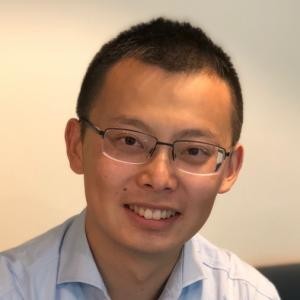
Bolun Xu |
Research and Work Experience Opportunities
Hands-on experience
At Columbia, you don’t have to wait until you graduate to start making a contribution. There are lots of opportunities to gain hands-on experience through research projects and summer internships.
Our faculty-run laboratories always need students to support them with their cutting-edge research spanning across areas such as electrochemical energy, carbon capture, climate modeling, materials recycling, and more.
Student Research Opportunities
Entrepreneurship
Considering launching a startup during your studies or after you graduate? Columbia Engineering Innovation, Design & Entrepreneurship team can help you develop the business acumen to successfully launch your venture.
The team offers specialist entrepreneurship courses, bootcamps, networking opportunities and spaces for prototyping and testing. They also organize competitions with opportunities to win seed funding. This community of talented professors, students and alumni will give you the network of support needed to achieve your entrepreneurial goals.
Entrepreneurship Opportunities
Related Programs
MS in Earth and Environmental Engineering
This MS program explores the most imminent challenges of our time - from sustainable energy and carbon management to safe and secure water and responsible resource management.
MS in Carbon Management
Master the mechanisms. technologies, and processes to sustainable resolve the global energy crisis.
Why Earn your PhD in Earth & Environmental Engineering at Columbia?
Columbia gives you a rigorous Ivy League education in the heart of a vibrant global city for unmatched opportunities and impact.
As a student, you’ll benefit from:
- New York City
Join top talent in one of the world’s most exciting and influential cities. Students choose Columbia Engineering over MIT, Berkeley, and others because of the New York City ecosystem of research and enterprise that can’t be found anywhere else.
- Faculty Who Are Leaders in the Field
Department faculty are active scholars pioneering research in areas like energy-efficient desalination, resource recovery from waste materials, and AI-empowered climate modeling.
- Diverse Multidisciplinary Research Opportunities
Solving the challenges related to a sustainable future requires input from many disciplines. Join experts from other fields in research institutions like Earth Engineering Center, The Earth Institute, Learning the Earth with Artificial Intelligence and Physics, Lenfest Center for Sustainable Energy, and more.
- Columbia University
With a PhD from Columbia, you’ll join one of the world’s most international, accomplished networks of researchers and alumni. Your Ivy League credential will open doors wherever you go and the relationships you build here will accelerate your career.
Research Areas
- Environmental Biochemical Processes
- Environmental Microbiology
- Water Quality Engineering
- Carbon Capture and Storage Technology
- Circular Economy
- Environmental Biotechnology
- Sustainable Resource Recovery (Sustainable Mining)
- Sustainable Water
- Sustainable Sanitation and Wastewater Treatment
- Wastewater Treatment
- Biological Nutrient Removal
- Resource Recovery from Biomass
Additional Information
-
Professional Experience
- Professor of Earth and Environmental Engineering, 2016 – to date
- Associate Professor of Earth and Environmental Engineering, 2011 - 2015
- Assistant Professor of Earth and Environmental Engineering, 2005 – 2010
- Senior Engineer and Technical Specialist, Metcalf and Eddy, AECOM, 2001 - 2005
-
Professional Affiliations
- Water Environment Federation
- International Water Association
- AAAS
-
Honors & Awards
- MacArthur Foundation Fellow, 2015
- WEF Camp Applied Research Award, 2016
- Visiting Professor, Royal Dutch Academy of Arts and Sciences (2014)
- WE&RF Paul Busch Award, 2010
- NSF CAREER Award, 2009
-
Education
- PhD, Environmental Engineering, University of Connecticut
- BE, Chemical Engineering, Indian Institute of Technology, Roorkee