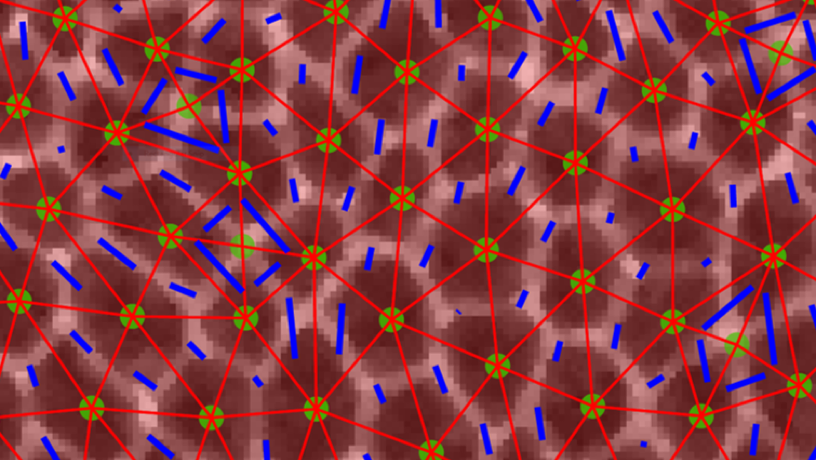
"The fact that we can override an existing force pattern is important, because the set of instructions or steps that an embryo follows during development is very robust, and to perturb them, we usually need methods like genetic mutations or drug injections," Herrera-Perez said. "Achieving such perturbations using optogenetics and light opens up a pathway to flexibly target cellular forces at the precise location and time point we want during development."

Specifically, the researchers studied the process of axis elongation in the fruit fly, where a tissue narrows in one direction and extends along the other direction to rapidly elongate the head-to-tail axis of the embryo. "A similar process occurs in humans as well," Herrera-Perez said. "We showed that modifying the mechanical forces in the tissue affects the way cells behave, for example, how they change shape and how they pack themselves into the tissue. This is helping us to understand how the tissue changes shape and elongates so rapidly and efficiently during normal development."

"The next step is to use these optogenetic tools both to explore how mechanical forces help regulate tissue development in the embryo and to control the mechanics and shape of tissues cultured in the laboratory for a wide range of applications in engineering, biology, and medicine," Kasza said.

Columbia Engineering

Columbia Engineering, based in New York City, is one of the top engineering schools in the U.S. and one of the oldest in the nation. Also known as The Fu Foundation School of Engineering and Applied Science, the School expands knowledge and advances technology through the pioneering research of its more than 220 faculty, while educating undergraduate and graduate students in a collaborative environment to become leaders informed by a firm foundation in engineering. The School’s faculty are at the center of the University’s cross-disciplinary research, contributing to the Data Science Institute, Earth Institute, Zuckerman Mind Brain Behavior Institute, Precision Medicine Initiative, and the Columbia Nano Initiative. Guided by its strategic vision, “Columbia Engineering for Humanity,” the School aims to translate ideas into innovations that foster a sustainable, healthy, secure, connected, and creative humanity.


ABOUT THE STUDY

The study is titled "Using optogenetics to link myosin patterns to contractile cell behaviors during convergent extension."

The study appeared in Biophysical Journal on July 20, 2021.

Authors are: R. Marisol Herrera-Perez, Christian Cupo, Cole Allan, Annie Lin, and Karen E. Kasza.

Department of Mechanical Engineering, Columbia Engineering

This work was supported by NSF Civil, Mechanical, and Manufacturing Innovation Grant 1751841. Karen E. Kasza holds a Career Award at the Scientific Interface from the Burroughs Wellcome Fund, a Clare Boothe Luce Professorship, and a Packard Fellowship.

ISS Liftoff: Introducing our NASA Student Payload Experiment

T-minus seven days and counting: In just under a week, Columbia Space Initiative (CSI) will board the International Space Station (ISS). Sort of.

A CSI team of 20 Columbia undergraduates will fly an experiment they designed on SpaceX’s resupply mission to the ISS. Lift off will take place before dawn on Dec. 21 from NASA’s Kennedy Space Center in Florida and be livestreamed on its website.

Dubbed SPOCS, which stands for Student Payload Opportunity with Citizen Science, the experiment is led by Kalpana (Kal) Ganeshan ’22SEAS and Swati Ravi ’22CC, seniors studying operations research and astrophysics, respectively. CSI was invited to participate as part of a NASA competition honoring twenty years of the ISS. Five student teams, including Columbia’s, received funding to build experiments, fly it up to ISS, and share their project with local K-12 schools.

Each of the experiments will focus on bacteria resistance or sustainability research. The Columbia team is working with two of five NASA-designated “medically important microorganisms”: Pseudomonas aeruginosa and Staphylococcus aureus, bugs commonly found together that are a common cause of chronic wound infections and that are themselves resistant to certain drugs. The team hopes to record how biofilm forms on the bacteria in a low gravity experiment. After thirty days in orbit, the bacteria will return to Columbia to have their DNA analyzed and see whether they respond to antibiotics and antibiotic testing.

ISS Liftoff: How Bacteria Impacts Space Travel

The students hope that studying how different microorganisms interact in space and become antibiotic resistant will help improve antibiotic treatments for astronauts of NASA’s Artemis program, to land the first woman on the moon by 2024. 

“We hope to contribute significantly to the impact of microgravity environments on bacterial genomes, given that there are fewer than five comparable pre-existing datasets for any and all bacteria,” said Theo Nelson ’24CC, a team member who serves as both outreach lead and protocol biologist. “We will be able to hypothesize the new rules of the road for these bacteria in space.” 

Their payload operates and conducts the experiment autonomously. The experiment is able to run without human intervention via a microcontroller connected to custom printed circuit boards. “Currently, most ISS experiments require an astronaut’s time, which is a very limited resource,” says Ganeshan. “Our project is a great opportunity to explore autonomous experimentation.” 

Another challenge involved designing a device to inject a preservative into petri dishes to protect samples from contamination. The team created a system optimized for low gravity while remaining fully sterile and sealed against any contamination, according to Alfonso Ussia ’22SEAS, who serves as the team’s mechanical co-lead. “It’s been especially exciting to put our classroom skills to practice in a project that’s allowed us to work with NASA to answer pressing questions in space exploration that will help astronauts on future long-term spaceflight,” says Ravi. 

The group is advised by Michael Massimino, a former NASA astronaut and current professor of practice in mechanical engineering, as well as Lars Dietrich, an associate professor of biological sciences. Founded in 2015, CSI is a student space technology and outreach club housed within Columbia Engineering’s Department of Mechanical Engineering. It serves as an umbrella organization for mission teams involved in everything from nanosatellite mechanical design to hosting space policy forums. 

Follow CSI as they take over the Columbia Engineering Instagram account on Thursday, December 16.

This year, the Blavatnik Acceleration Fund at Columbia Engineering will support four teams researching bladder cancer, embryonic brain development, spontaneous preterm birth, and the basis of common language disorders. These awards are supported by the School’s Blavatnik Fund for Engineering Innovations in Health, made possible with the generous support from the Blavatnik Family Foundation, headed by Columbia Engineering alumnus Len Blavatnik MS’91. 

Established in 2018, the Blavatnik Fund for Engineering Innovations in Health focuses on research at the intersection of engineering and health, with the aim to expedite the development, application, and commercialization of breakthrough discoveries. 

The fund has supported 24 projects across seven cohorts, teams rooted in cross collaboration. Those investigations have led to breakthroughs in understanding the foundations of memory, enabled the development of an important new technique for stem cell therapy, and supported the construction of a prototype robotic walker that helps children with cerebral palsy learn to walk. 

In addition to sponsoring research projects, the Blavatnik Fund for Engineering Innovations in Health also supports talented doctoral students at a critical stage in their research. Since its inception in 2018, the Blavatnik Doctoral Fellowships have been awarded to 39 students across a range of areas of study–from biomedical optics to single-cell genomics and protein engineering to cutting-edge drug delivery.

The interdisciplinary nature of the research projects supported by the Blavatnik Fund for Engineering Innovations and Health underscores the Engineering School’s strong ties with collaborators at Columbia University Irving Medical Center, including the Vagelos College of Physicians and Surgeons, all working towards a common goal of bringing innovative solutions to engineering and medicine.

About the winning projects: 

Engineering tumor painting nanoparticles to promote immunotherapy responsiveness in bladder cancer

Image
Santiago Correa
Santiago Correa
Image
Nicholas Arpaia
Nicholas Arpaia

PIs: Santiago Correa, assistant professor of biomedical engineering and member of the Herbert Irving Comprehensive Cancer Center; Nicholas Arpaia, associate professor of microbiology & immunology 

This project introduces a highly innovative strategy to enhance immunotherapy for muscle-invasive bladder cancer (MIBC) through the use of tumor 'painting' nanoparticles. These nanoparticles are designed to deliver immunomodulatory proteins directly to tumors via intravesical administration, meeting the urgent need for safer and more effective treatments. 

With MIBC's grim prognosis (~50% 5-year survival rate) and the limited success of current immunotherapies, their project aims to make tumors more responsive to such therapies, potentially benefiting a larger group of patients. Their research is structured around two main objectives. Aim 1 is to demonstrate that these nanoparticles can precisely target and deliver their protein payloads to MIBC tumors in advanced orthotopic mouse models, evaluating the treatment's efficacy and safety. Aim 2 explores the therapeutic potential of using these nanoparticles to deliver the CXCL13 chemokine, thereby priming the tumor microenvironment to enhance the response to PD-1 checkpoint blockade immunotherapy. The researchers hypothesize that CXCL13 delivery will induce the formation of tertiary lymphoid structures, known to amplify anti-cancer immune responses, as evidenced by recent MIBC clinical trials.

Their proposal integrates cutting-edge nanomedicine with immunology to offer a novel approach that could reduce treatment toxicity, target tumors more precisely, and amplify the effectiveness of existing cancer treatments. 

The genomic and synaptic basis of learned sound association and language disorder

Image
David Knowles
David Knowles
Image
David Sulzer
David Sulzer

PIs: David Knowles, assistant professor of computer science and member of the Data Science Institute; David Sulzer, professor of psychiatry, neurology, pharmacology

Learned sound association is the process by which the auditory nervous system associates a sound with a certain outcome. This ability can be impaired in neurodevelopmental conditions such as language disorder and autism spectrum disorder (ASD). 

In this research project, Knowles and Sulzer aim to identify variants and genes affecting language disorder and study the neuronal pathways and circuits involved in sound association along with the mutations that can disrupt them. This will be achieved by using computational approaches to analyze large-scale human genetic data such as genome-wide association studies (GWAS) and post-GWAS analysis methods, and conducting behavioral experiments with fiber photometry in wildtype and mutant mice models using an interactive virtual reality environment.

A multi-omic investigation of the vaginal ecosystem and cervical biomechanical properties in pregnancy

Image
Kristen Myers
Kristin Myers
Image
Tal Korem
Tal Korem
Image
Mirella Mourad
Mirella Mourad

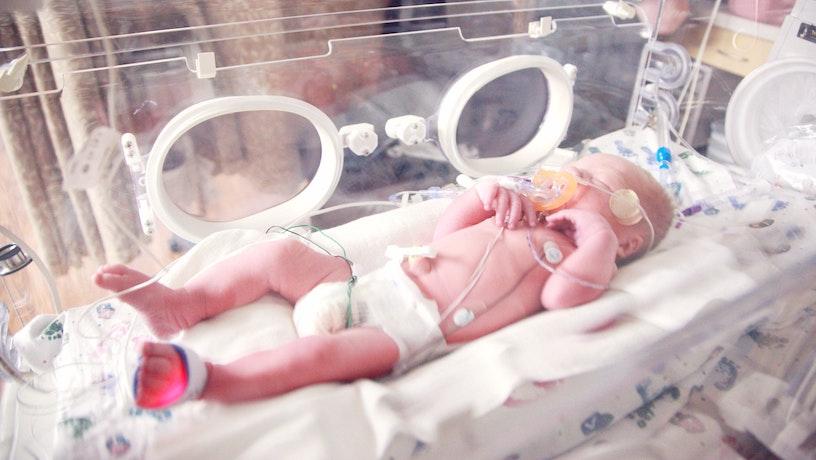
PIs: Kristin Myers, associate professor of mechanical engineering; Tal Korem, assistant professor of systems biology and reproductive sciences in Obstetrics and Gynecology; Mirella Mourad, assistant professor of obstetrics and gynecology 

Spontaneous preterm birth (sPTB) is one of the leading causes of complications during pregnancy, but there are few ways for physicians to predict or prevent it. Researchers have found that two factors — the community of bacteria living in the vagina and physical changes to the cervix — play a role in sPTB. 

With support from the Blavatnik Acceleration Fund, this research team will investigate how the vaginal ecosystem affects the stiffness of the cervix and its mechanical changes during pregnancy. This comprehensive approach could lead to new ways to identify women at risk of preterm birth and develop treatments to strengthen the cervix and prevent early labor.

Mechanobiology of early embryonic brain development

Image
Nandan Nerurkar
Nandan Nerurkar
Image
Maria Toches
Maria Tosches

PIs: Nandan Nerurkar, assistant professor of biomedical engineering; Maria Tosches, assistant professor of biological sciences

Errors in the earliest stages of brain development can lead to severe neurological disorders, but researchers still don’t fully understand the factors that determine how the embryonic brain’s shape and structure are formed. 

With support from the Blavatnik Acceleration Fund, this research team will study how physical forces and genetic signals work together to shape the developing brain. By combining engineering techniques to measure mechanical forces with advanced molecular biology methods, they aim to uncover how tension in the developing brain influences cell growth and identity.

This interdisciplinary approach could reveal fundamental insights into brain development, helping researchers understand how early disruptions can lead to neurological disorders and potentially guiding future treatments.

About the Study

Journal: Nature Cardiovascular Research

The study is titled “An engineered human cardiac tissue model reveals contributions of systemic lupus erythematosus autoantibodies to myocardial injury.”

Authors are: Sharon Fleischer1,*, Trevor R. Nash1,*, Manuel A. Tamargo1, Roberta I. Lock1, Gabriela Venturini2, Margaretha Morsink1, Pamela L. Graney1, Vanessa Li1, Morgan J. Lamberti1, , Martin Liberman1, Youngbin Kim1, Daniel N. Tavakol1, Richard Z. Zhuang1, Jaron Whitehead1, Richard A. Friedman3,4, Rajesh K. Soni5, Jonathan G. Seidman2, Christine E. Seidman2,6,7, Laura Geraldino-Pardilla8, Robert Winchester8,9 and Gordana Vunjak-Novakovic1,8,10,‡

1Department of Biomedical Engineering, Columbia University, New York, NY, USA

2Department of Genetics, Harvard Medical School, Boston, MA, USA

3Biomedical Informatics Shared Resource, Herbert Irving Comprehensive Cancer Center, Columbia University, New York, NY, USA

4Department of Biomedical Informatics, Columbia University, New York, NY, USA

5Proteomics and Macromolecular Crystallography Shared Resource, Herbert Irving Comprehensive Cancer Center, Columbia University, New York, NY, USA

6Division of Cardiovascular Medicine, Brigham and Women’s Hospital & Harvard Medical School, Boston, MA, USA

7Howard Hughes Medical Institute, Chevy Chase, MD, USA

8Department of Medicine, Columbia University, New York, NY, USA

9Columbia Center for Translational Immunology, Columbia University College of Physicians and Surgeons, New York, NY, USA

10College of Dental Medicine, Columbia University, New York, NY, USA

The study was supported by. National Institutes of Health (P41EB027062 and 3R01HL076485 to G.V-N.), the American Heart Association (19TPA34910217 to R.W.), a Pfizer Aspire research award (WI237809 2018 ASPIRE US Rheumatology to R.W.), and the National Science Foundation (NSF1647837 to G.V-N.).

The authors declare no financial or other conflicts of interest.

Subscribe to Medicine & Health