Delivering a Quantum Future at Columbia Engineering
It’s the 100th anniversary of quantum mechanics. Here’s how Columbia’s scientists and engineers are working together to shape the next century.
by Ellen Neff
Across Columbia, theoretical scientists, experimental physicists, chemists, and engineers cross corridors and courtyards with quantum in mind. It’s a uniquely collaborative environment, a refrain echoed by faculty, postdocs, and graduate students across departments and disciplines.
“Columbia is a remarkable place. The scale and intensity of the collaborations here are like nowhere else,” said Dmitri Basov, Higgins Professor of Physics at Columbia University and co-lead of the Columbia Quantum Initiative. “It’s a delightful experience, and a privilege to be part of this team.”
Together, they explore the frontiers of quantum mechanics, a now-century-old theory, in a combined quest to better understand the world — and deliver new quantum technologies. Those will include computers more powerful than any today, networks that can instantaneously transmit perfectly secure information, and sensors to detect quantum-scale changes in bodies, batteries, and more. Getting there means building new foundations that exploit the quantum nature of materials, light, and how they interact.
It’s an area that Columbia excels in, one hundred years in the making.
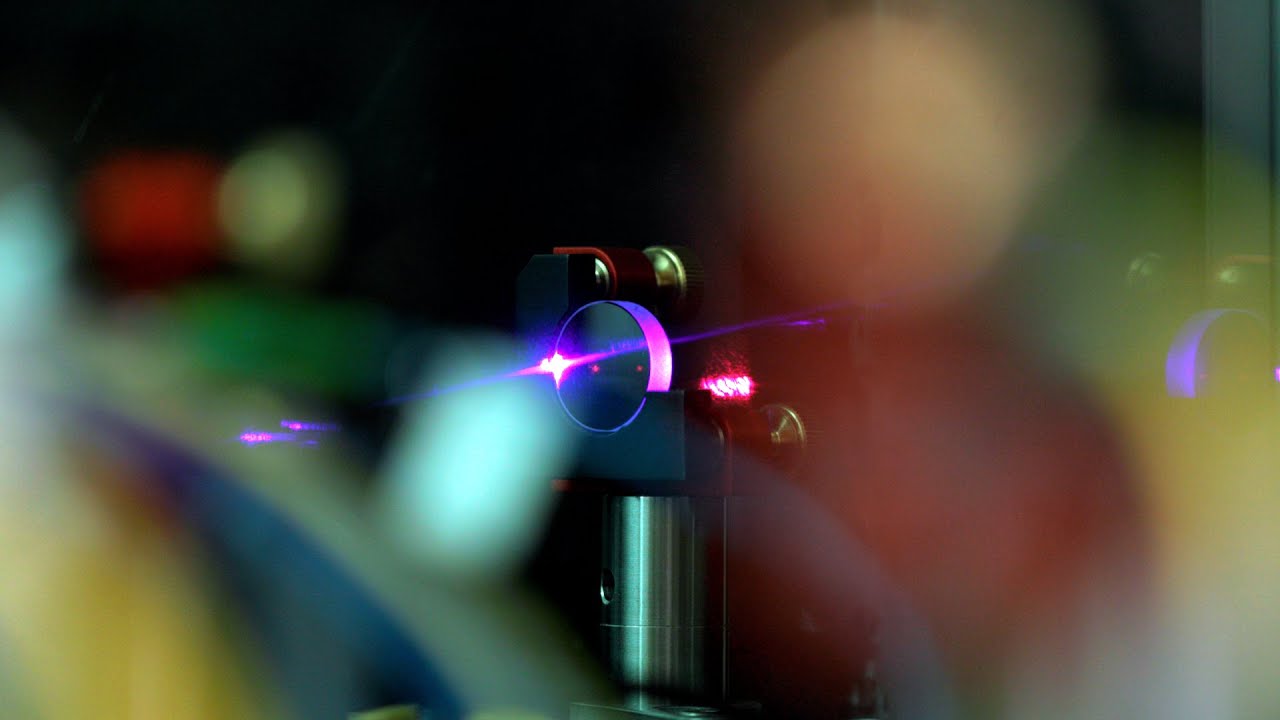
In 1925, Max Born coined “quantum mechanics” to explain, under one theory, the growing number of observations that were physics. Its basic tenets: quantum objects are simultaneously particles, with masses, charges, and discrete amounts of energy called quanta, and waves, with given frequencies and wavelengths. These quantum objects, which include electrons and photons of light, can combine in unique and often counterintuitive ways.
Though scientists in Europe initially developed the theory, Columbia has had a part in quantum history since its earliest days. In 1909, Max Planck brought the concept of energy quanta — the idea that would eventually lend the field its name — to North America in a series of lectures at Columbia. In the coming decades, as theory gave way to applications, Columbians made several Nobel Prize-worthy quantum discoveries that led to now commonplace technologies, including:
- I.I. Rabi’s observations of magnetic resonance, which led to today’s magnetic resonance imaging (MRI).
- Charles Townes’ amplified electromagnetic waves; the result, lasers, are just about everywhere.
- Louis Brus’s connection between a particle’s size and the color of light it emits; these quantum dots have found applications in LED displays, solar panels, and biological sensors.
Today, Columbia’s researchers are creating entirely new materials with unique quantum properties, controlling individual photons of light and entangling them together, and developing theories to guide quantum research into its second century. So, what’s to come? Columbia Engineers share where they think the (quantum) world is heading:
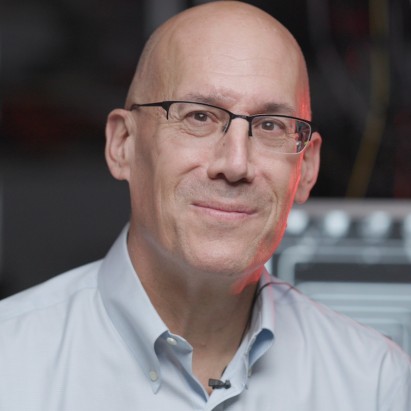
“One hundred years is a pretty long time. Perhaps we will have a quantum computer with a wide variety of applications — ones we aren’t even thinking about now. Quantum sensors may also become ubiquitous, all linked through a network and with capabilities we haven’t even dreamed of yet. I think a lot of it will hinge on these technologies that we’re working on here.”
Alexander Gaeta
David M. Rickey Professor of Applied Physics and Materials Science, Professor of Electrical Engineering, and co-lead of the Columbia Quantum Initiative.
Gaeta studies how laser light interacts with matter.
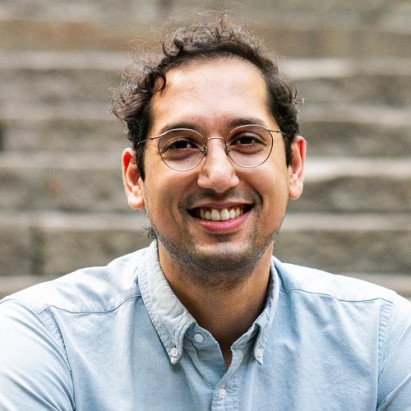
“We’ve been studying quantum systems for several decades already, but it’s been remarkable to see how quickly the field has grown recently. I’m particularly excited about using present-day quantum devices to simulate complex quantum materials and resolve long-standing, fundamental questions about how many electrons interact to create complex emergent behavior. There’s a lot of synergy here that could help us discover materials that revolutionize how we store energy, perform classical computing, and more in this century.”
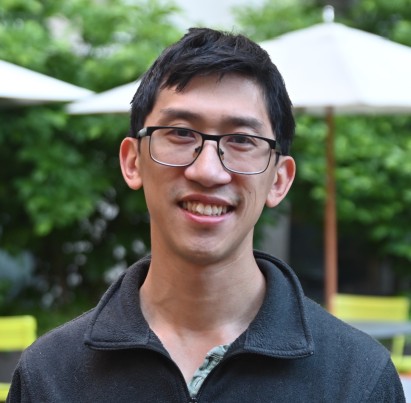
Assistant Professor of Applied Physics and Applied Mathematics Devarakonda combines physics, chemistry, and materials science to create and study quantum materials.
“In the next 100 years, the way we vote, earn, spend, negotiate, medicate, dress, compute, communicate, sense, and think will rely on harnessing the counter-intuitive laws of quantum mechanics. Just as the steam engine and electricity have transformed civilization, there will be no aspect of everyday life untouched by the fact that nature is quantum mechanical.”
Srivani Family Associate Professor of Computer Science. Yuen studies the theoretical foundations of quantum computing.

“We’ve seen the story before with quantum dots, and lasers, and other quantum advances: a curiosity in the lab becomes a breakthrough that becomes routine and used everywhere. We’re in the earliest stages with new kinds of quantum materials and what they will enable, but some of our lab curiosities will translate and scale into real devices.”
Wang Fong-Jen Professor of Mechanical Engineering. Hone studies the fundamental properties of 2D materials and their potential applications.
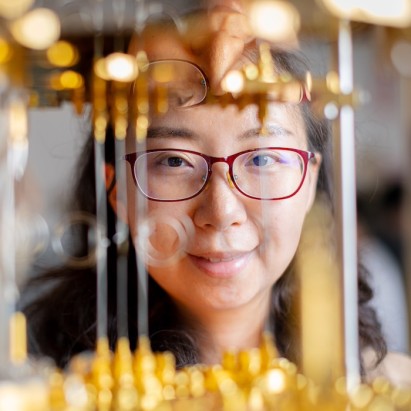
The next 100 years will likely be the most exciting time for quantum technology as we build the promises from decades ago into a reality. Quantum sensing, simulation, and computing will transition from initial demonstrations to useful technologies and beyond. In the end, quantum science may stop being ‘quantum’: it will just be technology, like semiconductors or AI today.
Sherry Zhang
Assistant Professor of Applied Physics and Applied Mathematics
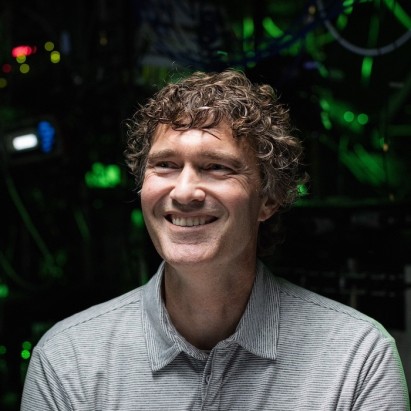
“While quantum computing currently gets much of the attention, quantum sensing may ultimately prove equally, if not more, impactful. The so-called quantum advantage originates from coherent states and quantum- entangled systems, enabling, for example, deep-brain imaging with photons that never touch the sample and detection of gravitational waves. By reducing noise and increasing precision by orders of magnitude, quantum sensing will become critical to fields spanning medical diagnostics to space travel. We have only begun to scratch the surface.”
Professor of Mechanical Engineering. Schuck builds tools that can control single photons and electrons.