
Inside Columbia’s Partnership with Commonwealth Fusion Systems
The new Columbia Fusion Research Center is partnering with industry leaders to make fusion power a reality.
by Grant Currin
Humanity is coming close to harnessing the source of energy that powers stars and supernovas. Once the last technical problems are solved, fusion power plants that emulate the physics of the Sun could provide cheap electricity without carbon emissions, the safety risks of nuclear fission, or the intermittent supply of wind turbines and solar panels.
Decades of publicly funded research set the stage for the vibrant ecosystem of companies now competing to develop the first power plant that runs on nuclear fusion. In the last five years, private investors have put more than $10 billion into these efforts. Nearly one-third of that capital backs one company, Commonwealth Fusion Systems (CFS), as it closes in on passing this vital milestone.
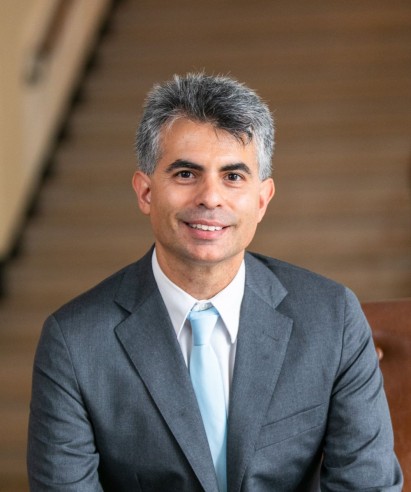
Columbia Engineers — including a dedicated community of undergraduate researchers — are making meaningful contributions to CFS’s effort. “Columbia has been an awesome partner since shortly after we started the company,” says CFS co-founder Brandon Sorbom, who serves as chief science officer. Last year, the University cemented its focus on fusion by establishing the Columbia Fusion Research Center, which has already developed partnerships with roughly a dozen companies in the fusion space. CFS joined as a founding sponsor.
The Center’s founding director, Carlos Paz-Soldan, says these partnerships ensure that Columbia’s research and education stay relevant in this fast-moving sector. “We’re not just pursuing academic milestones, we’re working closely with companies to accelerate their progress and guide our academic work,” says Paz-Soldan, who is an associate professor of applied physics and applied mathematics at Columbia Engineering. “That alignment is rare, and it reflects something distinctive about Columbia Engineering — a willingness to engage directly with industry to solve urgent global challenges.”
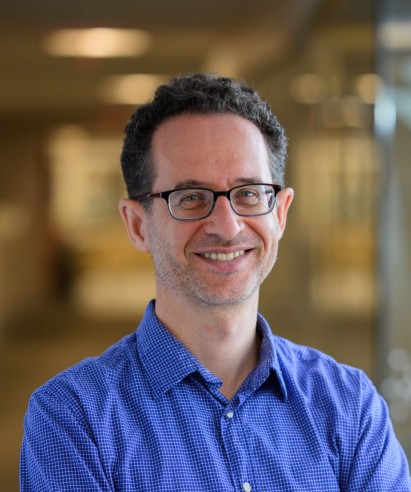
Columbia Engineering Magazine recently had a conversation about industry-academic partnerships with Brandon Sorbom, Carlos Paz-Soldan, and Michael Segal, CFS’s senior director of open innovation.
What is CFS focused on right now?
Sorbom: We’re in a sprint to build a commercially viable fusion device before anyone else does.
How do partnerships with academic institutions help you do that?
Sorbom: Industry is very focused, which is a strength and a weakness. We’re moving fast, so once I get enough data to solve a problem, it’s onto the next thing. The academics we work with have the latitude to go deeper into the details and understand things at a more fundamental level. The company may not need that information to meet our goals for the next couple of years, but it’s incredibly valuable in the long run. They can be working in parallel while we’re building the hardware that gets headline results.
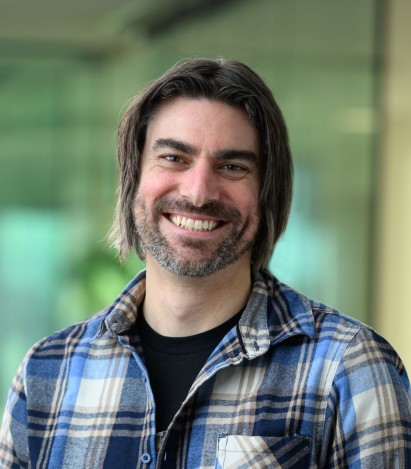
Segal: CFS recognized early on that our success depends on finding capabilities and assets wherever they are. We prioritize speed in our strategy, so if we think we can accomplish something faster with a partner, we’ll do it. Academic partners are especially adept at smaller projects on faster timelines, and they’ve proven flexible when it comes to making adjustments to meet our goals. University partnerships are a growth category for us.
How did Columbia’s partnership with CFS get started?
Segal: We started collaborating with Carlos when he was at General Atomics. When he moved to Columbia, the relationship followed him and started to grow. We began with what you might call a seed project in 2021, and that went really well. We’ve expanded from there.
Paz-Soldan: That first project was focused on understanding plasma positioning and how precise the construction of the machine needs to be. What happens if magnets are off by just a few millimeters? Is the plasma still stable? We developed new computational tools to find those answers. Through that effort, we started developing specific capabilities that match what CFS was looking for. We also identified several loose ends and open questions that merited further investigation.
What’s distinctive about working with Columbia?
Sorbom: When you walk through the lab space, you can tell that people are itching to get results. Sometimes they’re cobbling stuff together because they want to get something up and running. I call it scrappy — they’re actually getting stuff done. It reminds me a lot of MIT, where CFS got its start. Segal: In a lot of fusion departments, you find plasma physicists who run models or test basic science on a small device. As we scale to commercial deployment, CFS needs much broader expertise in areas like mechanical engineering, materials, controls, and chemistry. We’re a founding member of the Columbia Fusion Research Center, and we’re keen to see the center grow and bring in other faculty from other disciplines and departments across the University.
Paz-Soldan: Launching the center has enabled faculty members from other departments with other competencies to come out of the woodwork. We’re working closely to figure out how to get them resources to execute on ideas that contribute to our goal of fusion energy.
How is the partnership helping train the next generation of fusion engineers?
Paz-Soldan: At Columbia, we’ve built a program where undergraduates are hands-on with high-temperature superconducting magnets. With hardware donated by CFS, our students are winding magnets, cooling them with cryogenics, and testing them. It’s producing graduates who are ready to step into the fusion workforce. Some of our students have already gone to work for CFS.
Segal: From our perspective, that pipeline is essential. We want to deploy thousands of power plants. That takes an enormous workforce of scientists, engineers, and technicians.
We don’t want the workforce to be a bottleneck, so we’re working with Columbia and other partners to make sure the talent is there.