
Breakthroughs & Insights
Some of the latest advancements and transformative research findings from Columbia Engineering faculty and collaborators
Edited by Meeri Kim
Bacteria Act as a Trojan Horse for Cancer-killing Viruses
Researchers are developing a new tool to fight cancer. Oncolytic virus therapy uses genetically modified viruses to destroy cancer cells. One of the technology’s biggest hurdles is the body’s own immune system, which can neutralize the cancer-targeting viruses before they reach the tumor.
A team of researchers led by Tal Danino, an associate professor of biomedical engineering at Columbia Engineering, solved the problem by hiding the viruses inside a bacterium. The approach combines the bacteria’s instinct for homing in on tumors with a virus’s knack for infecting and killing cancer cells.
“The bacteria act as an invisibility cloak, hiding the virus from circulating antibodies, and ferrying the virus to where it is needed,” says Zakary S. Singer, a former postdoctoral researcher in Danino’s lab. The platform includes a safeguard against runaway infections. The team designed the virus to require a component from the bacteria to reproduce. Since the bacteria can only live inside the tumor, the virus can’t spread in healthy tissue.

Robots That Can Grow Bigger, Faster, and More Capable
Living things can grow, learn, heal, and reproduce — today’s robots cannot.
Researchers at Columbia Engineering created a novel platform that demonstrates how robots could act as open systems that grow, self-repair, and adapt in the future. For instance, two robots built from the team’s Truss Link technology can combine to form a larger robot. The technology enables 2D structures to fold into 3D shapes, and it allows robots to replace damaged parts with new ones it finds in the environment.
“Biological bodies are all about adaptation — lifeforms can grow, heal, and adapt,” says Hod Lipson, the James and Sally Scapa Professor of Innovation and chair of the Department of Mechanical Engineering at Columbia University, and director of the Creative Machines lab where the work was done. “In large part, this ability stems from the modular nature of biology that can use and reuse modules (amino acids) from other life-forms. “Ultimately, we’ll have to get robots to do the same — to learn to use and reuse parts from other robots.”
Chips Withstand Intense Radiation Inside the Large Hadron Collider
The Large Hadron Collider (LHC), the world’s largest and most powerful particle accelerator, is undergoing an upgrade that will significantly boost its performance by 2030. The High-Luminosity Large Hadron Collider (HL-LHC) project aims to produce up to a tenfold increase in the rate of proton-proton collisions compared to the LHC. Those collisions produce an enormous amount of data — and enough radiation to scramble the bits and logic inside almost any piece of electronic equipment. Fortunately, a research team led by Peter Kinget, the Bernard J. Lechner Professor of Electrical Engineering at Columbia Engineering, in collaboration with the Physics Nevis Laboratories, designed a radiation-hardened integrated circuit chip that can withstand the intense environment of the HL-LHC upgrade.
The chip functions as an analog-to-digital converter that captures electrical signals produced by particle collisions and translates them into digital data that researchers can analyze. Off-the-shelf components simply can’t survive the harsh conditions inside the accelerator, and the market for radiation-resistant circuits is too small to entice investment from commercial chip manufacturers. “Industry just couldn’t justify the effort, so academia had to step in,” says Kinget.
Creating a Bioactive Injectable Hydrogel from Yogurt
Hydrogels are soft materials that mimic the properties of living tissues. These materials stand to transform regenerative medicine by helping the body heal wounds or repair tissue.
However, traditional hydrogels are often composed of synthetic building blocks that lack bioactivity. Researchers from Columbia Engineering designed a framework for bioactive injectable hydrogels that come from an unexpected source: yogurt. They leveraged extracellular vesicles (EVs) derived from yogurt whey as crosslinkers to create hydrogels with tunable mechanical properties.
“This project started as a basic question about how to build EV-based hydrogels. Yogurt EVs gave us a practical tool for that, but they turned out to be more than a model,” says Santiago Correa, assistant professor of biomedical engineering at Columbia Engineering. “We found that they have inherent regenerative potential, which opens the door to new, accessible therapeutic materials.”
Early experiments showed that yogurt EV hydrogels are biocompatible and drive potent angiogenic activity within one week in mice. The material showed no signs of adverse reaction and instead promoted the formation of new blood vessels, a key step in effective tissue regeneration.
Paving the Way for Fully Internal Cochlear Implants
For decades, cochlear implants have restored a sense of sound to people who are deaf or severely hard of hearing. However, these devices rely on an external hearing aid microphone that is positioned on the side of the head, which imposes many lifestyle restrictions on users. They cannot swim, play certain sports, or sleep while wearing the external unit. In addition, the device doesn’t take advantage of how the structure of the ear can help direct, filter, amplify, and localize sounds.
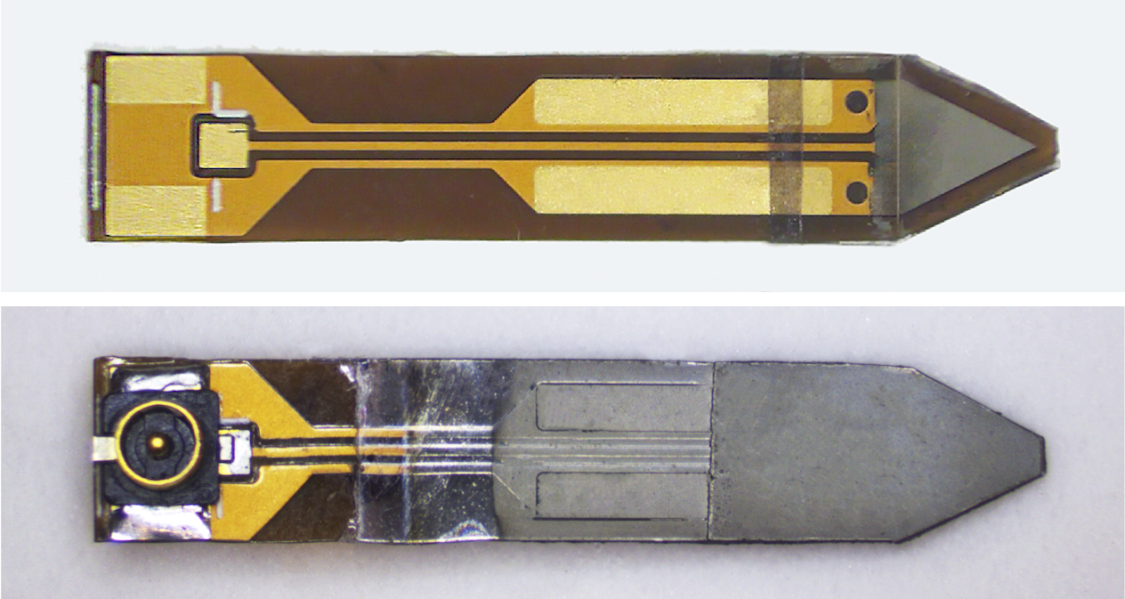
As a step towards a completely internal system, researchers at Columbia Engineering, including professor of biomedical engineering and auditory biophysics Elizabeth Olson, in collaboration with colleagues at MIT and Harvard Medical, developed a tiny microphone totally implantable within the head. The UmboMic consists of a piezoelectric sensor that detects the motion of the umbo — the tip of the hammer-shaped bone connected to the eardrum — paired with a charge amplifier.
“We’re taking advantage of millions of years of evolution,” says Ioannis (John) Kymissis, the Kenneth Brayer Professor of Electrical Engineering and vice dean of Infrastructure and Innovation at Columbia Engineering. “The ear is exquisitely evolved to pick up sound, and our design gets to make use of all of its adaptations for free.”
The UmboMic is comparable in performance to a conventional hearing aid microphone and represents a significant advance towards a fully implantable cochlear implant, which would enhance the quality of life of users.
Leveraging AI to Uncover the Hidden Atomic Structure of Crystals
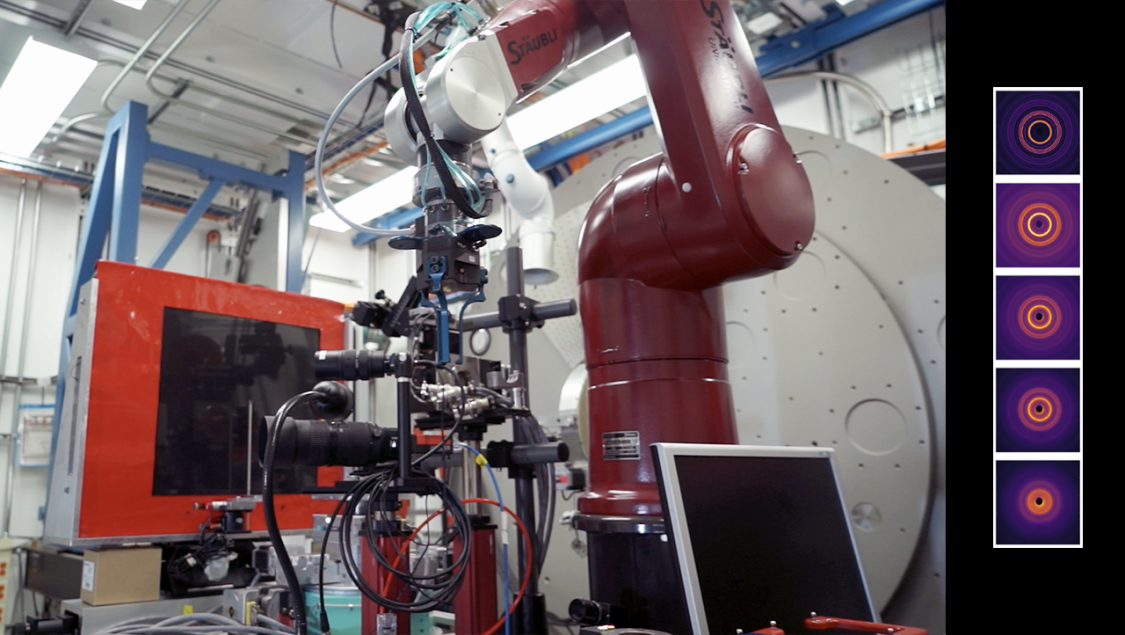
For more than 100 years, scientists have used crystallography to determine the atomic structure of materials. The method works by shining an X-ray beam through a material sample and observing a diffraction pattern. The challenge, however, is that this technique only works well when researchers have large, pure crystals. When they have to settle for a powder of minuscule pieces — called nanocrystals — the method only hints at the unseen structure.
Scientists at Columbia Engineering created a machine learning algorithm that can observe the pattern produced by nanocrystals to infer the material’s atomic structure. In many cases, their
algorithm achieves near-perfect reconstruction of the atomic-scale structure from the highly degraded diffraction information — a feat unimaginable just a couple of years ago.
“The AI solved this problem by learning everything it could from a database of many thousands of known, but unrelated, structures,” says Simon Billinge, professor of materials science and of applied physics and applied mathematics at Columbia Engineering. “Just as ChatGPT learns the patterns of language, the AI model learned the patterns of atomic arrangements that nature allows.”
How the Brain Actively Reshapes What the Eyes See
Perceptual categorization is a fundamental cognitive ability that helps us organize and make sense of all the different things we experience through our senses. For example, we can choose to put carrots in the same category as lettuce (both vegetables) or tangerines (both orange-colored items).
Traditional accounts hold that categorizing an object is the job of the prefrontal cortex, the brain region responsible for reasoning and other high-level functions that make us smart and social. In that view, the eyes and visual regions of the brain are kind of like a security camera collecting data and processing it in a standardized way before passing it off for analysis.
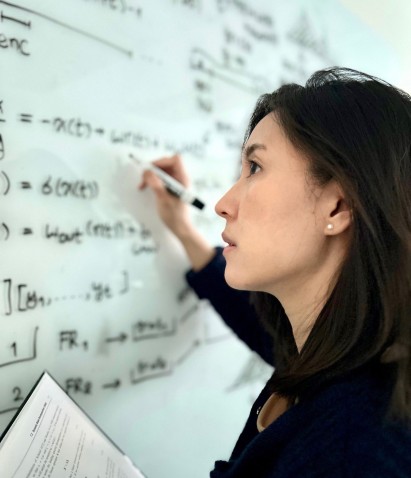
However, Nuttida Rungratsameetaweemana, an assistant professor of biomedical engineering at Columbia Engineering, and her colleagues show that the brain’s visual regions play an active role in making sense of information. Crucially, the way it interprets the information depends on what the rest of the brain is working on.
“Our findings challenge the traditional view that early sensory areas in the brain are simply ‘looking’ or ‘recording’ visual input. In fact, the human brain’s visual system actively reshapes how it represents the exact same object depending on what you’re trying to do,” says Rungratsameetaweemana. “Even in visual areas that are very close to raw information that enters the eyes, the brain has the flexibility to tune its interpretation and responses based on the current task.”
The researchers used functional magnetic resonance imaging (fMRI) to observe people’s brain activity while they put shapes in different categories. The twist was that the “rules” for categorizing the shapes kept changing, which let them determine that the visual cortex was changing how it represented the shapes depending on how the categories had been defined.
The findings may inform designs for AI systems that can better adapt to new situations, since even state-of-the-art AI systems still struggle with flexible task performance. The results may also contribute to understanding how cognitive flexibility might break down in conditions like ADHD or other cognitive disorders.
Lead Photo Credit: © 2014 CERN