CUbiC Annual Review 2026 Highlights
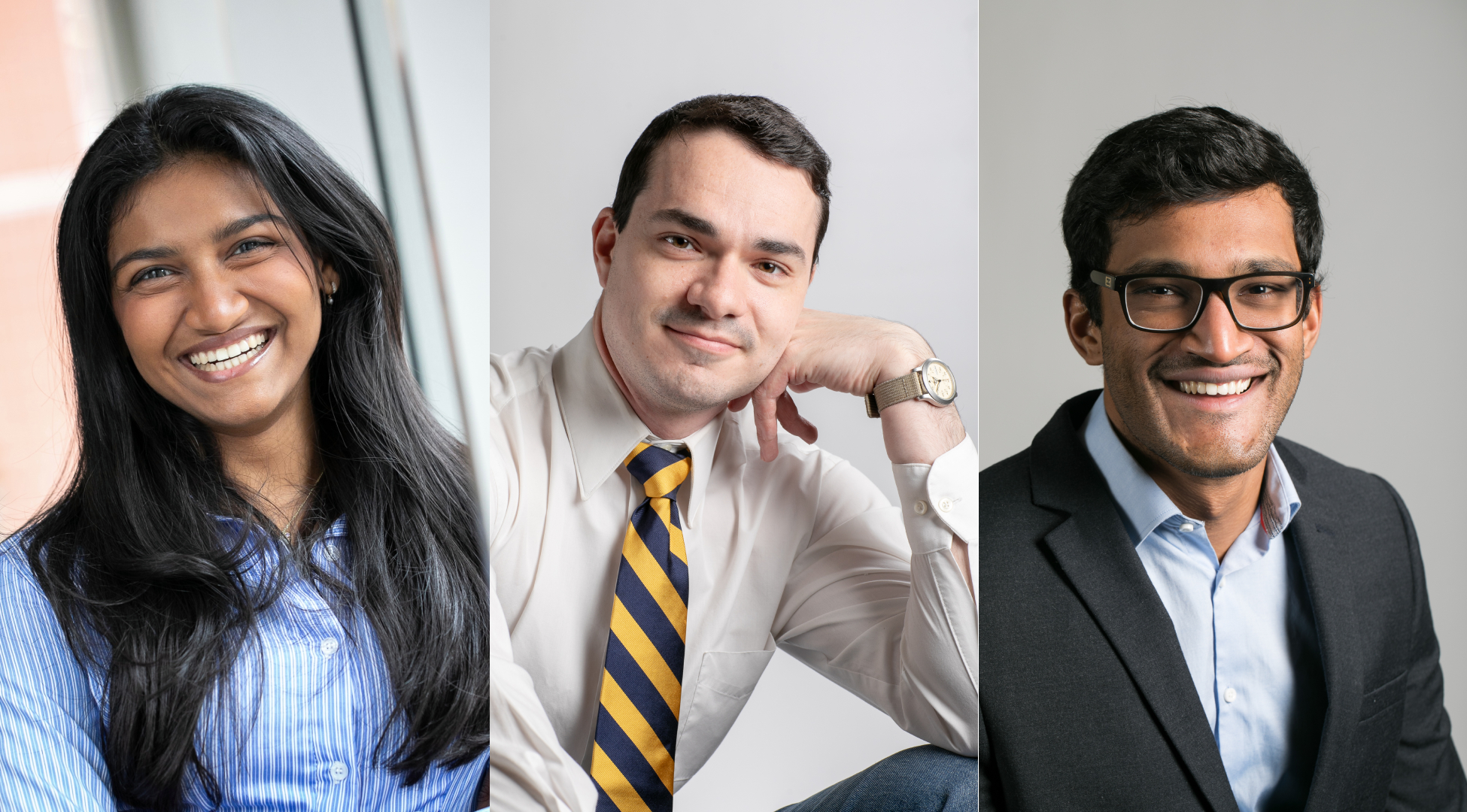
Student achievements
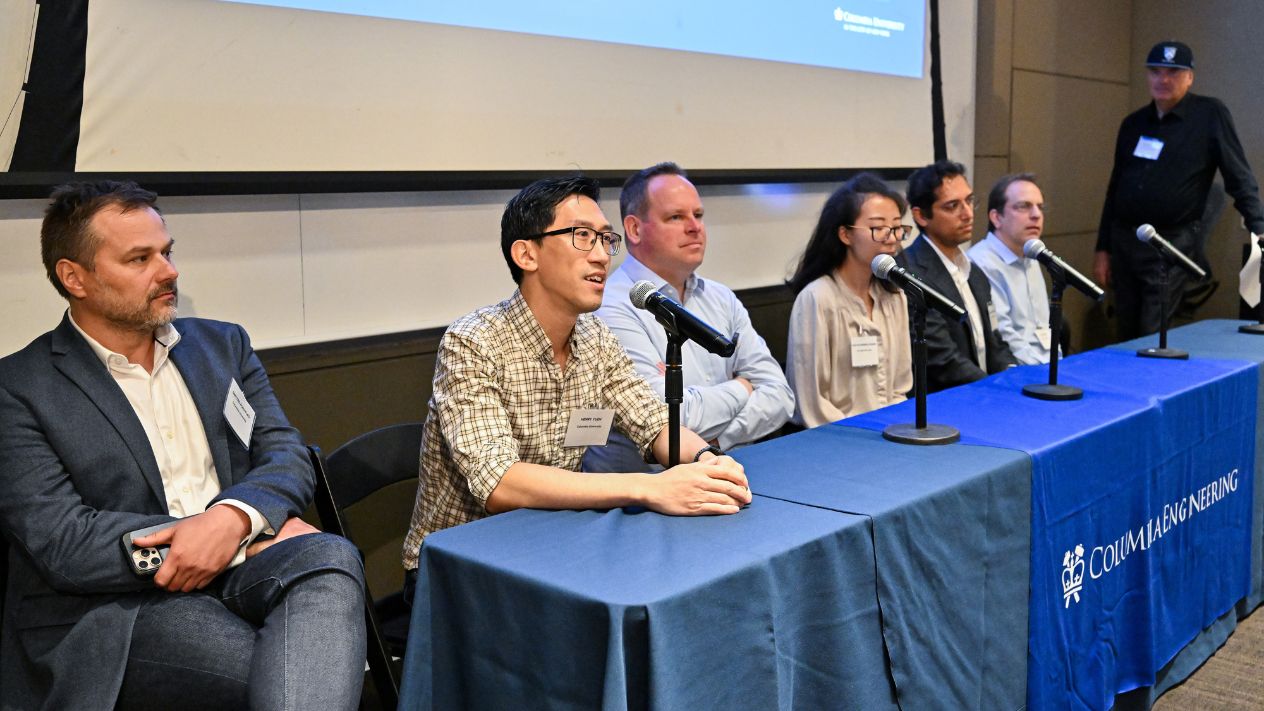
The annual review also commemorated the student research being done across the three themes of CUbiC. Theme 1 is research that takes a systems-level approach to improving bandwidth and connectivity.
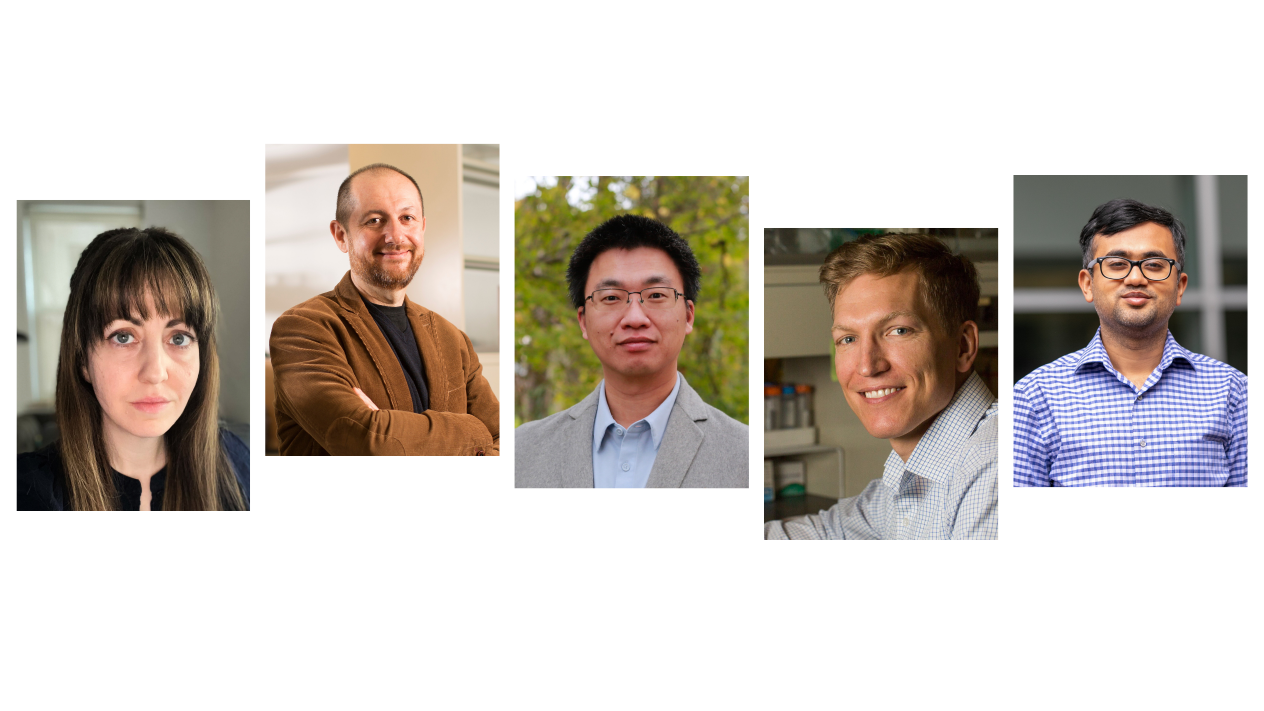
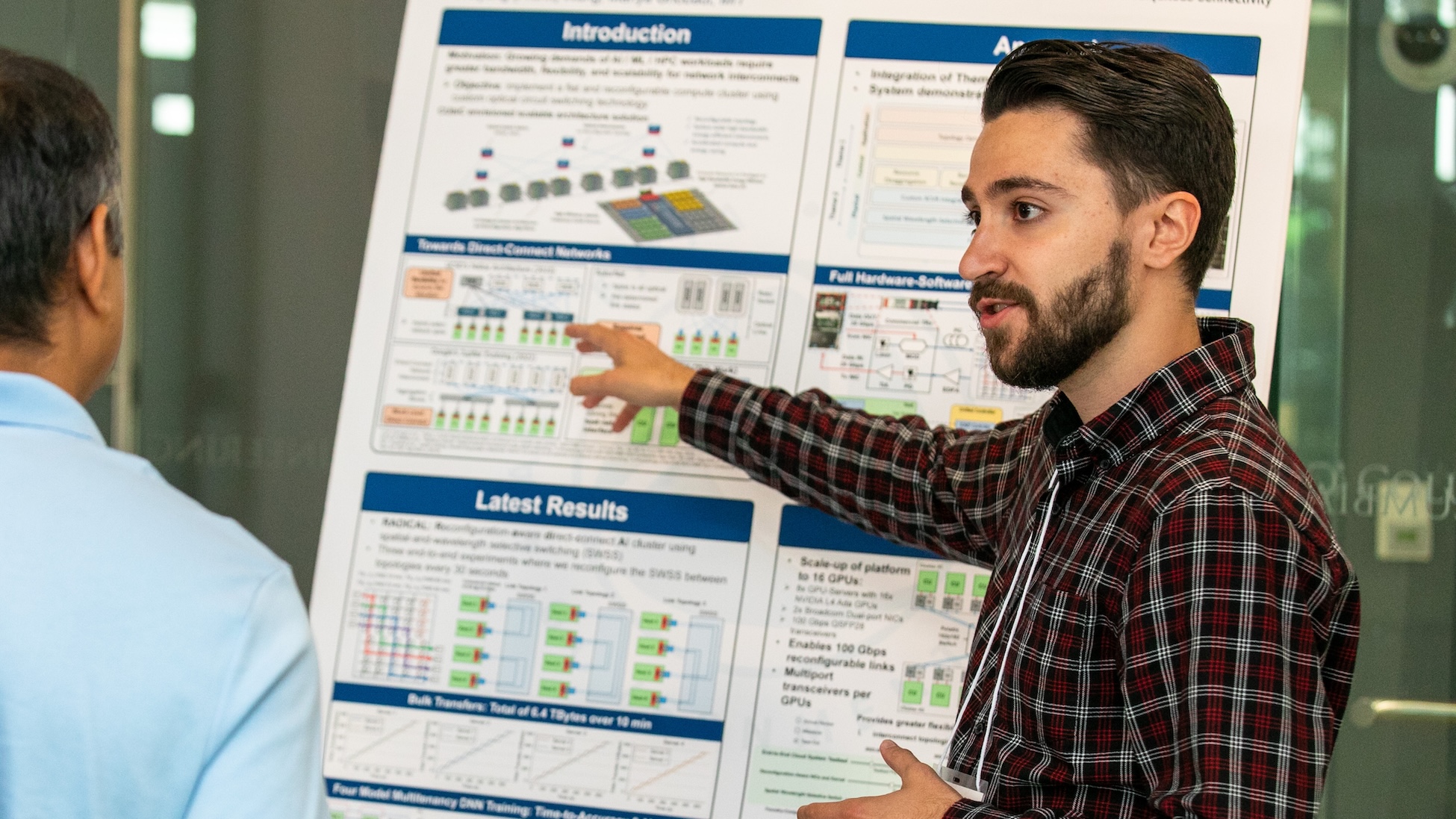
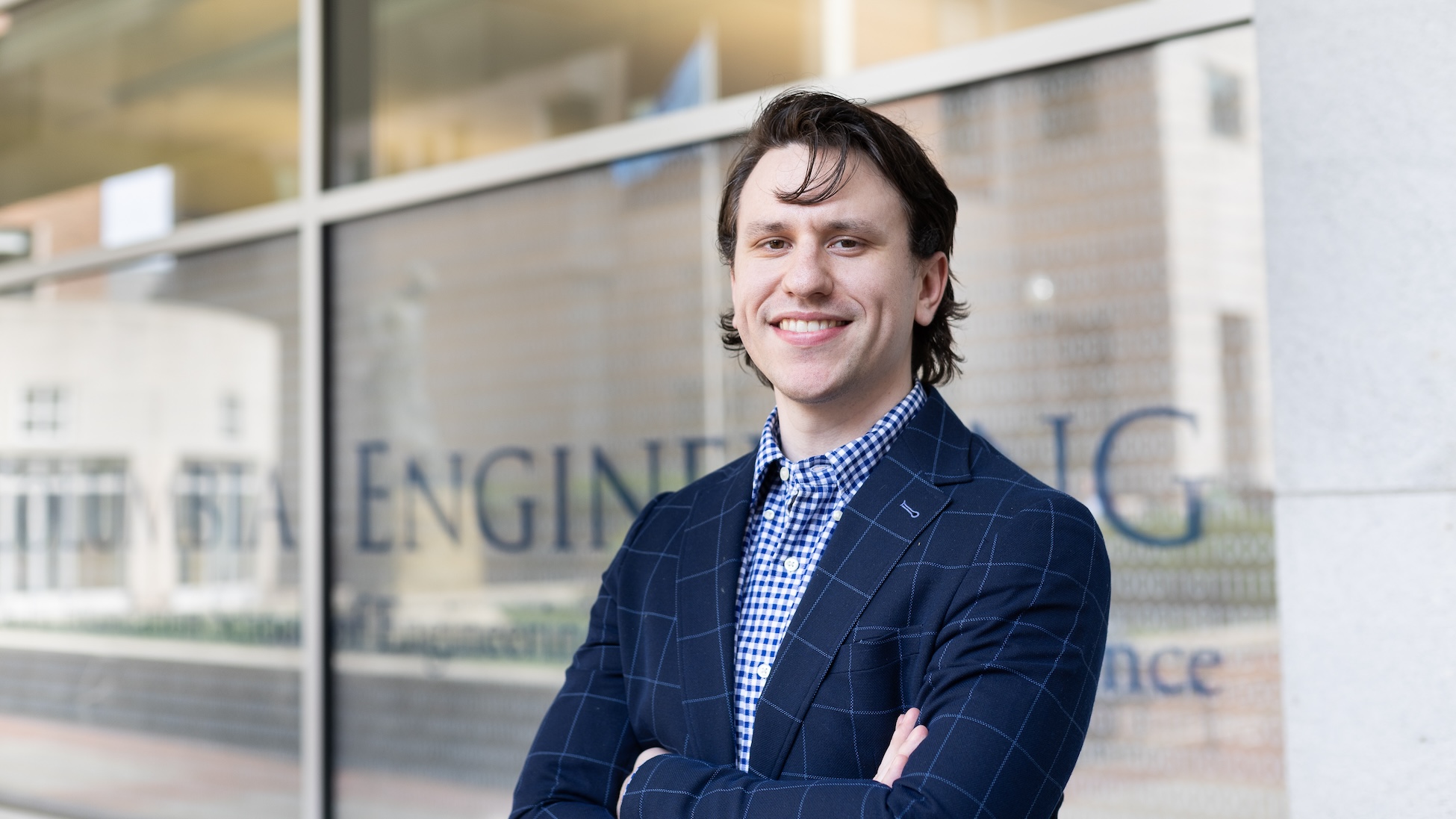
The first award went to Michael Cullen, a fifth-year PhD student at Columbia. He’s been working with CUbiC since the start of the center on the incorporation of photonics to improve bandwidth for AI training systems. His project tested photonic and electronic architectures to test how the two could work together in a simulated environment.
“We can leverage the best of our photonic design and marry it with the best of other circuit designs and achieve really nice results in hybridized communications,” said Cullen.
Anriban Banik, a third-year PhD student from UC Santa Barbara, took home the next award for Theme 1. Banik worked on a framework to improve millimeter-wave radar networks, a system that uses electromagnetic waves to map spaces.
“We wanted to utilize multiple views and introduce multiple radars so we can scale up to a huge network,” he said. Banik’s research leveraged techniques including real-time processing and one-shot fusion to improve calibration of the radar networks.
CUbiC’s second theme is improving bandwidth by developing more efficient electric and photonic links. The first award went to Yunping Wang, a PhD student from UC Berkeley. His project tested a new photonic chiplet for high-bandwidth connectivity with a host system.
Omar Bekdache, a third-year PhD student from the University of Illinois, also won the award for Theme 2. He tested a new framework for compute connectivity. “My biggest takeaway was the set of new insights that emerged from our COCO working group discussions and experiments, such as modeling the COCO fabric and recognizing that compute energy often dominates connectivity energy,” Bekdache said.
The third theme for CUbiC research is improving wireless connectivity, including developing the technology that could lead to next-generation wireless networks.
Jurui Qi, a PhD student from UC San Diego, won an award for Theme 3. He presented a hybrid reconfigurable intelligent surface (RIS). Qi describes his hybrid RIS as a “hardware platform for future communications.” This technology could be used in future 6G networks, and Qi reported promising results indicating that his hybrid RIS could enable real-time device localization.
The second award for Theme 3 went to Nagesh Patle, a fifth-year PhD student at UC Berkeley. His project was tackling limits in power delivery for eventual use in data centers.
“We can shrink the inductors, make our transients really fast, and increase our efficiency,” he said. “The trade-off, of course, is higher cost and more complexity.” Patle proposed a hybrid switch capacitor that could deliver high voltage in a design only a few millimeters tall.
The CUbiC annual review concluded after the awards ceremony. In the next year, the team of researchers, students, and industry partners will continue to develop the connectivity solutions. At the conclusion of her opening remarks, Bergman summed up the last year of CUbiC. “We’ve delivered,” she said. “We've delivered these immensely energy-efficient, bandwidth-dense connectivity solutions at the system level. We have this new technology now.”
Highlights: Designing for Impact
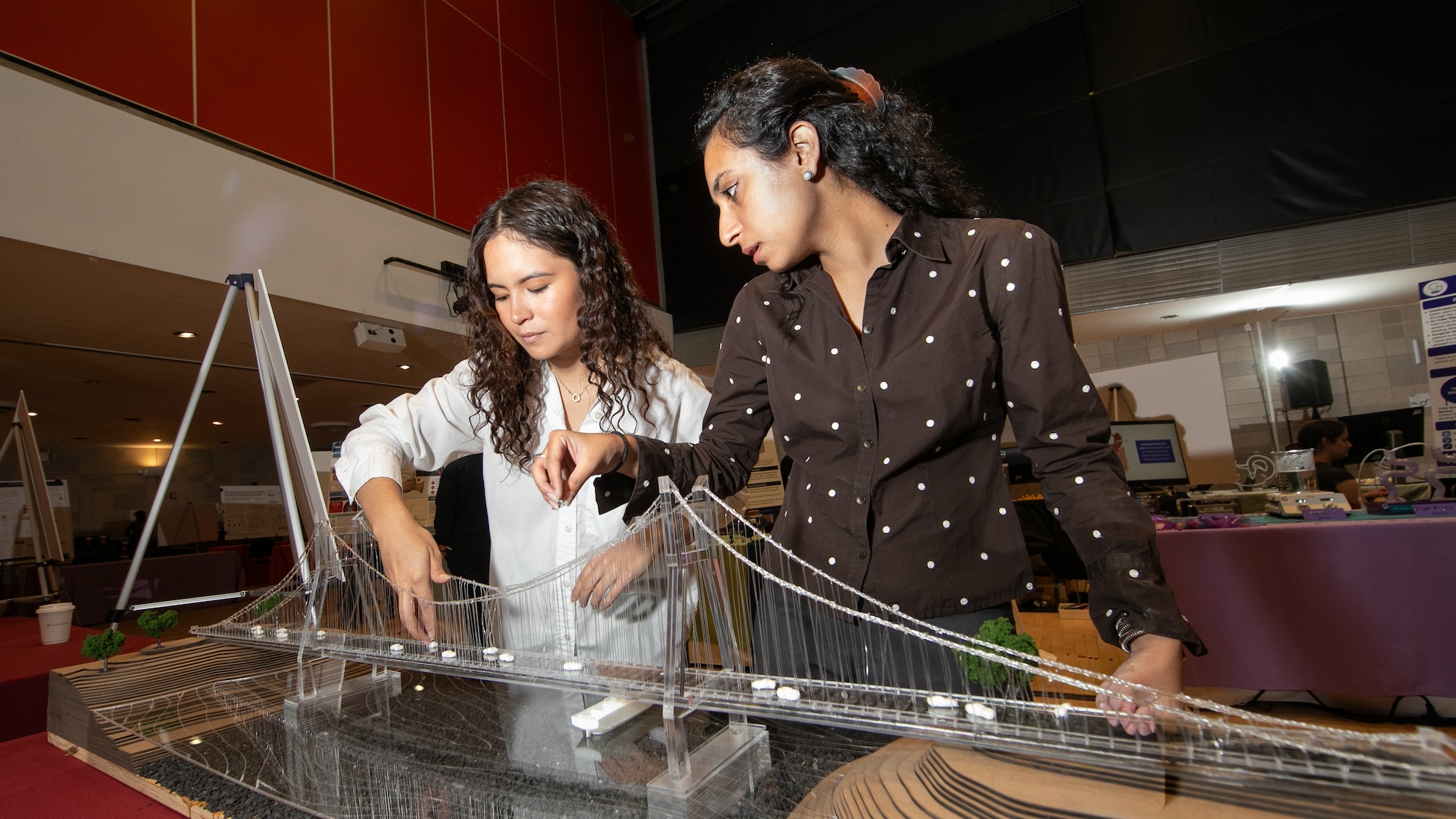
Here’s a look at some of the capstone projects on display at Senior Design Expo 2026. Credit: Timothy Lee
Many of the projects in this year’s expo integrated AI with custom hardware. The Clinical Handwashing Coach, which tracks handwashing sessions, is being tested at a hospital in Pasadena, California. The team of electrical engineering students designed an AI system to ensure that medical professionals comply with handwashing protocols. Other teams from the department used AI to create noise-canceling headphones with real-time language detection and translation (team ANURA) and a wearable device that inexpensively creates digital transcriptions (CLACS).
A couple of projects tackled wheelchair comfort and mobility autonomy. The Mechanical Engineering team STAR (Self-Transfer with Automated Reversing) Lift made moving in and out of a wheelchair easier for wheelchair users with upper-body mobility, allowing them to transfer themselves to a bed without assistance. Team Wheel-E created a specialized seat cushion for wheelchair users that helps alleviate the painful symptoms of prolonged sitting.
Urban green infrastructure was the main theme for many projects in the Department of Civil Engineering and Engineering Mechanics. The Morningside Park Rehabilitation Project reimagined the local neighborhood park by proposing two new community centers for public use and an upgraded drainage system that can handle heavier rainfall runoff.
From AI devices to reimagining a neighborhood park, the Class of 2026 proved that the best engineering goes beyond the classroom and makes an impact in the world.
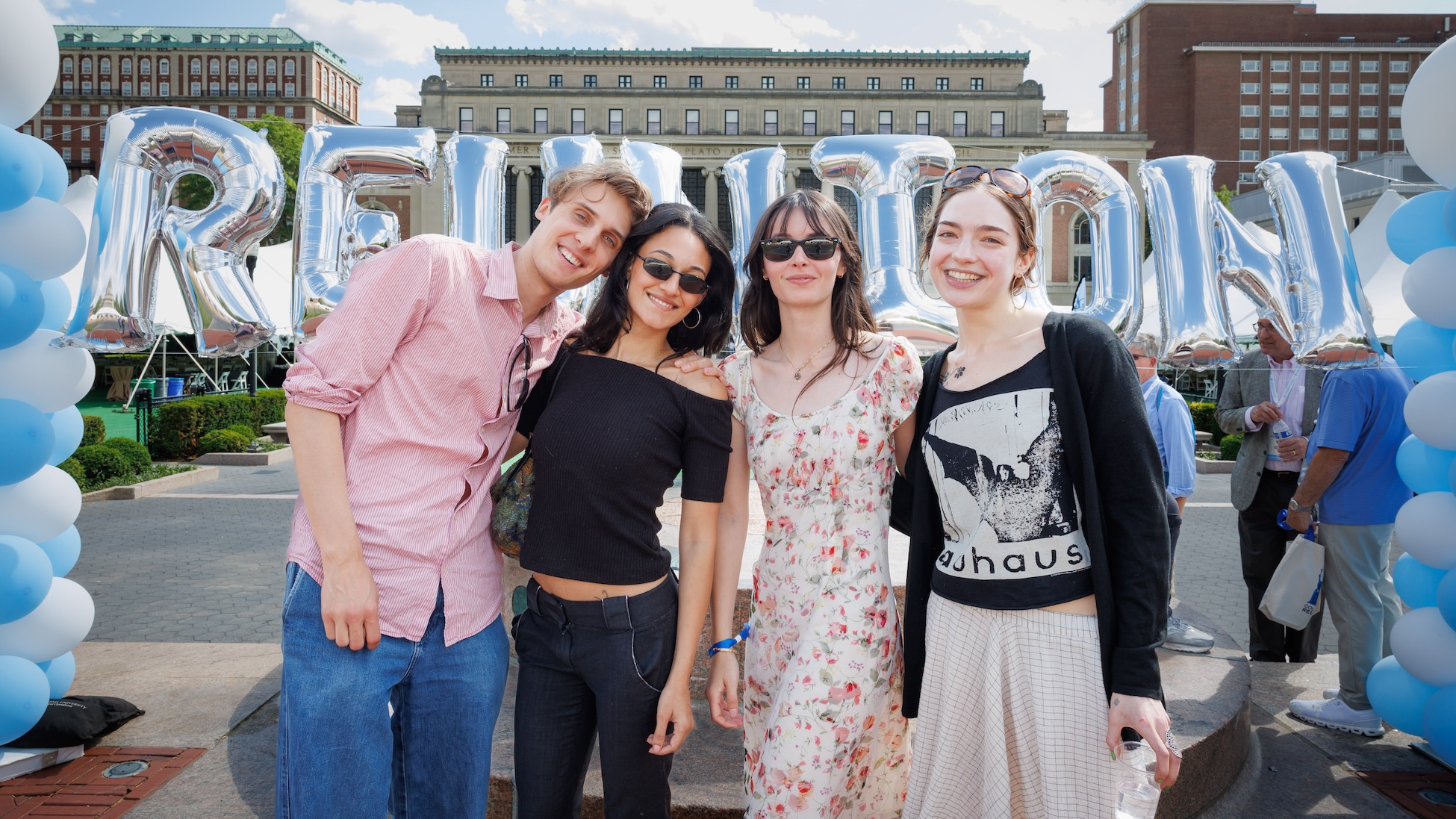
Reunion Weekend 2026
Dean Shih-Fu Chang recognized Raymond P. Daddazio BS'75, MS'76, EngScD'82 with the Thomas Egleston Medal for Distinguished Engineering Achievement. Daddazio is chairman of the Thornton Tomasetti Foundation and former president of Thornton Tomasetti. Dean Chang also recognized Azmi T. Mikati BS'94, the CEO of M1 Group, with the Samuel Johnson Medal for Distinguished Achievement Beyond Engineering and Applied Science.
Over the weekend, alumni and guests attended lectures from Columbia Engineering faculty, including a talk on AI and neural intelligence with Richard Zemel, Trianthe Dakolias Professor of Engineering and Applied Science and professor of computer science; as well as a presentation on energy, transition, and mining with Dan Steingart, Stanley-Thompson Professor of Chemical Metallurgy, professor of chemical engineering, and chair of the Department of Earth and Environmental Engineering.
On Friday, attendees toured the Plasma Physics Lab and the Robotics and Rehabilitation (RoAR) Lab. They also mingled at a general All Class Reception and recognized classes celebrating their 50- and 25-year anniversaries. Members of the Class of 1976 received Golden Lions pins, while the Class of 2001 members received Silver Lions pins to commemorate the milestone and their entry into the Golden and Silver Lions Societies. The day ended with a Reunion Lawn Party for alumni of Columbia Engineering, Columbia College, and the School of General Studies.
Dean Chang gave attendees an overview of Columbia Engineering news highlights and research updates on Saturday at the Dean’s Breakfast. The Engineering School also hosted a special reception for alumni of its master’s and doctoral programs. The Society of Columbia Graduates sponsored the Great Teacher Awards reception to recognize the 2026 honorees. Harry West, professor of professional practice in the Department of Industrial Engineering and Operations Research, received the Great Teacher Award for the Engineering School. Caterina Pizzigoni, associate professor of history, was the Columbia College recipient. The day closed with receptions and dinners for the classes and a Starlight Celebration on Low Plaza featuring a live band, dessert, and champagne.