Reducing Transit Transmission
Rising sophomore Destiny Meyers ’23 is among a group of civil and mechanical engineers looking at how to make mass transit like New York City’s subway less amenable to viral transmission. Having previously partnered with two of her teammates in Columbia’s remote DIY Ventilator Challenge in the spring, Meyers was excited to apply her background in civil engineering to rethinking public transportation. Her team’s concept—Stay In The Loop, a customizable and economical system of frequently sanitized hooks and loops allowing riders to stand balanced on moving trains without having to touch handrails—was inspired in part by theme parks that provide visitors with bracelets and 3D glasses later returned and cleaned for reuse.
“We knew it would be difficult to limit the number of people on the subway, especially since essential workers use it as their primary mode of transportation,” she says from her home in New Mexico. “But if we could decrease the transmission of germs through high-touch surfaces, we might have something special.”
While her teammates explored hook prototypes and means of sterilizing mechanisms, Meyers focused on designing the loops—initially investigating whether plastic or fabric would make the most sense and then, after calculating that fabric would be both cheaper and easier to clean, utilizing her sewing skills to design and iterate a prototype. The group met frequently online and regularly consulted with peers and faculty like civil engineering Professor Sharon Di and electrical engineering Senior Lecturer David Vallancourt on fine-tuning their design, documenting their work, and mapping out potential next steps.
The team has continued to hone their system after earning second place at the first round of competition in July, connecting with transit officials in Miami-Dade for feedback and hopefully to participate in a future pilot program. They also plan to apply for an ignition grant from Columbia to support their progress.
I’m amazed at the progress we made working from the unknown to the known. We had no idea that we’d end up creating a platform that would make a difference to first-years as we learned the importance of centering design on the user.
Improving Access to Vaccines
For the time being prevention is our best weapon against the pandemic and others yet to come, but vaccines will hopefully become available sooner rather than later. For biomedical engineer Min Tsou ’23, rising to the challenge of improving vaccine access in moments of extreme demand was a huge draw—especially once she learned that the special borosilicate glass used in vials is in perilously short supply.
Joining forces with biologist Bhoomika Kumar ’23CC and computer scientist Erin Liang ’23, Tsou is exploring creating a new multidose vial at less cost using cheaper materials while still seamlessly accommodating all the logistical issues of scaling up production within existing manufacturing and distribution processes. After extensive R&D, they came up with VaxFlask, a modular design which holds four doses per vial using just 14% of the scarce borosilicate glass.
Since constraints of time and equipment made it tough to present judges with a tangible product, the team—dubbed The Immunogeniuses—focused on the unique learning experience the challenge entailed, with extensive access to faculty experts and industry mentors alike imparting invaluable insights into the multidimensional contexts of delivering pharmaceuticals to patients.
“Our concept evolved a lot as we spoke with vaccine manufacturers,” Tsou says from home in Hawaii. “It really showed how important it is to consult with industry professionals at every stage of the process. Getting all the feedback helped us follow FDA regulations and develop a design that can be easily incorporated into existing production lines.”
Like many of their fellow teams, The Immunogeniuses approached the competition as a launching pad for further exploration of their concept. “In addition to working on 3D-printing a prototype, we’re in the process of reaching out to vial manufacturers for prototyping as well as pharmaceutical companies potentially interested in testing their vaccines in VaxFlask,” Tsou says. “It’s been incredibly rewarding to work on solving an important real-world issue affecting the health and lifestyles of billions worldwide.” After taking second in the first round, the team ultimately earned the $5000 grand prize, which they’re already investing in prototyping and initial tests.
Enhancing Communication
Pandemic notwithstanding, countless patients still need medical attention for a myriad of issues, routine and otherwise. For people who are hearing-impaired, particularly in developing nations, every step of that process can be a slog—a disproportionate burden that inspired a project known as Communic-aid for the challenge about reducing inequities. After extensive research, an international team of incoming data science and business analytics M.S. candidates devised an array of communication aids to help convey complex descriptions and terminologies. Their initial focus: working with India’s Ministry of Social Justice and Empowerment to assist deaf COVID patients in the state of Rajasthan.
“Based on the feedback, we’re planning to expand to cover multiple diseases across the hospital environment,” says Tushar Agrawal MS’22 from home in Dubai. “Next up, we’re recreating our visual aids in several regional languages and Indian Sign Language.” After taking second place in the first round, the Communic-aid team went on to win the $2000 prize in the finals’ “Connected” category. They’re now in the process of applying for an ignition grant to extend and refine their work.
In the challenge devoted to making the overall practice of medicine safer, three researchers from Professor Kristin Myers’ Soft Tissue Lab teamed up with a peer from Tuskegee University to explore how smarter communication could help keep expecting mothers out of the hospital as much as possible. Streamlining existing technologies, the team sought to improve telemedicine for prenatal care with a versatile and easy-to-use device helping pregnant women measure vitals at home and remotely coordinate with physicians.
“The thing that surprised me the most was that we spent more time thinking and researching and talking to doctors and new moms about flaws in the system and potential improvements than actually working on our prototype,” says mechanical engineer Arielle Feder ’22 from Westchester County, New York. “In the end, our solution felt relatively simple and I was surprised that nothing like it was already implemented. It taught me the importance of honing in on the problem before jumping to solutions, and that the most effective solution does not have to be the most complicated.”
Beyond medicine, human fellowship is no less important to public health—among students as much as anyone. For the challenge geared to facilitating social interaction in times of COVID, a diverse team worked out Columbia Connect, a hyperlocal network linking distant Columbians around the world.
“Our initial ideas revolved around different groups of people and how to make online interaction more intimate until we settled on a platform for incoming freshmen like me,” says aspiring computer scientist Martha Wangechi Njuguna ’24 from her home in Nairobi, Kenya. Aiming to create spaces for online interaction as natural as meeting in person, the group hosts a variety of virtual events and curates tips, memes, playlists and more for students. Along the way, they’ve consulted with Professors Lydia Chilton and Harry West on making their design as user-friendly as possible.
“I’m amazed at the progress we made working from the unknown to the known,” Njuguna says. “We had no idea that we’d end up creating a platform that would make a difference to first-years as we learned the importance of centering design on the user.” After earning first place in their competition, the team is currently collaborating with student groups and fostering self-sustaining virtual communities.
Smarter Energy Storage
In the end, the challenges gave many participants new insight into how their talents can best be used to improve human conditions. For a group of incoming first-years, the competition combating climate change through smarter energy storage marked their inaugural experience as Columbia engineers. As Team Beyond Organic, the novices developed a flexible system using renewables to charge battery-powered hydroponic farms with lower carbon emissions and using far fewer resources than conventional farming techniques—earning first place in their competition’s initial round in the process.
“I really enjoyed learning how renewables fit into the electrical grid and want to continue on that topic during my time at Columbia,” says aspiring earth and environmental engineer Andrew Fagerheim ’24 from home in upstate New York. “I’m so glad to have had the experience because it’s given me so much to think about and look forward to over the next few years."
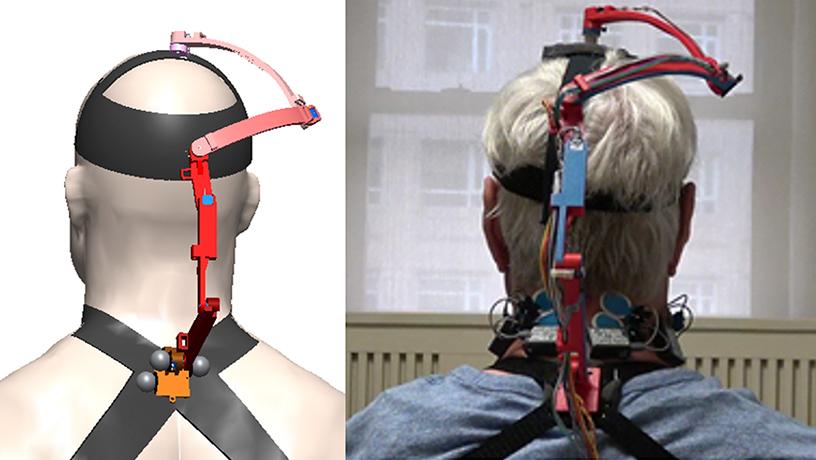
“We wanted to scientifically demonstrate how robotic TruST can be used to deliver an intense activity-based postural and reaching training to improve the functional sitting abilities of children with CP and trunk control problems”, says Victor Santamaria, a physical therapist and associate researcher scientist in Agrawal’s Robotics and Rehabilitation Laboratory, and first author of the paper.
Recent developments in robotic equipment have enabled clinicians to address engagement, repetition, and intensity for their patients to practice task-oriented movements in CP. A team led by Agrawal, together with other researchers at Teacher’s College and the Columbia University Irving Medical Center, recently won a five-year National Institutes of Health R01 award (#1R01 HD101903-01) to conduct a randomized clinical trial.
The project—"Improving seated postural control and upper extremity function in bilateral CP with a robotic Trunk-Support-Trainer (TruST)"—will involve up to 80 children with poor trunk control. Some will use the TruST robotic rehabilitation while others will try conventional rehabilitation. This new NIH study will compare the efficacy of the motorized TruST to engage children in play-oriented practice while advancing their skill progression with static trunk support.
“Our new NIH project is a randomized clinical trial with a large sample size to study the efficacy of TruST-intervention as a unique therapeutic solution to promote seated functional abilities in children with bilateral CP,” Agrawal adds
Columbia Engineering
Columbia Engineering, based in New York City, is one of the top engineering schools in the U.S. and one of the oldest in the nation. Also known as The Fu Foundation School of Engineering and Applied Science, the School expands knowledge and advances technology through the pioneering research of its more than 220 faculty, while educating undergraduate and graduate students in a collaborative environment to become leaders informed by a firm foundation in engineering. The School’s faculty are at the center of the University’s cross-disciplinary research, contributing to the Data Science Institute, Earth Institute, Zuckerman Mind Brain Behavior Institute, Precision Medicine Initiative, and the Columbia Nano Initiative. Guided by its strategic vision, “Columbia Engineering for Humanity,” the School aims to translate ideas into innovations that foster a sustainable, healthy, secure, connected, and creative humanity.
ABOUT THE STUDY
The study is titled “Promoting Functional and Independent Sitting in Children with Cerebral Palsy Using the Robotic Trunk Support Trainer.”
Authors are: Victor Santamaria, Moiz Khan, Tatiana Luna, Jiyeon Kang, Joseph Dutkowsky, Andrew Gordon, and Sunil Agrawal, Department of Mechanical Engineering, Columbia Engineering.
The pilot study was partially funded by the Langer Foundation as administered by The Order of Malta. The authors declare no financial or other conflicts of interest.
Columbia Engineers Share Their Stories - Anna Longobardo
Bringing Together Thinkers and Creators
From events on campus early in the year to more recent virtual gatherings, Columbia Engineering convened innovative thinkers and creators across the disciplines. After launching the new Makerspace in January, we welcomed Mediacom Chair and CEO Rocco Commisso ’71 ’75BUS for the Magill Lecture. The Data Science Institute’s annual Data Science Day went remote this spring with special guest Pat Bajari, Chief Economist and Vice President of Amazon Core AI, while Nobel Laureate Steve Chu delivered the annual Armstrong lecture in November. Meanwhile, Columbia Engineering Entrepreneurship hosted a variety of talks in addition to the largest-ever Fast Pitch competition.
Confronting our Climate Future
The next decade will be pivotal for averting a climate crisis; our faculty have been hard at work creating the tools to meet the challenge. From cleaning up the construction industry to finding new ways to sequester carbon--from making big data more energy efficient to finding cleaner sources of that energy, engineers and applied scientists are increasingly integral to the future of a healthy planet. That’s true not just for the sustainable technologies they produce, but also for their ability to create mechanisms for systemic change, reconceiving how markets invest in clean tech and how cities balance the fiscal and cultural impacts of rising seas.
Mastering Design
While still on campus this February, we partnered with Tikkun Olam Makers (TOM) for a weeks-long makeathon devoted to designing solutions for veterans’ unique challenges. Later, with the nation in lockdown, we hosted six remote design challenges focused on COVID and climate change that yielded promising startups from students across the university and globe. Over the summer, an array of undergrads continued ambitious research ranging from analyzing energy markets to exploring the mechanics of pregnancy.
Confronting COVID-19
As the global pandemic hit this spring, Columbia engineers leveraged their cross-disciplinary expertise to slow the spread, improve diagnostics, develop treatments, and save lives. Amid a worldwide shortage of personal protective equipment, teams of faculty, students, and staff collaborated online 24/7 for weeks with peers at the Columbia University Irving Medical Center and physicians at NewYork-Presbyterian Hospital and beyond to design, manufacture, and distribute up to hundreds of thousands of economical face shields per day. A million-dollar grant from business leader and Board of Visitors member Dr. Bing Zhao ’92 ’94 helped faculty across the university pivot their research to the pandemic. A project led by Prof Jingyue Ju of chemical engineering identified a library of molecules capable of targeting a key protein the coronavirus uses to replicate. A portable, affordable, highly accurate and ultrafast point-of-care platform from biomedical engineering Prof Sam Sia’s startup Rover Diagnostics was selected in the National Institutes of Health’s highly competitive Rapid Acceleration of Diagnostics (RADx) initiative. Other pandemic researchers included Prof Gordana Vunjak-Novakovic of biomedical engineering, who’s using small and large animal models to develop a potential inhalation treatment for acute respiratory syndromes and Prof Kartik Chandran of earth and environmental engineering, who's working with officials across the U.S. to monitor wastewater streams for COVID footprints. Overall, the School’s ad hoc COVID Innovation Group was instrumental in launching more than 20 research projects.
Students, Alums Earn Honors
This spring, graduating biomedical engineers Bunmi Fariyike ’20 and Michael Kirschner ’20 received Fulbright Scholarships to conduct genetics research in Madrid and Copenhagen, respectively, while chemical engineer Sapna Ramesh ’21 was named a 2020 Goldwater Scholar for her work in better batteries and 21 students and alumni won graduate research fellowships from the National Science Foundation. This fall, chemical engineer Virginia Jiang ’21 earned the Chopey Scholarship, and three alumni placed on Forbes’ 30 Under 30 lists.
Fantastic Faculty
Our faculty continued to garner an impressive array of recognitions, earning prestigious awards and election to august organizations.
On the awards front, Dean Mary C. Boyce of mechanical engineering received the 2020 Timoshenko Medal; Michal Lipson of electrical engineering and applied physics became the first woman to receive the John Tyndall Award and received the Erna Hamburger Prize from the Swiss Federal Institute of Technology in Lausanne—Women in Science and Humanities Foundation as the year’s “most influential woman in science;" Jingguang Chen of chemical engineering received the R.H. Wilhelm Award in Chemical Reaction Engineering, AIChE, named for Columbia Engineering alumnus Richard H. Wilhelm BS’31, PhD’34; Julia Hirschberg of computer science received the International Speech Communication Association’s (ISCA) Special Service Medal; Elizabeth Hillman of biomedical engineering and radiology (physics) earned the Royal Microscopical Society Mid-Career Scientific Achievement Award; Aaron Kyle of biomedical engineering received the 2020 Biomedical Engineering Society Diversity Lecture Award; Jeannette M. Wing of computer science and the Data Science Institute received an honorary doctorate from Linköping University in Sweden; and Michael Burke of mechanical engineering, Sharon Di of civil engineering, Adam Elmachtoub of IEOR, Xiaofan (Fred) Jiang of electrical engineering, Dion Khodagholy of electrical engineering, and Nandan Nerurkar of biomedical engineering each earned NSF CAREER Awards. Michael Weinstein of applied physics and applied mathematics won the Simons Math + X Investigator Award renewal 2020-2025 and Steve WaiChing Sun of civil engineering and engineering mechanics won the 2020 IACM John Argyris Award for Young Investigators.
Among those welcomed into organizations were Michal Lipson of electrical engineering and applied physics and Mihalis Yannakakis of computer science, who were elected to the American Academy of Arts & Sciences; Lipson also was selected by the Optical Society to serve as its 2021 Vice President; Kam Leong of biomedical engineering was elected to the National Academy of Medicine; Debasis Mitra of electrical engineering and Ah-Hyung (Alissa) Park were elected as fellows of the American Association for the Advancement of Science; Park was also selected as an American Chemical Society fellow; Christine Hendon of electrical engineering and Aaron Kyle of biomedical engineering were elected to the American Institute for Medical and Biological Engineering College of Fellows; Hendon was also elected as a fellow to The Optical Society; Prof X. Edward Guo of biomedical engineering was named a 2020 fellow of the Biomedical Engineering Society; and Tal Malkin of computer science was named a fellow of the International Association for Cryptologic Research. Helen Lu of biomedical engineering was elected a Fellow of Biomaterials Science and Engineering (FBSE), International Union of Societies for Biomaterials Science and Engineering (IUSBSE); Tim Roughgarden of computer science was selected as a Fellow of the Game Theory Society; Michael Mauel of applied physics became a National Associate of the Academies, National Academy of Sciences; and Clark Hung of biomedical engineering was named a Fellow of the International Orthopaedic Research, International Combined Orthopaedic Research Societies.